
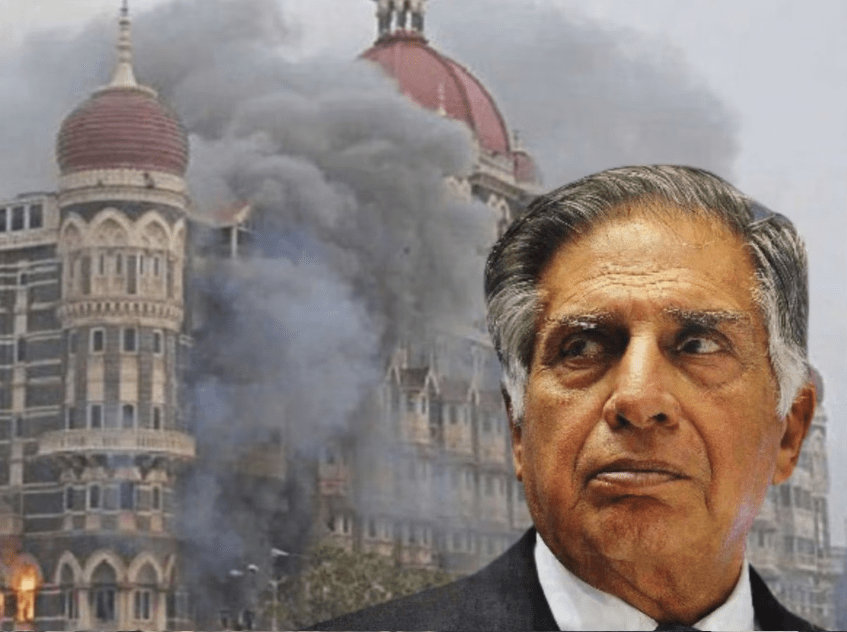
Ratan Tata passed away in the late hours of the 9th of October, 2024. The heartfelt sense of public grief and the profound sense of loss across the country was unprecedented. Social and print media, TV anchors, corporate honchos, political leaders and especially the common people bowed their heads in tribute. A social phenomenon unlike any other, akin to the emotional reactions after the sudden demise of Dr Abdul Kalam on the 27th of July 2015. Eminent scientist, author, teacher and the most distinguished President India has ever had.
On the late evening of the 26th of November 2008, 10 terrorists landed on the Mumbai shores via the Arabian Sea. They belonged to the terror group- Lashkar-e-Taiba-sponsored, supported and trained by the Pakistani Army and ISI. Other than The Taj, the targets were the Chhatrapati Shivaji Terminus, Oberoi Hotel, Cama Hospital, Leopold Café, Chabad House, and Nariman Lighthouse, for which recce had already been done. The terrorists split up to wreak havoc and terror. 2 entered the Taj, and two more joined later. Out of 1700 people at the hotel, over 1600 escaped safely; 34 died, including 17 staff members.
At around 10.45 pm, Ratan Tata reached the Taj after getting a call from RK Krishna Kumar, Director of Tata Group. For him, the hotel resembled a venerable old lady. Built in 1903 by Jamshedji Tata in defiance of the British for barring Indians from their hotels. In an interview with Fareed Zakaria (CNN), he admitted that he was truly emotionally overcome by the sight of the rather beautiful building going up in flames. He could hear the sounds of gunshots and exploding grenades from inside the hotel and felt ‘tremendously helpless.’ The fact that there were hundreds of people trapped in a life-or-death situation caused him extreme anxiety. But as Thomas Mathew writes in his book ‘Ratan Tata- A Life’ ‘for him, it was not just an attack on a hotel belonging to his group but on the nation.’ For 3 days the Chairman of the Tata Group (then 70 years old) stood at the Colaba end of the hotel. When it was all over, he was found at the back of the hotel feeding street dogs, which were distressed.
On the 21st of December 2008, the Taj reopened its doors. As the corporate doyen remarked, ‘We can be hurt, but we cannot be knocked down.’ Religious leaders of all faiths said prayers and performed healing ceremonies. The names of all 1700 Taj employees were read out to highlight their dedication to the Group philosophy. 540 employees who were on duty on the fateful days and could attend the function walked proudly through the lobby on a red carpet. Exactly one year after the horrific event, Ratan Tata unveiled a 12 ft high memorial with the heading- ‘for now and forever you will inspire us’- and there were etched the names of those who were killed in the terror attack. Just 21 months after 26/11, the Taj was restored to its former iconic glory.
Within hours, five outreach centres were set up by the Tata team to provide food, water and first aid to all affected across Mumbai city. In the days after, Ratan Tata & Senior managers visited all the injured at the hospitals to inquire about their well-being and pledge support. The Corporate Icon attended funerals and offered deep condolences and full support to the bereaved families. The families of the martyred employees were flown or driven to Mumbai and put up at the Taj President for 3 weeks at Company cost. He met 80 family members personally to share their grief and show his support. When his team came up with the rehabilitation package for each family, he kept saying, “This is not enough.” The Taj Public Services Welfare Trust (TPSWT) was set up. Ratan Tata broke all limits of empathy and generosity. Spouses or parents of Taj employees who lost their lives were awarded a compensation package of Rs 36 lakhs to Rs 85 lakhs. The spouses became eligible for full salary for their lifetime. The Company paid full educational fees for the children of the deceased and extended full medical facilities for the whole family for the rest of their lives. All loans and advances taken by the deceased were waived. The children who had lost a bread-winning parent were given an open offer of employment at any of the Taj Group of Companies of their choice. Plus, a counsellor was appointed for each bereaved family and for the Staff who survived the ordeal for any post-trauma stress disorder.
Listen to the story of Sunu Verghese (widow of Taj hero Thomas Varghese) meeting Ratan Tata, Krishna Kumar & Raymond Bickson, MD of India Hotels; when she cried and told Ratan Tata, “I have lost everything and we will go home now (to Kerala).” And Ratan Tata’s response, “We lost one of our golden employees in Thomas, and till you die, The Taj will take care of you.” In an interview with author Thomas Mathew, she tearfully said, “I have not seen God. But that day, I saw God in him. God was in front of me.” She was a housewife earlier but now works for the TPSWT. The Institution extended generous support and help to all those who were affected by the terror attack in Mumbai. Beneficiaries included police personnel, commandoes, railway employees, firefighters, pedestrians, and street vendors. TPSWT identified the 168 people who died and their families became beneficiaries of the Tata generosity. Even street hawkers who had lost their wares in the commotion were given brand-new handcarts. Amazing!!
Shaunak Chemburkar, a bell captain at Oberoi Trident, lost his life. TPSWT reached out to his widow, Anjali, and sponsored her beautician course. The whole family, including the paralyzed father and the Alzheimer-stricken mother, received medical and financial support. The Tata Trust stood steadfast with Karuna, a janitor at GT Hospital, and her 3 children. On 26/11, her 29-year-old husband Waghela was having dinner in their tiny house when a gun-wielding Ajmal Kasab knocked on the door. After 2 glasses of water, he sprayed the host with AK 47 bullets. Shyam Sunder Chowdhury, a pedestrian, was paralysed when a taxi full of RDX exploded as he crossed the road in Ville Parle. The Company where he worked did not offer any relief. TPSWT sends a monthly pension to Shyam and sponsors his children’s education. The Trust gave his wife and sister Skills training, and they are now working and earning for the family.
Whilst we salute the many brave-hearts amongst the Mumbai Police, Anti-Terror Squad and the Commandos who made the ultimate sacrifice for the Megapolis and the Nation, let’s highlight some of The Taj’s heroes. The General Manager, Karambir Singh Kang, remained in the hotel and took charge of the rescue operations during the 3-day siege. His wife and 2 children were in a 6th-floor suite, but he did not walk away from his duty calls to take them to safety. Tragically, his family perished due to asphyxiation as fire engulfed the floor. He had promised his father, an Indian Army Officer, that if the ship goes down, I will be the last man there. Kang calls Ratan Tata ‘a corporate saint’ but adds that he ‘is at his strongest when cornered.’
Mallika Jagad, a 24-year-old banquet manager, was managing the dinner conference hosted by Uni Lever. As soon as she heard the gunshots, she locked the doors and switched off the lights. She and her team told the 60 guests to move away from the doors and windows and quietly hide under the tables. They were asked not to use their mobile phones. The staff moved the food trollies to block the doors but continued to serve food and water to the terrified guests. Leena Iyer, the HR Head at Uni Lever in a Survivors- TV Interview marvelled at the young manager’s admirable presence of mind and the calm composure in the nerve-wracking situation right up to their rescue by fire brigade officials and commandoes. Mallika had only this to say, ‘I may have been the youngest in the room, but it was my responsibility.’
Incredibly, even staff who had been evacuated came back to their station later, such as the all-women’s team of The Taj’s telephone operations. They stayed back the whole night, guiding the guests on how to stay safe and escape. They softly advised the guests in the rooms to stay quietly, switch off the TV and power, and even remove the entry pass card to delete the ‘Occupied’ sign.
Thomas Varghese, a 48-year-old senior waiter, acted instinctively when alerted to the terror attack. He herded the 50-odd guests from the Japanese restaurant down to the kitchen area. When he got the all-clear, he got his juniors to take the guests down the stairs in batches of 5. An active trade union activist, he chose to be at the tail end to ensure that his team would lead the guests to safety. Sadly, the terrorists shot down and killed the final batch of guests and Thomas Varghese. A butler, Sudharshan Thevar, also demonstrated extraordinary courage in rescuing a Swiss couple in their 70s from the 6th floor. He remained in their room and barricaded the door with the bar cabinet and luggage items. As acrid smoke started coming in, he broke the glass windows and took the couple to the ledge. However, as the fire brigade was not able to reach up, he rushed the couple down the stairs just clear of the engulfing flames and finally got them out by crawling out of an AC duct near the ground floor. He later, in a choked voice, recalled meeting Ratan Tata at a function at Taj Chambers where the British Consulate officials had come to thank the Taj Staff. As he walked up to shake hands, all he heard the Chairman of the Tata House say other than a sincere thanks was, ‘May God give me the strength. I wish to do more.’
The most intriguing aspect of the 26/11 attack on The Taj was that all the 600 employees at the hotel remained at their duty stations. Many were young, and many were the sole breadwinners. The natural human instinct would have been to escape, and they were all aware of all the backways and exits. They all stayed back with the single goal of taking all the guests to safety. Why?! It has been the subject of much discussion in academic circles, newsrooms, and multiple TED Talk shows. As Ratan Tata himself had said,’ there were no manuals, no instructions as to what to do in such a situation. These were civilians from the hospitality industry, not Armed Forces or para-military personnel.
How did they defy the psychological stereotype? Prof Rohit Deshpande from Harvard University, who has done extensive research on The Taj attack, came up with 3 theories. ‘Athithi Devo Bhava’ or ‘The Guest is God’ is an enduring theme of Indian culture. In those desperate times, the Staff did not hide or flee but chose to become protectors of the guests and lead them to safety. Plausible. A more reverberating explanation was that because of their humane culture, the Tata Companies evoked a deep sense of loyalty and responsibility from their employees. But the most revealing insights came when the Professor sought to understand the staff’s behaviour through the lens of The Taj’s recruitment process, training and rewards & recognition program. The Taj recruited employees from Tier 2/3 cities and towns where the old-world values still prevailed. Respect for Parents, Elders, Teachers, and Guests. The Tata team recruited for ‘character’ and not high grades. They looked for Integrity, Respect, Empathy & Responsibility. In the customer-centric hospitality industry, they want to delight customers with kindness and attention. The training system at the Taj was to create leadership and ownership from below. The front-line employees were ambassadors of the Guests, the voice of the Customer. Also significantly, even though The Taj was at par with other big name hotel chains on monetary compensation and incentives, they were far ahead on the appreciation and recognition quotient. Within 48 hours of a complimentary remark or comment from a happy customer, the said employee would be applauded not only by her/his department but by the entire hotel management & staff. (Sourced from Thomas Mathew’s book and Prof Rohit Deshpande’s Ted Talk)
Ratan Tata’s steely resolve, indomitable spirit, and his extraordinarily compassionate response to the victims of the 26/11 terror attacks on Mumbai and The Taj has no parallels in the history of India or of any country in the world. Leaving the last words to the biographer, ‘In having responded the way he did to the crisis, he may have left behind a parable for the ages.’
 A Fistful of Salt
Beautifully written . Ratan Tata will remain a legend. The culture and ethos in an organisation creates leaders who displayed exceptional qualities during crisis at all levels.
LikeLiked by 1 person
Amazing read, there are enormous examples what makes Ratan Tata – Sir Ratan Tata. This blog captures many unsung deeds. A real tribute to hero of the nation. 🙏👍
LikeLike
I recall having read somewhere that Hemant Oberoi, then the Head Chef (I can’t recall his exact designation) also was part of the core team at Taj overseeing evacuation and safety of guests. I happened to watch his interview on a TV channel subsequently where he was describing the Sterling qualities displayed by each TAJ employee and the rock solid support from the top management led by Ratan Tata. Indeed the house of TATAs and their stalwarts like JRD and Ratan TATA are incomparable.
LikeLike
This narrative is a powerful reminder of how empathy, resilience, and values-driven leadership can inspire hope even in the face of unimaginable tragedy.
Thank you for sharing this moving account of Ratan Tata’s remarkable leadership and unparalleled compassion during one of India’s darkest chapters. His humanity and the Tata Group’s unwavering support for victims and their families exemplify true corporate responsibility.
LikeLiked by 1 person