Unknown's avatar

About SV Rao

Insurance professional by day. A teacher by choice. A sports-buff, traveler, movie-nut, bookworm, and, a lover of vintage Hindi-film songs, seeking sense within all this noise. Welcome to my take; a fistful of salt is recommended.

Overhyped? Or Underachievers?

PIC COURTESY: HEMANT SINGH

The drubbings at the hands of Pakistan and New Zealand in the T20 World Cup tick both the boxes in the above title. Getting thrashed by 10 wickets and 8 wickets is akin to an innings defeat in a Test match. The Men in Blue are out of another ICC major championship —only this time not making it to the knock-out stage.

Is it such a rude shock? Not really. First, the hype. The IPL is the world’s most glamorous cricket carnival hosted by the richest cricket body, the BCCI. It has given opportunity and confidence to the younger players and enhanced the fitness levels of our cricketers. Some of India’s best have been spotted by IPL franchise scouts; Bumrah was discovered by the Mumbai Indians. The flip side is that it does not have the intensity found in major ICC tournaments or even in well-contested series especially with the SENA nations. The cricketers are feted as celebrities and the real contest and the competitive edge are missing. But here lies the catch. The fortunes of the IPL and Team India are interlinked. If the latter continues to underperform at major tournaments, the mass following for the IPL will dwindle.

Many well-paid commentators, including ex-cricketer experts, have all jumped onto the gravy train. So on international series and tours, they no longer objectively call out selection mistakes, wrong captaincy calls, poor reading of the game, bad sportsmanship, or cracks appearing in team spirit. So when Shastri says that this is the greatest Indian team ever, there is a chorus of approvals. While Kohli says his team can win from any situation, there is chest-thumping in the media. Overconfidence leads to bad results. Curiously, there is very little focus on Impact players from the other teams. Remember that Harsha Bhogle was put out in the cold for some time a few years back. His sin – he had something good to say about the competing international players also. Millions of die-hard fans have been fed this false narrative that our cricket team is head and shoulders above the other teams. Bad days like the 36 all out at Adelaide and the 78 at Headingley on the recent England tour and the defeats at the 2019 ODI WC and the World Test Championships in 2021 are all swept under the carpet.

Indian cricket has an abundance of talent and bench strength which is the envy of other cricketing nations. But this has to be mobilized and harnessed effectively by the captain, coach, selectors, and the BCCI. Captain Kohli’s in-one’s-face aggression has won him a huge legion of fans. But such relentless intensity has also undermined his batsmanship – he is showing symptoms of burn-out. He has been crass and hyper on the field and per reliable reports in the dressing room also. The dressing room environment gradually creeps onto the cricket field. It is bound to affect both team spirit and individual performances. Both are two sides of the same coin. Now let’s talk about Mr Shastri. As the captain’s hand-picked coach and Yes Man, he is also accountable for our futile run at the ICC tournaments. With a rich repository of cricket talent to tap into, this is not acceptable. The toxicity started with the ouster of Kumble as coach at Kohli’s behest and the silence from the BCCI and the cricket establishment. Virat Kohli has gradually become bigger than the game in India. Erratic selection, benching of in-form players, taking decisions solely by instinct, and throwing tantrums have all become acceptable over the years. Analytics inputs or sensible advice from the outside even by a reputed name have all been given the short end of the stick. Team bonding and consistency have suffered and even seasoned players have not played up to their potential.

The extended bio-bubble may have taken its toll on the players. It is also possible that some had tired legs or felt stale with the second leg of the IPL just before the WC T20. But this does not tell the entire story. Pakistan’s cricket team is driven by hunger, anger, and passion. They feel marginalized on the world cricket circuit and have grabbed this opportunity to drive home their point. They are playing out of their skins.

Front and Centre are 2 subjects which are almost taboo topics for our cricketing establishment or brotherhood. Thankfully, Madan Lal has been critical about the scheduling of the IPL second leg just before the T20 WC.  Kapil Dev has gone even further- whether the Indian cricketers are giving more preference to this cash rich franchise league than to the singular honour of playing for the country. In the future the BCCI will have to give serious thought to player work-loads and series and tournament schedules with the prime focus being that the Men in Blue bring home some much needed silverware. Else they are killing the goose that lays the golden eggs. The success of the Indian Premier League draws from the success of the national cricket team.

The other relates to Virat Kohli’s captaincy. I guess the jury will always be out on this one. Kohli has become an icon for millions of Indian fans not only because of superlative batting performances but because of his raw aggression, passion for fitness and wearing his heart on his sleeve. Even after his team’s very disappointing exit from the ongoing T20 WC his army of admirers on social media hail him as King Kohli. The cricketing experts and the media in general are tip-toeing around the subject with diplomatic grace. We are living in some strange bubble.

Cometh the hour, cometh the man. Rahul Dravid will be the next coach. A true cricketing legend and a mentor for many of the younger stars through U19, India ‘A’, and the National Cricket Academy. Immense match experience and cricketing acumen: focused, grounded, level-headed, and universally respected. When The Wall walked out to bat one could see the Indian tricolour fluttering in the breeze. But he has his work cut out. There are challenging times ahead and he has to be given a free hand. Virat Kohli continues as captain for the Tests and ODI’s. Will he listen, change, adapt or even reinvent himself? Regain his mojo as a masterclass batsman? Some of the impressionable youngsters have bought into the hype and the celebrity-dom. They have to face the reality check and rediscover their day-to-day balance. Dravid’s mission is not just to get the Indian cricket team to bond together and play to their fullest potential. He has to get each person on the Indian team to value and respect the India cap to the fullest. And even more. Play to win but with the sporting spirit currently demonstrated by Kane Williamson’s Kiwis.

First World Hypocrisy

Photo by Tristan Sparks on https://www.flickr.com/photos/friendly-fire/252169955/

The First World refers to the USA and its Western Allies opposed to the Soviet Union after WW2. Nations characterised by democracy, prosperity, stability and progress. Over the last 7 decades this bloc has called the shots and controlled the narrative. Developing and Third World countries like India have tacitly accepted their superiority, condescending attitude and sermons without question. As an emerging power now, it is high time we shed our colonial mind-set and see the world in starkly real terms.

The game-changing ideas and policies, innovations and inventions from these western countries are richly acknowledged and warmly celebrated. But it is time to show the mirror to capture the less known darker side also. This blog has been triggered by the American debacle in Afghanistan. Recommend that you please take it with A Fistful of Salt.

Geopolitics. Think about the chaotic retreat of the US from Afghanistan after 20 years of occupation. Leaving almost 40 million Afghans (half of them female) to the mercy of a cruel and regressive regime which harks back to the medieval ages. Leaving a huge cache of deadly weapons and armaments for their ready use. Ironically, the Taliban was created by the US and their partner Pakistan to oust the Soviet troops from Afghanistan. Mission accomplished in 1989. The land of the free and the brave sponsoring and promoting a terror outfit.  The monster comes back to drive them out in 2021. During these 20 years almost $3 trillion was spent with only a miniscule going to build hospitals, schools and much needed infrastructure.  Funds were splurged on state of the art weaponry and equipment- cheered on by the domestic military-industrial complex.  With generous cutbacks going to the defence contractors and their political patrons.

This super-power also exited Vietnam in ignominy in 1974. After dropping more bombs on Vietnam and Cambodia than in the entire second world war. Napalm was deployed to execute the scorched earth policy. Rivers were poisoned to kill civilians and livestock.  History is generally written by the winners. Here the loser cleverly covered up all the war crimes and misadventures.

Turn the clock back to the late 1930’s when Hitler’s Nazis started the most devastating war in human history-WW II. Italy, Spain played willing accomplices and second fiddle to the Fuhrer. Those long, dark, destructive days and the brutal genocide of 6 million Jews have been well documented. The War ended with the Americans dropping atomic bombs- Little Boy and Fat Man- on Hiroshima and Nagasaki in August 1945.

All the hotspots in recent times have had the signature of the US and its Allies. That there were no WMD’s (Weapons of Mass Destruction) did not deter the old firm of Bush & Blair from toppling Saddam in Iraq with their eyes on the oil-fields.  Syria, Lebanon, Libya and the cursed land of Yemen- the tentacles go back to this Western bloc.  This is not to absolve Russia and the regional powers like Saudi Arabia and Iran who are equally complicit. But the First World nations have left these countries to a worse state and fate than when they first invaded. The geo-political chessboard has been played for ideology, hegemony, natural resources, trade routes and military bases. The Iron Curtain fell in 1989 but today the world is still a very divided and troubled place. The First World has not been the civilising influence it credits itself to be.

Colonial powers. UK, France, Spain, Portugal with vassal states across the world. The dream of an Empire has been a recurrent human theme throughout history. But the driving force was to exploit natural resources and wealth and cheap labour in the colonies and boast of a global footprint. “The Sun never sets on the British Empire.’ The plundering of minerals and crops, cruelty towards the native population and determined efforts to uproot local cultures and traditions are not even foot notes in the history books we read. It has all been white-washed.

Slave trade epitomises how the US, UK and other European empires manned their farms and mines and mansions. Even today statues of glorified and knighted slave merchants dot the United Kingdom. Some of the founding fathers of the US of A owned hundreds of slaves. Slaves were officially traded as cargo and even insured. Claims were paid for the goods lost at sea.  But the colonisers with their rich history are quick to lecture other nations on human rights. Smells of hypocrisy, right!!

Let’s turn back the page to August 1947 and the India-Pakistan independence story. PM Attlee announced in the House of Commons that the transfer of power would happen before June 1948. But Lord Mountbatten, wanted to have it done asap. The 3323 km border line was drawn by Radcliffe, a British lawyer, who had never been to the sub-continent and had no clue about the demography. The mammoth and complex task was completed by him and his team within 2 months in the cool environs of Shimla. IMAGINE!!! It does not take hindsight to see that the additional months would have been very valuable in communicating and planning for the inevitable cross-migration of 12-15 million people. Instead a million died in the panic and violence that erupted. The last Viceroy couldn’t care less. Nor did his political masters at the Whitehall.

The USA is deeply polarised country today. The Trump fan base of 30% voters are largely an alienated tribe who are at odds with their increasingly multicultural land. The main reason why the Brexiteers won was because Russian social media manipulators scared enough of the populace through images of immigrants flooding into their nation, from the hotspots of the Middle East, Africa and Asia.  France, Denmark, Sweden, the Netherlands (the cradle of liberalism) are sounding the bugle of a clash of civilisations and enacting restrictive laws and social measures. But all these happenings have not been a wake-up call for India and other developing nations . We continue with our mongrel behaviour of constantly putting ourselves down and lapping whatever criticism these elite western nations and their proxies throw at us.

The beacons of democracy. On the 6th Jan 2021 the US Capitol was attacked by an angry, vicious mob goaded on by President Trump who had lost the election and could not take it. This would have been sneered at as” a banana republic episode” in a third world country. But in the US of A the TV pundits kept sagely saying that ‘this is not who we are’ and the Trumpians even dismissed the rampaging crowd as tourists at the Capitol. The Caribbean island of Puerto Rico has been a territory of the United States since 1898 and its current President is Joe Biden. But Puerto Ricans remain second class citizens and have no representation and voting rights in the US Congress.  Again, with the most funded and militarised police force in the world in place, automatic guns are available and sold over-the –counter across the nation as a fundamental right to defend oneself.

Across continents, the patronising First World has propped up and supported despots, brutal dictators and puppet rulers. From the Shah of Iran, Libya’s Gaddafi, the Pakistani Generals, Marcos of the Philippines and so on and on. Else, a coup was orchestrated as the one to remove Allende in Chile. The UK grappled with the Irish problem for 70 years. For nearly 25 of those it was a violent cauldron of bomb attacks and guerrilla warfare- ruthlessly dealt with by the British forces. But hey, shrug, shrug. This was an internal matter of the United Kingdom and the English could deal with it.

The fault-lines of racism are now very evident in the fractured societies of the US and Europe. But these have been glossed over for decades as the developing world has been lectured on how to be civilised people. The lid has always been kept on the rape and murder of thousands of indigenous people in Canada. But now corpses of hundreds of native children have been recovered from many Catholic school sites. How many news channels carried this tragic story which played over from the 1890’s to the late 1970’s?!! PM Trudeau merely called for the Pope to apologise. Of course, the State had no role to play. News reports from France state that more than 300000 children have been abused over the last few decades by priests of the Catholic Church. The powerful Church protected its clergy from the law and order arms of the State. On the other side of the world in Australia the aborigines got a taste of hell in their own land as the white settlers discovered their paradise.

Yes, the Industrial Revolution took off in England and the technological one in the Silicon Valley. The world has benefitted in many, many ways. But not in the humane way. Many big brands in the west sourced their material and parts through sweat shops in the poorer countries.  Cheap and exploitative labour was the way to big profit margins.  Why, even in North America today, Amazon runs boot-camps with the workers having little time to pee. “Show me the Money,”  is the corporate war cry. As a whistleblower has recently revealed, Mark Zuckerberg’s Facebook allowed disturbing messages and images to trend on their platforms as it made them astronomical profits. So what, if it inflamed some racial hatred and divisions or drove more suicides or even put democracy at risk. A lot of good has been done by the charitable Gates foundation. But the halo of the ultimate billionaire do-gooder has paled off. Bill Gates batted to protect the turf of big pharma at the height of Covid. Disparaging suggestions for low-cost generic vaccines to help the world battling the pandemic. And his curious association with the late sex trafficker and power broker Epstein. Presumably to help him get the Nobel Peace Prize.

In the movie ‘Wall Street’ Gordon Gekko says the famous lines, “Greed is good.” Sure. The top 1% of the US rich pay tax at a lower rate than any other segment of the society. In the rush to cover-up the origins of Covid 19 were many top scientists from Europe and the USA.  The stakes were too high. Billions of dollars for the Gain of Function research which possibly led to the leak at the Wuhan Lab in China. The 2008 US financial meltdown featured a lot of Gordon Gekko characters. Banks, Insurers, Wall Street Finance companies, housing corporates, credit rating agencies and big name audit firms all collaborating and looking the other way as the sub-prime and derivatives  fuelled crises unravelled. “Too big to fail” and the Government bailed them out. Deregulation of the financial markets from the Reagan years and lack of oversight caused the global crises. And the CXO’s walked away with fat bonuses as millions across the globe lost their jobs and pensions and savings.

The Volkswagen emission cheating scandal represented an ethical breakdown and would have shut-down a lesser Company. The German Government stepped in to bail out this auto-giant which was poised at becoming the largest in the world. High-level talks with the Americans, some big penalties and back to business as usual. What also came out was the European Union’s somewhat lax attitude in applying emission norms to vehicle manufacturers on the Continent.

Let’s come to the Panama Papers and its latest edition called the Pandora Papers. Most of the attractive tax-havens are in the West. Of course, the scenic Switzerland heads the list which has South Dakota in the US, British Virgin Islands, Cayman Islands, Lichtenstein… It’s not only the Colombian and Mexican drug lords or Russian oligarchs or the Arab Sheikhs or super-rich Indians stashing away their money through shell companies. The First World had long earned this rite of passage. It is also not surprising that the UK is a preferred destination for financial scamsters. Perhaps, the tough extradition laws appeal to these criminal fugitives. And  staying with Colombia and Mexico which are derided for their Narcos cartels. Guess which are the most lucrative markets for the drug peddlers??

We can go on and on. The corruption at the highest levels of FIFA. The systematic doping on the Tour de France. Match fixing in football at the Serie A in Italy. These are all malaises associated with ‘those other countries.’

Human nature is what it is. Power and greed corrupts and no nation or peoples are immune to it. India is a work in progress. A huge and complex nation. We have a surfeit of venal politicians and problems of poverty, un-employment, education and public health. Community and regional divides and the scourges of corruption, and casteism.  But we are only 75 years old as a nation and progress is also being made. The young generation will signal the tipping point through its confidence and aspirations.

However, to really discover its own identity India will have to work to protect and serve its interests. That is Realpolitik. Absorb good initiatives and ideas and learn from the failures and blunders. There are positive takeaways from countries in Asia, Africa, Oceania, Middle East and South America. As an emerging power, strive to be a more responsible force both domestically and on the global stage.

The bottom-line is that ideas and philosophies and policies are revisited and revamped or fine-tuned or discarded when actually challenged by ground realities. The world is changing and the struggles and evolution of each nation needs more empathy and a better understanding. The only path towards achieving the Greater Good on the planet.

The Method of Dilip Kumar

Portrait of Dilip Kumar in 1946 from Wikimedia Commons

Amitabh Bachchan has famously said that, “the history of Indian cinema shall always be reckoned as before Dilip Sahab and after Dilip Sahab because of his impeccable presence.” Dilip Kumar (Yousuf Khan) made his screen debut in the mid 40’s and became an actor and star to reckon with by the end of that decade. The audience of that era had grown up on high voltage melodrama, high pitched dialogues accompanied by lots of gesticulations. Motilal and Ashok Kumar and (later Balraj Sahani ) had begun the process towards a more natural form of acting. However, it was Dilip Kumar who carried the torch and made it the norm.

Satyajit Ray called him the ‘Ultimate Method Actor.’ Javed Akhtar went a step further and called him the first method actor in the world even before the Hollywood great Marlon Brando burst on the stage and screen. The Indian screen icon has publicly spoken of his admiration for the craft of Brando and Paul Muni.

In lay terms, in order for actors to create natural performances they needed to tap into personal experiences in order to imagine how their characters are feeling. They would use their own memories and relate these emotions to the portrayal of a character. This is the essence of Method Acting although there are many more dimensions to it. In his autobiography ‘Dilip Kumar- the Substance and The Shadow’ the thespian reveals to the narrator Udayatara Nayar, “that the epithet was used to describe me before Brando. I am an actor who evolved a method which stood me in good stead. I learned the importance of studying the scripts and characters deeply and building upon my own gut observations about my own and other characters. It was always meaningful for me to study even those characters that would be close to me or opposed to me.” Thus began a legend’s life- long obsession with immersing in the character and inhabiting the role.

In doing so he changed the very concept and grammar of acting. He redefined the meaning of acting. If the dialogues were potent the acting had to be understated. It was not necessary to shout to be heard. A nuanced body language and even silence conveyed more through the camera lens than a plethora of theatrical gestures. Indeed, this actor had the gumption to enact critical scenes with his back to the camera letting his voice envelope the audience. Remember ‘Ram aur Shyam’ where the quivering voice of the nervous, timid Ram resonates through the halls – of how he has been bullied and beaten into submission by Gajendra babu (his screen brother in law- Pran). He played out the entire gamut of emotions brilliantly from the heartbreak and sorrow of ‘Jogan’ and ‘Devdas’ to the lively fun characters of ‘Kohinoor’ and ‘Ram aur Shyam’. It was no longer taboo for the hero to do comic sequences. Dilip Kumar gave a polish and finesse to acting which till then had been largely confined to self-conscious histrionics.

But a career of almost 5 decades, embellished with many memorable performances, did not just happen. Dilip Sahab imbibed quickly that the art and quality of film-making depended heavily on team-work. He understood the importance of not only the director, co-actors and cinematographer but even the value of a lightman and every member of the set crew, His commitment was not only to his role but to the film itself. Listen to Yash Chopra, third assistant to his brother BR Chopra during the making of ‘Naya Daur,’ “Dilip Sahab spent an entire month with Akhtar Mirza, the writer, and Chopra-saab at his Juhu shack. He would take up each scene with the dialogues and enact it with the drama, pathos, sentiment, humour and deep emotion and render us speechless. He would show us variations in the enactment and enthral us. He not only dwelt upon the moulding of his character but also the character played by Ajit. He made sure that Ajit’s part (a critical character) was equally strong and sensitively written. And the climax of the film was a challenge for Akhtar Mirza. How could a horse-driven tonga beat a motor vehicle in a race. It was Dilip Kumar who gave the writer the idea of the tonga taking a short-cut- something that was logical and convincing.” [Excerpt from ‘Dilip Kumar- the Substance and The Shadow’]

The immersive performance in ‘Devdas’, a man driven by unrequited love to become a complete drunkard. Recall that his eyes are hazy and glazed throughout the film, the spoken word is oft slurred and the silences are melancholic. Film-lore had it that Dilip Kumar got so much into the skin of the character that he had to seek the help of a Harley Street psychiatrist to come out of the depression. And per his advises went on to do some light-hearted roles in ‘Azaad’ and ‘Kohinoor.’

‘Ganga Jamuna’ is considered to be his greatest performance. The ‘Method Actor’ in him made him run all around the studio premises to the point of exhaustion in order to get the right look and feel for the death scene in the film. The rustic dance with a folk flavour to the song ‘Nain Lad Jayi Hai’; a sublime collaborative effort with choreographer Hiralal and team brought out and captured the simple, cheery spirit of that moment. In his movies, songs were in-built into the story and drove the narrative forward. And, speaking the Purbi/Avadhi dialect impeccably after learning from the dialect coach Kumud Tripathi. Actors like Amitabh Bachchan and Naseeruddin Shah who hail from the State of UP have been bowled over.

Dilip Sahab’s voice modulations enhanced his performances. His considered pauses added weight to the delivery. He did not rely only on the spoken word to act. His mere presence in a frame made the scene come alive. And he brought in the subtle art of listening. Listening to what the other character was saying brought realism and involvement to the scene. Then reacting with a mere glance, a half-smile or furrowed eyebrows. Amazing! The audience was sucked into that moment itself.

His dedication was legendary. His quest for perfection was clear. He learnt to play the sitar for months from Ustad Abdul Halim Jaffer Khan .  All for a song ‘Madhuban me Radhika’ in the film ‘Kohinoor.’ He could have faked it as many of his contemporaries did. But his desire to get the positioning of the instrument and his hand movements right added credibility to the performance.

The under-stated role of Prince Salim in ‘Mughal-e-Azam’. A lesser actor would probably have gone toe-to-toe with Pruthviraj Kapoor’s grandiose Emperor Akbar. The high-pitched dramatic acting, deep throated dialogues and flamboyant style. Dilip Kumar chose to strike a contrasting note. Emoting with his eyes and saying the graceful words in a soft, refined voice. His smile, his walk and the overall demeanour added to the aura of a romantic prince. The ‘Master at Work’ image is further highlighted by a sequence where as an actor he had nothing to do and nothing to say. The interest and emotion he evokes in the viewer as Prince Salim as his lover Anarkali performed the provocative ‘Jab Pyar Kiya to Darna Kya’ number. The prince had to maintain his royal composure even as the Emperor was about to lose his through a series of eruptions. It is very difficult for an actor to make an impact by doing nothing but Dilip Kumar pulled it off.

Let’s move to the heart-rending late -night scene in ‘Mashaal’. Where he is the helpless, elderly man begging for help from nearby residents and passing motorists to take his dying wife to a hospital. Where he is callously pushed by a passing vehicle on to the rain-drenched street. As he screams for help his voice becomes more desperate and hoarse and plaintive and cracks. The scene is numbing and gives us goose-bumps. The consummate actor drew from sad memories of his brother’s death and the anguish on his father’s face in the emotional scenes in ‘Mashaal’ and earlier in ‘Shakti.’

In a career spanning almost 50 years, Dilip Sahab acted in less than 60 films. It must have taken tremendous guts and self-belief to do so. He has himself said in interviews that he had avoided over-exposing himself to the audience. Plus the decision to only work on one film at a time underlined his confidence in the content of these films and his complete dedication to them.  He showed courage in the choice of scripts and roles that were varied and different. He moved from being ‘the Tragedy King’ to swashbuckling action to fun and comedy with flair and success. He imbued some characters with gravitas. He took conscious risks with his screen image breaking all the unwritten rules for stars of his era. In ‘Aadmi’ his character is mostly confined to the wheel-chair, a jealous, possessive man with a murderous streak. Much earlier he had played the blind young man in ‘Deedar’, playing the character with his eyes open. And a small aside. Be it the dapper suited gentleman in ‘Andaaz’ or Prince Salim in Mughal regal finery (Mughal-e-Azam) or the dhoti-kurta wearing villager in ‘Ganga Jamuna’, Dilip Kumar donned the role and stepped into the character.

No surprise that he is regarded as the gold-standard of film acting across India. His recent demise has brought heartfelt and glowing tributes from the likes of Amitabh Bachchan, Kamal Haasan, Manmooty, Chiranjeevi and many many others. He was the first leading man of cinema to build the bridge across talent-acting-stardom. He had total grasp of the medium of cinema and that it worked only as a collaborative effort. Kamal Haasan has remarked that, “Only after watching his classics he understood the meaning of subtlety; the eloquence of cinema where a mere look or sheer silence can convey so much, so powerfully.” [Excerpt from ‘Dilip Kumar- the Substance and The Shadow’]

The ability to understand a character and react to and from its innate nature was what set Dilip Sahab apart. Let’s have the last take from the legend himself, “Attempts should always be to make films with good stories, sound conflicts, characters that make it real and entertaining. I do not like films with a lot of lectures.” Dilip Kumar has left his indelible imprint on Indian cinema and on a vast global audience. His stellar performances will continue to inspire generations of actors and film-makers to raise the bar for their art, craft and work.

This Tail Tells Many Tales

Skipper

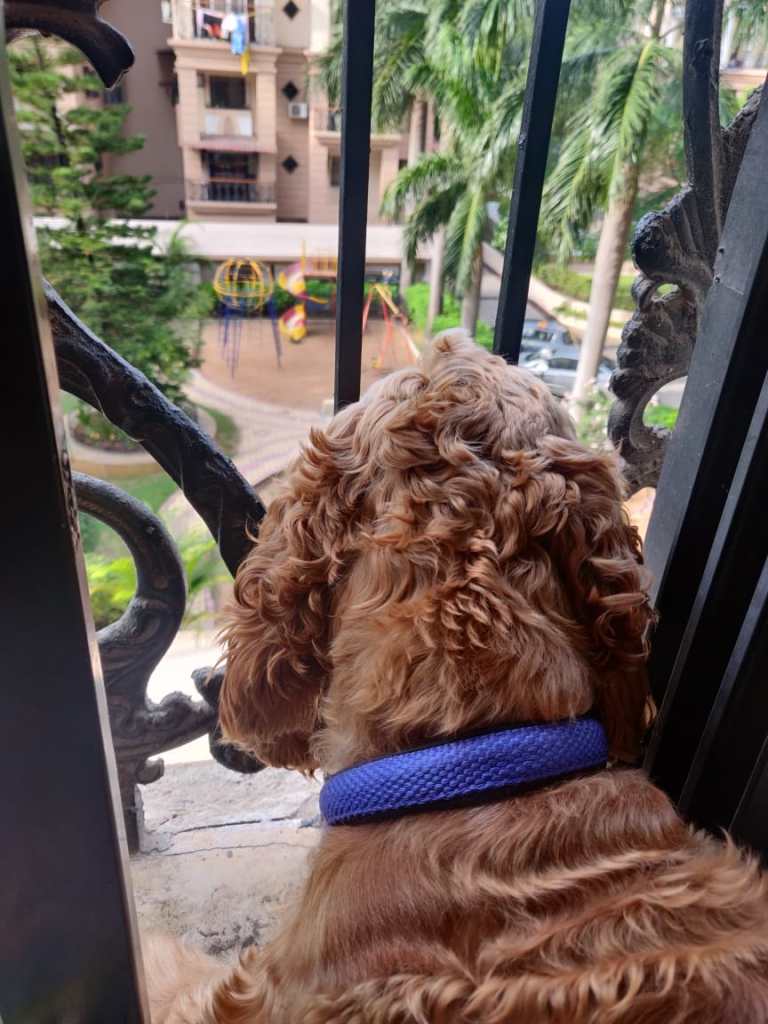
His name is Skipper. A 9 month old Cocker Spaniel who is enriching our lives. Named so by cricket buffs- he is actually leading us and showing us the small pleasures of life.

Unconditional love and trust. In those brown, melting eyes. In the way he scampers around the house to keep us company. If someone coughs or sneezes he approaches with a concerned look. He senses that we are about to go out when he sees one of us dressed up. Then, the mild whimpering and fussing around. He has to be petted and reassured. The delighted welcome when we are back, jumping all over and expressing his joy. During these long months of Covid lockdown the puppy has brought in warmth and fun. And heightened our empathy and understanding.

Living in the moment. It is common to brood over the disappointments of the past or worry about the uncertain future. Especially with all the negativity which seems to shroud us in today’s times. Skipper’s coming has been a blessing. Nudging us towards a positive outlook. Most importantly, living in the present. We are enjoying sitting with him in the balcony and simply watching the kids playing in the society or the birds settling in the trees. After quite some time the smell and flavour of the monsoons have entered our home.

Skipper looking out of the balcony

Skipper has also little time for the loungers and the social media addicts. He demands attention after a reasonable stretch of time. One has to get up and throw the ball or the ring or play tug-tug. He deflects attention from the binge-worthy stuff on Prime or Netfilx or being glued to the phone. These time-outs are not only opportunities to stretch out but also a welcome break from the Work Form Home routine.

Then there is the animal instinct of time. At 5am in the morning he is up for his morning trot and politely waits for me to get up. At around 8.30 pm in the evening he gets a bit restless and cranky if we are not having our dinner. Many a times he comes up and paws and licks us to the table. By around 10.00 pm he is asleep. 15 minutes later he is on his back with all fours in the air. A truly relaxing and resting spectacle.

Skipper and his naps

In the frantic pace of life, we have come to take our meals for granted. Pan the camera on Skipper. Before meal time he will be reminding us of the event through looks or licks and taps on our hands. Once the bowl and ingredients are on the table he bounds onto the nearby sofa to get a closer look and sniff what’s in store. Oft times, he actually sees and smells his food being mixed. Then the smacking and gobbling sounds are the back-track for the next 10-15 mins. Our spaniel has hit the pause button on the rush-rush routines. We now savour whatever is on the plate, talk over small daily stuff and give ourselves more time.

Then there is the actual tail between the legs and not the proverbial one. On our morning walks, Skipper still gets rattled by the motor-cycle which rumbles through the Society at 5.30 am each morning. A couple of larger dogs intimidate him and he scurries to the other side. But the scooters of the early morning vendors no longer bother him. Nor do the cats which dart across. Every day, he is adjusting, learning and growing in confidence.

Soaking in the Sun

He is a dogged doggie. Does not give in in a tug of war over a piece of cloth or a furry toy. There have been occasions when he has mis-judged a jump to catch a ball and fallen on the wrong side. Briefly shaken, but quickly back in action for the next catch.

His cute mannerisms and antics often have us in splits. His stand-up jumping is a sight to behold. When he squats on his hind legs, with his long ears and furry head and soulful eyes he looks like a philosopher. In another moment, when he has had enough of jumping and running he becomes mischievous and hides the ball. When it’s time to wipe or wash his face and mouth after food he avoids looking into the mirror. Inevitably, after the wash or when the room freshener is sprayed Skipper slithers and gyrates on the floor rubbing his nose and face to the floor or the wall. Akin to a ‘Nagin’ dance.  At times he irritates us by not finishing his food or biting the mat or digging into a newspaper. He gets smacked and goes quietly to the corner with his head down. The next minute he is back to make amends, wagging his tail and butt and entreating us with those incredible eyes.

Skipper’s melting eyes

Skipper is family. He also makes friends easily and is a favourite with family- friends. He has taken a liking to two security guards in our society, and they to him. These two petting stops have become part of the early morning schedule. He welcomes both our house-helps and they happily take out time to play with him. It is a pleasure to watch. Such innocence and energy have in a sense recharged our lives. Our pup has also introduced us to some professionals- the Dog breeder in Mumbai and a team of Vets near home- whose passion for what they do goes well beyond commerce and business.

As I come to the end of this doggie tale, I look at him. He is stretched out near my chair. Those melting eyes look up and the tail wags gently. He stands up, stretches and bends elegantly. Then the fervent shaking of the head and flapping of those drooping ears. It’s  Skipper time.

Skipper Time

Photo Credits: Sunita Rao

Shraddha Saburi

This is a tale of a surreal experience I had many, many years ago. Even so, I can vividly remember the dream and how the entire episode unfolded. I had and have this sense of Divine Providence.

At the centre of the story is the divine aura of Shirdi Shri Sai Baba. At our Lucknow residence, we had this simple picture of him in a white garb, sitting on a rock or large stone. The line below said, “Why Fear When I am Here.” My mother was an ardent devotee of this Saint .The Sai Leela periodical was a must-read for her and many a time I went to the Post office for making the annual subscription vide Money Order. She once told me that in the late 40’s a gentleman called Shri Narasimha Swamy had come visiting to our ancestral home in Madras. Over coffee and snacks he told my grandparents and family about this spiritual and humane being and his profound influence in interior Maharashtra.  Indeed, this great apostle of Shri Sai carried the inspiring story of the Baba across the South. In the early 50’s he was the catalyst and the force behind the construction of the Sai Baba temple in Mylapore, Madras. It has since become the Shirdi of the South. Much later, I remember my Mama (maternal uncle whom we have always looked up to) telling me more about Shri Narasimha Swamy. That he was a well-known lawyer and a member of the Madras Legislative Council for many years. A double family tragedy set him off on a spiritual quest to all parts of this vast land. In the mid 1930’s he heard about this godly-man from the small town of Shirdi. A visit to the Samadhi and multiple interactions with the local people and the Baba’s close circle convinced him about his tryst with Divinity. Then followed several meetings with more Sai disciples in the cities of Bombay and Poona- Judges, lawyers, professors, government officials… Today, of course, the Spiritual Master has millions of devotees across the country and in many parts of the world. Shirdi has become a major pilgrimage destination.

The year was 1975. We were on an extended summer vacation at the serene family home in Madras. This was a yearly sojourn we really looked forward to. My father, a retired Army doctor, returned to Lucknow after a two week stay. He had joined a well-known private trust hospital in the city. Those were the days of Inland letters and post cards. A letter from my father jolted me out of the holiday mood. He had written that my roll number had not appeared amongst the list of successful candidates for the Intermediate exam, published in the local newspaper. He had requested a friend of mine to confirm at the college and the list on the Notice Board also did not show my name or number. My world had gone topsy-turvy. I felt acute guilt and shame. I had let my parents down and wasted a crucial year of education. I had become a failure for family and friends. The rest of the Madras trip was a blur. The only other thing that I recall is my mother taking me to the Mylapore temple for a darshan.

The long rail journey back to Lucknow was a miserable experience. The train was scheduled to reach in the early morning and I had a restless night on the upper berth. And then I was there at the breakfast table with my father and couldn’t meet his eyes. He said that yes, it was disappointing but I had to move on. No sharp words, no rebukes. It made me feel even smaller. While getting up he said that I should go and collect my report card and later on we would discuss the next course of action.

So around 11.00 am I got on my bicycle for the long haul to the college. My mother had come to the gate and applied Vibhuti (holy ash) on my forehead.  As I cycled, I thought that it was probably the Hindi paper which had pulled me down.  On reaching the college administration office I met Sharmaji at his table. I requested him to first check the Supplementary List register. This was my best hope. Supplementary meant that I could have another shot at the paper I had flunked in- provided my marks were within 5 marks of the pass-marks cut-off. I could then move on to a graduate degree course albeit from a less reputed college but would not lose out on a year. Sharmaji went through the sheets and shook his head. He then moved on to the Failed Students Register and seemed to spend an eternity looking it over. “You are not here, as well,” he remarked and reached out for the third file. After a couple of minutes he looked up and smiled, “Babua, you have passed. Why have you wasted my time?”  He handed over my report card and took my signature on the duplicate. I had passed with good marks in all the subjects including Hindi. A wave of relief swept through me. As I stammered through my back-story, his smile broadened. He shook my hand warmly and asked me to get him ½ kilo mithai (sweets) from Ram Aasrey or Chowdhary Sweet House, two well-known sweet marts in Lucknow. I virtually broke the record, cycling back home. My mother and brothers were delighted at the sudden turn of events. Three good friends also landed up in some time and they wanted to celebrate the occasion. But it was getting time for my father to reach home for lunch. It was a very happy and chatty group around the table with my buddies joining in. The entire atmosphere had changed in a few hours.

After a long break my friends wanted to hang-out together. So on this hot summer afternoon we cycled to Chowdhary Sweets for Sharmaji’s order plus for family and friends. Then all the way to the college where a surprised Sharmaji was happy to receive his treat. It was past 3 pm and all the cycling had taken its toll. Someone suggested that we catch the movie at the nearby theatre. Tickets were easily available as we entered the plush AC hall. In a few minutes the main feature film started with the hero running and running and running in a desperate manner. He reaches the house of an eminent Judge at night and confesses that he has killed a man. He wants to tell his strange story before the police arrest him. My mates and I looked at each other- wow, this is going to be thrilling. But after the first 15 mins it all unravelled into some bizarre Nagin story. Time to take a nap. Come interval and we took our cycles from the stand and headed for a good Chat (street food) joint. Batashes, aloo-tikki, samosas and lemonade- the works. A great end to an eventful day. The strange thing was that I kept seeing that picture of Sai Baba- off and on.

And then suddenly I heard the shouts of the coolies. The train had reached its destination station. Oh shit, this had all been a dream!

My father had come in the Fiat car to pick us up. With the extra luggage, one of us had to go home in a cycle rickshaw. I quickly opted for it. But there was no escaping my father at the breakfast table. He quietly told me’ that what has happened has happened. I should go and collect my report card.’ As I left my mother applied the Vibhuti (holy ash) to my forehead. I grunted it out to the college on the cycle. On my request Sharmaji pulled out the Supplementary register first. He shook his head and my heart sank. Then to the list of the failed candidates. As I continued to watch numbly he said that I had passed. The report card and the warm handshake. The smiling ask for a ½ kilo of mithai from those famous shops. I shook my head. Have I been here before?!?

The good cheer at home. A happy lunch with family and friends. Then we pedalled off to Chowdhary Sweets enroute to the college. We were drained by the time we handed over the sweet box to a delighted Sharmaji. Then a friend suggested that we chill out at the nearby cinema hall- watch the matinee show.  The film was ‘Milap’ starring an upcoming Shatrughan Sinha and Reena Roy. A re-run before the next big release hit town. As the credits rolled- the lead man is shown running and running but with a touch of agony. He knocks at the door of Judge’s residence. It’s night time. As the Judge checks out this distraught man, he blurts out that he has killed a person and wants to tell his strange story. My pals are excited by this dramatic opening sequence. I whisper to them that there is some Nagin angle to the plot. Sometime later we have all switched off and dozed off.  We make our escape during the interval and go over to a nice Chat joint. The delicacies wipe out the bitter taste of a bad movie experience.

When I discussed all this with family and friends the standard response was that my dream reflected that I was confident of clearing my exams. The culprit was a typo error. A few years back a school-mate who has become a reputed psychiatrist and I were swapping stories; he said that the non-stop running of the movie protagonist was in fact me running away from my sorry situation and ending in a confession. (Read failure-guilt-shame).

For me many things did not add up so rationally. I had been away from Lucknow for 45 days and had no way of knowing what movie was running at the cinema hall near the college. It was a spur of the moment decision to beat the summer heat. Although it was a re-run we had no clue about the film or its subject. With our limited pocket money we picked and watched only Hindi movies with our favourite stars and directors. Milap had never been on our watch list. Also we had never walked out of a movie at half-time before. On the radio the only film program I tuned into was Binaca Geet Mala. Else, it was all about cricket or hockey commentaries. Most of our leisure time was spent on the sports field. Also, those were not the times of social media and IOT with movie spoilers as a common occurrence.

Then about dear Sharmaji. He was just one of the Admin team at the college office- Mr Sebastian, Tiwariji and Mary Madam being the others. I had met and interacted with the others also in equal measure- about forms, fees, special classes, leave applications… The fear of failing the Hindi test paper was also not misplaced. It was a tough paper that year. Internal assessment would have seen us all through but we also dreaded the possibility of it being checked by some strict lecturer at say Allahabad University. Indeed, I came to know later on that some of my classmates who were also pretty good at the subject had their grades pulled down by the Hindi marks. They got a lower Division.

Finally, there is the matter of the Sai Baba image virtually punctuating my dream narrative. Add to it my mother’s simple and pure faith. The uncanny sequence of events. Way beyond just intuition – moving into the metaphysical space. An undercurrent of curious energy which transcends normal explanations.

Shirdi Shri Sai Baba. Shraddha Saburi. Faith. Patience.

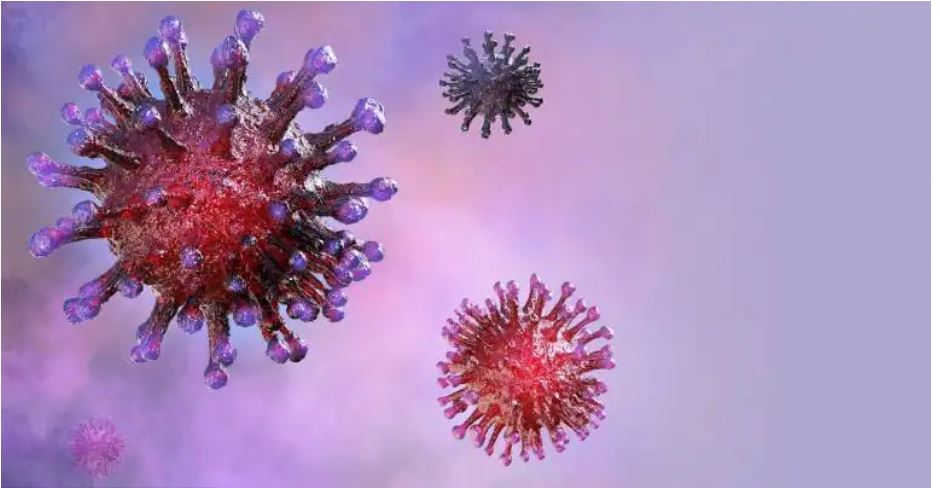
The Origins of Covid 19??

I have no desire to go down a rabbit hole only to dig out some far- fetched conspiracy theory. Having said that, the murkiness surrounding the origins of this global pandemic has to be thoroughly cleared. Did nature or humans open the Pandora’s box in Wuhan? After all, the Wuhan Institute of Virology (WIV) is Asia’s largest virus bank.

The first inklings came out in a South China Morning Post news video. 44 persons have been infected by a mysterious illness in Wuhan, China. All have been quarantined. 11 of them in a serious condition.  No medical personnel infected. Most patients worked in the seafood market where birds and rabbits were also sold. Unlike 2002 SARS outbreak, China has quickly shared all information with the World Health Organisation (WHO). Origins and nature of viral pneumonia spread unknown. Medical researchers across China on the job. The government in full control.

Now for some relevant context. As always, Xi Jinping and his CCP comrades muzzled all information about the early days of the virus. Indeed, China weighed in on the WHO and virtually decided on the Committee to first visit Ground Zero.  There was no mention of any lab escape whilst there was not a single shred of evidence of a natural escape from bats.

The Director General of WHO, Tedros Adhanom played perfect PR for the PR (People’s Republic) of China. In his Jan 2020 visit he expressed full solidarity with his hosts and complimented them on the way they had handled the outbreak. 2 months later WHO declared COVID 19 a global pandemic. The institution has morphed into a public-private partnership-a deviation from the UN Charter.  The USA is its largest contributor with $480 million or approx. 22% of the budget, compared to China’s $89 million. However assessment fees are based on population and wealth of the member nation.  The prospect of China becoming a major contributor is very alluring to the Agency.  It needs China on its side.

The drum beaters for ‘the lab leak’ theory were President Trump and his men.  His Secretary of State Mike Pompeo openly declared that Corona virus had escaped from the Wuhan lab. Trump and the Fox News anchors sneered at ‘the Chinese virus’. The liberal media termed this as a racial slur and immediately dismissed this hypothesis. A bio-science scenario snuffed out by political polarisation. Chinese propaganda had won the day. As for the scientists, only those with no conflict of interest spoke up but their versions had few takers. And with time there emerged a UK variant, A South African variant, a Brazilian mutant and an Indian mutant.

Why is ‘the lab leak origins’ plausible? First, the Chinese response. They delayed giving access to the Wuhan lab for months after the initial outbreak guaranteeing that the lab had been deep cleaned before any forensic analysis could be done. They did not share any raw data of the early Covid patients or any lab records or data logs that were critical to understanding the origins of SARS Cov2. A key avenue would have been to run a genetic sequencing on original samples that the lab was working on. The Chinese sign board at the entrance read- No Entry!!! Trespassing Prohibited!!!

18 months after the first cases on record there is not a single shred of evidence that it was transmitted from bats, pangolins, minks, rabbits or frozen meat. There was some buzz about a few young kids in Yunnan province coming down with fever and breathing problems after a visit to a bat cave. This was said to have some similarities to the corona virus symptoms. But Yunnan is 1800 kms from Wuhan and bats do not travel far. Also, these creatures start hibernating from the month of September leaving no possibility for a colony of bats acting as carriers. Reports also emerged that no trace of virus or its RNA molecule was found in the wet market in Wuhan.

Some more perspective on this Centre of Interest/Intrigue- the Wuhan Lab- will be in order. After the 2002 SARS epidemic, China had become obsessed with developing vaccines and cures for such viruses. The Wuhan Institute of Virology was set up in 2014 through French collaboration and US support. By 2017 both had been side-lined. The Chinese State took over all control and the military stepped in. Maj Gen Dr Chen Wei became a key figure. He had earlier been involved in the research for an Ebola vaccine in Africa. It is from here that rumours started that the lab was being used for bio-chemical warfare- to create weaponised viruses. It is also pertinent to note that it was the military which shut down the lab after alarm signals went out.  Another important player is Prof Shi Zhengli, a Director at WIV, famously known as ‘the Batwoman’. She and her team had performed hundreds of experiments on bats and mice. It was common knowledge in scientific circles that the lab researchers were creating new viruses by using reverse engineering on bat coronavirus. Also that humanised mice in the lab confines were very well adjusted to human cells. Juicing up Viruses is done in labs across the world. The novel corona virus has proved to be far more transmissible, virulent, mutant-prone and fatal than SARS 1 in 2002. This indisputably puts the WIV on the investigative radar. Consider this- SARS Cov1 had 8437 reported cases and 813 known deaths from 2002-2004. It was traced to horse-shoe bats in Guangdong province. The current pandemic has already logged 16.9 crore cases and till date more than 35 lakhs people have succumbed across the world. Merits some serious thought and action, right!

On the 24th May 2021, the Wall Street Journal reported that 3 staff researchers at the Lab were taken acutely ill in Nov 2019 and had to be hospitalised. The official Chinese case of the first novel corona virus patient is the 8th Dec 2019. Over the years repeated concerns had been raised about the bio-safety of the Wuhan lab with the US embassy in Beijing officially communicating it in the fall of 2017. A major lab like WIV should have been rated at P-4 – complying with the highest bio- safety standards. BSL-4 or Bio-Safety Lab -4. But it was opened for international inspection only in the fall of 2019 and the first safety protocols declared.

The first WHO investigation report in Jan 2020 was co-authored by 17 Chinese scientists (??) many of whom worked with State institutions. An important member was Dr Peter Daszak, whose credentials will be discussed later. The lab-leak angle was barely discussed. A clean-chit? On the 31st Dec 2019, the Taiwan Central Epidemiology Command Centre has sent a red-flag message to WHO – warning about the possibility of human to human transmission by the virus. Taiwan? Who? Considered by China as its territory and not yet a nation member of the World Health Organisation. Yet again in late Dec 2019 and early Jan 2020, Chinese virologist Li- Meng Yan (Post- Doctoral fellow at Hong Kong University)  sounded the alarm bells. As part of the first medico-forensic team to land in Wuhan she refused to become part of the cover-up. She had to flee to New York and turned whistle-blower. Amongst her observations- China had deliberately suppressed the number of afflicted patients in Wuhan in the early days. Also that her WHO supervisor told her not to cross the red-line by talking about human to human contagion and the high mutation rates.

A sinister trail leads to Dr Ai Fen, Director Emergency Services at Wuhan Hospital, who went missing for many months. In a story which broke more than a year ago, she referred to an early patient ( early Dec 2019) with signs of flu and influenza who did not respond to the conventional treatment. She had broken into a cold sweat when she discovered symptoms of SARS Corona virus. But her seniors at the hospital muzzled her voice and her concerns about human to human transmissions. The Chinese Dragon ensured her disappearance in the critical months when the pandemic was declared. She reappeared later in strange circumstances with an eye surgery which has left her nearly blind in one eye..

Now to the core problem which may have resulted in the leak of a virulent SARS Cov2. The controversial ‘Gain of Function’ research. The underlying mantra- to get ahead of the virus instead of chasing them down. To protect people from viruses which jump from one species to another. They deliberately set out to create dangerous variants of viruses so that they can study and research them. It is a reverse genetic engineering process. Helping pathogens and micro-organisms to grow, reproduce itself and mutate freely into lethal viruses. A Jurassic Park scenario. Fraught with real dangers and risk. The WIV passionately embraced the Gain of Function Research with China’s ambitions to develop capabilities and be a world leader in this critical field also.

 The story gets curiouser and curiouser. The Wuhan lab was set up in 2014. President Obama banned Gain of Function research in Oct 2014 (except for National Security purposes). In May 2014 the National Institute of Health (NIH) and its affiliate National Institute of Allergy and Infectious Diseases (NIAID- headed by Dr Fauci) gave $ 3.4 million grant to the Eco Health Alliance (ECH) run by Peter Daszak (one of the first scientist investigators to reach Wuhan). ECH sent $600,000 to WIV between 2014 and 2019. The Alliance has 30 member countries. In a recent interview Dr Fauci has denied that these monies were meant or used for Gain of Function research in China. But both he and Dr Daszak remain champions of this risky method of research. In a 2011 co-authored opinion piece published in the Washington Post, Dr Fauci had said as much. So it’s not surprising that throughout 2020 both these top scientists vehemently rejected the lab-leak theory. Further, Global Viral Project has recently sanctioned $1.2 billion for such research projects. One of the important reasons as to why even the media has been blind-sided is deference to the Science experts. Donald McNeil, New York Times Science Reporter has admitted that he had debunked the virus leak possibility out of respect for Dr Fauci’s stand. The latter seems to have done a 180 degree turn in a 11th May 2021 interview to Politifact, “The leak hypothesis is legitimate and needs to be investigated.”

However, what has created a paradigm shift in the approach to the Wuhan intrigue is a 10,000 word article published on Medium on the 2nd May 2021. The writer is British scientist Nicholas Wade, earlier associated with the New York Times and The Science Journal. He has brought the lab-leak hypothesis both front and centre. The title is ‘Sustained Chinese Propaganda blocking Covid origin facts’. He says with simple clarity, “There are two possible scenarios. But if you look at all the evidence and ask yourself which scenario explained all the facts better, it seems to me at least, that the lab leak hypothesis explains it a lot better. In their labs they created viruses more dangerous than those which exist in nature. They argued that they could do so safely and that by getting ahead of nature they could predict and prevent natural ‘spillovers’- the cross-over of viruses from animal host to people. If SARS2 had indeed escaped from such a lab experiment a savage blow back could be expected and the storm of public indignation would affect virologists everywhere and not only in China.”

Another respected authority, Italian Professor Tritto has lent authority to this view-point in his book, ‘China Covid 19, The Chimera Which Changed the World’.  Let me bring in another significant voice Dr Ralph Baric of North Carolina University, an eminent virologist and a fervent supporter of Gain of Function research.  For years he has been a confidant and collaborator of Dr Shi Zhengli, (the Batwoman) Director, Centre for Emerging Infectious Diseases, Wuhan Institute of Virology. He is one of the 18 scientists who on the 13th May 2021 wrote an open letter to The Science Journal seeking a more rigorous investigation into the origins of the corona virus, saying that the theory of accidental release from the lab and a natural spill-over both remain viable. There are lab-leaks every year in some lab or the other but they are contained quickly. For instance at the Fort Detrick, a military lab in Maryland USA. In August 2019 its deadly germ research operation was abruptly shut down following serious safety violations- in particular relating to the disposal of dangerous material. 

So how are the 2 major actors performing in this long drawn drama? WHO has not quite lived up to its name.  After its massive endorsement of the Chinese Government in January 2020 itself, this institution has blundered its way along. After declaring the pandemic in March 2020, on the 4th May 2020, WHO categorically stated that Covid 19 was of natural origin and the lab-leak story was extremely unlikely. On the 19th May 2020, 137 member nations called for a thorough scrutiny and inquiry into the origins of the virus. The organisation suddenly fell into line. In a 30th Nov 2020 statement it said that it was committed to find out about the origins of the virus. Dr Tedros offered hypothesis and promises. Bats, frozen-meat, minks, pangolins, lab-leak were all on the table. What followed, bordered on the ridiculous. Transmission from frozen meat, bats, directly from animals to humans everything was deemed possible. Finally on the 5th January 2021, a WHO delegation of 10 specialist virologists landed in Wuhan.  The Chinese tactics of delay and defy had paid off. The WHO Chief issued a disclaimer, “The mission will not find all the answers.” This investigative sojourn turned out to be a charade. With TV cameras lined up- trips to the WIV and the wet meat and seafood market and the Centre of Disease Control, Wuhan. In this well staged event, China also got all the sound-bites it wanted.  So 18 months after SARS Cov 2 was detected, the world is still waiting for answers. A few days back WHO put out its latest status update-, “We must continue to follow the science and leave no stone unturned.”

China refuses to budge and indeed has dug its heels in as the call for an independent probe escalates. Dr Shi Zhengli’s latest report says that, “The novel coronavirus is closer to pangolins than bats.” On the 25th May 2021, China told the annual gathering of WHO’s decision making body that it considered the investigation in its country complete and attention should now turn to other countries. The Great Wall of China remains impregnable.

Of late, TV channels and media have started saying that ‘the lab leak theory’ has got a new lease of life. Investigation into the origins of the novel corona virus is both legitimate and imperative. If nothing else, to prevent the next pandemic. This can only happen if the Chinese State allows unfettered access to the Wuhan Institute of Virology. Wishful thinking, what?

Why Have We Set the Bar So Low for Our Politicians?

Indian Parliament

India is hailed as the world’s largest democracy. The sheer scale and logistics of our elections have been celebrated in Discovery channel documentaries. Yet 70+ years after independence we have not evolved into a mature, functioning democracy. Indeed, in many, many ways we have lost our way. Hordes of politicians- precious few leaders and statesmen.  Political dynasties sprouting all over, endemic corruption, gross incompetence. Turncoats and floor crossers; Subsidies, freebies, quotas and reservations; vote banks and appeasement and divide and rule. Always in election mode with little time for good governance.  Hollowing out our nation.  Cheered on by a largely discredited Fourth Estate.  Navigated by a mostly pliant babudom of bureaucracy ( with some honorable exceptions).

Why do we give our Netas a free pass again and again? Why do we tolerate their BS? Why do we not hold them accountable as public representatives for their conduct and performance? Look at any other walk of life. A rash bus driver will be suspended- the passengers will ensure that he is not in the driving seat any longer. A construction worker will lose his /her livelihood if not reporting in time for the grind every day. An errant school teacher will be hounded and reported by irate parents. An underperformer at a corporate will likely get the pink slip. A soldier/officer who has breached military discipline will be court-martialled.

We, as a people, are largely to blame- beyond our apathy and indifference. We have this mongrel attitude of putting ourselves down. Plus the colonial/feudal hangover. The people in authority cannot be questioned. So we willingly play into their hands. Region, community, caste or creed. Or a once in a 5 year spread of booze and mutton. We have been manipulated to such an extent that even educated people gloat when their preferred venal leader has outsmarted the tainted leader from the other side. Grandmaster, Chanakya are the accolades. We have become accomplices in a very corrupt system.

It is laughable that the only criteria we have to monitor the performance of our elected representatives is the attendance sheet at the Assembly/House or the number of questions asked or debates participated in. The average attendance in the Lok Sabha is below 80% and the other parameter does not bear scrutiny. Even raising the hand and making a few inane observations count as participation. In no other self- respecting institution or organisation will such a person be invited again to join a meeting or a quorum.

Take the mismanagement of the second Covid surge. Yes, India has a huge population and some resource issues. Nobody knew the second wave would be so virulent. The fact is that the recurrence of the pandemic was entirely predictable after the outbreak in UK & Europe last December. The Central Government was lulled into a false sense of complacency after an effective handling of the first phase. Even the Sangh Chief has admitted as much. The dropping of guard happens when the powers that be are surrounded by Yes Men. No professional and non-political Task Force to tell it as it is. The tone deaf denial mode of the Union Government was highlighted by the prolonged elections in West Bengal, the rallies all over and the hosting of the Kumbh (thankfully, called off after a week.)  Super-spreader events. Any responsible government (including State Governments) would have focused on expanding the number of hospital beds, stocking Remdesvir and other drugs, ramping up of vaccination and planning the evacuation of migrants, if required. The oxygen and ventilator crises could have been averted through stocking up and imports. Supplies from industrial oxygen producers could easily have been diverted for public health use as was done much later in the day. How have Sikh Gurudwaras achieved the miracle of running both oxygen and food langars so effectively? The NDMA (National Disaster Management Authority) and critical units of the Armed Forces could have been put on alert. Again in an established Company, heads would have rolled in the Boardroom. But our expectations from our political leadership is woefully low. Even as the human tragedy unfolds every day, the politicians and their media partners delight in taking pot-shots at their opponents.

And it is not that India does not know how to deal with catastrophes. When a cyclone is imminent and the landfall declared the NDMA swings into action. Evacuation exercises, shelters, food & provisions, medical help, rescue ops – all are conducted humanely and efficiently. With the collaboration of the State Administration, NGO’s and philanthropic trusts. The way Orissa cyclones have been dealt with in recent times should be a matter of pride for us. Far better relief and response than the Americans have experienced when hurricanes have battered their regions.

Good Economics is the best politics. But this seems to be lost on our timid and status-quoist Ministers. Our Hon FM brushed off the issue of fuel price as a ‘Dharamsankat’ (a very difficult decision to make) – a matter to be resolved between Centre and States. So why not do it? Fuel prices are nearly hitting Rs 100/- per litre with nearly 2/3rds going to Central and State Treasuries. Diesel & Petrol prices also fuel the inflationary trend. A reasonable reduction in taxes will help on the ground. If the hike in taxes is to cover-up revenue shortfalls during the pandemic or to create a Crises fund- be transparent about it with the public. Continuing with Covid 19, the NDA administration has not talked about measures to rejuvenate the economy once more normal times are around the corner.. No relief or rebates for the hard-hit industries, sectors or even retail commerce and trade. In India after agriculture the employment generation sectors are Construction, Trade, Transport & Storage, Education, Hotels & Restaurants’ and the retail markets. The economy has to be jump started into resurgence. In the second term of the BJP led government there has been only some noise about disinvestment and privatisation. Again, nobody is seeing the whole picture. For instance, the Japanese and the UAE are willing to invest billions$ into even home and apartment constructions if the law of the lands satisfy them and RERA ( Real Estate Regulatory Authority) is made effective and mandatory at State levels. Homes and flats will be cheaper for the average citizen. But there is a close nexus between politicians, real estate and the mafia. FINITO!!! The other reason for the lack of direction is the curious reluctance to seek expert advice from those who do not subscribe to the party’s political philosophy. For instance Gita Gopinath, Chief Economic Advisor to the International Monetary Fund can be roped in for structural and sector reforms; Nobel laureate Abhijit Banerjee should be the go to person for new ways to alleviate poverty.

On the political turf, we still seem to be stuck in the 70’s-90’s period when the Congress called the shots. Vote bank politics, reservations, engineering defections and horse-trading, imposing President’s rule and unleashing Central Investigative agencies on opponents; the winning formula of caste, creed, money and muscle; getting TV channels and media on board. The BJP and the regional parties have fully espoused the Congress playbook. The GOP may be in decline but their machinations endure. Verily, we may be caught up in ‘ the devil and the deep sea’ syndrome.

The only glaring difference is that the power game has become much polarised. With the deaths of Shri Arun Jaitely, Madam Sushma Swaraj and Shri Manohar Parrikar the BJP has lost the senior leaders who could reach across the aisle and have a dialogue with the other side. The ruling party has to realise that it governs the country and not just those who voted for it. The ‘Sabka Saath, Sabka Vikas, Sabka Vishwas’ slogan has to have a genuine ring about it.

Political and personal attacks have reached the nadir- across the political spectrum. Such language will not be tolerated in any other space. Our ministers & parliamentarians simply shrug it off and say that they have been misquoted or even dig in their heels. The regressive comments made about women, dress-sense or food habits do not fit in with India 2021. These motor-mouths are not even rapped on the knuckles let alone fired, suspended or disqualified.

The mishandling of part 2 of the pandemic has brought the Hon PM Modiji’s government to its lowest point since 2014. Of course, the opposition and their cheer leaders are gloating. But it is also a loud wake- up call which they can ignore only at their peril. If they don’t see the real picture, the road leads downhill. It will be a hat-trick of misses since the majority governments of Mrs Gandhi in 1972 and Mr Rajiv Gandhi in 1984. The power to achieve a Greater Good will be wasted again.

The NDA Government does have some bold decisions to its credit. Can it harness the same resolve and its majority strength in both houses to push through some vital reforms?  The expose of the rotten politician-police nexus in Mumbai underscores the imperative need for Police Reforms. Till now, all parties have ‘Copped Out’. What better than to have the Cops serve their venal interests and boost their power.  A Supreme Court Judgement of 2006 attempted to move the needle a bit. The Soli Sorabjee Commission (2015) made 7 recommendations to kick-start reform. Constituting a State Service Commission to set broad policy guidelines, ensure functional space for the police and to evaluate their performance. At least a 2 year tenure for DGP’s, SP’s, Station Heads. To separate the Investigative and Law & Order functions of the force. Set up a Police Est. Board to independently decide on the transfers, postings and promotions at least up to the DSP level with recommendatory authority above that.  Likewise a Police Complaint Authority to which the general public can have easy access to. At the Central level a National Security Commission would take up the responsibilities.

The working conditions also shout out for change. India has only 198 policemen for every lakh of population. Even the most conservative bench-mark is 275. Constables work 14-16 hour days with no over-time. Service and housing conditions are pathetic. There is little dignity in wearing the uniform at their level.  There is no career path to speak off. Operational budgets are so tight that petrol/diesel is often filled in police jeeps by some ‘business cronies’ or by heavy-handed tactics.  Even today in some States the force works at only 75% of the sanctioned strength.

A lot of lip-service has been paid to the cause of 1/3rd reservation of seats for women in the Lok Sabha and the Rajya Sabha. The UPA Government had tried to introduce the bill but threats of withdrawal of support from the Samajwadi Party and the Rashtriya Janata Dal made it a non-starter. In Jan 2019 women representatives from across parties in the Rajya Sabha appealed to PM Modiji to get the Bill passed with his majority force. The sooner this becomes a Law the better. Yes, some of the women candidates will be proxies for their political families. Some MP’s may turn out to be incompetent for the job at hand. But greater women representation will usher in more decorum and dignity in these Chambers and going forward more diligence and responsibility.

In 1970 the Wanchoo Committee report raised alarms as to how black money had permeated our politics. The Vohra Committee Report of 1993 was titled ‘ The Criminalisation Of Indian Politics.’ It is said to have even spelt out the politico-bureaucrat links with the D Company. It is not surprising that only 11 pages of the report were tabled in Aug 1995 in the Lok Sabha. The more than 100 page report was buried. Clearly, there is Honour Amongst Thieves. Politicians across the gamut know how to take care of each other, especially the Big Fish.

The Aam Aadmi Party was born out of an Anti-Corruption crusade. But in the Delhi Assembly elections of 2020, nearly half of their candidates had criminal cases against them. 116 BJP MP’s (39%) in the Lok Sabha have criminal charges on their records and with Congress sharing space with 29 tainted MP’s. In the recently conducted polls in Kerala, Tamil Nadu and West Bengal 71%,60% and 49% of the winning coalitions boast of criminal charges and quite a few of a serious nature. ( As per media sources and electoral news reports gleaned on the internet). So whether it is the disciplined cadres of the BJP or the holier than thou Comrades, criminality is a common theme. It is the winnability factor which has sullied our electoral process. Adding Money and Muscle to the earlier caste and creed to intimidate, buy, and steal elections.

The response from the Hon Supreme Court and the Election Commission of India (ECI) has been disappointing. A declaration is all that is needed, courtesy the political parties. They have to detail the criminal history of their candidates on their official web-site and justify why they have given them a seat. That’s It.!!!

The lust to get power and retain it takes all our political outfits over the red line-into gross criminality. We are told that we have some really tall leaders, even cult figures gracing our political landscape. With millions of die-hard followers. Why do these dominant personalities not use their charisma to enlist competent, sensible people as their candidates and ensure that the right people are voted in?  Why lug on the same old dirty bag of dirty tricks??

Black money is the other insidious influence on our democracy. The undisclosed wealth in India has been officially estimated at 15% of the GDP. That we are a cash economy helps. A rational mixture of reduced income and consumption tax will spread the tax net considerably. Per other researchers our parallel economy is closer to 25% of the GDP. Indian money parked in Swiss and other off-shore banks is said to be in the range of $1.5 to $ 2 trillion. Now our super-rich are actively looking at buying Residency and Citizenship in St Lucia, St Kitts, Antigua, Malta and Cyprus. Of course, the UK remains the haven for our fugitive financial criminals and the extradition of Nirav Modi and Vijay Mallya will be an achievement, if and when it happens.

Although tricky to monitor, poll funding should constantly be under the scanner. It represents another bane of our electoral process and tells why the quality of the representatives is so low. In France, business is barred from political donations to avoid the mess of special interests or in Indian lingo, ‘crony capitalism’.  Individual contributions are limited to 7500 euros per year and if exceeding 1520 euros have to be made by cheque. Regular payments by the registered party members make up around 35% of their funds. In the Presidential elections the State reimburses 20% of the campaign expenses of all parties. This % age goes up with %age of votes and seats won. If India has to shake off the murky sources of election monies, the ECI+ SC+ lawmakers will have to roll out a viable model. The ECI observation that the average election spending per candidate is around Rs 40 lacs cannot be taken seriously.

The last of this wish-list pertains to re-structuring of our creaking judicial system. Inefficient and overwhelmed. Out of the 4 crore cases pending, the District and Subordinate Courts are submerged by 75% of them. Litigation by the Government Departments is high accounting for almost 50% of the cases and many Dept. vs Dept. Our country has only 21000 judges where there should at least be 40,000. The Indian Judicial Service does not attract the best talent and the competence of the judges in the lower courts is not up to the mark. At the HC and SC levels there is a ? on the transparency of the process of appointment of the Judges. The bottom-line is that neither the Centre nor the State is interested in increasing the spending on this vital pillar in our democracy. Budgetary allocation varies from a pathetic 0.17% to 0.40% of the budgets. Faith in our judiciary is at its lowest. We acutely need more Fast Track Courts and Tribunals, Lok Adalats and Gram Nyayalayas. It has also not sunk in that this dubious track-record adversely impacts the flow of foreign direct investment in India.

This lethargic machinery caters to the under-trials- a whopping 70% of the approx. 4.75 lakh prison population in India. The Prison Report in 2019 has said that 65% of them have already spent more than a year as inmates for petty and minor crimes. The poor and the illiterate can’t afford bail. Why a sweeping decision cannot be taken by the Law Ministry with the guidance of the Hon. Supreme Court to release those who have completed 85% or more of their maximum expected term of imprisonment. Let’s take a leaf from the recent Supreme Court order to release 568 prisoners held in Kerala jails on parole and another 350 on bail. The objective-immediate release of the prisoners to avoid overcrowding of jails in the wake of the unprecedented spread of the pandemic.

Indian democracy and its institutions require urgent overhaul. Request the Hon PM Modi’s Government to use their majority to push through these reforms. There will be a lot of resistance from within and without. No matter. They have another 3 years to go and what better and enduring legacy to leave behind or take forward.

Is the Indian Cricket Team on the Cusp of Greatness?

(File image: Reuters)

After the miracle Down-Under and the wins against England at home, many pundits and fans have already anointed India as the champion cricket team. Ravi Shastri’s bombast adds to this somewhat pre-mature exuberance and celebrations. However, Ian Chappell’s recent observations brings a positive perspective and a lot of cheer and hope for the Indian cricket follower. “India have finally got the equation right and as long as they can avoid the pitfalls often associated with continuing success, they are better equipped than any other team to produce an era of dominance. The rest of the cricketing world.Beware!”

To be hailed amongst the all-time great teams India would need to show its class against quality opposition on their turf. And demonstrate supremacy on home soil. Really perform on the big occasions. Across the 3 formats- Tests, ODI’s, T20 cricket.

An objective look at our recent track record against the SENA nations (South Africa, England, New Zealand, Australia), shows that Indian cricket still has much to conquer. (0-1) Australia in 2015, (1-2) SA 17-18, (1-4) England 2018, (2-1) Australia 2018 and (0-2) New Zealand 2019-20. The Australian tour win be seen in the context of the host side shaken by the sandpaper-gate scandal and without their best batsmen Smith and Warner. Nine of our overseas Test wins have been against Sri Lanka (5) and the West Indies (4) languishing at the bottom of the table. Also take cognisance of our semi-final exits in the 2016 T 20 WC and the 2019 ODI WC.

The West Indies cricket team under Lloyd and Richards dominated cricket from the late 70’s till the end of the 80’s. They comprehensively won on all the Australia tours, only drawing the 1981-82 series (1-1). From 1976 onwards, they beat England in England decisively including a 5-0 blackwash in 1984. India, considered a difficult place to tour, lost (0-3) in 1983-84 followed by a (1-1) draw in 1987. Under Viv Richards they did not lose a Test series from 1984-91.

The Windies transformed themselves from a bunch of easy-going Calypso cricketers to a charismatic band of winners. Their sheer athleticism, ability to play exhilarating and attacking cricket, improvise and control the game changed cricket itself. The lethal pace quartet revolutionised the sport and the Caribbean impact was such that to this day cricket buffs can recall the names of all the players  in their squad and not just the marquee ones.The men in the maroon caps had also won the first 2 editions of the ODI WC in 1975 and 79 before losing to India in the memorable final in 83.

The Aussies under Steve Waugh and Ricky Ponting were world beaters for almost a decade. They won the ODI trophy in 1999, 2003 and 2007. Awesome!!! Championship titles in 2006 and 2009. Their record in the other SENA countries is impressive. Under Waugh they won 8 out of 9 Ashes Tests, losing only one. Also, he led them to 15 of their record 16 consecutive  victories. England beat Ponting’s XI in a thrilling 2005 Ashes series (2-1) but they exacted a 5-0 whitewash revenge at home in 2006- 07. The stamp of Aussie dominance can be gauged by the fact that Ponting is the only cricketer in history to be a part of 100 Test victories. The next 6 top players with most Test wins are all Australians who were intrinsic parts of the great teams of the late ‘90’s-2000’s.

This Aussie era was marked by ruthless efficiency and driven by cold-blooded scientific analysis and planning. Sledging also reached its peak as winning was everything. But other than Waugh and Ponting others like Gilchrist and Hayden and McGrath and Warne have also left huge shadows on the cricketing grounds.

A few interesting nuggets for Indian buffs. Waugh’s winning streak ended at the Eden Gardens on the classic tour of India in2001. (2-1 for india) The Aussies could not breach the Last Frontier. Ricky Ponting never won a Test match in India, played 7 and lost 5. But under his captaincy from 2005 to 2008 there was a second incredible show of dominance over 22 undefeated matches and 20 wins. India again played the Spoiler at Perth in one of Indian cricket’s most famous overseas wins.

2008-14 was the golden age of Spanish football.  Spain topped FIFA rankings for 6 years winning the UEFA Championships in 2008 & 2012 and the FIFA World Cup in 2010. The first team to win 3 consecutive world trophies. From 2010-13 they went undefeated for 29 games. And the Spanish team scored the highest maximum points for WC qualification- 30 out of 30. The star players were mainly drawn from Barcelona and Real Madrid, bitter rivals in the domestic La Liga. But they combined as a team at the national level with the Tiki Taka style of play of short, quick passes. Retaining possession of the ball, wearing down and opening up the opposing defence and then shifting gears. They took the game to another level with their precision, well-oiled football.

After watching ‘ The Last Dance’ on Netflix, the glorious story of the Chicago Bulls stays with you. The treble NBA championships from 1991-93 and an euphoric encore from 1996-98. Although the Bulls have become synonymous with Michael Jordan, it went beyond MJ. The coach, Phil Jackson, created a great team around MJ for the first hat-trick of trophies. When MJ came back from retirement he was moulded into the ultimate team player with the likes of Scottie Pippen, Rodman and Toni Kukoc playing critical and even game winning roles. The dissipation and fall of the team due to the whims and ego of a General Manager and a pliant owner is both poignant and educative. Great teams are very difficult to build. Once they happen and come together they find a life and synergy of their own.

Sunil Gavaskar believes that India has a great team. He comments, “A captain is always as good as his team and he has a terrific team under him. The full balance of the team has been fantastic. When you have something like that you will win more matches than you lose.” He continues about the “terrific opening batsmen, a very good middle order and a bowling attack which has most variety. A wicketkeeper who is very good and who can come down the order and pummel the bowlers.”

Indeed, the bench strength is deep and impressive. We have 2/3 more openers who can take on international attacks. There is strong competition for the middle order slots. A pool of good all-rounders led by Jadeja lends flexibility to the team. A fit and energetic fielding side- thanks to the example set by Kohli and the demands of the IPL. A potent fast bowling battery plus an array of good spinners to choose from. And the dashing Pant has to keep improving as he has Samson, Rahul, Karthick, Saha breathing down his neck to don the gloves. Indian cricket has never had it so good, verily, a plethora of resources.

Behind the scenes, Indian cricket owes a debt of gratitude to Rahul Dravid. Whether at the Cricket Academy or at the U-19 level, the break-out youngsters have been groomed and mentored by this cricketing legend. Young, raw talents have blossomed like never before.

The X factor to make Indian cricket the force that it is- is the fast bowling arsenal. We have at least a dozen bowlers in domestic cricket who can bowl at 140 kmph plus consistently and make the batsman hop and duck. A far cry from the days of Saeed Ahmed Hatteea (a Bombay quick) who was advised by shaken batsmen to cut down on his speed so that he would not burn himself out.

Bharat Arun, our bowling coach, believes that’ over the last 2-3 years Indian pacers have mastered the art of bowling fast, pushing for speeds of over 140 kmph. They have become fast and lethal and most importantly consistent in maintaining fitness which is a crucial issue for speedsters. Bumrah, Shami, Siraj, Yadav and Bhuvi have troubled batsmen in international cricket irrespective of playing conditions. They have hugely influenced Team India’s success to become a top-ranked nation in cricket.’

The only other ingredient for continuing success is team spirit and the hunger for wins. As shown by the Windies teams of the 80’s, the Aussies under Waugh and Ponting, the Bulls era in the 90’s and the golden period of Spanish football. The fairy-tale victory Down Under by Rahane’s depleted team have many lessons to take forward. About getting all players on board, playing to their best potential and at times even out of their skins.  Team Spirit adds an extra dimension of its own to team performance. Capt Kohli should reach out and tap into the cricketing brains of Sharma, Ashwin, Rahane and Bumrah in both strategizing for and reading the game.

2021 may well be the watershed year for Indian cricket if events unfold as per schedule. First, the World Test Championships at Lords vs New Zealand on the 18th June 2021. Followed by a gruelling 5Tests tour of England. To cap it all, the World T 20 tournament at home from Oct this year. If the Men in Blue win the Lord’s contest, have a good English tour and lift the T 20 cup, then they are on their way to the Hall of Fame. And we will be ushered into an exciting and enchanting Era of Indian cricket.

What the ISMS!!!

Photo by Jack Hunter on Unsplash

Let’s take a look at the Ideologies and Doctrines which have dominated discourses and radically shaped the world- geopolitically, economically, culture-wise- over the last 100 years. Whilst science and technology, IOT and social media have made today’s world a different place, in many ways we are stuck with the same ‘Isms’ albeit in variant forms. What the ‘ Isms’. Time to revisit these long-held and almost sacrosanct beliefs. Review how they have stood the test of time and actually fared in practice. Are they still effective and relevant or past their shelf-life.

I post this blog as a student and an observer. Recommend that you take it with A Fistful of Salt.

Capitalism, we have been told, is about free markets with limited government intervention. Defined by the profit motive of entrepreneurs and corporates, freedom of consumers to choose goods and services, fair competition(?),  flexible labour markets (!!), robust finance sector and free trade. The Capital of this ‘Ism’ is the USA. It has been said that if Wall Street sneezes the rest of the world catches a cold. The $ is the global and petro currency. From Europe to Japan to China and Saudi Arabia trillions of dollars have been invested in US Treasury bonds, real estates and the US stock market. Silicon Valley rules the roost in the IT of things. A galaxy of American brands shine over the world. At $ 22 trillion the US economy accounts for 25% of the world’s GDP. The wealthiest, most powerful nation in history. A roaring success, right???

Not quite. Almost 40% of the US population live in poverty. Another 10% hold on to 2 jobs to put food on the table and send the kids to school. The proportion of middle class (the weather bell index) has fallen below 50% over the last 5 decades. Real Income remains stagnant at the 1989 levels. More than 20% of the adults are illiterate. College grads carry a staggering burden of $ 1.3 trillion debt. Amongst developed nations the USA ranks a poor 15th in healthcare and services. Yet, yet … in 2020 the richest 400 Americans paid tax at a lower rate than any other section of the society.  Unbridled, deregulated capitalism was unleashed by the economist Milton Friedman and President Ronald Reagan. (Curiously around the same time the movie ‘Wall Street’ was released with the Gordon Gekko character saying, “Greed is Good.”) This led to the meltdown of 2008. The US government bailed out the ‘Too Big to Fail’ firms ($ 700 billion program) and their CXO’s walked away with fat salaries and bonuses. Sadly as millions across the USA and the world lost their jobs, pensions and homes. The corrupt nexus between Capitol Hill, the White House, Wall Street, the media houses and the Ivy League experts is out there for all to see.  As is the plight of a worker who does not even get the time to pee as he sweats to keep the line moving. Did I say minimum government intervention, earlier on. It is the irony of ironies that the Biden administration has got a $ 1.9 trillion relief bill passed to help out millions of ordinary Americans caught up in the Covid crises. The Federal administration as the Saviour. What the ISM!!!

The Russian Revolution of 1917 led by Lenin brought the Communist Manifesto into practice and it shook up the world. The doctrine quickly took over Eastern Europe, parts of Asia, spread to Africa and Latin America with Cuba becoming a flag bearer and a flash point. The footprint grew rapidly. A Communist State became a state that was administered by a single party-guided by the Marxist/Leninist/Maoist philosophy.

The captivating charm of this philosophy lay in its egalitarian, humane and idealistic welfare promises. A better socio-economic order. Remember the oft quoted definition of Communism, “a theory or a system where all property is owned by the State, where each person contributes according to their ability and gets according to their needs.” Intellectuals, academics and activists in Europe were swept away by the fervour. A few decades later the bearded guerrilla Che Guevera was romanticised around the world with his face adorning T shirts and jackets. As Chairman Mao had said, “Power flows from the barrel of a gun.” PM Nehru was a great admirer of the Soviet Union and the Stalinist 5 year plans. As the years rolled by, many in India- politicians, bureaucrats, professors, economists, writers and activists bought into the Vodka fuelled narrative. The hangover still lingers on. Only today the General Secretary of our communist parties sits in Delhi whilst the Chairman sits in Beijing.  West Bengal, Kerala and Tripura have had leftist governments with multiple tenures.

How did the Utopian ideal work on the ground. China’s stupendous economic growth over the last 40 years has been driven by a mutant Ideology. China and Russia still remain dominant military and nuclear powers. But after the collapse of the Soviet Union, Russia has struggled with its economy which is heavily dependent on oil, natural gas and minerals. An embarrassing fall for a country which till 1989 was the other super-power. East European nations- earlier a part of the Iron Curtain- are still struggling to play catch-up with their Western neighbours. The case of the 2 Germany’s is stark and glaring. Even after nearly 4 decades of re-unification and an infusion-aid of $ 2 trillion, East Germany has twice the rate of unemployment and lags behind in wages to the extent of 20%-40%. The meltdown of the oil rich Venezuela is another example of the collapse of the command economy model. Castro’s Cuba has done well in health-care and education. As is the case with the Indian state of Kerala and esp. on the literacy front. The Naxalbaris of the late 60’s with their violent protests did augur in substantial land reforms in West Bengal. The State became a communist bastion for 3 decades. Today the Naxal movement has degenerated into domestic terrorism funded and armed by China and Pakistan. On the side, they have evolved into a Mafia group deep into an extortion and protection racket and illegal trading.

The only Communist wickets left standing are China, Cuba, Vietnam and North Korea. Vietnam’s economy is picking up pages from the Chinese model. North Korea is the worst embodiment of the communist practice- a Hermit Kingdom run by a cruel dictator, a wannabe nuclear power with millions living in poverty and misery. The really dark side of communism is not as freely discussed as it should be. Probably because so-called intellectuals and left leaning activists still control the narrative in India and many other parts of the world. Millions and millions have been brutally killed by the likes of Stalin, Mao, Pol Pot in Cambodia and the Dear Leaders in North Korea. Surprisingly, these mass murderers continue to be deified and have their portraits in Parliament Halls, Public offices and even Universities.

Let the final word rest with George Orwell’s classic ‘Animal Farm’ – the best unravelling of the Communist culture and state of mind. What starts of as the Utopian ideal of creating a paradise of progress, justice and equality where all are happy and free but fatally ignores the human weaknesses for power, control and greed. Alas, the revolution against tyranny leads to totalitarianism, just as terrible.

Deng Xiao Ping who followed Mao jettisoned the Great Leader’s Ideology. Sacrilege! His oft quoted mantra- “Black Cat. White Cat. What does it matter what colour the cat is so long as it catches mice.” Just 40 years later, China is the second largest economy in the world at GDP $15 trillion. In purchasing power parity (PPP) it has overtaken the USA. State Capitalism. The factory to the world. The capital of off-shoring.  Leveraging cheap labour to power the world’s largest brands and plants. Benefitting from and eating into the tech transfer. Transforming this huge country into the world’s largest market. But it continues to be governed with an iron fist by a single party with a strong man at the head. The cutting to size of Jack Ma of Alibaba fame shows who’s the Boss. This is Bian ti, the Chinese variant of capitalism. Ironically this rapid, exponential growth has rolled out because of the authoritarian regime. The Comrades have bulldozed their agenda through, lands and communities cleared overnight to set up factories and for infrastructure projects. No courts, no opposition, no activism.

This massive economic surge has propelled more than 30% Chinese into the middle-class., majorly in urban areas. Basic health-care insurance covers have been provided to all citizens.  Mandatory school education from the age of 6-15 years has also been a game changer.

But there is much that is hidden. The yuan is a tightly managed currency and the Communist Government manoeuvres to keep it low. Off late, there have been rumblings in the US and Europe about the theft of patents and IP rights. The Chinese have stolen everything from the formulae for drugs, technology for mobiles and blueprint for heavy equipment. The reason for joint ventures with a not so subtle aim to access state of the art Western and Japanese technology. And there is the controversial issue of large scale dumping- selling its oversupply in overseas and Indian markets, depressing prices and hurting indigenous manufacturing. There are many many secrets behind the Great Wall- forced labour from rural areas on construction sites, sweat -shop factory hubs and the origins of the Wuhan virus. The Comrades and Capitalists have much in common- Greed and a lust for power. Human nature being what it is. With Big Brother watching, corruption is rampant.

Europe is deemed to be the cradle of liberal thought and practice with England and France claiming to be at the vanguard of the movement. Liberalism can be broadly defined as a socio-economic and political philosophy which promotes democracy, civil rights and individual liberties and free enterprise. A liberal being a person with an open-mind -receptive to opinions, ideas and lifestyles different from one’s own. The report card has been impressive on the whole-voting rights for adult population, gender equality, marriage equality, racial equality, environmental justice, minimum wages and stipulated work conditions, labour unions and constitutionally limited and democratically elected governments.  Positive Progress.  But any thought, however virtuous and taken to the extreme can be counterproductive. Look at France today. Unregulated freedom of expression has sparked an outrage amongst millions of Muslim faithful around the world. On the other hand French liberals have reset themselves into the belief that these communities should espouse the values and culture of the country they are living in and integrate themselves into the mainstream to the extent possible. Now these are being implemented through laws. Across the continent also there are many European leaders and peoples who now believe that their way of life is being undermined and challenged by these migrants- The Other. Attitudes are hardening and suspicions are rising. Is this ‘The Clash of Civilisations’ as predicted by Samuel Huntington..

Also genuine liberal thought is on the wane. Reaching out to understand where the other is coming from is a rare occurrence. Objective and reasonable opinions and analysis based on sound research is no longer the norm. Self -proclaimed liberals and activists are often aligned to a political party or ideology or an NGO or a think tank with an agenda of its own.  Why are our progressive intellectuals silent on the mass persecution of Uyghur Muslims in the Xinjiang province of China.!!??  The basic premise of an open mind-set has long been jettisoned.  Even once trusted institutions like the BBC and The New York Times have lost a lot of credibility. The latter, for example, provides a platform and $money to discredited Indian journalists to vent their opinion and bias. No fact-checking. No one like Mark Tully (the famous BBC correspondent in Delhi) to deep-dive and ascertain the real situation. India and the world need the conscience-keepers and the sane and reasonable voices more than ever. May their tribe increase. However, liberalism has to reboot itself to be an effective influence and to resonate across borders.

For the concept of secularism, let us turn again to a French philosopher and sociologist Jean Bauberot and the French word ‘laicite’ with its anti-clerical roots.  It refers basically to the separation of State from religious institutions. No domination of the political sphere by any religious community or entity . Neutral State in an Open Society. In  increasingly plural and diverse nations Secularism seeks to maximise harmony and minimise conflict. Another exploration of the term brings out 3 core principles-institutional separation, freedom of conscience and belief and no discrimination on the grounds of religion. “These conditions allow for the competing concepts of the good life to be pursued in society.”

In practice, this philosophy ran into a lot of hurdles. The clarion call for Religion to be entirely excluded from the public square and manifest solely as a private matter remained a non-starter. Human nature being what it is and the power of religion being what it is. For centuries, the State and the Faith had fed off each other and used each other to consolidate their powers. It is to Dr Ambedkar’s credit that he realised the impracticality of introducing the word ‘secular’ in the Indian constitution. Mrs Gandhi added it in the year 1976 for political reasons and political capital. Taking a leaf from the playbook of our colonial masters, our GOP (Grand Old Party) mastered the art of Divide and Rule, Vote Bank politics and selective appeasement on regional or religious grounds. All political parties play the same psuedo secular card today. An idealistic and progressive Idea  remains unrecognisable – hijacked and manipulated beyond measure. In the Indian context we have to reclaim the soul and spirit of our secularism-Genuine tolerance for all religions rather than separation from the temporal – with a secure place for even non-believers.

At the global level also, Secularism has been resisted and derided. It is seen by many as a maligned Western concept. When the burkhas and veils were banned in many European nations the International Humanist and Ethical Union of the Middle East protested that this was not their secularism. The powerful Evangelical lobby in the USA supported the venal Trump to move the needle on their agenda- Anti abortion and anti LGBTQ. Even a much debated issue like Mercy Killing remains on hold because of the overlap of Religion and Public Policy. It took Independent India seven decades to ban a practice like the Triple Talaq, which had already been rejected by many Islamic countries. The issue is complex and sensitive. It is not helped by the fact that many religions have themselves fragmented into different denominations and there is even discrimination and hostility amongst some. As the churning in Europe demonstrates it is difficult to get all sides on board to agree to a common definition of Secularism for the Greater Good.

Another ‘ISM’ in currency is Internationalism- a political movement that advocates greater economic and political cooperation amongst nations of the world. It is meant to promote peace and security, economic stability and humanitarism. Organisations like the United Nations, World Bank, ASEAN, OECD, WTO, WHO, UNICEF are the tangible results of this thought. Single nation states cannot resolve systemic global issues like climate change, nuclear disarmament, cyber terrorism, global tax avoidance, pandemic and the catastrophe risk. These agencies have stepped in with varying degrees of success. For instance, climate change has been addressed through the Kyoto Protocol and the Paris Accords. The latter had 195 signatories- a possible tipping point to take on this crisis. However the terms are not enforceable on the nation states and any progress is subject to the focus/ whims of the large and powerful signatories. President Trump withdrew the USA from the Paris Agreement and also the World Health Organisation. Likewise, the World Trade Organisation has to a large extent stabilised global trade through agreed upon terms which are fair and remove inequities amongst trading partners. It has also played a significant role in the reduction of trade protectionist policies. But the large scale dumping from China continues to disrupt other markets. The World Bank has helped nations recover after the global recession of 2008. Peace keeping forces have played a stellar role in controlling hostilities in war zones. The International Red Cross has gallantly stepped in during the Ebola pandemic and in providing humanitarian aid in war ravaged countries. The positives are many. International sports events like the Olympics and the football World Cup have connected countries like never before as have cultural exchanges like music, movies and cuisine.

The downside is also stark. The world is a more troubled place and new blocs are forming. There are many hotspots and prolonged localised wars. Yemen and Syria are truly cursed lands. The scourge of terrorism continues unabated. North Korea continues to be a nuclear rogue whilst the Iran deal may be back on the table. COVID 19 has again demonstrated as to how the rich countries call the shots. They have pre- booked and stocked the major supplies of vaccines and left the rest of the world to their own fate. The pandemic crisis has been gravely compounded by the WHO chief playing PR for the Chinese and playing down the gravity of the virus.

Colonialism did not die with the British Empire. The USA stepped in with its subtle model – leveraging on its 800 military bases across the globe, its industrial might and its control over the international finance agencies. China takes the baton forward in a refined form. The Belt and Road initiative is one with its expansionist dream of a great Chinese Empire. Pakistan and Sri Lanka and some East European and African countries will soon be reduced to debt-ridden vassal states. China will have unfettered access to raw materials, minerals, trade routes and markets. As British historian Mark Mazower aptly observes in his book ‘Governing the World’, “Internationalism was first and foremost a Euro-American project.  It was a gift the West promised to give the Rest but like all Gifts created its inadequacies and dependencies.” National Interests and ambitions of these dominant powers plus geo-politics will determine what the future of the global order will be. They guard the same with intense zeal. How else does one explain that India as the world’s largest democracy with a 1.3 billion population and the 6th largest economy in the world does not have a permanent seat at the UN Security Council.

And so we wait for the next great experiment which will enamour the world.  Hope it has Humanity at its core. Where basics like food, shelter, health, education, public utilities, law and order will co-exist with entrepreneurship and innovation, aspirations and wealth creation. Where quality of life will also factor in the Happiness Index. The signs are out there with Canada seriously debating about Universal Basic Income and New Zealand raising its minimum hourly wages and taxing its 2% super-rich at 39%. Hopefully, they will bridge the gap between theory and practice by factoring in human nature. And hark back to another Deng Xiao Ping mantra “Of crossing the river by touching the stones.”  Meaning gradual implementation of the reforms or models to know which policies produce favourable outcomes and which do not before they can be implemented across.      

The Gift of Captaincy

On the 19th Jan 2021, the Indian cricket team breached the ‘Gabbatoir’ in Brisbane, Australia. The hosts had last lost a Test there in 1988, against the Viv Richards led great West Indian side. This series win has caused mass frenzy amongst the Indian cricket fans and pundits alike. ‘The Underdog Miracle’, ‘Against All Odds’, ‘A Fairy Tale Win’, ‘The Gabba Heist’ and ‘The Greatest Comeback in Cricket History’ are just some of the awe-struck and superlative reactions and headlines. Social media has gone berserk. After the shameful 36 all out debacle at Adelaide, to pull off the stunning win at the MCG, fight to a stirring draw at Sydney and finally that wonderfully scripted victory at the Gabba seemed unreal and straight off the ultimate feel-good movie triumph. Some of the Indian papers summed up the cricket series thriller with ‘Ajinkya’ (Invincible).

Delve into the sub-texts and one discovers even more astounding layers to the story. The Men in Blue were truly Down-and-Under after the humiliating 36 in the First Test. On Boxing Day at the MCG, the tourists were already depleted without their captain and best batsman and some other major players hobbling along. But then each session, each innings and each Test called out for its own heroes. Debutants and novices and net-practice bowlers rose to the occasion and the national call. As did the few seniors remaining- Rahane, Pujara, Bumrah, Ashwin and Jadeja.  For the decider match, the last three were also ruled out because of injuries. The India XI were reduced to the ‘Hardly XI’ as an Aussie paper put it.

So what was the X-factor? Kohli left on paternity leave after the disastrous First Test. In stepped his understated deputy, Ajinkya Rahane. His astute marshalling of his team and calm disposition played a defining role in what played out thereafter. In a blog I had posted before the WC 2019 (Captain Kohli) I had submitted that the best player does not necessarily the best captain make. Kohli’s undoubted greatness as a batsman notwithstanding. Truly MASTERCLASS. Think about Ian Botham’s dismal stint as the England captain before his break-out Ashes series under Mike Brearley.  Kohli is a force of nature. His passion, his focus and his fitness have left an indelible mark on our cricket. RESPECT. However, his hyper temperament does not make him the right man to lead this Indian side into the sacred pantheon of the All Time Great Teams which demand a sterling overseas track record.

This is not a simplistic debate about aggression vs composure. One of our best captains ‘Dada’ Ganguly was aggressive and even dubbed as arrogant by some. At times he wore his heart on his sleeve. But his cricketing judgments remained sharp and the emotional connect with even the younger members added depth and dimension to his leadership. Remember that he steered the Indian team after the infamous match-fixing scandal and also mentored emerging small town players who later became big names.In the Indian context at least, empathy and bonding and understanding make a big difference- on challenging tours and in big-match situations. The dressing-room environment matters a lot. Come to think of it, Rahane did show a quiet, steely resolve backed up by game-plans and with the entire team on board. But in today’s hyped-up times this may perhaps not qualify as aggressive intent.

So let’s look at the Rahane Effect. Brearley in his book, ‘The Art of Captaincy’ says, “That it is not about winning or losing. It’s about getting the best out of the team you have.” Our stand-in skipper did just that- extracted every ounce of performance from his team, no matter what the situation. He was approachable and the team related to him. The grapevine tells us that he did not tell his men what to do. He just gave them space and re-assurance and they responded magnificently. After all, he counted himself amongst them. The team plays under Kohli. It plays with and for Rahane.

The team-huddle; Rahane with a few key words and a composed tone, with Rohit Sharma, Ashwin, Bumrah, Pujara and Jadeja weighing in. Contrast to Kohli. Mostly a monologue – at times peppered with intensity. Is it any wonder that Bumrah walked back with the debutant Siraj to the top of his run-up. Or that the Indian lower-order batsmen refused to give up. Ashwin and Vihari with back spasms and a hamstring problem. Later Thakur and Sundar stepped up to the plate. Everyone’s contribution counted. Rahane had brought in empathy- the emotional quotient- and this resonated with the players. His special mention of Kuldeep Yadav after the Series win was one with this inclusiveness- this Brohood.

He read the games astutely and keenly. Like introducing Ashwin as first change in the 11th over of the game at the MCG. There was moisture in the wicket. It was a tactical master-stroke. He snared Wade and Smith in his first spell. Ashwin bowled a 12 over spell. Yadav 6 overs, Bumrah 5 overs and Siraj 6 overs. The longish spells allowed the bowlers to find their rythmn and work on their plans. The impatient Kohli had been known to change bowlers after a couple of overs if he sensed nothing was happening. Move to Brisbane on the 4th day. Australia comfortably placed with a 100 run lead and all wickets at hand. The Indian captain continued with his 2 slips and a gully field. Looking for wickets to contain runs. And sure enough, the hosts lost 5 wickets- 4 to catches by the keeper and the slips cordon. Or the decision to elevate Pant to the no 5 position at the SCG and Gabba- repaid in full by the game changing 97 and 89 N.O. knocks. On the 5th day at Brisbane as he walked back after a quick-fire innings he told the incoming Pant to bat out the few minutes before tea. Then revert to his natural self with the bat. Rahane’s calculation was that a target of around 145 was gettable in 35-38 overs if they had a few batters striking good. The clear-headed session by session approach. This when most of India was praying that we would hold out for a draw. The gamble of inducting Washington Sundar into the side with Kuldeep Yadav on the bench underlined the serious strategizing for the finale Test match.

His calmness was a major plus and kept the focus in place. After the racial slurs vented at Siraj by some spectators at the Sydney Test, Rahane stepped in. He firmly complained to the umpires and the referee asking that the guilty be evicted. They had come to play cricket but his players had to be respected. Having stood up for his man the game continued. Or his implacable demeanour when a clearly run-out Tim Paine was ruled not-out at the MCG. Virat Kohli would have ranted. Or his own run-out after a scintillating century on the same ground. He walked up to the disconsolate Jadeja at the other end with a pat and a, “No worry. Keep going. The team needs you.”

Lastly, setting an example as a leader. His impactful century (112) at the MCG turned the narrative for the series. The positive cameo knock (24 of 22 balls) after Gill’s classy 91 on the final day of the Brisbane Test showed India’s intent and kept back the Aussies from an all-out attack. The grit and courage of Pujara, the brilliance from Pant and the aggressive burst from Sundar completed the unbelievable last lap for India. The post-match presentation ceremony where he quickly shifted the limelight to his team and the handing over of the 100 match memento jersey to Nathan Lyon showed humility and grace in abundance (shades of Kane Williamson). Even the hard-boiled Aussies have been bowled over.

Contrast this to the frequent chopping and changing of the Indian team under Kohli (where Shastri had been complicit). Rahane benched for the first 2 Tests on the South African tour despite a good overseas record. The ever dependable Pujara dropped from a Test eleven on this important tour.  Now that both of them have become household names-recall these selection blunders. Bhuvaneshwar Kumar out of the second Test after a good show in the first Test. Whimsical, what!! It is commonly accepted by the experts that our disastrous 1-4 sojourn in England owed much to poor team selection. Two of the matches India lost were fairly close and could have gone our way with the right resources at hand.

His misreading of pitches and conditions has become a regular feature. On a dry Southampton wicket he opted for only one spinner- a half-fit Ashwin. The English went with Moeen Ali and Rashid. The Impact Player- Moeen Ali.  At the new Perth stadium in Australia the skipper got carried away by the history of the ground. We fielded 4 fast bowlers. Nathan Lyon gave the Man of the Match performance. Back to England where the defensive field settings allowed the English middle order to flourish and take control of the matches. Even at the IPL level it has been oft been said that RCB would surely have won a trophy by now if only AB de Villiers had been the captain.

Let me bring in Paddy Upton, a renowned mental coach + a professional cricket coach from South Africa to drive home the point. He had been associated with the Indian cricket squad when Gary Kirsten was the coach. His observations, “Kohli has the fear factor making others insecure and even inferior. Under him the team views everyday details as a chore. When people burden their mind it is hard to get them to be free and to play the game the way it works for them. Kohli is very demonstrative- exuberant in his celebrations but also not empathic on the field whilst showing anger or anguish. His team-mates walk on thin ice, afraid of making a mistake. Once a player tightens up he is no longer the player he is meant to be. On the other hand Rahane is equanimous. His calm and general demeanour allows him to be approachable and relatable to the team.  He has fire and courage within him but controlled. That is why they played so well at the Gabba.” And then the ultimate compliment, “That level of camaraderie I haven’t seen in Test cricket for a while.”

What about Kohli’s handpicked coach- Shastri? This Australia tour has been a boon for him-just being at the right place at the right time. Some of the credit will rub off on him and he will milk and spin it for all it is worth. Especially the so-called rousing speech he gave to the team after the Adelaide debacle- wear this 36 as a badge and it will never happen again.  Shastri is the ultimate Indian cricket establishment figure and so no one will call him out. He is an over-rated loyalist who knows which side of his bread is buttered. Remember his bombast before the WC 2019, calling the team the greatest Indian side ever. A side-kick, a cheer-leader for Virat Kohli- it is high time we found a coach with more professionalism and integrity.

Cricket is a game where the acumen and people- skills of the captain (and coach) really matter. And nowhere is this more tested than in a hard fought Test series. This is the Kohli- Shastri overseas record in the SENA countries since 2017, 1-2 South Africa- 18-19, 1-4 England- 2018, 0-2 New Zealand-2020, and 2-1 Australia- 2018. The context for the last Australia tour which counts as his most famous win is that Smith and Warner were missing and the Aussies were struggling to come out of the sand-paper gate cheating scandal. Else, he is the most successful Indian captain because of wins against the languishing West Indies and Sri Lanka and solid performances on home turf.

Indian cricket is now poised on the cusp of greatness. The best fast bowling attack in our history. Match-winner spinning options. Batsmen who can dig in for hours or change the game in an hour. Tremendous bench-strength. Improved fitness and high confidence levels. But if we have to be rated with the great West Indian teams under Lloyd and Richards or the Aussie teams under Steve Waugh and Ponting, we still have much to prove. Consistent winning performances across formats and dominating overseas tours to the SENA nations.

Despite this wake-up call, Kohli will remain the India captain even for the Tests. At the BCCI no one has the balls to out him. Hopefully, the other players will step out of his aura after this seminal series and stamp their own identity on the field. Perhaps, Virat (Colossus) can reach out to Ajinkya (Invincible) to forge a formidable partnership. Hopefully, Captain Kohli 2.0 will inspire and lead The Men In Blue into Cricket’s Hall of Fame for the legendary cricket teams.

What should change is at the Head Coach position. A Rahul Dravid or a Zaheer Khan can play a defining role and balance out the Kohli excesses. Lest we forget, many of the overnight heroes from the recent tour Down Under,- Gill, Pant, Sundar, Siraj-have been groomed and mentored by Dravid at the India A & Under-19 levels.

Indian Cricket is in for some exciting times ahead. Time to take fresh guard, mark the bowling run-up afresh and set the right field.