
The Corporate Quicksand

The Corporate World- swanky glass-fronted buildings, CCTV’s and security guards, luxury cars and SUV’s gracing the parking lot. Marquee IT companies, big name consulting, MNC & Indian private sector banks and insurance companies, sprawling industrial complexes and OEM’s. The Aura and Smell of Success. Ticking all the boxes in the corporate report card- stock prices, market share, profits and branding.

What about the employees who inhabit this world, especially at the middle-management and junior levels. Obviously revelling in their success, thanking their stars and counting their blessings, right? Not quite. There is some starkness behind all the glitter.

Even a few years ago, corporate culture was reflected by a Mission statement. To be the trusted partner for customers: the preferred employer for employees: to protect and advance the interests of the shareholders. Some sense of balance was achieved for all stakeholders and this profoundly influenced the work environment.

Yes, the promoters have invested money in the business and expect a good ROI. They are not here for charity. But the pendulum has swung so much that it is now all about enriching the share-holders. In a competitive market, the customers do figure prominently in the narrative. But it is the employee who actually makes things happen on the ground who lurks insecurely in the shadows. Pause. Some may shrug and say change is inevitable as the Corporate grows big.

It is the time of hands-off Management. Targets are assigned for the various business verticals. Monitoring is done on a daily basis. It is common to get WhatsApp messages at 10 pm at night demanding the day’s results. Workdays are structured around review meetings , con-calls and video-conferencing. There is a cascading effect of pressure on the front-line team. They become the TARGET. The language used can be colourful and intimidating. The middle level executives off-load on them after getting roasted by their bosses.

Perhaps People Management is now looked upon as a weakness. An unproductive area to invest time and energy in. They are being paid well and are expected to deliver always. Never mind that it is these people who have strived to build the brand, joined in the daily grind to ensure the Company’s success. Of course, no Company or even an office can afford to carry dead-weights. The inefficient and the incompetent, the trouble-maker or the unethical will have to go. All this, in the context of normal times.

Listening is no longer the norm. It is a one-way traffic down the line. Not so long ago, leaders used to tap into the ground realities. Find time even for a fresher employee. Go on joint calls. Discuss problems. Find solutions. Encourage. Motivate. Be there during difficult times. Leaders have now mutated into Bosses. They take their cue from the top man and nobody wants to step out of line. Voices of Reason have been drowned out by the noise and rattle of this passing bandwagon. Except the inner coterie, no one knows when their time has come. It is a Catch-22 situation. It definitely gnaws at the souls of the well-meaning professionals.

Where everything is reduced to hard-nosed business numbers, politics and sycophancy thrive. Reliable sources told me about an organisation where the top honcho liked to be addressed as the Supreme Leader or the Great Leader in mails and adulatory speeches. Even PPTs made by the senior management were buttressed with his quotes. Shades of North Korea, what? The world is really getting smaller.

There are Bosses who openly take pride in being ruthless. Survival of the Fittest. Any wonder, that the survival instinct kicks in? As the old nursery rhyme goes, “Yes Sir, Yes Sir, three bags full Sir.” The good men and women within an organisation who are still respected and can make a difference have also thrown in the towel, for now. Their energy has been sapped. They cannot take on the System. The days of think tanks and brainstorming on good ideas and initiatives have long gone. And the sad thought is that many youngsters imbibe these trends and attributes as the lessons of management.

Employee No. XXX has to reach office before the appointed hour. Out-Time is very flexible especially if you are saddled with a bad-boss or are down the food-chain. Not good for your professional health if the Chief thinks of you as a work-shirker. Including travel time, many spend a good 12 hours plus on the job. Add business tours and travels. With very little quality time for family and friends, work-life balance has been reduced to the classic corporate Lip Service. Stress at work plus less time with family makes for a toxic mix. Kids can easily grow up as strangers and it takes a heavy toll on a normal married life.

A fair number of such workers pride themselves on being workaholics. Sincere, dedicated- with whole-hearted involvement. But workaholism is a disease, an addiction which does a lot of harm to the individual. Other than the bad impact of Stress on health, this misled person can never evolve or grow- missing out on many slices and joys of life. Dr Abdul Kalam’s observation is pertinent for the current corporate climate, “Love your job but don’t love your company because you may not know when your company stops loving you.”

Some of the more savvy Corporates are tinkering around without rocking the boat. One hears of good initiatives like mandatory leaves, work from home facilities, cultural events, yoga sessions and the like. But the broader narrative remains unchanged. Monday Blues have become very common. Enjoying work – a disappearing experience. Things have become very clinical and mechanical, impersonal and a tad cold. It is all about NUMBERS. The human touch has been lost.

The advent of technology, innovation and disruption has added to the woes and the grim picture. We have to accept the inevitable. Technology will reduce costs significantly and bring efficiency and convenience of service delivery. The customer also stands to benefit. AI, Bots and Blockchain will dramatically change many of the routine operational processes across industries. But the manner in which some Industry Chieftans, whose words matter, are projecting it is both immature and insensitive with no regard to the collateral damage. Use and throw. The thousands who contributed to making a Company a brand are reaching their shelf-life. No plan B, no up-skilling, no re-deployment, no re-structuring. Tough times ahead. However, the Board is only fixated on market share, valuation and profits. Not on the Greater Good. Not on adding the blessings of their own team to the Balance Sheet.

I remain optimistic that the pendulum will swing back. Good Sense will prevail. Creative CEO’s and CXO’s will buck the trend and revive the balance and fairness embodied in the Mission Statement triangle referred to earlier. Also, a Salute to the few who are not scrambling onto this gravy train. The OUTLIERS. Who continue to acknowledge the contributions of their Team Members. Knowing that a good work environment itself guarantees productivity, consistent results and success.

But for now it’s SHOW ME THE MONEY. Surely a big consulting firm can be persuaded to bestow on the Company- “The Best Company to Work For” Award.

The True Power of Sport

sport

Photo by Antonino Visalli on Unsplash

25th June 1983. As the midnight hour struck, half of Ahmedabad was on the streets. My friends and I must have walked across the city for a good four hours- but with a spring in our steps and joy in our hearts. We soaked in the bonhomie and the festive atmosphere. The street vendors were running out of their delicacies. There was a hunger for more, as Indians savoured a famous victory. Thousands of miles away, Kapil Dev had lifted the Cricket World Cup at the hallowed Lord’s ground, sending much of urban India into delirious celebrations. We could do it! We had beaten the colonial masters on their own turf in the semi-finals and had triumphed over the great West Indies team in the finals. 36 years after independence we were still finding our own identity and confidence as a country and Kapil’s Devils had played a seminal role in a nation’s awakening.

June 1995. The Rugby World Cup in South Africa. Let’s listen to President Nelson Mandela, “Sport has the power to change the world. It has the power to unite the people as little else has…It is more powerful than governments in breaking down racial barriers.” He should know. It was the genius of Madiba to use the 1995 World Cup as a strategic instrument to reconcile the blacks and whites, and bring peace to a country fractured by five decades of apartheid. Just 5 years earlier when Mandela was released from prison the country seemed to be on the verge of a civil war. Springboks, the national rugby team was for long a hated symbol of white supremacist rule. The African National Congress would have liked nothing better than to marginalise the sport- a passion for white Afrikaners. But when Francois Piennar’s team defied odds to beat the seemingly invincible New Zealand All Blacks in the finals, it became the game that healed and united the Rainbow Nation. This was beautifully captured in the movie ‘Invictus’.

Civil War had been raging in the Ivory Coast for 5 years. Enter Didier Drogba, Chelsea star and Ivory Coast forward and the most famous man in the country. After helping the West African country to qualify for the 2006 World Cup the footballer went down on his knees in the dressing room. Surrounded by his teammates on live television, he begged both the warring factions to lay down their arms. Within a week his fervent appeal was heard and a ceasefire worked out. By 2007 Drogba’s call for peace had become a reality.

On the podium after the 200 mtrs finals at the 1968 Mexico Olympics, Tommie Smith and John Carlos raised a black gloved fist as the US anthem was played. This black power salute was to highlight the racial discrimination and abuses faced by their community back home. They also did not wear shoes to show the poverty and neglect of African Americans. This created headlines around the world. As Smith later said, “We had to be seen because we couldn’t be heard.”

A year earlier the most famous athlete on the planet, Muhammad Ali, had refused to enlist in the brutal war in Vietnam. “Man, I ain’t got no quarrel with them- Viet Cong.” As for going to jail he shrugged it off with, “We ‘ve been in jail for 400 years.” Such acts of defiance not only gave momentum to the Civil Rights struggle but also gave a fillip to the anti-war movement gaining ground in the USA.

Sport is a major force in shaping social consciousness and change. In India till the early 90’s the national cricket team was synonymous with the metros- Bombay, Delhi, Bangalore and Madras. Now the second tier and small towns have stepped up to the crease. Ranchi, Shrirampur, Agra,Roorkee, Vadodara, Amroha are all home-towns of well-known India cricketers, some of the Men in Blue.

Adivasis and tribals, forgotten people for centuries, are now being swept into the mainstream through sports academies and disciplines like hockey and archery. Limba Ram a poor tribal and then Padmi Shri awardee from Rajasthan became a breakout star archer in the early ‘90s. Some of our celebrated hockey players also hail from such alienated and exploited communities.

The Phogat sisters from the deeply masochist and conservative Haryana upended all social norms by winning international medals- in wrestling of all sports. They have become the inspiration for many young girls in the region. Driven by their father Mahavir Phogat their story has been well narrated in ‘Dangal’.

The fabulous Mary Kom has brought the beautiful North East into the national consciousness through her boxing feats. PV Sindhu, the 2019 World badminton champion is not only an inspiration to millions of youngsters but has gate-crashed into the exclusive preserve of a few top cricketers as a media celebrity in her own right.

Across the seas, the inner cities in the UK, France, Italy or the US suffer the plague of unemployment, lack of opportunities and crime. Sport plays a key role in reducing crime. It removes young men, the main perpetrators of random crime, from the streets. Kicking a football or shooting the hoop gives the embittered young to experience a sense of achievement as well as an outlet for their frustrations. It provides a positive channel for their restless energy. In India also it has been harnessed to good effect like the heartening ‘Bridges of Sport’ initiative of Akhilesh in the city of Nagpur, which led to India being represented in the 2010 Homeless World Cup.

Then there is the fairy-tale appeal of sports. Mark Edmundson was ranked 212th in the world in 1976 when he won the Australian tennis Open. He also worked as a window cleaner and floor polisher at a hospital to make ends meet. His modest take on becoming the champion, “I knew the game of the top seeds, but they had not seen mine.”

The Brian Clough managed Nottingham Forest were a football team’ of outcasts and strays’ who made people believe in miracles in the 1977-78 seasons. Not only did they lift the First Division title but also the European Cup. Leicester City too in 2016 put a smile on millions of faces by doing the impossible- lifting the Premier League title.

Muhammad Ali’s ‘Rumble in the Jungle’ in Zaire in 1974 was one such story. The menacing George Foreman, with a fetish for KO’s, was in prime form. Ali at 32 in decline and many worried about whether he would survive the punishment. The rest is history. The stuff of sporting legends.

Yes, the sporting world has seen its scandals and shown its dark-side from time to time. Ben Johnson and Marion Jones have been outed as drug cheats. The former Soviet bloc countries have been tainted with state sponsored doping. Many baseball stars in the US came under the cloud for using performance enhancing drugs. Lance Armstrong has been stripped of all his Tour de France titles. On a lighter side, his best-selling auto- biography ‘It’s All about the Bike” is now to be found in the Fiction section of bookstores and libraries.

The football and cricket worlds were especially rocked by the match fixing and spot-fixing sagas. The Italian League came into the spotlight for all the wrong reasons and some top teams had to be black-listed. Even the gentleman’s game fought to regain its credibility but it was shocking to see the skeletons tumbling out of the cupboard. The reputations of powerful bodies like FIFA and BCCI have been sullied and tarnished. Exposes have revealed that top FIFA officials were even bribed to allot the World Cup to certain interested nations. There was even a concerted effort to legalise cricket betting in India. After all, it is a huge shadowy business.

Despite all this, the reach and influence of Sports continues to grow. The 2008 Beijing Olympics was watched by an estimated audience of 4.7 billion people over 16 days.  The 2018 Football World Cup final in Russia had an audience of 1.1 billion.

And what about the life lessons and management lessons which playing and watching sports can teach us? Tuning into or reading about Alex Ferguson, Brian Clough, Johann Cyruff, Mike Brearley, Frank Worrell, Phil Jackson and Francois Piennar provides a masterclass in leadership and people skills. Team-work, collaboration, motivation, communication, focus, hard-work and practice, dealing with failure, experimentation, risk-taking, analytics… the entire gamut of things.

In 2018, the world was captivated by the story of the Thai Cave rescue. 13  junior football team players and their 25 year old Assistant Coach were trapped for 18 days in a cave labyrinth after severe monsoon flooding. Let’s listen to a Thai psychiatrist who treated them at the hospital after their miraculous rescue, “One of the major reasons for everyone surviving is that they are part of this football team. They care and look out for each other. Lot of love and respect for their coach. They listen to him.”

No wonder Sport speaks a universal language, and carries the great power to change things for the good.

Against the Odds

Sandeep is a Puneri Gully boy but not a street rapper. He writes Lok Geet and Bhav Geet in Marathi- in praise of the Khandoba deity at Jejuri, in appreciation of his guru at Alandi, also near Pune, or anything which captures his imagination as he performs his cleaning duties or drives the auto-rickshaw at night. It all started at the nearby Math ( Shivji temple) where elders sang and swayed to Sant Tukaram’s Abhangs. The troubled teenager found some peace in these serene enviorns and it soon became a refuge.

After his father’s sudden demise when he was just 14 years old, Sandeep stepped into his shoes as a sweeper and garbage collector in a housing society. He became the bread winner in the family with a younger sister and brother to take care of, especially with a mother who is mentally ill. The youngster had no choice. His father had taken a loan from a local neta, pledging his small house, to marry off his eldest daughter. He passed away a few months later. The bereaved family was harassed by the loan-shark’s goons who had an eye on the house. They were even locked out of their own home a couple of times. The message was clear- cough up Rs 3000 per month or else. The boy became a man.

Sandeep’s family was dysfunctional. The eldest sister simply moved away from their world after her wedding. More disturbing was his brother, seven years senior, cutting off all ties after a love marriage. He had been a ball-boy, maintenance guy and a coach to kids at a tennis club. Sadly, his untimely alcohol induced death last year has left the abandoned family more desolate. It is a cousin brother who has been an anchor and mentor giving him moral support and advising him on government related forms and papers. The medicines for Sandeep’s mother are provided free by a Government agency.

Over the last decade, he has taken charge of his life. In the slum area he lives in, it could so easily have gone off track. One of his childhood neighbours has done time in jail. Another is in the illicit liquor business.

Sandeep’s work day starts at 5.30 am in the morning. He covers 2 housing societies as part of the clean-up team. Plus washing and wiping around a dozen cars. At 8.30 am he is at the insurance broker’s office where I work. Other than being the house-keeping help, he is the man Friday who prepares the tea and does the odd-jobs. After 7.30 pm he hits the road, ferrying passengers in his own auto. He calls it quits around 11.30 pm. All for the family.

Recently he has purchased another auto which is given out on hire. Ocassionally, he organises help for moving and shifting of household goods and furniture. Quite a guy, wouldn’t you say?

He has got his younger sister married and she remains in close touch. The brother is a regular student at a local school. At 25, Sandeep More is happily married with 2 kids, a 3 year old daughter and a year old son. Sunday is family time for him. He met his wife at a bhajan event and they decided to tie the knot. He credits her for bringing happiness and stability at home, taking care of everything and looking after his mother.

The 4th standard pass young man has triumphed over other adversities. His new-born son was pronounced critical at the government hospital. The desperate family moved him to a well-known private hospital in the city. The baby came out of critical care but the hospital bill of 2.5 lacs came as a big blow. The infant was kept at the hospital for more than 2 weeks after discharge for non-payment. The resourceful Sandeep reached out to the Charity Commissioner after touching base with a newspaper reporter. The Commissioner’s instructions that it be covered under the Indigent Patients Fund (IPF) and the stinging local news report forced the hospital authorities to do the right thing as a registered charitable trust entity. The infant could go home. But it also bailed out 11 other distraught families in a similar predicament. All held yellow colour ration cards.

Others have also stepped up to help Sandeep in his struggle. Such as the promoter and the director of the firm he has worked for the last 5 years. When the baby was fighting for his life, the former ensured that Sandeep had easy access to the blood banks. Earlier this year when dengue took him down, the director pitched in with financial support to cover the medical bills.

Through all this he remains quiet, calm and mature beyond his years. My colleagues who have known him for years say that they have not seen him either despondent or riled up and angry. He does not say No to work. But yes they have heard him sing one of his Lok-Geets or seen him sit alone and drum beat at the pantry table.

We look for motivation through inspiring books, films or videos or following the success stories of celebrities and icons. Or by tuning in to Ted Talks or spiritual discourses.

Look around. Inspiration may be standing right next to you.

Reflections in the Nation’s Mirror

789775-bjp-congress

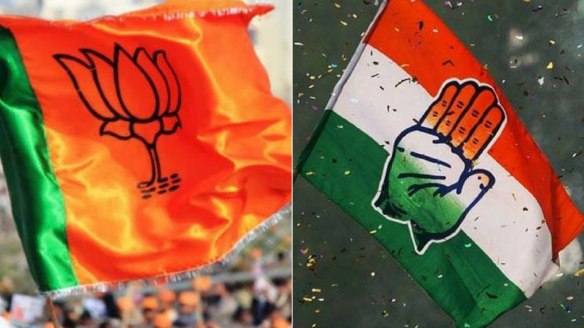
It is election season again and I have this feeling of deja-vu. Been there, heard that. The ruling BJP in many ways has become a mirror-image of what the Congress once was. This goes beyond their appropriation of national icons like Mahatma Gandhi and Sardar Patel. Instead of a Congress-mukt Bharat we would be better served if the current dispensation renders us Mukti (freedom) from the bad governance, wrong practices, precedents and policies of the Grand Old Party. But look closer-

  1. Money/Muscle/Religion/Caste was the winning combination for the Congress for many decades. The BJP has whole-heartedly embraced this mantra. Even after 70 years the Reservation footprint is expanding and the ruling party is happy to oblige. It is all about power. And power corrupts. In 2019, it is exceedingly difficult for good, qualified and well-intentioned people to break into this toxic political system. Mr Modi and his advisors have also sold their souls to the Winability formula.
  2. The ‘Aaya-Ram Gaya Ram’ politics of defection still holds currency. The Indian National Congress can claim a patent for its invention. Recent events in Goa, Karnataka and Maharashtra demonstrate that the defectors are alive and kicking in this Naya Bharat. Many of them tainted by corruption charges.
  3. Corruption became synonymous with the Congress Sarkar. The BJP looks better in comparison because no major skeletons have tumbled out of the closet so far. More importantly because of the personal clean image of the Prime Minister. But let’s not forget that Dr Manmohan Singh is also well regarded for his integrity. But what happened under his watch in UPA2! The rottenness and avarice reached its peak. Politics has become the first refuge of the scoundrel. Modiji’s government is also sacrificing good governance and integrity at the altar of power. The case of the rapist MLA in UP highlights this dalliance with criminality and is a wake-up call for the BJP leadership. Their UP CM clearly looked the other way. Such thugs are shockingly called Bahubalis in these parts and actively courted by the BJP, Congress and the regional outfits.. And what about the BJP brat in MP who wielded the cricket bat to poor effect. Just not cricket. The PM delivered a strongly worded sermon. No further action seems to have been taken. His doting father is too important for the party as he oversees the West Bengal election apparatus. Politics as usual. No signs of a New India.
  4. The Anti-Corruption mission is also part of the sound and fury, signifying nothing. The Choksis and Nirav Modis and Mallyas are still living the good times abroad. After 5 years of the Modi government we are no wiser about illicit Swiss bank accounts and shell companies in Cyprus, Bahamas, Panama or Lichenstein. The P Chidambaram case may well turn out to be a litmus test. If the investigating agencies have not really done their work, the wheels will come off the anti-corruption drive. If the former FM and HM is released for lack of evidence, politicians of all hues will be celebrating. All future arrests will be termed vindictive and politically motivated.
  5. The Congress was notorious in its heydays for undermining critical institutions like the Supreme Court, CBI and the Election Commission to promote the family or party agenda. Circa 2019. The BJP continues the good work by diluting the independence of the Reserve Bank and the autonomy of the CBI. The unseemly controversy at the top level of the CBI was disgusting. Mud-slinging by the top brass of our premier detective agency. One of the actors, known to be close to the ruling party may soon get a clean chit. Also check-out the appointment of loyalists and politicos to the constitutional post of the Governor. Many of their actions and words are embarrassing. Rewind to the grand old Congress days. And interestingly little news on the much hyped Lok Ayukata. The autonomous, anti-corruption ombudsman in each of the Indian States.
  6. Both these national parties also seem to be on the same page in avoiding much needed bold structural reforms. Their leaders pay lip service to it. Nothing more. Think about the long pending women’s reservation bill for the Lok Sabha and Rajya Sabha. The Police Reform Act to upgrade this much neglected force and to free them from the clutches of unscrupulous politicians. The Political Finance Bill to lay bare the source of funding for political parties and for elections. The BJP leaders, despite their holier than thou pravachans, are one with their political brethren. Let the status-quo remain. Let their political fiefdoms remain unchallenged. Dynastic politics thrive. For allowing sincere people in the fray is injurious to their political health.
  7. Criminality and politics are a successful mix. Even the high-brow Communist parties have their goon squads. All political parties including the BJP and Congress have given tickets to very dubious characters. Many charge-sheeted. Some having done jail time. They wear it like a badge of honour. Our freedom fighters will be rolling in their graves. A frightening percentage of our representatives in the Parliament and the Assemblies are criminals. Three score and ten years after Independence. If the Judiciary or Election Commission want to clean-up things, our Honourable leaders scream that it is an assault on our democratic values. The more things change the more they remain the same. Modiji does not seem to realise that millions of voters voted him and not the BJP to power. Many did not know who the local BJP candidate was. He can dismantle this rotten system. Induct people of character. But does he really want to change the political landscape for good?
  8. Delhi Durbar and Lutyens Delhi invoke the Congress rule. The First Family. The Power brokers. The Leftists and Liberals. All feeding off the perks and the privileges. Such clouds do hang-over the current regime as well. The Congress and Left parties had their mouth-pieces in the media. Many TV channels and news-houses have hitched on to the Modi band-wagon. Facts and reasoned reporting be damned. Modiji will have to reach out beyond the ‘Yes Men’, the inner-circle and the clique of babus to get a real sense of things. Get professionals like Deepak Parekh, Nandan Nilekani, Arif Mohamad Khan, Julio Riberio and Raghuram Rajan known for their independent views in the PMO. It was the former RBI Governor who blew the whistle on Bank NPA defaulters – which has led to a serious socio-economic crises today. Why not consult the new Nobel Laureate for Economics, Abhijit Banerjee. Yes, he has been critical of De-Mo. But he is an authority on Universal Basic Income and has a refreshing take on hard data evidence to back policy intervention. Very relevant to our economic growth story. Also have conversations with the critics in the media and academia. Sir, you are representing the country of 1.3 billion people in your own words, and not just those who elected you. Pay heed to those who disagree, listen-in to their perspective. Sabka Saath is an important part of your ringing slogan. It will herald a clean break-away from the cosy Congress club and coterie culture.
  9. Our political parties are infested with crude motor-mouths. The Congress came up with the classic line for its uncouth who crossed the line”It is his personal opinion. It does not reflect the position of the party.” Now we have the BJP spokesperson plagiarizing this on a regular basis. Nobody is hauled-up, disciplined, suspended or expelled. The party fraternity hangs out together. Disparate elements from the Sangh Parivar have clambered on to the Modi Express.But the political tirades and personal attacks especially at election times have hit a new low. The Congress chanakyas had honed the personal attacks. The BJP seems to be determined to plumb the depths. Even their own allies are not spared. The party high-command should understand that the tragic demise of Manohar Parrikar, Sushma Swaraj and Arun Jaitely has left a huge vaccum. These were the people who could reach out across the aisle. Speak and debate with facts and fervour. During Vajpayeeji’s stewardship, wit and banter and poetry gave flavour to political discourse. In the sound-bytes by today’s BJP netas, amplified by sensationalistic TV channels and the omnipresent social media, one can hear echoes of decadent Congress leaders and pravaktas.
  10. The PM made a strong pitch for Sabka Vishwas. Resounding words, little action, no out-reach. Is he running with the hares and hunting with the hounds (just an uncomfortable thought!). Minorities, especially Muslims, are beginning to feel disengaged if not marginalised. The other side of the same coin was the appeasement or vote-bank politics played by the Congress- a legacy of the British rule. If the Constitution of India is the sacred book, then the Government must demonstrate that it is. Replaying the same old cynical politics is dangerous in times of connectivity and social media. A suggestion- why does the Home Ministry not step in to ensure justice for Pehlu Khan’s family in Rajasthan. Send a clear message to the lynchers and their fringe supporters. The law of the land is above all politics, it is Raj Dharma.
  11. Radical Islam needs no introduction. However, it was startling to hear that barbers in some province in Pakistan were penalised for stylising beards. The customers were let off with stern warnings and presumably half-trimmed beards. In India also we have these self-styled guardians of morality and the Hinduvta elements are raising their disruptive heads again. From moral policing to telling women what to wear and other do’s and don’t’s, to monitoring the dietary habits of all and sundry. They really are the left-overs from some medieval age.And mob-lynchings are hate-crimes. Period. The perpetrators should be arrested and summarily punished. Through fast-track courts. These criminals and their cheerleaders showcase as to how people end up becoming what they hate the most. Sadly,in a recent TV interview, the Home Minister shrugged aside ‘these incidents’. Using the classic Congress playbook- Deny, Deflect and finally Rant out at some conspiracy.
  12. The BJP’s timidity on the economy front is both an off-shoot and a hang-over from the Congress era. The hero of the ground-breaking reforms was Dr Manmohan Singh with full-backing from PV Narasimha Rao. More than 25 years ago. Still we have the BJP FM’s gingerly tip-toeing around wealth-creation, promoting entrepreneurship, divesting PSU white-elephants and creating a good eco-system to do business. Like their Congress brethren they also revel in a ‘pro-poor’ image- whatever that means.Subsidies and freebies, loan-waivers and reservations continue to be the staple and populist offerings. The status-quoists still control the narrative. Even a major initiative like the GST has not been well-thought through and implemented. WARNING: A young and aspirational population will be much less forgiving than the earlier generation. Nothing less than transformational change will be acceptable.During the Congress Raj, even the well patronised liberal economists used to sneer at the low- ‘Hindu rate of growth.’ Enough reason to provoke Mr Modi & team to focus on real growth.
  13. Mr Modi’s stature rests on his no-nonsense approach to national security and tough stand against terrorism. Balakot, Uri, Abrogation of Article 370 have resonated well across the country. Made for TV spectacles like the “Howdy Modi” event have added to his 56- inch- chest aura. India is no longer a soft nation punching well below its weight in the global arena. We remember with acute shame our Government’s paralysis after 26/11 happened.

However, the BJP’s default strategy of blaming all the ills in the country on the Congress will harm its own political well-being. The PM and party have to walk the talk. NOW!

The Hon PM’s legions of followers will say with some justification- hey, this is unfair. India is a huge and complex country. Sure. But Modiji is at the top of his game. He is in prime form. He can hit the ball out of the park at will. The next 12 months can record the defining moments in the India growth story.

14. If NaMo.2.0 does not deliver on development and good governance, the BJP and Congress will share another dubious distinction. Letting India down despite absolute majority mandates and multiple terms in power.

The BJP has to carve out its own identity in national affairs, polity, economy and social change, and time is running out………

Is it the Hand touching the Lotus? Or is the Lotus striving to bloom in muddied waters?

INDIA’S Soft POWER

Soft Power is the ability of a nation to positively influence, attract, seduce, and persuade peoples of other geographies, cultures, and societies to their ideas, values, and way of life.

This creates a positive perception and image of the country on a global scale.

India’s soft power is unique in the sense that it has flourished not through colonisation, occupation or high-octane marketing. It has found acceptance over the years in a subtle manner.

The sheer magnitude of the elections process in the world’s largest democracy is stunning and the subject of many documentaries. Mahatma Gandhi’s clarion call for a non-violent revolution has been emulated by great leaders like Martin Luther King and Nelson Mandela. It has resonated in the Arab Spring movement and even the recent Hong Kong protests. Also the incredible diversity that is India with its multitude of languages, religions, and sub-cultures continues to stand-out in an increasingly polarised world.

Bollywood is often seen as the flag-bearer of this soft power. Raj Kapoor’s “Laal Topi Russi” in Shree 420 doffed his hat to the Soviet Union and China where his films were enthusiastically embraced. Amitabh Bachhan, Shah Rukh Khan, Aamir Khan have become household names across Arabia, South East Asia, the Gulf, Africa, Eastern Europe, parts of Latin America, Israel , China, and even Germany. Uncle Khan aka Aamir has such a huge following in China that their strongman Xi Jingping made a special mention of him in a meeting with our PM. The Thailava, Rajnikanth holds a cult appeal in Japan since the release of Muthu in 1998. The Japanese even have a name for him-Odori Maharaja or the dancing Maharaja. And the waves created by the Bahubali films are there for all to see.

The emotional connect with many nationalities never ceases to surprise. A Hindi soap “Kyunki Saas Bhi Kabhi…” dubbed in Dari became an obsession in Afghanistan during its most troubled times. SRK’s love affair with white Germans and esp. the womenfolk curiously dates back to the screening of his melodrama “ Kabhi Khushi….” on prime time TV.

The melody and appeal of Indian film songs know no boundaries. You-Tube is full of contests in East Europe, SE Asia and South America with the winners crooning or dancing to Hindi film numbers. Flash mobs in Europe revel in it and the song and dance items have even become a staple at wedding events.

Classical Indian music also holds overseas audiences in thrall. The sitar, santoor, veena, tabla and, flute have all found international expression. From Pt. Ravi Shankar to Ustad Amjad Ali Khan, Pt. Shiv Kumar Sharma to Ustad Zakir Hussain – all have performed to packed houses. Fusion music with top western artists have hit appreciative notes. The baton has passed on to the likes of A R Rahman today.

Dance forms like the Bharatnatyam, Odissi and Kathak are expanding their footprints. The beats of the exuberant Bhangra can be heard across many western countries.

Indian cuisine is being lapped up across the urban centres. Butter chicken, Rogan Josh, Biryani, Dosa, Samosa, and the Chaat servings are in gastronomic demand. The Indian Vegan diet is finding its place on dining tables around the world.

Medical tourism has grown into a huge industry. An appreciative nod to the corporate health care infrastructure and the professional expertise available. Patients from the Gulf, Middle-East, South Asia, Pakistan and Bangladesh come to India for the complex cardiac and transplant procedures not easily available in their lands. From UK to Europe , we get visitors keen for a quick, efficient, cheaper coronary or orthopaedic surgeries. Not for nothing it is said that the UK Health service would close down if India origin doctors exited.

Of special interest to the health-care and wellness fraternity in the developed nations are the age-old medicinal practices of Ayurveda and Siddha and Yunani . These work without side-effects. The formulations are extracts from herbs and spices like neem, turmeric and cinnamom. This data base runs into thousands and India’s fight to protect and patent these herbal remedies is now being acknowledged by the global health care eco-system. Reinforced by IPR wins against biggies like Colgate, Unilever and L’Oreal.

Yoga, a traditional rejuvenation technique , with a global appeal has become synonymous with India. Meditational therapies like Vipaasana are also finding many takers amongst stressed-out homo-sapiens.

Our country also exudes a spiritual mystique. It is the fount of great religions like Buddhism, Sikhism and Jainism. A well organised Buddha circuit around Bodh-Gaya and Sarnath will attract thousands of devotees from Japan, South Korea, Taiwan, Sri-Lanka, Vietnam, Cambodia, SriLanka, and even China.

The ancient faith of Hinduism has its own allure for seekers and believers on a spiritual quest and journey.

ISRO’s Mangalyan and Chandrayan missions have excited the international space community and captured the imagination of millions of Cosmos buffs. All this at a fraction of the cost incurred by NASA. How do these Indian scientists pull it off!

The widespread and successful Indian diaspora has added to the positive narrative. Satya Nadella as the top honcho at Microsoft and Sundar Pichai as CEO of Google have personified this perception. Along with many other marquee names in industry, science, law, academics, entertainment and even politics.

The US and China are the world’s leading economic and military powers. The Indian economy is projected to be in the top 3 within the next 15 years. India is recognised as a major nuclear and military power.

However, it is this expanding soft power which has enhanced the country’s image and aura. It is this creative buzz which is travelling all around the world.