
50 Years of Sholay

Sholay was released on the 15th of August 1975. Fifty years later it remains one of the most iconic, celebrated and loved films in the annals of Indian cinema. Let’s first check-out it’s box office impact which transformed the fortunes of Hindi cinema in the mid 70’s. Planned with an ambitious budget of ₹ 1 crore (2x the budget of a well-mounted Bombay produced film); but the shooting and processing span of 27 months cost GP Sippy Films a staggering ₹ 3 crores. After a dismal start over the first weekend, it gained momentum to become the all-time cultural phenomenon it now is. This happened in an era where there was no social media and with several newspapers and magazines giving mixed and even negative reviews. Indeed, the Emergency had been declared just 2 months earlier. It was word-of-mouth excitement that sparked the Sholay explosion.

Thereafter, even the main-stream media got onto the bandwagon to celebrate its massive collection of ₹ 15 crores in its first run. Sholay had a 50-week (hallmarked as a golden jubilee) run at 28 cinema halls. At Minerva Theatre in Bombay, it was featured for a continuous run spanning an astonishing 5 years. Over the next 7 years of releases and re-releases the film had minted a historic ₹ 35 crores. Many trade experts in 2024 projected the movie’s inflation adjusted earning at around ₹ 2,750 crores. Surpassing the ₹ 2,000+ crores of Dangal (propelled by its humongous success in China) and Bahubali 2 at around ₹ 1,900/ crores. One simple fact to end all debates- Sholay sold more than 25 crore tickets – the highest by any Indian film ever.

Let’s connect with the nay-sayers in August 1975. The country had 11 film circuits including 6 major territories. The Rajesh Khanna starrer, Haathi Meri Saathi (1971) had created a record of ₹ 90 lakh gross in a couple of major territories. But the ₹ 3 crore budget itself signaled disaster. The 198-minute-long film had too much of violence and action and no romance or family values to pull in the crowds; an unknown villain Amjad Khan was pitted against 3 big stars in Dharmendra, Sanjeev Kumar and Amitabh Bachchan. (by the time of the film’s release AB had become the Big B). To make matters worse, Gabbar Singh’s dialogue delivery was considered weak and that too in some rustic dialect; a similar story Mera Gaon Mera Desh with Dharmendra, Asha Parekh and Vinod Khanna had set the box office counters ringing in 1971. Indeed, the tall, well-built Vinod Khanna was impressive in the villain’s role as Jabbar Singh. (Sound familiar? What?). Writer Salim Khan’s father had been a senior police officer in Central India and had talked about a dreaded dacoit called Gabbar Singh in the Gwalior ravines who spread terror by slicing of the noses of those who went against him.

But why has Sholay become such a cultural phenomenon? Why has it become the subject of research for so many social- scientists? There are several dialogues which have entered the common spoken language. Audiences remember names of side characters who barely had screen time for a few minutes. Certain characters and dialogues have contributed to numerous viral and trending memes on YouTube and TikTok. The film itself does not look dated even today. The epic rail chase and encounter with dacoits and the sounds of horse hooves, the steam engine puffing and coaches rattling and rifle shots stunned audiences in 1975. The pulsating back-ground score added the X factor to the 70 MM spectacle as did the expansive lens of the cinematographer, Dwarka Divecha. Even today one wonders how they pulled it off. Delving into some of the back stories surrounding the making of the film may provide some answers about its stupendous impact beyond the darkened single-screen cinema theatres (Author’s note: These nuggets have been mainly consumed from various YouTube interviews of Ramesh Sippy, the director, and the writer duo Salim-Javed + a sprinkling of Sholay  trivia  stock-piled over the years)

What really stands out is the passion, confidence, commitment and teamwork of the entire Sholay unit. Let’s start with producer GP Sippy. Yes, the success of Andaz and especially Seeta aur Geeta (both directed by his son Ramesh Sippy) must have emboldened him. But a ₹ 1crore budget was unheard of in the Bombay film industry at that time. Salim-Javed had approached GP Sippy films with the complete script of what became Majboor which could be wrapped up in a reasonable budget and with limited schedules. However, the film mogul wanted to do something big and Sholay happened. The 27-month shoot in the rugged, rocky terrains of Ramanagara (near Bangalore) and the drastic spike in budget -spend to ₹ 3 crores did not deter the production-house, director, star-cast, technicians and crew from giving their very best. Nothing underlines this more than the fact that when the film’s obituary was being written in the early days after release, Salim-Javed took out full page ads in the Screen and other papers asserting that the movie would gross ₹ 1 crore in every major territory.

GP Sippy Films wanted to retain Dharmendra, Sanjeev Kumar and Hema Malini ( the endearing tangewali Basanti)for their next project after the super-hit success of Seeta Aur Geeta. Amitabh Bachchan was backed by the writer-duo and signed on by Ramesh Sippy after watching his performance in Anand and in the popular Kishore da bus song in Bombay to Goa. Jaya Bahaduri came on board for a small emotional role. Danny Denzongapa was the first choice for the Gabbar Singh character but did not have the dates as he was shooting for Feroz Khan’s Dharmatma in Afghanistan. Again, the just 26-year-old director and the writer team stepped in. Amjad Khan (the son of veteran actor Jayant) and having some theatre experience stepped in. Amjad Khan became Gabbar Singh. The rest, as they say, is history. The debutant actor, himself, gave credit to RD Burman for creating the eerie, unsettling background score when his character was first seen and then adding a palpable aura to his later scenes as well. The Avadhi dialogues became a smash hit with the masses and resonates even 50 years later. ‘Kitne aadmi the?’ (Translation: How many were there?), ‘Ab tera kya hoga Kaaliya?’ (Translation: What will happen to you now Kaaliya?), ‘Yeh haath mujhe de de Thakur!’ (Translation: Surrender your arms to me Thakur- with the implication of cutting his arms off), ‘Bahut yaarana lagta hai!’ (Translation: They look quite close! – said in an amused and calculative way), ‘Holi kab hai? Kab hai Holi?’ (Translation: When is Holi? When is Holi?) have all become part of the spoken lexicon. An interesting trivia is that the cassettes of the Sholay dialogues were specially released on huge public demand and sold more copies than the film’s hit songs.  And let’s listen to Javed Akhtar on why the Gabbar Singh character fascinated the public- ‘…he was pure evil with no back story to justify his cruelty; another reason was that the villain was not a pervert or lecherous, which would have undermined his impact.’

For me, one of the most intriguing aspects of Sholay power is that the names of small characters with limited screen time are still remembered after decades. Gabbar Singh’s side-kick Sambha (played by Mac Mohan) says only three words in the entire film’s run-time- ‘Purre pachas hazaar’ (Translation: A full ₹ 50,000) when the dacoit pointedly asks him about the bounty put on his head by the Government. That too, says Javed Saab, because a supreme egotist like Gabbar can’t boast of it himself. The faithful Sambha has to say it out loud for the other gang members to hear and remember why Gabbar is to be feared- an implicit psychological control over the rest. The venerable and blind Rahim Chacha is remembered for one poignant line, ‘Itna sanaata kyon hai bhai’ (Translation: Why is there so much silence?) when the village is aghast when the body of his dead grandson is brought to the village. The Hitler caricature, bumbling jailor (played by Asrani) has inspired hilarious memes especially with his ‘Aadhe idhar aao. Aadhe udhar jao. Baki hamare saath aao.’ (Translation: Half of you go over there. Half of you over there. The rest follow me- said in a petulant way by a tinpot dictator who is desperately trying to be in command). And who can forget Mausi (so naturally played by Leela Mishra)? And the one-and-only Soorma Bhopali (played by Jagdeep), who entertained us with scenes of situational comedy and flavored by his unique delivery of lines.

Another striking fact about Sholay is that the complete bound script, dialogues and even scene sequencing was handed over to the production house before filming. Only one scene was added and one scene changed. Veeru’s water-tank dramatics was added later to give Dharmendra more screen time, as the star was at the peak of his popularity. Also, in the original film Thakur (Sanjeev Kumar) stamped, kicked and trampled Gabbar Singh to death with his spiked footwear. The CBFC would have none of it and so the cops made their timely entry, arrested the villain and took him away, in a bid for a more palatable ending. When the movie was not doing well after its first weekend, Ramesh Sippy, Salim-Javed and Amitabh Bachchan met to discuss whether the ending with the death of Jai be changed. As by August 1975, Bachchan had become a bonafide superstar with a growing fan following. However, the original death scene remained, as does the legend of Sholay with the fake coin.

As mentioned earlier, the humongous impact of Sholay went far beyond the box-office numbers. Barely a year after it was released, in 1976, Amjad Khan featured in the Britannia Glucose-D ad with the tag-line ‘Gabbar ki asli pasand’ (Translation: Gabbar approved!- Note how the evilest character became  a brand spokesman!). Kailash Surendranath (the admaker) himself remarked on this turn or events, ‘…from being the most feared villain, to the face and brand ambassador of a majorly children consumed product was really something?’ The marketing gold mine was tapped for government campaigns, by major corporates and even down to the Goli Vada Pav joint franchise- ‘Ab goli kha’ (Clever wordplay, where you don’t take the bullet but translation: Have the vada-pav at a Goli franchise) to resonate with the masses.

Even today 50-60 people buy tickets of ₹ 25 each to visit the Ramanagara village- the fictional Ramgarh (off the Bengaluru-Mysuru expressway) to see the rocky locations where the film was shot. On weekends the number of fans goes up to 250. The ticket is ostensibly for the Vulture Park entry, but all the tourists are flocking to see the sites where the iconic film was shot even though nothing related to the film set remains.

As I write this blog, Sholay is being re-released in a 4K restored version (204 mins) at the Toronto International Film Festival. When the film is re-launched in India (re-release is not the word), the senior citizens and the 50+ will throng the cinema halls in millions. The Millennials and the Gen Z may wonder what the buzz is all about and some may even go to end their FOMO (fear of missing out).
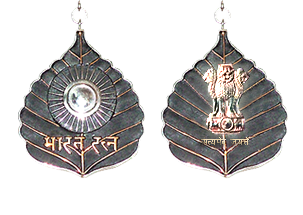
Bharat Ratna

Bharat Ratna- The Jewel of India

The Bharat Ratna, the highest civilian award in the country, was instituted in 1954. It is awarded in recognition of exceptional service/performance of the highest order in any field of human endeavour. No formal recommendation for the award is necessary. This is made by the Prime Minister himself to the President. The number of awards is restricted to 3 annually. On conferment of the award, the recipient receives the Sanad (Certificate) and a Medallion from the President. The award does not carry any monetary grant (Ministry of Home Affairs site- mha.gov.in).

The medallion is designed in the shape of a peepal leaf with the obverse having the Bharat Ratna inscribed in Devanagari script under the image of a sun. The reverse side has the motto, ‘Satyamev Jayate’ written under the Emblem of the State. The emblems, the sun and the rim of the medal are made of platinum whilst the inscriptions are in burnished bronze. The awards are created at the Kolkotta Alipore Mint along with the prestigious Padma awards and the Param Veer Chakra. The award is worn around the neck by a white ribbon.  An interesting fact is that the Bharat Ratna cannot be used as a prefix or suffix with the recipient’s name( India Today).

Let’s look at the subject in the context of the highest honours conferred in other democratic nations. The Presidential Medal of Freedom was established by President Kennedy in 1963. There have been 647 recipients and whilst it is a civilian award it can also be awarded to military personnel and worn on the uniform. An equivalent honour is the Congressional Gold Medal presented by the United States Congress.  Thus far 184 individuals and institutions have received this prestigious prize since 1776. If institutions also are considered for our highest award, the Indian Space Research Organisation (ISRO) will be a leading candidate.

The Legion of Honour is the highest decoration in France and is divided into 5 categories with the Grand Croix (Grand Cross) at the highest. This was instituted by Napoleon Bonaparte in the year 1802. On average 2000 French and 300 foreigners are decorated each year. And here lies the rub. Around 3000 French citizens have received the Grand Cross since inception averaging around 14 per year.  The current French population is around 7 crores. India has 140 crores. We are also 4X of the US population. The fact is that the Bharat Ratna and even the Padma awards have literally been rationed out.

70 years after the first awards were conferred; we have only 53 recipients of our highest civilian award. The limitation of a max of only 3 awards per year has brought us to this ridiculous situation. This limit has been breached by 4 awards in 1999 and 5 awards in 2024. Another big disappointment is that the Bharat Ratna was not awarded between 2020 and 2023. The award doesn’t need to be given every year.

Controversies related to the Bharat Ratna are all about political colour and affiliations. A few of the names in this ultimate roll-call of honour may make your eyebrows rise. Dr Radhakrishnan was conferred the honour in 1954 as a sitting Vice President. Sardar Patel, India’s first Home Minister and Deputy Prime minister, credited with the seminal achievement of preserving the Union of India was honoured posthumously only in 1991, four decades after his demise. PM Nehru was a recipient in 1955 with the Congress supporters and Nehruvian followers insisting that the President presented it to him suo-moto. Again, Smt Indira Gandhi was the Prime Minister in 1971 when she received the top honours. Earnestly hope that such an event does not happen again in the next few years. In 1992, Netaji Subhash Chandra Bose was awarded the Bharat Ratna reigniting controversies regarding his death. This was the only instance where the award was announced and withdrawn. This historical wrong should now be corrected.

There is no formal provision that the decoration be given only to Indian citizens. It has been conferred on a naturalised Indian citizen, Mother Theresa in 1980, which begs the question as to why it has not yet been conferred on the Dalai Lama. The two foreign recipients are Abdul Ghaffar Khan, born in British India, but a Pakistani citizen at the award ceremony in 1987; the other being the iconic South African leader and President Nelson Mandela. Whilst the Pakistani national received India’s highest honour, Dilip Kumar got the Nishan-e-Imtiaz (Pakistan’s highest civilian honour) in 1998. Here’s hoping that India’s first ‘Method Actor’ Dilip Saab moves from the Padma Vibhushan award in 2015 to a richly deserved Bharat Ratna, albeit posthumously. Surprise, Surprise!!  Morarji Desai remains the only Indian honoured with both the Bharat Ratna and the Nishaan-e-Pakistan (the second-highest civilian award in Pakistan).

The one Mega film star to make this august list is M G Ramachandran (MGR) who also became Chief Minister of the State of Tamil Nadu. But overlooked is his Telugu counterpart N T Rama Rao, ‘the God of Telugu Cinema’ not only because of his stirring portrayals of Lord Ram and Lord Krishna but also of several inspiring historical characters. His huge following also made him the Chief Minister of the then Andhra Pradesh. Dr Rajkumar was the colossus of the Kannada film industry- an accomplished playback singer, the SuperStar in more than 200 hit films and a social-cultural symbol in the State like none other. Vara Nada (Gifted Actor) and Bangarada Manushya (Man of Gold) for his legion of fans. The top civilian award also eluded Sivaji Ganesan, hailed as Nadigar Thilagam (Prince of Actors) in the Tamil film industry. His versatility and brilliance in over 280 films have made him the inspiration for generations of Tamil and Indian actors after him. The venerated Mohanlal and Manmooty from Malayalam cinema should also make the shortlist for the Bharat Ratna awards.

Winner of the first National Award in 1967 for Best Actor, Mahanayak Uttam Kumar is the most successful and influential actor in Bengali film history. His name will add lustre to the top national honour. As will that of the consummate actress Suchitra Sen who co-starred with him in many memorable films. Another name that readily comes to mind- the accomplished actress and dancer from Hindi films, Waheeda Rehman.

No case needs to be made for Amitabh Bachchan, ‘The Star of the Millenium’. A real anecdote will suffice. In the 1980’s when his stardom was at its peak, the stunned Egyptian film industry came up with the decree that no Indian film should be allowed a consecutive run of more than 4 weeks. The Soft Power of Indian Cinema was first exemplified by Raj Kapoor whose films ‘Awara’ ( 1951) and ‘Shree 420’ ( 1955) captivated audiences across the Soviet Union and China. The celebrated Satyajit Ray remains the only filmmaker in the list of 53 recipients thus far. Guru Dutt the maker of internationally acclaimed films like ‘Pyaasa’ and ‘Kaagaz Ke Phool’ has also been ignored. Let recognition be delayed, but not denied. Rajamouli Garu and Mani Ratnam are also staking their claims for this highest accolade. But are the powers- that- be paying any attention?!

Lata Mangeshkar’s golden voice floated in the air when the award was conferred on her in 2001. Classical Maestros like Bhimsen Joshi, Bhupen Hazarika, M S Subbalakshmi and Ravi Shankar have also been so honoured. But surely cherished household names Mohammad Rafi Saab, Kishore Kumar and Asha Bhosle do not have to prove ‘ their performance of the highest order’ in their artistic space. The sublime voice of S P Balasubramaniam has not only captivated South Indian film audiences but also those of popular Hindi cinema. Kerala’s iconic singer KJ Yesudas has sung mellifluously in multiple Indian languages and bagged 8 National Awards. Tabla maestro Zakir Hussain after 3 Grammy Awards is again knocking on the door.

In 2014, Sachin Tendulkar became the youngest recipient and the only sportsman to make the honour list. You may well ask- what about Sunil Gavaskar who scored tons of runs against the dreaded West Indian fast bowlers without wearing a helmet?! Or Kapil Dev, lifting the World Cup at Lords in 1983, which remains to this day the most seminal moment in Indian cricket history. Five times World Champion Vishwanathan Anand’s name does not make the honour list – shocking in a country which invented the game of chess in the 6th century Gupta period. To a forgotten hockey hero Balbir Singh Sr part of the Olympic gold medal winning teams in 1948, 1952 and again as captain in 1956. Eligible for the Bharat Ratna- a no-brainer one would think!! Mary Kom, bronze medallist at the 2012 Olympics and the most successful boxer in the history of the World Championships also deserves the highest civil recognition in India,

A welcome news has been of the late PM Narasimha Rao being awarded the Bharat Ratna for opening up and liberalising the Indian economy in the early 1990s. Surely his partner in arms Dr Manmohan Singh, Finance Minister and architect of critical economic reforms in a major crisis situation deserves the same laurels. Jan Nayak and ex-Bihar CM Karpoori Thakur’s belated recognition also raise hope that Odisha CM Naveen Patnaik gets his place in the sun. The hugely popular Naveen Babu’s administration (+ NDMA) handling of recurrent cyclones has been highlighted as the model for disaster management globally. His initiatives have pulled his State from its acute poverty and Naxal insurgencies and made it an attractive FDI and Domestic investment destination. Add to this the sponsoring of the Indian men’s and women’s hockey teams till 2033 and it remains for the Honourable Prime Minister to take the right call.

The socialist/leftist mindset that prevailed for over 5 decades ensured that only JRD Tata received the Bharat Ratna award as a hugely respected business leader.  Ratan Tata has followed in his footsteps through generous philanthropy, especially in health care and education and the Tata Group is now valued at $370 billion which is more than the current GDP of Pakistan, estimated at $341 billion by the IMF. Azim Premji at Wipro and Narayana Murthy at Infosys ushered in the IT revolution in India. Nandan Nilekani, a co-founder at Infosys, is also known as the father of the Aadhar Card (Unique Identity for Indian citizens) which along with the digital revolution and Unified Payments Interface (UPI)I has been the ultimate game-changer for the economy, trade and business and for e-governance. Capitalists and Business Houses are not the derisive words as bandied around in the license-raj times from the 1950s to the late 1980s.  All these gentlemen are now seen as role models and champions of a resurgent India.

Also missing from the list of awardees are extraordinary personalities like the late Ela Bhatt, labour lawyer and organiser par-excellence, who formed SEWA- Self Employed Women’s Association- a trade union for women workers in India’s huge informal sector. What about Verghese Kurien, the architect of India’s ‘white revolution’, which transformed the country from an importer of dairy products to the world’s largest milk producer through a system of farmer’s co-operatives – pushing out the middlemen. Another hero who deserves the highest laurels posthumously is Dr Govind Venkataswamy, the founder of the Aravind Eye Hospital, Madurai. Internationally reputed for its high quality, high volumes and low-cost service model. Do these worthies come up to the criteria of ‘exceptional service/ performance of the highest order’?! –the key requirement for the Bharat Ratna award.

‘Extraordinary contribution in any field of human endeavour.’ If you are the Prime Minister will you recommend Salim Ali, India’s celebrated ornithologist and naturalist- known as ‘the Birdman of India.’ Or Kailash Sankhala noted wild-life conservationist, whose passionate efforts virtually saved the Indian tiger from becoming extinct. Or Rajendra Singh, who renewed traditional techniques for storage and conservation of water in hundreds of villages in Rajasthan and made them inhabitable again.

The above is merely a wish-list of some richly deserving individuals who have been overlooked. You will have your own opinions and your own choices. Respect. The bottom line is that the entire process and dimension and scale of evaluating India’s most prestigious award needs to be revisited and revamped.

Restricting the Bharat Ratna to a quota of 3 awards per year beggars disbelief in a nation of 140 crore Indians. 15 awards annually, including posthumous recognition, is the least correction to be made. Having a jury of 12 upstanding and accomplished citizens from various walks of life to recommend 30 deserving names to the Prime Minister for his final review and selection will greatly enhance the aura of the awards. Let’s celebrate the extraordinary achievements and influence of this unique group of Indians- without distinction of race, caste, creed, occupation, position or gender. Let’s celebrate the Naya Bharat.

Notes & Records of some Iconic Hindi Film Songs

The Golden Age of Hindi Film Music is considered to be the period from the 1950s to the 1970s. Song and dance were always considered to be a part of Indian Nautanki and drama and became an integral part of the narrative structure of popular Indian cinema. By the 1970s, Hindi film songs had reached out to a humongous audience across India but were also resonating in Asia, Africa, Russia, and Eastern Europe. This amazing era was defined by the exceptional creativity, talent, passion, and innovation of not only the Musical Trinity of Iconic Singers, Composers, and Lyricists; song and music also flourished because it was exquisitely imagined and projected by visionary filmmakers and directors.

Flashback to ‘Shree 420’ (1955). ‘Ramaiya Vastavaiya’ sung by Lata Mangeshkar, Mohammad Rafi and the voice of Showman Raj Kapoor- Mukesh. RK’s music team – Shankar Jaikishan, Hasrat Jaipuri, and Shailendra frequented Khandala to compose music for his films. They used to stop at a roadside hotel run by a Telugu guy Ramaiah for tea and snacks. Shankar, who was conversant in Telugu, placed the orders. One time around there was a delay in service and Shankar started humming  ‘Ramaiya Vastavaiya’ – calling Ramaiah to come quickly. His partner Jaikishan started drumming on the table. Shailendra piped in with ‘Maine dil tujko diya’ – indicating that all 4 were waiting for Ramaiah. As they hummed the lines they felt that this could be a song. Raj Kapoor liked the idea and created a street situation for the song and the lyrics were written keeping these lines intact. The original Telugu words were retained even though the Hindi audience could not understand its meaning. The song became a chartbuster.

Lata Mangeshkar sang the ‘Pyar Kiya to Darna Kya’ song for recording at 3 different locations. Mughal-e-Azam was released in 1960 and had been a few years in the making. “There was no technology to create’ the echo effect’,” writes Srishti Magan in an article for the magazine Bollywood probably alluding to a grand palace setting. “The only way out was to record the song at different places and overlap the recording. ” This was achieved to splendid effect by music-director Naushad and Lata Mangeshkar.

OP Nayyar (OP) is lauded as ‘The Rhythm King’.  His music had a robustness and rhythm; his songs were bewitching and easy on the ears. He brought the folk and modern together in perfect harmony. But the OP name is associated with the melodious use of Western instruments like the guitar, accordion, claret, cello, and piano. Author Ajay Mankotia reveals surprising facts through his meetings with and articles on this maverick composer. He changed the rules of Hindi film music. Please listen to ‘Yeh Kya Kar Dale Tune’ from ‘Howrah Bridge’ (1958) and ‘Ankhaon hi ankhon mein ishaara ho gaya’ from ‘CID’ (1958). He brought the Sarangi out of its limited role- either in kothas or as a mournful accompaniment to melancholic songs. He transformed it into an upbeat musical instrument. He gave it a feel-good melody and a fast pace. “The poor Sarangi was joyfully released from typecasting.”

Take the Santoor. The beat allotted to it by music directors was gentle. OP Nayyar used it as a fast-flowing brook- soft but more insistent in the prelude to ‘Jayenge Aap Kahan Jayenge’ from ‘Mere Sanam’ (1965). Never had been the santoor used like this. Shades of fusion music in the 1990s brought forth by the upbeat rhythm of traditional Indian musical instruments. Take ‘Yeh Haseen dard de do’ from ‘Humsaya’ (1968). For the song an accomplished tabla player would provide a beat pattern that would be simple and linear. OP’s beat patterns are complex yet riveting. The beat patterns certainly shook up the music aficionados of the time.

In an episode of KBC, Big B revealed that the exuberant yell “Yahoo!” in the song ‘Chahe Mujhe Junglee Kahe’  from ‘Junglee’ (1961) was recorded by writer Prayag Raj who happened to be in the studio and not by the singer Rafisaab. Later in Amitabh Bachchan’s own ‘Coolie’ (1983) Prayag Raj provided vocalization by shouting “Allah Rakha” in a song. The ‘Yahoo’ song picturized on the ‘Rebel Star’ Shammi Kapoor is considered a turning point in Hindi cinema. It solidified his image as an untamed screen presence, an unshackled freedom-seeking soul. Much akin to contemporaries Elvis Presley and James Dean. The singer in a later interview commented that he sang this exuberant song on a high scale whilst visualising the persona of the rocking Shammi Kapoor. In his foreword to the biography ‘Mohammad Rafi- Golden Voice of the Silver Screen’ by Sujata Dev, Dilip Kumar writes, “With Rafisaab it was a mystical bonding.  As if he was part of me when he sang for me without being told how I would perform the song during the filming of the sequence.” Think also of Kishore Kumar. His years as an actor helped him to project his voice to captivatingly express the emotions of other actors.

A musical giant Salil Chowdury or Salilda, enriched us with his music over 5 decades. From Bengali to Hindi films, Malayalam, Tamil, Telugu, Gujarati, Marathi, Assamese and Odia films. Agnivo Niyogi when writing for the Telegraph mentions quite a few Bengali masterpieces introduced to Hindi audiences. We check out some of these compositions of Salilda which are memorable both in Hindi and Bengali. “The wistful melody ‘Na Jaane Kyun’ from ‘Chhoti Si Baat’ (1976) set to Yogesh’s words and brought to life by Lata Mangeshkar was a recreation of his Bengali song  ‘Pagol Hawa’ which Jaitleshwar Mukhopadhyay sang with great finesse. ‘O Sajana Barkha Bahaar Aayee’  from Bimal Roy’s 1960 classic ‘Parakh’ is another gem from the composer-singer duo of Salilda and Lata Mangeshkar. The latter also sang the Bengali version, ‘Na Jeo Na’. ‘Kahin Door Jab Din Dhal Jaye’ from ‘Anand’ (1971) captures the melancholy of a terminally ill cancer patient who is watching his life slip by. Penned by Yogesh the heartfelt lyrics as rendered by Mukesh touches our hearts. The original Bengali version ‘Amay Proshna Kore Neel Dhrubo Tara’ in Hemant Kumar’s deep, rich voice has etched its place in the annals of Bengali music.”

‘Ek Chatur Naar’ one of the most loved songs from the1968 laugh-riot ‘Padosan’ was actually made up of 3 different songs. A puzzle perfected by bits and pieces brought in by the versatile Kishore Kumar. As composed by RD Burman it was a combination of Carnatic and Hindustani classical music. Manna Dey, a trained classical singer rendered the Carnatic part whilst self-taught Kishore da sang the Hindustani counterpart.  The Alaap ‘Ek Chatur Naar Karke Shringar’ was taken from Ashok Kumar’s original version in ‘Jhoole’ (1941). The tune used in ‘Sant Tulsidas’ (1939) song  ‘Ban Chale Ram Raghuram’ was adapted as ‘Are Dekhi Teri Chaturai.’ The tune used in ‘Chanda Re Jaa Re Jaa Re’ sung by Lata Mangeshkar  ‘ Ziddi’ (1948) was the final piece of the puzzle, ‘Kaale Re Jaa Re Jaa Re Are Nale Mein Jake Tu Munh Dhoke Aa.’  The famous reel battle remains as humorous and entertaining as it was 55 years ago. Rajendra Krishan’s lyrical fluidity, RD Burman’s creative mastery, the class of Manna Dey, and the genius of Kishore Kumar all contributed to the timeless track we have today. The humorous on-screen presentation by Sunil Dutt, Mehmood, and Kishore da himself remains till today as a favorite repeat watch for movie buffs, Manna Dey in his interviews has mentioned his fond memories of the making of this crazy, rollicking duet. The rehearsal over 8 days and good food at each other’s house. The final recording in 2 phases. Manna Dey in his interviews admiringly speaks about the mad-cap genius of Kishore and his improvisations which made the song into a cult classic.

Indian Railways is a recurring character in countless Hindi songs of that era. Shakti Samanta’s 1969 romantic drama ‘Aradhana’  gave Hindi cinema an evergreen romantic song in ‘Mere Sapnon Ki Rani’.  The filmmaker’s son Ashim Samanta recounts what went into the making of the iconic song. The number was to introduce the lead pair of Rajesh Khanna and Sharmila Tagore. The song was visualized with the hero driving a jeep through a scenic hill station whilst the heroine is sitting in a slow-moving passing train. The Bagdogra to Darjeeling toy train route was selected for the song. But just a few days before the actual shoot, Sharmila Tagore informed the director that she had already allotted the dates for a Satyajit Ray film. The filmmaker was livid but she convinced him to go ahead with the scheduled shoot without her. As the hero proposes to her in the song the heroine is seen sitting in the train trying to read a novel and sneaking glances at the Romeo. Whilst watching the film it seems that it was all shot at the same Darjeeling location. In reality, it had to be re-shot on a set at Nataraj Studios, Bombay. Art Director Shanti Das recreated a set to match the toy train compartment. The scenes were edited and interspersed so seamlessly to seem one with the outdoor location shoot. Another important reveal is that all the songs were supposed to be sung by Mohammad Rafi. As he was on a 3-month world tour, Sachin Dev Burman and Shakti Samanta brought in Kishore Kumar. The rest is history.

‘Khaike Paan Banarasiwala’ became the USP for the 1978 hit film ‘Don.’ The lyrics were written by Anjaan for a Dev Anand film ‘Banarasi Babu’ (1973). Kalyanji-Anandji (KA) were the music directors for both the films. However, the star disliked it as it did not go with his urbane, debonair image and hence it went into the KA song bank. After the completion of the rushes, ‘Don’s’ director Chandra Barot screened the film for his mentor Manoj Kumar. He was advised that the film script was going too fast and that a song be introduced post-interval to give the audience a breather. Hence, the famous song picturized on Amitabh Bachchan, where he was inspired by some of Bhagwan Dada’s dance moves a la ‘Albela’. Kishore Kumar agreed to sing the song after much persuasion by the music director duo but insisted that he would only give one take. He asked for a paan at the studio, and chewed the paan, and also spat it during the recording. Please check out the song again to get the real feel and flavor of it again. These incidents were recounted in the radio show Suhana Safar with Annu Kapoor’.

In a Facebook video, Asha Bhosle recalls the recording of the song ‘Inteha Ho gayi Intezar Ki’ when Kishore Kumar sang the song whilst lying on a table. This superhit song featured in Prakash Mehra’s film ‘Sharabi’ (1984) with the camera panning on Big B and another top heroine from the South, Jaya Prada. Anjaan captured the mood of the song in his lyrics which was composed by Kishoreda’s nephew, Bappi Lahiri. The singer decided that he would sing the song lying down as a fallen drunkard. A teetotaller, the artist in him decided to reach the high by lying down flat.

During her last concert tour to Britain in 2016, Asha Bhosle spoke with the Hindustan Times about how she immersed herself into the role of a Lucknow courtesan to prepare herself for the rendering of the mellifluous ghazals from the 1981 film ‘Umrao Jaan’. The soulful lyrics were penned by Shahryar and the music of the film was composed by Khayyam. She mentioned that normally her focus is on 2 things- who is singing the song on the screen and what the screen persona of the actress is. For ‘Dil Cheez Kya hai’ the gestures and expressions of Rekha came to her mind. Then she read an Urdu novel ‘Umrao Jaan Ada’ (1905) to understand the character and situation. “After imbibing all that I became Umrao Jaan myself. I could translate her feelings into my rendition of the song.” We have all heard of Method Acting- the technique for an actor to get into the skin, mind, and even soul of a character. How about, ‘Method Singing?’

Eminent lyricist and filmmaker Gulzar is full of anecdotes about Pancham. 116 of his songs were set to music by R D Burman. “He used to be at his wit’s end about my lyrics. Ek to bechare ki Hindi weak thi aur oopar se meri poetry,” says Gulzar- The poor man’s Hindi was weak and to top it he had to grapple with my poetry. “When I gave him ‘Mera Kuch Saaman ‘ (Ijazat-1987) he threw away the sheet saying that next time you will give me a headline from the Times of India and tell me to tune it.”

Such iconic songs are known for their timeless melodies and poetic lyrics which resonate with people across generations. They have stood the test of time. They take us back in time to a period when music-directors Laxmikant-Pyarelal (LP) flawlessly conducted an 80-piece orchestra and when music arrangers played a vital role. The lyrics were meaningful and had universal themes and appeal. These classic melodies touched millions of hearts and spread cheer and goodwill. Tapping into the entire spectrum of human mood and emotions- uplifting, philosophical, sad, reflective, wistful, upbeat, naughty, and seductive. During a recent episode of a reality show, Sanjay Dutt shared that his father Sunil Dutt had told him to listen to 4-5 select inspiring and motivational songs when he felt down and desolate. One of the booster-dose numbers, ‘Ruk Jaana Nahin Tu Kabhi Haar Ke’- Do not stop after a defeat from the film ‘Imtihaan’ (1974). Another stirring song by Kishore Kumar,  curated by the LP- Majrooh Sultanpuri team and featuring an idealistic and resolute teacher Vinod Khanna who triumphs over the travails and challenges that life has in store for him. The Golden Oldies numbers have this subtle power to relax and refresh, revive and reinforce.

The Method of Dilip Kumar

Portrait of Dilip Kumar in 1946 from Wikimedia Commons

Amitabh Bachchan has famously said that, “the history of Indian cinema shall always be reckoned as before Dilip Sahab and after Dilip Sahab because of his impeccable presence.” Dilip Kumar (Yousuf Khan) made his screen debut in the mid 40’s and became an actor and star to reckon with by the end of that decade. The audience of that era had grown up on high voltage melodrama, high pitched dialogues accompanied by lots of gesticulations. Motilal and Ashok Kumar and (later Balraj Sahani ) had begun the process towards a more natural form of acting. However, it was Dilip Kumar who carried the torch and made it the norm.

Satyajit Ray called him the ‘Ultimate Method Actor.’ Javed Akhtar went a step further and called him the first method actor in the world even before the Hollywood great Marlon Brando burst on the stage and screen. The Indian screen icon has publicly spoken of his admiration for the craft of Brando and Paul Muni.

In lay terms, in order for actors to create natural performances they needed to tap into personal experiences in order to imagine how their characters are feeling. They would use their own memories and relate these emotions to the portrayal of a character. This is the essence of Method Acting although there are many more dimensions to it. In his autobiography ‘Dilip Kumar- the Substance and The Shadow’ the thespian reveals to the narrator Udayatara Nayar, “that the epithet was used to describe me before Brando. I am an actor who evolved a method which stood me in good stead. I learned the importance of studying the scripts and characters deeply and building upon my own gut observations about my own and other characters. It was always meaningful for me to study even those characters that would be close to me or opposed to me.” Thus began a legend’s life- long obsession with immersing in the character and inhabiting the role.

In doing so he changed the very concept and grammar of acting. He redefined the meaning of acting. If the dialogues were potent the acting had to be understated. It was not necessary to shout to be heard. A nuanced body language and even silence conveyed more through the camera lens than a plethora of theatrical gestures. Indeed, this actor had the gumption to enact critical scenes with his back to the camera letting his voice envelope the audience. Remember ‘Ram aur Shyam’ where the quivering voice of the nervous, timid Ram resonates through the halls – of how he has been bullied and beaten into submission by Gajendra babu (his screen brother in law- Pran). He played out the entire gamut of emotions brilliantly from the heartbreak and sorrow of ‘Jogan’ and ‘Devdas’ to the lively fun characters of ‘Kohinoor’ and ‘Ram aur Shyam’. It was no longer taboo for the hero to do comic sequences. Dilip Kumar gave a polish and finesse to acting which till then had been largely confined to self-conscious histrionics.

But a career of almost 5 decades, embellished with many memorable performances, did not just happen. Dilip Sahab imbibed quickly that the art and quality of film-making depended heavily on team-work. He understood the importance of not only the director, co-actors and cinematographer but even the value of a lightman and every member of the set crew, His commitment was not only to his role but to the film itself. Listen to Yash Chopra, third assistant to his brother BR Chopra during the making of ‘Naya Daur,’ “Dilip Sahab spent an entire month with Akhtar Mirza, the writer, and Chopra-saab at his Juhu shack. He would take up each scene with the dialogues and enact it with the drama, pathos, sentiment, humour and deep emotion and render us speechless. He would show us variations in the enactment and enthral us. He not only dwelt upon the moulding of his character but also the character played by Ajit. He made sure that Ajit’s part (a critical character) was equally strong and sensitively written. And the climax of the film was a challenge for Akhtar Mirza. How could a horse-driven tonga beat a motor vehicle in a race. It was Dilip Kumar who gave the writer the idea of the tonga taking a short-cut- something that was logical and convincing.” [Excerpt from ‘Dilip Kumar- the Substance and The Shadow’]

The immersive performance in ‘Devdas’, a man driven by unrequited love to become a complete drunkard. Recall that his eyes are hazy and glazed throughout the film, the spoken word is oft slurred and the silences are melancholic. Film-lore had it that Dilip Kumar got so much into the skin of the character that he had to seek the help of a Harley Street psychiatrist to come out of the depression. And per his advises went on to do some light-hearted roles in ‘Azaad’ and ‘Kohinoor.’

‘Ganga Jamuna’ is considered to be his greatest performance. The ‘Method Actor’ in him made him run all around the studio premises to the point of exhaustion in order to get the right look and feel for the death scene in the film. The rustic dance with a folk flavour to the song ‘Nain Lad Jayi Hai’; a sublime collaborative effort with choreographer Hiralal and team brought out and captured the simple, cheery spirit of that moment. In his movies, songs were in-built into the story and drove the narrative forward. And, speaking the Purbi/Avadhi dialect impeccably after learning from the dialect coach Kumud Tripathi. Actors like Amitabh Bachchan and Naseeruddin Shah who hail from the State of UP have been bowled over.

Dilip Sahab’s voice modulations enhanced his performances. His considered pauses added weight to the delivery. He did not rely only on the spoken word to act. His mere presence in a frame made the scene come alive. And he brought in the subtle art of listening. Listening to what the other character was saying brought realism and involvement to the scene. Then reacting with a mere glance, a half-smile or furrowed eyebrows. Amazing! The audience was sucked into that moment itself.

His dedication was legendary. His quest for perfection was clear. He learnt to play the sitar for months from Ustad Abdul Halim Jaffer Khan .  All for a song ‘Madhuban me Radhika’ in the film ‘Kohinoor.’ He could have faked it as many of his contemporaries did. But his desire to get the positioning of the instrument and his hand movements right added credibility to the performance.

The under-stated role of Prince Salim in ‘Mughal-e-Azam’. A lesser actor would probably have gone toe-to-toe with Pruthviraj Kapoor’s grandiose Emperor Akbar. The high-pitched dramatic acting, deep throated dialogues and flamboyant style. Dilip Kumar chose to strike a contrasting note. Emoting with his eyes and saying the graceful words in a soft, refined voice. His smile, his walk and the overall demeanour added to the aura of a romantic prince. The ‘Master at Work’ image is further highlighted by a sequence where as an actor he had nothing to do and nothing to say. The interest and emotion he evokes in the viewer as Prince Salim as his lover Anarkali performed the provocative ‘Jab Pyar Kiya to Darna Kya’ number. The prince had to maintain his royal composure even as the Emperor was about to lose his through a series of eruptions. It is very difficult for an actor to make an impact by doing nothing but Dilip Kumar pulled it off.

Let’s move to the heart-rending late -night scene in ‘Mashaal’. Where he is the helpless, elderly man begging for help from nearby residents and passing motorists to take his dying wife to a hospital. Where he is callously pushed by a passing vehicle on to the rain-drenched street. As he screams for help his voice becomes more desperate and hoarse and plaintive and cracks. The scene is numbing and gives us goose-bumps. The consummate actor drew from sad memories of his brother’s death and the anguish on his father’s face in the emotional scenes in ‘Mashaal’ and earlier in ‘Shakti.’

In a career spanning almost 50 years, Dilip Sahab acted in less than 60 films. It must have taken tremendous guts and self-belief to do so. He has himself said in interviews that he had avoided over-exposing himself to the audience. Plus the decision to only work on one film at a time underlined his confidence in the content of these films and his complete dedication to them.  He showed courage in the choice of scripts and roles that were varied and different. He moved from being ‘the Tragedy King’ to swashbuckling action to fun and comedy with flair and success. He imbued some characters with gravitas. He took conscious risks with his screen image breaking all the unwritten rules for stars of his era. In ‘Aadmi’ his character is mostly confined to the wheel-chair, a jealous, possessive man with a murderous streak. Much earlier he had played the blind young man in ‘Deedar’, playing the character with his eyes open. And a small aside. Be it the dapper suited gentleman in ‘Andaaz’ or Prince Salim in Mughal regal finery (Mughal-e-Azam) or the dhoti-kurta wearing villager in ‘Ganga Jamuna’, Dilip Kumar donned the role and stepped into the character.

No surprise that he is regarded as the gold-standard of film acting across India. His recent demise has brought heartfelt and glowing tributes from the likes of Amitabh Bachchan, Kamal Haasan, Manmooty, Chiranjeevi and many many others. He was the first leading man of cinema to build the bridge across talent-acting-stardom. He had total grasp of the medium of cinema and that it worked only as a collaborative effort. Kamal Haasan has remarked that, “Only after watching his classics he understood the meaning of subtlety; the eloquence of cinema where a mere look or sheer silence can convey so much, so powerfully.” [Excerpt from ‘Dilip Kumar- the Substance and The Shadow’]

The ability to understand a character and react to and from its innate nature was what set Dilip Sahab apart. Let’s have the last take from the legend himself, “Attempts should always be to make films with good stories, sound conflicts, characters that make it real and entertaining. I do not like films with a lot of lectures.” Dilip Kumar has left his indelible imprint on Indian cinema and on a vast global audience. His stellar performances will continue to inspire generations of actors and film-makers to raise the bar for their art, craft and work.

The Bollywood Bazaar

Image by dan123ny from Pixabay

Behind the glamour and glitz of Bollywood is the Hindi film industry. It churns out 350-400 films a year. Most go unnoticed and do not recover their costs. Some quality movies get very limited releases but then hopefully a fresh lease of life on the streaming OTT platforms. A few do well in the C & D centres. A significant data point is that there are only 6,700 single screens + around 2,400 multiplex screens in India for 1,600+ films a year, compared to the 40,000 in the US and 55,000 in China.

With the Mumbai film world also in a lockdown, let’s look at how the real business works. Brush aside the myths and make-believe narrative about the mega-stars and the celebrity film makers. After all, these are tales spun by PR agents, TV anchors, critics and trade people on their pay-roll. Social media facilitators take the hype and hero-worship to another level.

Glorify, hype, manipulate, seduce, deflect, misinform are all tricks of the trade. Add snuff- out competition.

The big production houses, superstars, media outlets and the social media apparatus have together created powerful cabals which dominate B-Town.

Let’s look at some real numbers. Sushant Singh Rajput’s Chhichhore grossed ₹ 200+ crore last year on a budget of ₹ 45 crore. It managed to get a 1200 screen release in September last year and the audience lapped up the content. Uri-the Surgical Strike, with Vicky (who??) Kaushal in the lead, garnered ₹ 245 crore in domestic collections alone, on a budget of ₹ 25 crore only.  Again a 1200 screen opening. A smash hit, wouldn’t you say. The chatter media has largely kept quiet, even played it down.

Salman bhai’s magnum opus Bharat, has a 2,000 plus screen grand release. Just touches ₹ 200 crore with inflated ticket prices at the multiplexes. Production costs are touted at ₹ 80 crore. But it is the time to go ga-ga. This is the tried and tested formula for Mr BO. His films come out on a major festival which along with week-end gives it a 7 day free run with no competition to speak off. His die-hard fans plus the holiday mood kicks in. All the moolah is raked in over the first week. Then it is all down-hill.  The average cine-goer forgets the movie as soon as he/she steps out of the theatre. Tubelight and Dabangg 3 have flickered briefly and flopped. No industry insider dares to say so. The Sultan continues to walk with a swag.

Take the case of King Khan. A disappointing run for the last 6-7 years but his stardom has not dimmed. A few average movies and some big duds. Remember Zero. Fades in comparison to Kamal Hassan’s Appu Raja and AB’s Paa. A critic for a leading paper panned it with a 1 star rating. But couldn’t resist saying that it was not worthy of the SRK talent. I naively thought that he had the clout to command scripts, choose directors and co-stars… In fact the works. Mainstream actors like Matt Damon and Tom Hanks use their stardom to get better projects and quality content. Jab Harry met Sejal was a disaster. The critic in another leading English paper drooled, “SRK is like old wine. The more he matures, the better he romances.” Are these guys made of Teflon? Nothing sticks to them. Is it too much to hope for a Swades again!!!

You can now see why we wallow in such mediocrity. The eco-system pampers the stars and the so-called show-men. There is no reality check. The camp culture keeps them in a comfort zone. They have become lazy and repetitive and are taking all of us for granted.

Only politicians and movie stars get away with such trash in India. A 2 time world cup winning captain like Dhoni is asked if he is past his shelf life. Take another analogy. Will investors be gung-ho about a corporate which has given average or negative results over the last 12 quarters.

Let’s move on to the accomplices- like celebrity critics Rajeev Masand & Anupama Chopra, whose bias and fandom is there for all to see. Fortunately, independent You Tube reviewers and Netizens are pushing back and calling a spade a spade. Both these big names refused to review a significant film, The Tashkent Files presumably as the filmmaker is a BJP supporter.  Based on a validated expose of how from the late 50’s the KGB had infiltrated and possibly compromised people at the highest levels of the Indian government, academia, media and even the film fraternity. It was this stuff which was difficult for their ideological gut to digest. And the mystery of Shastriji’s death was too much to handle.

The A-list filmmaker, husband of one of these reviewers released Shikara on the streaming platform, billed as ‘the Untold Story of Kashmiri Pandits’. Sadly the story remains untold. The film makes little mention of the genocide, violence and rape which led to the exodus of half a million of this community from their centuries old homes. If anything, more screen time is given to justifying the cause of the militants- funded and armed by our ever friendly neighbour State.

A few more examples- Tanhaji (₹ 200 crore club) was treated by these intellectuals with some disdain. A Maratha warrior taking on the Emperor Aurangzeb. Really? Research and history be damned. Ajay Devgns third film on unsung Indian heroes may calm their nerves. It celebrates the great football coach- Syed Abdul Rahim- and the golden period of Indian football from 1952-62. I look forward to this homage to a sporting icon.

Akshay Kumar’s terrific run at the box-office is shrugged away as hyper-nationalism.  Mission Mangal, Kesari and Airlift are inspiring, true stories and make for good cinema. I recall that their take on Uri was punctuated with the word ‘Jingoism’.

Bollywood is loath to admit the superior quality of films from other regions, esp. the South and Maharashtra in recent times. More movie buffs are discovering the same on Netflix or Prime. Consider Kumbalangi Nights and Virus (Malyalam), Super-Deluxe (Tamil) or  Tumbbad (Marathi). They ooze with creativity and story-telling.

The Hindi films award shows are a farce.  Gully Boy getting ten! LOL!  An engaging film. Not an all-time classic. Think of the opportunity missed in hailing some real actors and technicians. It must be great to belong to this close-knit clique.

Their inflated egoes will never acknowledge the biggest box-office bonanzas which have been helmed at other centres. Bahubali 2 tops the India box office with a staggering ₹ 1400 crore collection. Surprise, Surprise-its Hindi version topped ₹ 570 crore. Rajnikanth’s 2.0 follows with ₹ 564 crore (multiple language release). Then Dangal with ₹ 538 crore and Bahubali – the Beginning at ₹ 516 crore. KGF (Kannada) scored a BO century on home turf itself. Sairat (Marathi) made at a modest ₹ 6-7 crore breached the historic ₹ 100 crore mark. It was immediately remade in Hindi with star kids.

Global BO numbers of Hindi films are largely driven by the Indian diaspora. Very few have made the cross-over and resonated with foreign audiences. Dangal has smashed records in China pulling in over ₹ 1,000 crore. Earlier 3 Idiots had really connected with audiences in South Korea, China, Japan & South East Asia.  Secret Superstar (made for ₹ 15 crore) had an India score of ₹ 75 crore and a China tally of ₹ 750 crore.  Andhadhun also hit the ₹ 300 crore jackpot in China. But this also is not trumpeted in the media domain.

The Bollywood kitty of the world box-office revenue of $40 billion is just under 5%.

Some earlier films to make the breakthrough were Awara & Shree 420 ( Soviet Union & China), Mughal-e-Azam,  Naya Daur,  Anand, Sholay, Deewar, Trishul, DDLJ, Lagaan, My Name is Khan…..Disco-Dancer had Russians and East Europeans dancing to its tunes. Rajni’s Muthu touched the hearts of the Japanese. Satyajit Ray’s films created a loyal, niche audience especially in Europe.

Let’s turn the clock back for another interesting take. How much would the blockbusters of yesteryears taken at the ticket counters today. An eye-opener for today’s movie nut clued into the ₹100/200/300 crore clubs instituted by the trade people. Adjusted for inflation, Sholay and Mughal-e-Azam would probably rub shoulders with Bahubali and Dangal in the ₹ 2,000 crore stratosphere. Mother India would have set the cash registers ringing for say ₹1,300 crore. Awara would be in the ₹ 1,000 crore club. Mass entertainers like Johnny Mera Naam, Amar Akbar Anthony & Disco Dancer would have crossed the ₹ 700 crore mark. To be fair, DDLJ and Hum Aapke Hain Kaun would also have pole vaulted into the ₹ 1,000 crore collection zone in today’s times. But the perspective to take here is that Raj Kapoor, Dilip Kumar and Amitabh Bachchan would have featured in the top grosser list many times over. (These are estimate numbers sourced from articles on the internet by cinephiles, journalists and pundits.)

Those were also times when this abject sycophancy did not exist. Raj Kapoor’s Mera Naam Joker was called out as a flop. In contrast SRK’s ambitious Ra-One was quietly laid to rest. In the mid-70’s itself Rajesh Khanna was being discussed as a super-star in decline. I recall reading in a popular magazine that his mannerisms had become stale. Indeed, trade papers and critics had dismissed the multi-starrer Sholay as a dud in its first week itself. They had to eat their words for the next 5 years and more.

Till the end of the seventees it was not all about the stars. Technicians were given their due. DOP’s like Dwarka Divecha and Fali Mistry were feted and lauded. Musicians and lyricists had their names on hoardings and posters. The legendary singers-Mohd Rafi & Kishore Kumar, Lata Mangeshkar & Asha Bhonsle…. could pack concert halls on their own. Today they piggyback on a star tour. Everybody had their place in the sun- the directors, character actors, editors, choreographers, production designers.

The raw business truth is that today it is the distributor and exhibitor who are taking the real risk. The star packaged product is sold out to all the 11 territories by the big production house. Plus they rake in the big bucks from the overseas markets, the music rights and deals made with other media and streaming outlets.

Finally, it is upto the audience to demand better value for money. The success of Andhadhun, Chhichhore, Uri, and Article 15 shows that there is a large and growing market for good content films. The distributors and exhibitors should wake up to the fact that this involves lesser risks and higher margins and ROI. More screens and shows is the only way for good talent to show what they are capable of.  The creative juices will then really flow in the Mumbai film world. A good story, well told, will carry the day.

The show must go on. But it is high time that we as consumers call for a more fulfilling experience.