The Scourge of Corruption

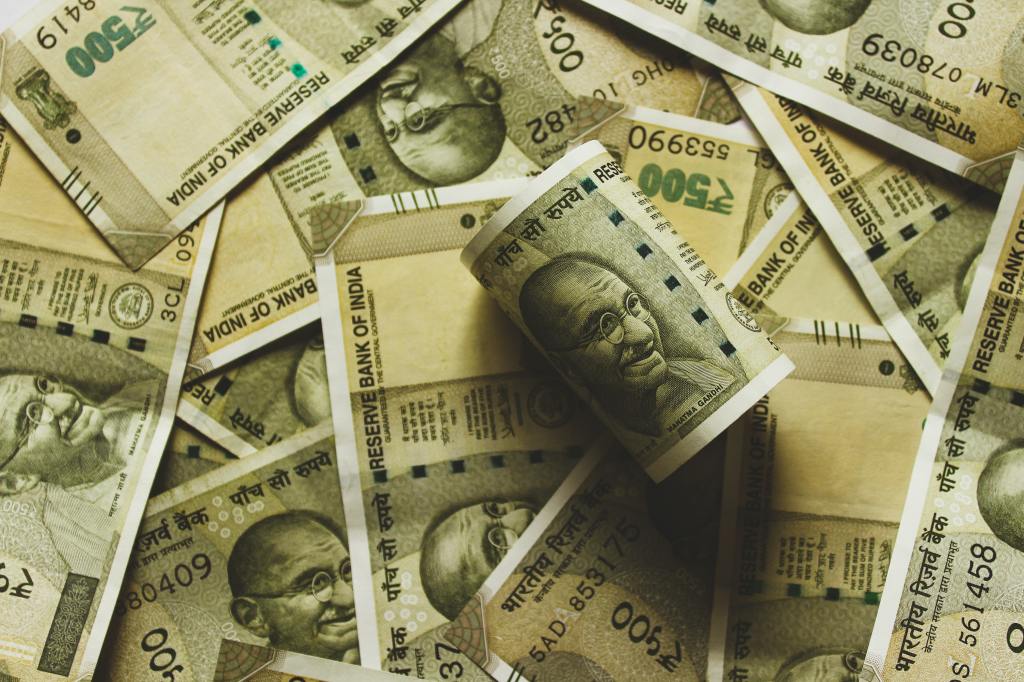
Photo by rupixen.com on Unsplash

My earlier blog ‘Cans of Worms’ was about the big scams and corruption scandals in India over the last 7 decades. Corruption in India has taken on a huge, toxic dimension. It takes a cruel toll on the poor and is very troubling for the middle class. It has seriously compromised our polity and public systems and is pervasive across the country.  It has eroded the quality and prospects of life for millions of Indians and aggravated the struggles of the majority populace of have-nots. The malaise has gone so deep that many good, educated citizens helplessly shrug that nothing can be done about it.

Western countries also have acute problems of corruption but it does not intrude into the day-to-day lives of their people. The venal ex-President and self–proclaimed billionaire Donald Trump has evaded paying income tax for many, many years. London is the welcoming, Go-to place for the world’s financial criminals as extradition is difficult. The serene beauty of Switzerland with the snow-capped Alps as shown in the Yash Chopra films is the picture-postcard version of it. The country’s banks have been the preferred havens for black money from all around the world. The Nazis were amongst their first customers.

Let’s hit the pot-holed roads. Their proliferation is such that the traffic has to navigate the holes to find the stretch of roads. The NCRB (National Crimes Records Bureau) finds that 5% of the deaths on Indian roads are due to pot-holes. The traffic police point to the same as the cause of long traffic jams in cities. This perennial bane can be resolved only if the roads are constructed with good materials and maintained properly. But there’s the rub. The 10% cut from the contractors to public officials and politicians has moved with inflation to 25%. The quality of roads becomes the first casualty. Poor roads or bridges or flyover construction is the fall-out. Let it be noted that one of the major reasons for China’s economic explosion was the focus on building good roads and infrastructure. Creating many, many jobs and driving economic growth.

The Public Distribution System (PDS) is supposed to cater to the food requirements of the neediest- the ration card holders. Instead, the sad reality is that the fair price shop owners sell the good quality food-grain in the open market by using fake ration cards. The BPL (Below Poverty Line) populace is often left with poor-quality residual stuff.  As it is, the system gives them access to only items like rice and wheat, ensuring that the poor continue to suffer on the nutrition front. The program also has an urban bias because the rural areas are not well connected by an efficient transport system. But surprise, surprise! Uttar Pradesh has redefined the system by becoming the first State to achieve more than 95% food distribution through a transparent biometric identification system.

Let’s look at the Minimum Wages scenario outside the States’ Shops and Establishment Act and the Central Sphere of Employees. The major chunk of daily wage workers is in the informal, unorganized sector.  The National Floor level wage for an unskilled worker is Rs 178/- per day.  Varying from State to State and Cities and towns. But it’s no secret that these poor people are at the mercy of the Agents.  Through a social worker friend of mine, I was shocked to learn that these middlemen appropriated 40% of their daily legitimate earnings if they wanted 20 days of work a month.  Also, extending work hours by a couple of hours a day is deemed normal.  Talk about ‘bonded labor’ in our cities. They remain gagged as the Principals, Agents, and public officials enjoy the spoils. Meanwhile, the law against underpayment or exploitation gathers dust within the legal tomes.

The Medical profession and the hospitals have also fallen from grace. There has been a positive side to Covid management in India but the flip side has been very disheartening. The black marketing of oxygen cylinders and drugs like Remdesivir has been reported in the media.  Less so the extortion from some in the hospital management for the availability of rooms and beds. Overbilling and prolonging patient stay is common practice at many private hospitals across the land. But a particular data shared with me by a health professional friend stunned me- 22,000 pediatric claims at government hospitals in a State for Rs 15 crs; 30,000 child care claims amounting to Rs 165 crs in the same State by private institutions. Malafide intent goes even beyond this. HPR (Health Professional Registration) by the National Health Authority has been made mandatory in several States. Many hospitals are accessing or buying or leveraging such certification as a cover for billing and conducting procedures and surgeries by less qualified or experienced professionals. So you have the case of 1 registered eye specialist deemed to be performing 300 cataract surgeries a day at different locations.  Eyeball-rolling, Really?!!  Then there is the frightening scenario of quacks endangering the lives of poor patients by donning surgical masks and gloves and wielding the scalpel. In fact, the ‘The Wealth is Health’ mantra goes back to the late 1980s. An anecdote as told to me by a colleague- his friend, a senior employee at a pharma firm had to pay Rs 1 lakh a month to the Health Secretary to secure access for his Company’s products at government hospitals.  As they became more comfortable, the babu confided that most of the money went upstairs.

Digitalization of the economy and business has had a positive impact. The Co Win App and the vaccination drive showed what the country and the governments are truly capable of. Listen to Sundar Pichai (CEO-Google) about UPI and the Covid Relief fund. “It’s remarkable. It shows up on an individual’s account immediately.” But E-Governance has not really freed the citizens from the corruption quagmire. A simple case of renewal of a driving license. One goes online, fills in the details, uploads the documents, and makes the requisite payment.  All one gets is the transaction number. So multiple rounds to the RTO with the same documents to get the job done. Then the middle-man enters and the fees are paid and hey presto! The job is done. This is where corruption spooks the average Indian. For every standard routine matter, one has to grease palms.

Let’s dekko at the judiciary and the police- 2 important pillars of the State. There is this saying, ‘the fish rots from its head.’ So we have a retired Supreme Court Judge reluctant to let go of his perks- having 20 public servants at his beck and call for many months post-retirement. From ‘Your Honour’ to ‘My Lord.’ Two more cases illustrate the rot in the judiciary. In May 2015, a Hindi film star was sentenced to 5 years in jail by the Mumbai Sessions Court in a hit-and-run case. The same night the High Court convened and suspended the sentence. The Superstar walked out with the swag of a Sultan. On the other hand, you have nearly 3 lakh under trial who have been locked up for more time than their alleged crime warrants. But the Governments and the Courts which only cater to the privileged do not initiate the process to set them free. It is a truism that in India a number of litigants pass away before their Judgement Day on Earth. A fresh infusion of 1 lakh + judges and magistrates and the fast track model can only clear the staggering pile of cases.

The police have a dismal reputation for being amongst the most corrupt organizations. This will continue till the Union and State Governments let go of their feudal hold on the police through the much-needed police reforms recommended by Shri Prakash Singh, retired IPS officer, and endorsed by the Supreme Court in 2006. So we have a reinstated police sub-inspector in Mumbai extorting crores of rupees from bars and clubs and having unfettered access to the Police Commissioner and the Home Minister.  More than 40 years back, I had heard from a senior police officer that Rs 50,000 was the price for a lucrative posting at one of the stations in the Bombay port area. This was the investment and a resourceful cop would certainly look forward to a multiple ROI. The same sleaze was again exposed by a report around a decade back. –the secretary of an MLA asking for Rs 15 lakhs for a posting to a particular police station. It was further elaborated that the asking amount would depend on the importance of the police station in their constituency and its income-generating capacity. However, it needs to be said that a critical part of the Police Reform Report says that the ground level Constable force be given more dignified living and working conditions.

Elections are high stake games with tons of black money involved.  All political parties follow the winnability quotient from the Congress playbook- Money, Muscle, Caste, Creed. So you have the BJP in UP strongly supporting their ‘Bahubali’ MLA from Unnao, Kuldeep Sengar. Accused and later thankfully convicted for the brutal rape of a 17-year-old girl and later killing of 2 of her relatives in a planned road crash. Sengar had earlier represented the Congress, the Samajwadi Party, and the Bahujan Samaj Party.  But this serious and blatant criminalization of politics and shameless horse-trading has not served as a wake-up call for any of our tall leaders.

The 2014 Lok Sabha election, according to informed sources, cost around Rs 30,000 crores.  The political coterie in India has become an exclusive, self-serving club. Hence, very few top politicians end up in jail. Some of them increase their assets by more than 1000 percent from one election to another. The Companies Act 2013 and the Electoral Bond scheme 2017 do not provide for more transparency and do not work for the greater good. The possibility of anonymous corporate, individual, or even foreign funding has increased.  Increasing the risk of public policies being framed for the funders and not the voters. A potentially scary situation.

With the budget session looming, signing off on the much-debated topic of Income tax. Only 3.2 lakh Indians declare income of more than Rs 50 lakhs annually; only 16.8 lakhs fall into the highest 30% tax bracket; only 5.83 crs IT returns were filed in FY 2022. Think about all this in the context of the 1 million SUVs sold in FY 2021; and that 30.85 lakh Indian tourists applied for visas in 2022 despite the pandemic travails. The parallel economy in India is estimated to be around 50% of the GDP. Despite DeMo and the increase in digitalization, the cash economy has grown from 10.7% of the GDP to 14.4% of the GDP to a record high of Rs 30.88 lakh crores. Easy to understand why ‘ the captive salaried class’ or the organized sector employees are fervently praying for tax relief in the budget. A recent Oxfam report has revealed that 64.3% of the GST collections have come from the bottom 50% of the population. High time for a more equitable review of both direct and consumption taxes and widening the base through lesser tax rates.

As the current Government has a clear majority in both Houses it should pass the much-needed structural reforms Acts-police reforms, revamping the judiciary, 30 % women’s representation bill, recall of corrupt representatives, and election finance laws and regulations (look at the French model). There is no hope for a Naya Bharat or a New India till this rampant corruption is controlled and minimized. Only well thought – through and transparent public policies and laws can reverse decades of neglect and indifference. The third largest global economy will not have a satisfying ring to it if India continues to feature in the highly corrupt and high inequality indices in the world order of nations.

Why Have We Set the Bar So Low for Our Politicians?

Indian Parliament

India is hailed as the world’s largest democracy. The sheer scale and logistics of our elections have been celebrated in Discovery channel documentaries. Yet 70+ years after independence we have not evolved into a mature, functioning democracy. Indeed, in many, many ways we have lost our way. Hordes of politicians- precious few leaders and statesmen.  Political dynasties sprouting all over, endemic corruption, gross incompetence. Turncoats and floor crossers; Subsidies, freebies, quotas and reservations; vote banks and appeasement and divide and rule. Always in election mode with little time for good governance.  Hollowing out our nation.  Cheered on by a largely discredited Fourth Estate.  Navigated by a mostly pliant babudom of bureaucracy ( with some honorable exceptions).

Why do we give our Netas a free pass again and again? Why do we tolerate their BS? Why do we not hold them accountable as public representatives for their conduct and performance? Look at any other walk of life. A rash bus driver will be suspended- the passengers will ensure that he is not in the driving seat any longer. A construction worker will lose his /her livelihood if not reporting in time for the grind every day. An errant school teacher will be hounded and reported by irate parents. An underperformer at a corporate will likely get the pink slip. A soldier/officer who has breached military discipline will be court-martialled.

We, as a people, are largely to blame- beyond our apathy and indifference. We have this mongrel attitude of putting ourselves down. Plus the colonial/feudal hangover. The people in authority cannot be questioned. So we willingly play into their hands. Region, community, caste or creed. Or a once in a 5 year spread of booze and mutton. We have been manipulated to such an extent that even educated people gloat when their preferred venal leader has outsmarted the tainted leader from the other side. Grandmaster, Chanakya are the accolades. We have become accomplices in a very corrupt system.

It is laughable that the only criteria we have to monitor the performance of our elected representatives is the attendance sheet at the Assembly/House or the number of questions asked or debates participated in. The average attendance in the Lok Sabha is below 80% and the other parameter does not bear scrutiny. Even raising the hand and making a few inane observations count as participation. In no other self- respecting institution or organisation will such a person be invited again to join a meeting or a quorum.

Take the mismanagement of the second Covid surge. Yes, India has a huge population and some resource issues. Nobody knew the second wave would be so virulent. The fact is that the recurrence of the pandemic was entirely predictable after the outbreak in UK & Europe last December. The Central Government was lulled into a false sense of complacency after an effective handling of the first phase. Even the Sangh Chief has admitted as much. The dropping of guard happens when the powers that be are surrounded by Yes Men. No professional and non-political Task Force to tell it as it is. The tone deaf denial mode of the Union Government was highlighted by the prolonged elections in West Bengal, the rallies all over and the hosting of the Kumbh (thankfully, called off after a week.)  Super-spreader events. Any responsible government (including State Governments) would have focused on expanding the number of hospital beds, stocking Remdesvir and other drugs, ramping up of vaccination and planning the evacuation of migrants, if required. The oxygen and ventilator crises could have been averted through stocking up and imports. Supplies from industrial oxygen producers could easily have been diverted for public health use as was done much later in the day. How have Sikh Gurudwaras achieved the miracle of running both oxygen and food langars so effectively? The NDMA (National Disaster Management Authority) and critical units of the Armed Forces could have been put on alert. Again in an established Company, heads would have rolled in the Boardroom. But our expectations from our political leadership is woefully low. Even as the human tragedy unfolds every day, the politicians and their media partners delight in taking pot-shots at their opponents.

And it is not that India does not know how to deal with catastrophes. When a cyclone is imminent and the landfall declared the NDMA swings into action. Evacuation exercises, shelters, food & provisions, medical help, rescue ops – all are conducted humanely and efficiently. With the collaboration of the State Administration, NGO’s and philanthropic trusts. The way Orissa cyclones have been dealt with in recent times should be a matter of pride for us. Far better relief and response than the Americans have experienced when hurricanes have battered their regions.

Good Economics is the best politics. But this seems to be lost on our timid and status-quoist Ministers. Our Hon FM brushed off the issue of fuel price as a ‘Dharamsankat’ (a very difficult decision to make) – a matter to be resolved between Centre and States. So why not do it? Fuel prices are nearly hitting Rs 100/- per litre with nearly 2/3rds going to Central and State Treasuries. Diesel & Petrol prices also fuel the inflationary trend. A reasonable reduction in taxes will help on the ground. If the hike in taxes is to cover-up revenue shortfalls during the pandemic or to create a Crises fund- be transparent about it with the public. Continuing with Covid 19, the NDA administration has not talked about measures to rejuvenate the economy once more normal times are around the corner.. No relief or rebates for the hard-hit industries, sectors or even retail commerce and trade. In India after agriculture the employment generation sectors are Construction, Trade, Transport & Storage, Education, Hotels & Restaurants’ and the retail markets. The economy has to be jump started into resurgence. In the second term of the BJP led government there has been only some noise about disinvestment and privatisation. Again, nobody is seeing the whole picture. For instance, the Japanese and the UAE are willing to invest billions$ into even home and apartment constructions if the law of the lands satisfy them and RERA ( Real Estate Regulatory Authority) is made effective and mandatory at State levels. Homes and flats will be cheaper for the average citizen. But there is a close nexus between politicians, real estate and the mafia. FINITO!!! The other reason for the lack of direction is the curious reluctance to seek expert advice from those who do not subscribe to the party’s political philosophy. For instance Gita Gopinath, Chief Economic Advisor to the International Monetary Fund can be roped in for structural and sector reforms; Nobel laureate Abhijit Banerjee should be the go to person for new ways to alleviate poverty.

On the political turf, we still seem to be stuck in the 70’s-90’s period when the Congress called the shots. Vote bank politics, reservations, engineering defections and horse-trading, imposing President’s rule and unleashing Central Investigative agencies on opponents; the winning formula of caste, creed, money and muscle; getting TV channels and media on board. The BJP and the regional parties have fully espoused the Congress playbook. The GOP may be in decline but their machinations endure. Verily, we may be caught up in ‘ the devil and the deep sea’ syndrome.

The only glaring difference is that the power game has become much polarised. With the deaths of Shri Arun Jaitely, Madam Sushma Swaraj and Shri Manohar Parrikar the BJP has lost the senior leaders who could reach across the aisle and have a dialogue with the other side. The ruling party has to realise that it governs the country and not just those who voted for it. The ‘Sabka Saath, Sabka Vikas, Sabka Vishwas’ slogan has to have a genuine ring about it.

Political and personal attacks have reached the nadir- across the political spectrum. Such language will not be tolerated in any other space. Our ministers & parliamentarians simply shrug it off and say that they have been misquoted or even dig in their heels. The regressive comments made about women, dress-sense or food habits do not fit in with India 2021. These motor-mouths are not even rapped on the knuckles let alone fired, suspended or disqualified.

The mishandling of part 2 of the pandemic has brought the Hon PM Modiji’s government to its lowest point since 2014. Of course, the opposition and their cheer leaders are gloating. But it is also a loud wake- up call which they can ignore only at their peril. If they don’t see the real picture, the road leads downhill. It will be a hat-trick of misses since the majority governments of Mrs Gandhi in 1972 and Mr Rajiv Gandhi in 1984. The power to achieve a Greater Good will be wasted again.

The NDA Government does have some bold decisions to its credit. Can it harness the same resolve and its majority strength in both houses to push through some vital reforms?  The expose of the rotten politician-police nexus in Mumbai underscores the imperative need for Police Reforms. Till now, all parties have ‘Copped Out’. What better than to have the Cops serve their venal interests and boost their power.  A Supreme Court Judgement of 2006 attempted to move the needle a bit. The Soli Sorabjee Commission (2015) made 7 recommendations to kick-start reform. Constituting a State Service Commission to set broad policy guidelines, ensure functional space for the police and to evaluate their performance. At least a 2 year tenure for DGP’s, SP’s, Station Heads. To separate the Investigative and Law & Order functions of the force. Set up a Police Est. Board to independently decide on the transfers, postings and promotions at least up to the DSP level with recommendatory authority above that.  Likewise a Police Complaint Authority to which the general public can have easy access to. At the Central level a National Security Commission would take up the responsibilities.

The working conditions also shout out for change. India has only 198 policemen for every lakh of population. Even the most conservative bench-mark is 275. Constables work 14-16 hour days with no over-time. Service and housing conditions are pathetic. There is little dignity in wearing the uniform at their level.  There is no career path to speak off. Operational budgets are so tight that petrol/diesel is often filled in police jeeps by some ‘business cronies’ or by heavy-handed tactics.  Even today in some States the force works at only 75% of the sanctioned strength.

A lot of lip-service has been paid to the cause of 1/3rd reservation of seats for women in the Lok Sabha and the Rajya Sabha. The UPA Government had tried to introduce the bill but threats of withdrawal of support from the Samajwadi Party and the Rashtriya Janata Dal made it a non-starter. In Jan 2019 women representatives from across parties in the Rajya Sabha appealed to PM Modiji to get the Bill passed with his majority force. The sooner this becomes a Law the better. Yes, some of the women candidates will be proxies for their political families. Some MP’s may turn out to be incompetent for the job at hand. But greater women representation will usher in more decorum and dignity in these Chambers and going forward more diligence and responsibility.

In 1970 the Wanchoo Committee report raised alarms as to how black money had permeated our politics. The Vohra Committee Report of 1993 was titled ‘ The Criminalisation Of Indian Politics.’ It is said to have even spelt out the politico-bureaucrat links with the D Company. It is not surprising that only 11 pages of the report were tabled in Aug 1995 in the Lok Sabha. The more than 100 page report was buried. Clearly, there is Honour Amongst Thieves. Politicians across the gamut know how to take care of each other, especially the Big Fish.

The Aam Aadmi Party was born out of an Anti-Corruption crusade. But in the Delhi Assembly elections of 2020, nearly half of their candidates had criminal cases against them. 116 BJP MP’s (39%) in the Lok Sabha have criminal charges on their records and with Congress sharing space with 29 tainted MP’s. In the recently conducted polls in Kerala, Tamil Nadu and West Bengal 71%,60% and 49% of the winning coalitions boast of criminal charges and quite a few of a serious nature. ( As per media sources and electoral news reports gleaned on the internet). So whether it is the disciplined cadres of the BJP or the holier than thou Comrades, criminality is a common theme. It is the winnability factor which has sullied our electoral process. Adding Money and Muscle to the earlier caste and creed to intimidate, buy, and steal elections.

The response from the Hon Supreme Court and the Election Commission of India (ECI) has been disappointing. A declaration is all that is needed, courtesy the political parties. They have to detail the criminal history of their candidates on their official web-site and justify why they have given them a seat. That’s It.!!!

The lust to get power and retain it takes all our political outfits over the red line-into gross criminality. We are told that we have some really tall leaders, even cult figures gracing our political landscape. With millions of die-hard followers. Why do these dominant personalities not use their charisma to enlist competent, sensible people as their candidates and ensure that the right people are voted in?  Why lug on the same old dirty bag of dirty tricks??

Black money is the other insidious influence on our democracy. The undisclosed wealth in India has been officially estimated at 15% of the GDP. That we are a cash economy helps. A rational mixture of reduced income and consumption tax will spread the tax net considerably. Per other researchers our parallel economy is closer to 25% of the GDP. Indian money parked in Swiss and other off-shore banks is said to be in the range of $1.5 to $ 2 trillion. Now our super-rich are actively looking at buying Residency and Citizenship in St Lucia, St Kitts, Antigua, Malta and Cyprus. Of course, the UK remains the haven for our fugitive financial criminals and the extradition of Nirav Modi and Vijay Mallya will be an achievement, if and when it happens.

Although tricky to monitor, poll funding should constantly be under the scanner. It represents another bane of our electoral process and tells why the quality of the representatives is so low. In France, business is barred from political donations to avoid the mess of special interests or in Indian lingo, ‘crony capitalism’.  Individual contributions are limited to 7500 euros per year and if exceeding 1520 euros have to be made by cheque. Regular payments by the registered party members make up around 35% of their funds. In the Presidential elections the State reimburses 20% of the campaign expenses of all parties. This % age goes up with %age of votes and seats won. If India has to shake off the murky sources of election monies, the ECI+ SC+ lawmakers will have to roll out a viable model. The ECI observation that the average election spending per candidate is around Rs 40 lacs cannot be taken seriously.

The last of this wish-list pertains to re-structuring of our creaking judicial system. Inefficient and overwhelmed. Out of the 4 crore cases pending, the District and Subordinate Courts are submerged by 75% of them. Litigation by the Government Departments is high accounting for almost 50% of the cases and many Dept. vs Dept. Our country has only 21000 judges where there should at least be 40,000. The Indian Judicial Service does not attract the best talent and the competence of the judges in the lower courts is not up to the mark. At the HC and SC levels there is a ? on the transparency of the process of appointment of the Judges. The bottom-line is that neither the Centre nor the State is interested in increasing the spending on this vital pillar in our democracy. Budgetary allocation varies from a pathetic 0.17% to 0.40% of the budgets. Faith in our judiciary is at its lowest. We acutely need more Fast Track Courts and Tribunals, Lok Adalats and Gram Nyayalayas. It has also not sunk in that this dubious track-record adversely impacts the flow of foreign direct investment in India.

This lethargic machinery caters to the under-trials- a whopping 70% of the approx. 4.75 lakh prison population in India. The Prison Report in 2019 has said that 65% of them have already spent more than a year as inmates for petty and minor crimes. The poor and the illiterate can’t afford bail. Why a sweeping decision cannot be taken by the Law Ministry with the guidance of the Hon. Supreme Court to release those who have completed 85% or more of their maximum expected term of imprisonment. Let’s take a leaf from the recent Supreme Court order to release 568 prisoners held in Kerala jails on parole and another 350 on bail. The objective-immediate release of the prisoners to avoid overcrowding of jails in the wake of the unprecedented spread of the pandemic.

Indian democracy and its institutions require urgent overhaul. Request the Hon PM Modi’s Government to use their majority to push through these reforms. There will be a lot of resistance from within and without. No matter. They have another 3 years to go and what better and enduring legacy to leave behind or take forward.