INDIA POSITIVE- The Saga Continues

When on the 23rd of August 2023, Chandrayaan 3 landed its rover on the south side of the moon, crores of Indians across the globe were all over the moon. The ISRO scientists and engineers were lauded and feted across the world. The success put India’s ‘rocket women’ in the spotlight- over 100 were closely associated with the lunar mission. Another surprising revelation was that only 2% of the ISRO space scientists had IIT affiliations.  Most of them were from Regional Engineering Colleges such as the COE Thiruvananthapuram.  Shri S Somnath had done his Mechanical Engineering degree from Kollam, Kerala. ISRO’s partners in this historic project were companies Hindustan Aeronautics, Bharat Heavy Electricals, Godrej Aerospace, Larsen & Toubro, MTAR Technologies… A satisfying ‘Make in India roll-call list’. However, what has stunned the international space community is that the Chandrayaan 3 mission cost only $75 million whereas the Russian Luna 25mission cost around $200 million. The Hollywood movie’ Interstellar’ had a production and marketing budget of $165 million. So ISRO is best placed to be the launch pad for global satellites outbidding rival agencies in the US & Europe. Satellite launches + satellite manufacturing services also.  India’s space economy which is valued at $8 billion is expected to grow to $40 billion by 2040. Forbes India has said that it may even catapult to $100 billion over the next 15 years. Since 1999 ISRO has put 381 foreign satellites in space for 34 countries and earned $279 million in revenue.

Covaxin, India’s indigenous Covid 19 vaccine was developed by Hyderabad-based Bharat Biotech in collaboration with the Indian Council of Medical Research (ICMR) and the National Institute of Virology (NIV). Around 35 million doses of Covaxin were administered effectively (1.69 billion doses of CovidShield). A recently released film, ‘The Vaccine War’ celebrates the dedication of Dr Bhargava (Director ICMR & team) and Dr Priya Abraham (Director NIV & team). Again, a number of women virologists and bio-scientists made a significant contribution when it really mattered. That India supplied almost 24 crore doses of the vaccines to 101 countries, mainly through grants, is hardly a footnote.

Many Indians take pride in the ever-expanding list of Indian-origin global CEOs. Sundar Pichai (Alphabet/Google), Satya Nadella (Microsoft), Leena Nair (Chanel)… Rishi Sunak (PM-UK) and Leo Varadkar (PM-Ireland) have given hope to some that a certain Vivek Ramaswamy may be the next occupant of the White House with the blessings of a certain Donald Trump. Shuddering thought!! Why indulge in these vicarious feelings when actually good things are happening in our country.  Like the expanding global footprints of Indian MNCs.  Bharat Forge is the world’s largest forging company with manufacturing facilities in India, Germany, and Sweden. Tata Steel, JSW Steel, SAIL & Arcelor Mittal are amongst the largest steel manufacturers in the world. Bajaj Auto (3rd largest 2wh- manufacturer) is the most valued 2wh company with a market cap of $13 billion. Asian Paints makes the top 10 peer list with a valuation of $2.18 billion. Sun Pharma has broken into the pharma companies’ elite top 25 club. Indian Pharma is also the world’s largest producer of low-cost generic drugs which is God Sent to developing nations. Airtel Africa (Bharti Airtel) is the first or second largest operator by customer market share in 13 out of the 14 African countries it operates in with its 4 G services. As of April 2023, India has claim to 167 billionaires, behind the US and China. This is in the context of the Indian economy being opened up only in 1991 by the Shri PV Narasimha Rao government with Dr. Manmohan Singh as the Finance Minister.  In the India Positive saga, it is also interesting to note that the Women’s Reservation Bill was first tabled in the Lok Sabha by the Shri Deve Gowda government in 1996. This much-needed legislation has finally become an Act just last month.

A lot of positive developmental work is happening on the ground. The media does not share any good news as everything is seen through a political lens. So hit the road in the next few months to find out that the Raipur-Vishakhapatnam 6-lane Greenfield highway has reduced the distance from 590 km to 464 km and the travel time from 14 hours to 7 hours. The Meerut to Prayagraj Ganga Expressway will also halve the travel time from 12 hours to 6 hours. The Bengaluru-Chennai 258 km expressway which will be open to traffic from Jan 2024 has reduced the stretch by 50 km and commute time by 30%. 4 lanes are expandable to 8. All part of the 202 NH projects worth Rs 80,000 crs are under implementation and crisscrossing the country, with a special focus on the North East.

The 1483 km Delhi-Mumbai Industrial Corridor through Haryana, Rajasthan, and Gujarat & Maharashtra will have industrial zones, logistic hubs, power plants, ports access, schools, and hospitals –creating new economic centers with large employment potential. The ambitious Narmada Valley project seeks to optimize water resource management and generation of power through a network of canals and small dams. Another objective is to raise the groundwater level tables in the adjoining areas. The Chenab Rail Bridge (1.3 km) is expected to open to rail traffic soon. It will connect the Kashmir Valley to the Rest of India- Baramullah- Srinagar-Udhampur. The new international airport terminal at Bengaluru (T2) is expected to take air passenger footfalls to 55 million in the near future (currently 32 million annually). With a T3 planned annual air passenger traffic can move to Heathrow levels. If critical projects are completed within timelines- the economic, social, and employment impact will be huge.

The Ayushman Bharat National Public Health Insurance Scheme already has around 24 crore card holders with the GOI aiming at 50 crore registered members from the low-income earners or ration card holders. The cashless health care benefits provided – Rs 5 lakhs per eligible family per year at empaneled hospitals and designated health care centers. Sure, there are problems of corruption, fraudulent claims, and excessive billing. But a welfare scheme at such a large level will have to face, confront, and resolve such issues.

India is a happening place as a medical tourism destination. Around 2 million patients from around 78 countries sought medical, wellness, and IVF treatments in India, and the numbers are growing. The current $6 billion revenue is expected to double by 2026 with a boost from the GOI ‘Heal in India’ initiative. Chennai hospitals are especially sought after for their high-quality treatments with more than 40% of the overseas health tourists’ traffic landing in the city.

The Indigenisation of Defence Production is another stellar chapter in the India Positive story. Indian defense exports have leapfrogged from Rs 1500 crs in 2016-17 to the current levels of Rs 16000 crs. To friendly countries in South East Asia & Africa with an intent of a long-lasting relationship for military hardware. Prithvi (surface-to-surface missile), Akash (surface-to-air), Trishul (naval version of Prithvi), Nag (anti-tank), Agni(anti-ballistic missile), and Light Combat Aircraft (Tejas) have received some coverage in the media. However, India’s specialisation in Weapon Simulators, Night vision- Monocular and binocular, Weapon locating radar, Coastal Surveillance Radar, Torpedo loading machines have invited a lot of interest from countries like the Philippines. Although 80% of the defense production is by Government establishments like HAL, DRDO and BEML private companies like Bharat Forge, Mahindra Aerospace, and MATR Technologies are stepping forward as trusted partners.

Mr Nandan Nilekani has often referred to India’s new model of growth with technology drivers whilst remaining anchored to inclusivity and the Greater Good values. This Digital Transformation is dramatically changing India from an informal, fragmented, cash-driven, and inefficient economy to a formal, organized and high-productivity economy. Mr Nilekani should know as the father of the Aadhar card issued by the Unique Identification Authority of India (UIDAI). Remember this happened in 2009 under Dr Manmohan Singh’s UPA 2 government. Although it took its time to take off, there are 1.3 billion Indians with digital ID’s today. The Aadhar was the ID layer. In late 2014 the Jan Dhan Yojana was announced and in a few years 400 million new bank accounts were opened and India went from being one of the most unbanked countries in the world to one of the most banked ones. The account holders have now crossed 50 crs and have the added facility of the Ru Pay debit card. In 2016 the scenario became turbo-charged with the launch of the UPI (Unified Payments Interface) payment scheme and the advent of smartphones. Block Building. The payment layer and the data layer became naturally integrated. KYC (Know your customer) with 10 million authentications per day (OTP, Iris, Face, Fingerprint) became the gateway for not only opening bank accounts or securing mobile connections but for pensions, mutual funds, and insurance. One may recall that with EKYC, Jio issued 100 million SIM cards in just 6 months. Being financially inclusive and connected meant that almost $5 billion of welfare funds were directly transferred to the accounts of 160 million beneficiaries who were in dire straits during the pandemic.

UPI has catalyzed and streamlined the economy in just 7 years.  300 million active monthly users, 500 million merchants who use UPI to accept money for their businesses, and 7.6 billion transactions a month. In September 2016 the RBI launched the Bharat QR code and by Dec 2022 the Bharat QR had 4.9 million users and UPI QR-238 million. Vegetable vendors, farmers, shopkeepers, merchants, and professionals are all embracing the QR code for receiving payments, delivery of services, seeking feedback on services…

The Digital Revolution has become a way of life. As the ex- Infosys Chairman succinctly puts it, “the change and momentum is irreversible.” The Digi Locker (GOI cloud) was rolled out in 2015. As per the latest data 134 million Indians securely store their documents on the cloud- Aadhar, PAN card, Driving License, CoWin certificate… Fast-Tag has released the traffic jams at highway toll booths and also plugged considerable leakage. 324 crs (number of) transactions were done vide Fast Tag in 2022-23. The Digital Tax system for Income Tax and Indirect Taxes has made matters more efficient and transparent. The competition between Jio, Airtel, and Vodafone has ensured that the cost of consumption of data on our smartphones is amongst the lowest in the world.

At the cutting edge is the AI for Bharat- a voice tool in 22 regional languages. A farmer can raise his query about the sowing season timing, the weather, or the markets and receive a quick response in his own language. Some of the information will be facilitated by GPT. Let’s talk about another game-changer ONDC (Open Network for Digital Communication- GOI-Promotion of Industry & Internal Trade). “An advanced ecosystem that enables smooth and interoperable online transactions; ONDC provides an open protocol that envelopes different aspects of e-commerce for a streamlined exchange of goods and services.” Small and medium businesses can directly engage with potential customers or clients without the demands of intermediaries; it can provide a collaborative channel between the logistics and the seller to make deliveries more timely and efficient; small businessmen or farmers in Tier 3 and rural areas can access the App in their own language. They no longer have to rely on big firms, agencies or markets to sell their products and services.

By 2030 India is expected to become the 3rd largest economy in the world, overtaking Japan. But per-capita income is what we should be tackling on a war footing. Our current ranking is a dismal 141 out of 197 nations. The economy has to grow at 6.5% to 7% CAGR every year for the next 20 years if we have to be accepted and acknowledged as an advanced economy. There is surely some progress to cheer about but it is a long haul ahead. It is incumbent upon whichever future government is in power to relentlessly focus on a vibrant economy and real & inclusive growth. Good Economics is the Best Politics. In 2047, the Indian tricolor should unfurl after 100 years of Independence to represent one of the leading global powers and celebrate being one of the most progressive nations on Earth.

Buckle Up For the Great Indian Election’s Global Ride

The 2024 General Elections will be a Great Indian Blockbuster Tamasha. The stakes couldn’t be higher: for the I.N.D.I.A bloc of 26 opposition parties, have come together solely to overthrow the Modi Sarkar; and for the BJP-led NDA coalition, which is trying for an unprecedented hat-trick of wins. The sheer scale of the elections will be breathtaking. The magnitude of efforts taken by the Election Commission, the administrative and law and order eco-system, will be awe-inspiring. The ultimate salute to democracy.

Unfortunately, the toxic side will also be on full display. The old Congress playbook with its ‘winnability’ formula – Money, Muscle, Caste, Creed – has been embraced across the entire political spectrum. Many candidates with criminal backgrounds, dubious credentials, and low merit will be voted in as our future Members of Parliament. Vitriolic language and uncouth barbs will capture our media headlines. Political families will break up, and even long-affiliated leaders will head for supposedly greener pastures. Divisive rhetoric will prevail, and even some communal and regional disturbances may be instigated or inflamed to consolidate vote banks. TV channels, print media, and social media influencers will go berserk, spewing out a lot of stuff – less real news and loads of propaganda and negativity.

However, the X factor in the 2024 election will be the global interest, and more so, the meddling and interference, and even infiltration by some governments and nations, special interest groups, and social media disruptors. Indian political parties slugging it out is all okay. When foreign money and deliberate disinformation come in to subvert the election process, it takes on a dark and troubling dimension.

Let’s take the case of the Hungarian-American billionaire George Soros and his Open Society Policy Centre (OSPC). Ostensibly to push back against strident nationalism in any country, Soros publicly announced at the Davos Conference that he was going all out against the Modi Government. Hardly surprising! In 2018, the Sherpa Association backed by Soros filed a complaint with the financial prosecutor of France against the 36 Rafale Aircraft deals with India. The Opposition parties in India raised the decibel meter of ‘Corruption’ in the months before the 2019 elections. Is it a coincidence or is there more to it than meets the eye? Then his Organised Crime and Corrupt Repairing Project (OCCRP) targeted industrialist Adani immediately after the Hindenburg allegations (Investment firm with a focus on short selling). Are they just separate events or is there a definite pattern to it? If there is any substance in the allegations, Indian Regulatory and Investigative agencies are perfectly capable of probing into it. Period. It’s extremely likely that in the next few months, another top Indian industrialist comes on their radar, and ‘crony capitalism’ becomes the most uttered jibe by our desi politicos. Beyond this, it will lead to shocks in the stock market and jolt the Indian economy.

Generally, in conspiracy theories, there is talk of a ‘Deep State.’ Here, it is all out in the open if you know where to look. The BBC, CNN, New York Times, Washington Post, Wall Street Journal, Guardian, Observer… The BBC keeps talking about the instability and unrest in the Indian State of Kashmir. They have to keep the pot boiling. Remember that it was in a 2001 BBC interview that Yasin Malik (JKLF) had casually admitted to killing a judge, some unarmed Indian Air Force personnel, and some civilians. (Fact check – more than 13 million Indian tourists have visited the Valley till July this year, with another 3 months of the season to go. The hotels and guesthouses are full, and also the buses, cabs, and shikaras.)

After the inspiring success of ISRO’s Chandrayan 3 landing on the South face of the moon, a British news anchor patronizingly asked India to return 2.3 billion pounds in aid given between 2016 and 2021. The years cited are the giveaway. The British Foreign Office has formally acknowledged that no British aid has been given to India since 2015. The corpus relates to a joint investment fund for fighting challenges like climate change. Sadly, our news media did not directly rebut the fake news but instead spoke about reparations of $45 trillion dollars which the colonizers had looted from India. Remember that it was the BBC that played up the big lie about Weapons of Mass Destruction (WMD) to justify the invasion and destruction of Iraq by Anglo-American forces. Christiane Amanpour, in a CNN interview, spoke of the Indian PM in the same breath as Putin & Xi Jinping. The New York Times, Wall Street Journal, and Washington Post’s default setting on India is to showcase the country in a negative light. $2000 per Op-ed article is given to members of our very own Vodka Biryani brigade (you know the names) to highlight the slow death of democracy in India and the persecution of its minorities. Remember that our national Opposition leader brandished a copy of the Guardian paper with the same headlines as he spoke to a gathering at Cambridge. The Empire Strikes Back!!

NYT Mangalyaan Cartoon October 2014

The hypocrisy and double standards in peddling news is staggering. A few months back, an unarmed 17-year-old man of North African descent was killed by the police in a Paris suburb, sparking off weeks of violence in the city and across the country. Cut to BBC reporting on the banlieue (suburbs) where the migrant populace stays, “Is the violence the result of poverty and discrimination?” Not quite. “It’s a law and order problem. Gangs and petty criminals use anger over a tragic death to sow mayhem. Their problems have long been recognized by the authorities. But it will not be resolved anyway soon.” BBC Verify also talked about false posts and images about the French riots spreading online. Remember that Brexit happened with a 52%-48% leave vote majorly influenced by images of a wave of immigrants from Africa, the Middle East, and Asia swamping the country. These images were dropped by Putin’s army of social media manipulators sitting in St. Petersburg. Rest assured that the handlers from ISPR (Inter-Services Public Relations Unit of the Pakistani ISI) will be extremely active in fear-mongering and spreading toxic disinformation in India in the run-up to the 2024 election. Insidious versions of Chinese whispers will also pass around.

Sticking to Britain, the extradition of fugitives Nirav Modi & Vijay Mallya will be drummed up by our Opposition bloc as a major election issue. Status – Nirav Modi – his case is said to be ‘statute barred,’ indicating further pending litigation. This after he lost his final appeal in November 2022. The latest about the ‘King of Good Times’ is that he cannot be extradited till a ‘confidential legal issue’ concerning him is resolved. When our MEA tells us that the entire extradition process is tortuous, it is exactly right. No wonder that London is the haven for financial fraudsters and oligarchs.

Recently, liberal France banned the wearing of the Islamic Abaya dress in schools. Check out the reaction from the Western media. Zilch!! Why then the uproar when the erstwhile Karnataka Government talked about standard school uniforms for all. Think about the profound disrespect shown against a Great Religion in Sweden and Denmark in recent months. Shrugged off by the Western media and channels like Fox News as mere ‘freedom of expression.’

Let’s move to Canada. Justin Trudeau openly supported the farmers’ agitation in India, which was confined to 2 States and went on for months in a heavily politicized manner. His vote bank politics led him to interfere in another sovereign country’s internal affairs. The funding for the agitation came from Khalistanis and allies in Canada, the UK, the US, and Australia. Fast Forward. How did the Canadian PM respond to the country-wide transporters’ strike in his nation relating to some Covid regulations? He went missing and underground for a week. He emerged to declare a national emergency (Fact Check – which was the party in power in India when the Khalistan crises came to a boil?).

It is an undeniable fact that the Union and State Governments in India handled the prolonged COVID-19 pandemic challenges more effectively than any advanced nation. Yet papers in the US and Europe showed photos of dead bodies at the Varanasi ghats as Covid deaths, which were being suppressed by the Indian authorities. India supplying vaccines to more than 100 countries also did not receive the media attention it deserved.

Selective Outrage. Remember that the World Health Organisation (WHO) and reputed Western virologists and bio-scientists played PR for Beijing after the Wuhan leak. China is the second-largest funder of WHO, and The Gain of Function Research which resulted in the leak has been a financial bonanza for the scientific community. Likewise, the persecution of over a million Uyghur Muslims in Xinjiang province of China does not raise protests from even Islamic countries. It’s not surprising that our human-rights Comrade activists are quiet.

In the 60’s & 70’s, the KGB infiltrated the top rungs of the Indian government, public service, media, university campuses, and even the Hindi film industry (The Mitrokhin Papers). If not Ideology, Vodka, Money, or a Honey Trap did the trick. Now it is Chinese money that is funding leftist media outlets, some political parties, NGOs, and social influencers. It’s distressing to hear the complete silence from the Opposition parties and this eco-system when China recently released a map claiming Arunachal Pradesh as its territory. All political parties in the Philippines joined together to lambast China’s claims to their part of the South China Sea. A joint US-Philippines naval exercise followed. It is high time that our political parties, irrespective of ideology or political compulsions, do not undermine serious matters of National Security. Remember that ahead of the 2019 election a national political leader after meeting the Chinese Ambassador claimed that the PLA (People’s Liberation Army) had occupied 2400 sq km of Indian territory. Mocking the Indian Army just to take some political potshots.

China’s remarkable growth over the last 3 decades has been propelled by the Communist Party’s absolute dictatorship and State Controlled Capitalism. No dissent is allowed. India as the world’s largest democracy has made a more gradual but definite progress. With the additional internal challenge that some elements in the political domain and media have actively worked to undermine the national interest. Today the bottom line is that India’s growing geo-political clout and economic rise do not sit well with 2 neighbors, some Western countries, and their special interest NGOs and agenda-driven Think Tanks. It is interesting to note that Harvard has received $1 billion from China over the last decade, mainly as gifts. Show me the money. Be prepared for a lot of negative flak from Ivy League intellectuals over the next 10 months.

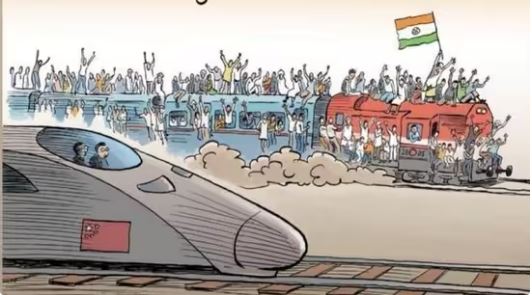
Cartoon from German Magazine Der Spiegel

In April 2023, a cartoon in the German magazine Der Spiegel depicted an overcrowded Indian train passing a modern Chinese bullet train on a parallel track with only 2 drivers inside. The many passengers on top of the Indian train are holding the tricolor.

‘Everyone is entitled to their own opinion. But they are not entitled to their own facts.’ Daniel P. Moynihan-US Senator and Ambassador to India. The stakes and criticality of the 2024 Lok Sabha election cannot be overstated. Please fact-check. Please don’t get misled. Please see through the clutter and noise. Then please cast your valuable vote. Once the dust has settled and the debris removed we will have our new Government per the mandate and will of the people.

India Positive

Photo by Naveed Ahmed on Unsplash

Rainbow Nation was a phrase coined by Archbishop Desmond Tutu to describe post-apartheid South Africa after the 1994 elections as the country peacefully and remarkably transitioned into a democracy.  This was to bolster the blending of diverse cultures and traditions to create a colorful and vibrant society. India with its huge geography and 140 crores + population defies any such paradigm. Just consider this. 122 languages adding up to 234 including dialects. Hindi is said to be spoken by a major segment of the populace. If you count dialects like Awadhi and Bhojpuri… and even the tapori slang of the Mumbaikars and the Hyderabadi lingo’s twist and flavor. 6 recognized religions (Christianity, Islam) & including 4 great faiths born in India- Hinduism, Sikhism, Buddhism, and Jainism. Add the small Parsee community of Zoroastrian tradition and Jews who sought refuge in India from persecution elsewhere. An ancient civilization that dates back to 6000-7500 years ( historian Tim Dyson).

Today’s India has truly started to churn as a melting pot. This cultural acceptance is being fostered by the job opportunities and economic interdependence of ordinary Indians which has led to mass relocations, which in turn is driving the wheels of commerce. Travel and tourism have led to millions of Indians discovering new sub-cultures and traditions and even taking a liking to their food and apparel habits. INDIA POSITIVE- a story not following the script of the divisive politicians and their acolyte media influencers.     

Food for Thought. Whether the sweet delicacy Rasgulla originated in Puri as an offering to Lord Jagannath or in the State of Bengal does not really matter; as also whether the original recipe of Sambhar can be traced to the royal kitchens of Maratha ruler Sambhaji Maharaj or is a Southern India concoction as considered today. Whether the famous Idli dish originated in Tamil Nadu or Karnataka or as Kedli by the cooks of the Indonesian Hindu kings more than 1000 years ago also does not matter. Today be it Punjabis, Gujaratis and Bengalis are drooling over some delicious variants of the Idli & Sambhar or the Dosa, Uthappam, or Appam. The Rasgulla is a must at large corporate events and weddings as a preferred dessert. The Lucknawi or Hyderabadi servings of the biryani or kebab are hot-sellers across the country. The Chola Bhatura, Aloo Paratha, and Rajma Chawal from up North are the stuff of thousands of Swiggy orders every day down South. The Bengali Doi Maach, Goan, and Kerala fish curries are culinary bestsellers. The very thought of farsan items like the Dhokla Khaman virtually transports us to Gujarat as does Daal-Baati-Churma to Rajasthan.  The delicious Momo –a staple in Leh-Ladakh, Sikkim, and Arunachal Pradesh – has spread its food-print all over.  A visit to Indore is not complete if you do not sample the fare at Chhapan Bhog (the 56 eateries’ food lane) or taste the night offerings at the Sarafa bazaar.

During a recent visit to Chennai, I was struck by the number of Tea Shop chains across the city- Chai Kings, Chai Waala, and Chai Galli. Although the aroma of filter coffee still fills the metropolis the young Chennai crowd is having their sips of the other beverage also. A young woman from Chattisgarh was attending the order desk and language was hardly a barrier in handling local customers and the delivery boys. At one such crowded joint, I noticed the ubiquitous Mumbai fast food Vada Pav selling like hot cakes.

During a 2-day hotel stay in Chennai, I learned that the Supervisor and the entire Housekeeping staff were from Tripura. Disciplined, polite, and making an honest living a long way away from home. At a reputed South Indian restaurant chain, the entire waiter service staff was from Bihar and spoke the Maithili dialect. One of them told me that he had been working for them for the last 5 years and that he and his buddies were decently looked after.  Other than the specialities the restaurant is known for they had expanded the Menu items to Naan, Paneer Kulcha, and Rajma Chawal. For me, Chennai is the Bellwether of cultural shift and change.

More than 13 million domestic tourists have visited the Kashmir valley this year with 3 months of the season still to go. The hotels and guest houses are full as are the cabs, buses, and Shikaras.  Some of my friends who have returned after a memorable vacation are not just full of the beautiful scenery but also about the warm hospitality from the locals. Travel is good education. It changes perspectives and dismisses prejudices. The North East is now firmly on the Indian traveler’s map and as I have been there multiple times it is an experience to cherish. The backwaters of Kerala, the coffee hills of Coorg, the beaches of Goa and Puducherry, the wildlife sanctuaries, and the tranquil spots of Himachal and Uttarakhand are already attracting hordes. The less visited spots of the tribal hills of Araku (Andhra Pradesh) or the lush forests, icy lakes, and monasteries of Sikkim will soon turn into attractive tourist destinations. Odisha will not remain “ India’s best-kept secret’ for long and with the Governments of Rajasthan, Madhya Pradesh, and Gujarat putting their weight behind scaling up the tourism economy good times are ahead for the tent stay in the Rann of Kutch, the Jaisalmer desert festival and the Kanha Tiger Reserve Park. The younger generation is on the move and they are seeing and finding the Real India. Their passion for long trips by car or bike and for trekking and adventure sports is a good omen.

When one does the ‘Matha Tekna’ at the Golden Temple in Amritsar one is bowing down to show respect to the message of the Gurbani. Then there is the heart-warming concept of the Langar. In Sikhism, the Langar is the community kitchen of the Gurudwara which serves free meals to all irrespective of caste, creed, gender, or economic status. During the Covid lockdown, the Langar was God sent for lakhs of migrant workers and the jobless and the destitute. Putting a Chadar at the Ajmer Sharif Dargah is on the wish list of millions of Indians cutting across faiths.  The Sufi saint and philosopher Moinuddin Chisti is celebrated in the A R Rahman song,’ Khwaja Mere Khwaja’ in the 2008 film ‘ Jodha Akbar’.  The Sai Baba temple at Shirdi attracts millions of devotees every year and is second only to the multitudes that pay respects at the Lord Balaji temple at Tirupati. Just imagine the seismic effects when the Ayodhya temple of Shri Ram is opened to the public. Crores of faithful will line up for darshan. But it will also do wonders for the local and neighborhood economy and will serve the Greater Good. The Buddhist and Jain circuits in Bihar are testimony to India’s rich spiritual heritage. A look at the beautiful paintings at the Jain temple in Mount Abu or the pristine sculpture work at the Meenakshi temple in Madurai gives us a glimpse of who we are as a people. The St Thomas Church in Palayoor Kerala is believed to have been established by the Saint himself as far back as 52AD. The celebration of Merry Christmas in India is not confined to the lighted-up and decorated churches and the Midnight Mass. That Santa Claus caps and little glittering Christmas trees are sold at the city traffic lights a week before the Big Day speaks of the festive spirit which has taken over.

The Soft Power of Indian films, music, and dance has reverberated across Asia, Africa, the Middle East, South America, and Europe and is now making waves in North America. Dangal has been a huge blockbuster in China. The ‘Naatu Naatu’ dance sequence from RRR has captivated the world. But now in India Bollywood no longer rules the roost. Bahubali 1 & Bahubali 2 did huge business in the original Telugu and other South Indian languages but the Hindi dubbed versions broke all box-office records. Paving the way for the big success of Pushpa & RRR (Telugu) & KGF & Kantara (Kannada) in the Hindi heartlands.  Southern stars like Yash, Prabhas & Vijay Deverakonda are now well accepted and applauded by Hindi film audiences. So much so that many Bollywood biggies do not release their films when a mega South film is about to hit the cinema theatres. The Covid lockdown and the streaming channels also have played a big role in the breakdown of these regional film barriers. Audience tastes are now conditioned to the quality content and performances from Malayalam, Tamil, Bengali, and Marathi films.  Tumbbad is a stellar example of a classic Marathi movie. Vijay Sethupathi (Tamil) and Fahadh Faasil (Malayalam) have developed a fan following of their own beyond South India. I was not surprised when on a trip to Kochi I saw a corporate gathering at a hotel grooving to the beats of ‘Zingaat’ (Sairat, a Marathi blockbuster). Nor was I surprised when I saw baraatis at a traditional Maharashtrian wedding in Pune doing the rousing Bhangra. People are now opening up to other cultural influences.

 Rabindra Sangeet strikes a popular chord much beyond Bengal with its distinctive rendition whilst singing. But the music is a fusion of Bengali folk music, Carnatic music, Hindustani classical music, and the occasional Western note. Gurudev Rabindranath Tagore created a pan India scores much before Independence. More than 100 years later we are still understanding the notes.

For the last 2 decades, many of India’s top cricketers have come from India’s smaller towns. Dhoni (Ranchi), Jadeja (Jamnagar), Shami (Saharpur-UP), and Bhuvaneshwar Kumar (Meerut) to name a few. India’s most popular sport is no longer about the metros. And for the fervent fan of the Men in Blue, it does not matter if the winning runs are scored by Kohli, Gill, or Sanju Samson or if Mohd Siraj or Ashwin wins the match with the ball. That a man from Jharkhand is anointed as Thala (Leader) by the Chennai Super Kings fans and is embraced as one of their own is a potent, emotional story. Mr. Naveen Patnaik’s Odisha government sponsoring and supporting both the men’s and women’s hockey teams has resonated well with sports buffs across India.  These impactful undercurrents are not restricted to big sports. A Pro Kabbadi League (an indigenous sport with the scent of our desi soil) was launched in 2014 and attracts full stadiums and a good viewership on Star Sports. It has brought into prominence Indian stars like Maninder Singh from Dasuya, Punjab; Nitin Tomar from Malakpur in UP; Kashiling Adake from Sangli, Maharashtra. Plus professionals from countries like Iran & South Korea. Times are changing.

The gender barrier is falling on all fronts. Sticking to the sports narrative we have medal-winning woman wrestlers from conservative Haryana. Mary Kom (Boxer- Manipur) & Deepika Kumari (Archer from Jharkhand) who both have tribal backgrounds are now pan-India sporting ICONS. Mary Kom has had a successful Bollywood film made about her life and achievements. PV Sindhu & Saina Nehwal (Badminton) and Sania Mirza (Tennis) are household names and brand ambassadors for many products and services. Earlier this year the lucrative and glamorous Indian Premier League for women’s cricket was launched and the first season had good audiences and good TV ratings. Some of the Indian women cricketers are already celebrities on social media.  Top women corporate and business leaders are no longer outliers; many successful start-ups are being driven by women entrepreneurs. It’s still a work in progress but with the tipping point in the not-too-distant future.

In a sense, this can be seen as the quiet confluence of India’s mighty rivers, criss-crossing across our vast land. The Brahmaputra, the Ganga, the Indus, the Narmada, the Godavari, the Tapti, the Krishna, and the Cauvery and their tributaries flow into and merge into the other with the mythical and hidden Saraswati beneath the surface. A myriad of sub-cultures reach out to understand, appreciate, and live with each other. This is not wishful thinking, being naïve, or misplaced idealism. The story of India Positive-around the Idea of India-is not making any headlines but has started happening. It is gradually enriching and reinforcing the national ethos. Just let people be.

Own Goals which have cost India dearly

Over the last 75 years, India’s standing and development have been heavily compromised by statecraft blunders, misplaced ideology, prejudices and biases and lack of vision from our top political netas and a compliant babudom.  They have shown a flair for scoring own goals in the fields of geopolitics and national security. They have also undermined national welfare and governance in the single-minded pursuit of power at any cost. Some of our most esteemed leaders have let the nation down through short-sighted policies and actions and even more so through sheer inaction.

Let’s put the Kashmir problem in context. In 1946 Sheikh Abdullah raised the call of ‘Quit Kashmir’  to get rid of the Dogra rulers. Mr Nehru rushed to support his friend and Raja Hari Singh stopped him at the border. The Nehruvian ego cost India dearly as subsequent events proved. In July and Sept 1947, Raja Hari Singh approached the Indian leadership for accession to the Dominion of India. Nehruji declined. He wanted Sheikh Abdullah to first take charge of a provisional government and accession would come later. National interest, logic and common sense dictated that he accept Kashmir’s accession to the Indian Union, forever shut the door on any Pakistani plans and then go for the change in administration. His intransigent position still haunts us after more than 7 decades. Pakistan took advantage and invaded Kashmir occupying a large portion of it and the State became a disputed territory. The Instrument of Accession was finally signed on the 27th Oct 1947. All the tragic events which have panned out since have been a corollary to this original sin.

Worse was to come. On the 2nd Nov 1947 PM Nehru announced that the fate of Kashmir would ultimately be decided by the people through a referendum held under the auspices of the United Nations. So the Kashmir problem was internationalised by our own Prime Minister. To aggravate matters further Article 370 came into force in 1954 with the Agreement of the State Constituent Assembly- basically granting local authority to the State of J&K. Article 370 was a temporary provision with its applicability to last until the formulation of the State Constitution.  However, the State Constitution dissolved itself without recommending the abrogation or amendment of Article 370. The huge benefits of this special provision and the Union Government’s generous funding accrued to Nehruji’s dost Sheikh Abdullah’s family and the family of Mufti Mohammad Sayeed. Shockingly, some terrorists and separatist leaders sponsored by Pakistan enjoyed a luxurious lifestyle in the Valley with security also provided by the Indian government. Finally, on the 5th Aug 2019, the pernicious Article 370 was abrogated.

In the 1950’s, PM Nehru rejected Nepal King Tribhuvan Bir Bikram Shah’s offer that the Himalayan kingdom become part of the Union of India (The Presidential Years- Pranab Mukherjee). The same is also detailed on the Shodhganga website. Nehruji rejected the offer on the grounds that Nepal was a free country and should remain so. The late President has commented in his book that ‘had Indira Gandhi been in Nehru’s place she would probably have seized the opportunity as she did with Sikkim.’

On the 5th of May 2018 (Karl Marx’s birthday)Mr Sitaram Yechury celebrated the merger of the Communist Party of Nepal (Marxist-Leninist) and the Communist Party of Nepal (Maoist) as a transition from a once-Hindu kingdom to a Republic.  Since 2006 the Indian Comrade had become a mentor to this nation’s tryst with Communism. Cut to 2023. India faces an imperialistic China with humungous influence in Nepal. At times it does seem that our Comrade General Secretaries sit in Delhi. Their Chairman sits in Beijing.

Then there is the curious case of India being offered a permanent seat in the UN Security Council in the 1950s. In 2023, it remains one of the country’s top diplomatic objectives considering the chaotic geopolitical situation. A seat at the table should be reserved for the world’s largest democracy, the 5th biggest economy, an established nuclear and military power plus a Soft Power in its own right.  The Great Wall of China is the barrier. Even left-wing media in India have acknowledged that in August 1950 as the Cold War gained momentum, America dangled the bait for a permanent seat at the UNSC. There was more to come. Servapalli Gopal’s biography of Nehru (1979) specifically mentions that ‘he (Nehru) rejected the Soviet offer in 1954 to propose India as the sixth permanent member of the Security Council and insisted that priority be given to China’s admission to the august group.’ Please note that the historian was the son of President Radhakrishnan, a close friend of the Prime Minister. Further, a detailed exchange between Nikolai Bulganin and Nehruji on this subject is part of another Nehruvian scholar’s book- AG Noorani’s ‘Selected Works of Jawaharlal Nehru’ (2002).  Some Congress leaders and intellectuals have dismissed this as baseless rumours and a conspiracy theory of the BJP. The Hindi-Chini bhai-bhai bonhomie was rudely jolted by the Chinese invasion in October 1962 resulting in the loss of Aksai Chin territory in Eastern Ladakh. This humiliating loss is detailed in Brig John Dalvi’s ‘Himalayan Blunder’. The helplessness and shock displayed by the PM and his close acolyte, Defence Minister Krishna Menon. The outdated rifles of the Indian army and even the lack of warm clothing. Today, China has its eyes on Arunachal Pradesh.

In 2017, 2018, and 2019 the PM in waiting Rahul Gandhi met the Chinese Ambassador multiple times. He publicly announced that India had lost hundreds of square km to the Chinese without a fight.  Shameful!!. A disparaging remark by a national party leader for the Indian Army just to score some political points. But flashback to 1962. His grandfather had done exactly that. Foreign intelligence agencies reported that in a few clashes in recent years, the PLA had retreated with a bruised nose. The latest is that the Chinese are reinforcing their border forces with Han-Tibetan soldiers.

The Vodka Biryani brigade, which drives the ‘Aman ki Aasha’ narrative should get a reality check done. China and Pakistan are hostile neighbours. Period.  Check out what happened after the PM Atalji Vajpayee- PM Nawaz Sharif Lahore peace declaration in early 1999. KARGIL!!.

In the late 1970s, Mrs Indira Gandhi’s Congress attempted to co-opt Bhindranwale in a bid to split the Sikh votes and weaken the Akali Dal- its chief rival in Punjab. For starters, Congress supported his candidates in the 1978 SGPC election. Mr Sanjay Gandhi and Giani Zail Singh are credited with transforming an obscure preacher into a Frankenstein monster. The rest is history leading to Operation Blue Star.  Followed by the shocking assassination of PM Mrs Indira Gandhi. Then the genocide of thousands of innocent Sikhs with Congress leaders inciting the mobs and goons. Even 40 years later justice has not been done. Connect the dots to the well-orchestrated Khalistan rallies in Canada, the UK, the USA and Australia. Follow the money to the funders of the farmers’ agitation.

The implementation of the Uniform Civil Code (UCC) is a hotly debated topic today amidst the Amrut Mahotsav of Azaadi. Countries with large Muslim populations like Indonesia and Bangladesh have adopted the same. UCC has been practised for decades in Goa and Puducherry. Dr Ambedkar tried to reform Indian society by recommending the UCC.  It just ended up as an article of the Directive Principles stipulating that ‘the State shall endeavour to secure for the citizen a uniform civil code throughout the territory of India.’ The recommendation remained a dead letter because Muslims took a hard line on their personal law. There was also a pushback from traditional Hindus who were opposed to reforms of Hindu practices like inheritance, marriage and divorce and adoption. But the next few decades did see codification and reforms of the Hindu code as also the practices of Sikhs, Jains and Buddhists.

In 1985 the Shah Bano case became the litmus test for the progressive Rajiv Gandhi government. A 73-year-old woman was divorced through Triple Talaq and denied regular maintenance under Muslim Personal Law. The Supreme Court ruled in favour of Shah Bano (Section 125 of All India Criminal Code) pertaining to the maintenance of wives, children and parents irrespective of religion.  The Congress Government with 400+ Lok Sabha seats capitulated to vote bank politics and appeasement. In 1986 the Muslim Women (Protection of Rights of Divorce) Act was passed making Section 125 inapplicable to Muslim women and verily overturning the Supreme Court decree. Alimony or maintenance was deemed payable only for 90 days after divorce.

In October 1993, the Vohra Committee submitted its 100-page report which has never seen the light of the day. The Home Ministry now claims that it has been misplaced. It is said to have explosive revelations of the cosy relationship between senior Maharashtra ministers and politicians, Mumbai crime branch officials and primarily the D Company of Dawood Ibrahim and some other underworld figures. The Netflix serial ‘Scoop’ tangentially refers to this in a 2011 time frame. If only the Vohra Committee report had been discussed responsibly in the public and national interest.  The needle moves to 25 years later and the sordid saga of the MVA government in Maharashtra with its Home Minister in jail, an absconding Commissioner of Police and a reinstated sub-inspector- who had easy access to both- running an extortion racket targeting bars, dance clubs and restaurants. Truth be told, the Congress playbook with its winnability formula for elections- money, muscle, caste and creed have wholly been embraced across the political spectrum including by the BJP. So we have 233 elected MPs in the current Lok Sabha with criminal charges; 65% of sitting Kerala MLAs with criminal records with 21% in ‘the serious category’; and the BJP leading with 37% criminally tainted representatives in the UP Vidhan Sabha.

It is said that a fish rots from the head down. Independent India’s first official scam was the Jeep scam. In 1948, Krishna Menon, High Commissioner to the UK bypassed protocols and ordered 2000 refurbished jeeps for military use from an unknown foreign company. A substantial amount then of Rs 80 lakhs was paid upfront.  155 jeeps were delivered but did not pass the Defence Ministry tests. PM Nehru’s patronage ensured that even judicial enquiries were dropped in 1955. In Jan 1956 Menon was inducted into the Council of Ministers and continued till he met an inglorious end as Defence Minister in the disastrous Indo-China war of 1962. Those were supposed to be idealistic and patriotic times with memories of the freedom struggle still fresh. The Scourge of corruption was unleashed and has now become synonymous with India; gnawing like termites at the vitals of the nation and hurting the poor and needy and the middle class the most.

Jaichand and Mir Jafar are not confined to our history books. In 2008, India Today presented the Youth Icon Award to the mass killer and Kashmiri terrorist Yasin Malik.  He was cheered on by the Vodka Biryani brigade in full strength. The trophy was handed over by a well-known Harvard-educated industrialist. In 2002, Malik had laughingly admitted to the killings of a Judge, some unarmed IAF personnel and some innocent bystanders in a BBC Hard Talk interview. Not surprising, what?! Consider which self-respecting government would have done absolutely nothing after the persecution and forced exodus of half a million Kashmiri Pandits from 1990 onwards. Just 2 years after 26/11 we had Digvijay Singh, Mahesh Bhatt and Zakir Naik on the stage for the release of the book- ‘26/11 an RSS conspiracy. Disgusting!!!  Several Congress and Opposition leaders were in denial after the Balakot surgical strike against Pakistan. Can’t blame them, what? It’s totally beyond their comprehension. But more seriously, this is the reason India is seen as this soft, fractious and easy to lecture to and meddle with country. Even national security matters have become political football.

The majority governments of PM Nehru, Smt Indira Gandhi and Mr Rajiv Gandhi faltered and messed up in vital areas and the side-effects are still being felt. PM Modiji in his second term and with a majority in both the Houses also does not seem to be focused on urgent structural reforms. Possibly his own BJP Parliamentarians, Legislators and Corporators are the nay-sayers who defend the toxic status quo. The Supreme Court in 2006 in a landmark judgement had directed the Centre and State Governments to bring in urgently needed police reforms on a PIL filed by a retired senior police officer. Road maps on the way forward were already in place. Zilch!! (meaning nothing.)The 33% reservation of seats for women in the Lok Sabha and State Assemblies was first proposed in 1996 and was also part of the BJP election manifesto. The Sound of Silence!!! A well-thought-through election finance bill on the lines of the French model to curb black money has never been on the table.  To borrow some lines from Bob Dylan’s famous protest song- ‘The answer my friend… Blowin’ in the Wind.’

 So it seems that in 2047, 100 years since independence, India will remain a work in progress. The country may make huge strides as a major economy, in technology and defence innovation and in global geopolitics. However, in key areas which directly influence governance and the greater good we may still languish behind as a developing nation. Courtesy of the reluctance of our tall political leaders to go the whole hog in cleaning up, revamping and reinforcing the entire edifice of the country’s public institutions and support systems.

Over the last 2 decades, a galaxy of stars of Indian spirit and origin has sparkled brightly in the space of business, technology, culture and entertainment. Is this destined to be India’s century- with India leading the comity of nations?!

The Scourge of Corruption

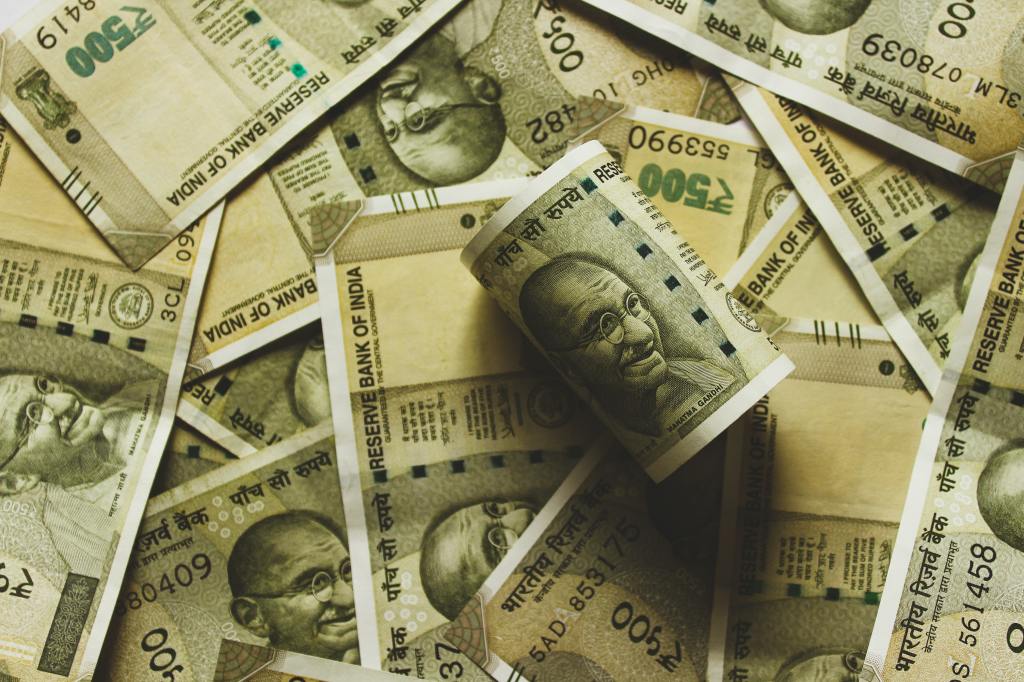
Photo by rupixen.com on Unsplash

My earlier blog ‘Cans of Worms’ was about the big scams and corruption scandals in India over the last 7 decades. Corruption in India has taken on a huge, toxic dimension. It takes a cruel toll on the poor and is very troubling for the middle class. It has seriously compromised our polity and public systems and is pervasive across the country.  It has eroded the quality and prospects of life for millions of Indians and aggravated the struggles of the majority populace of have-nots. The malaise has gone so deep that many good, educated citizens helplessly shrug that nothing can be done about it.

Western countries also have acute problems of corruption but it does not intrude into the day-to-day lives of their people. The venal ex-President and self–proclaimed billionaire Donald Trump has evaded paying income tax for many, many years. London is the welcoming, Go-to place for the world’s financial criminals as extradition is difficult. The serene beauty of Switzerland with the snow-capped Alps as shown in the Yash Chopra films is the picture-postcard version of it. The country’s banks have been the preferred havens for black money from all around the world. The Nazis were amongst their first customers.

Let’s hit the pot-holed roads. Their proliferation is such that the traffic has to navigate the holes to find the stretch of roads. The NCRB (National Crimes Records Bureau) finds that 5% of the deaths on Indian roads are due to pot-holes. The traffic police point to the same as the cause of long traffic jams in cities. This perennial bane can be resolved only if the roads are constructed with good materials and maintained properly. But there’s the rub. The 10% cut from the contractors to public officials and politicians has moved with inflation to 25%. The quality of roads becomes the first casualty. Poor roads or bridges or flyover construction is the fall-out. Let it be noted that one of the major reasons for China’s economic explosion was the focus on building good roads and infrastructure. Creating many, many jobs and driving economic growth.

The Public Distribution System (PDS) is supposed to cater to the food requirements of the neediest- the ration card holders. Instead, the sad reality is that the fair price shop owners sell the good quality food-grain in the open market by using fake ration cards. The BPL (Below Poverty Line) populace is often left with poor-quality residual stuff.  As it is, the system gives them access to only items like rice and wheat, ensuring that the poor continue to suffer on the nutrition front. The program also has an urban bias because the rural areas are not well connected by an efficient transport system. But surprise, surprise! Uttar Pradesh has redefined the system by becoming the first State to achieve more than 95% food distribution through a transparent biometric identification system.

Let’s look at the Minimum Wages scenario outside the States’ Shops and Establishment Act and the Central Sphere of Employees. The major chunk of daily wage workers is in the informal, unorganized sector.  The National Floor level wage for an unskilled worker is Rs 178/- per day.  Varying from State to State and Cities and towns. But it’s no secret that these poor people are at the mercy of the Agents.  Through a social worker friend of mine, I was shocked to learn that these middlemen appropriated 40% of their daily legitimate earnings if they wanted 20 days of work a month.  Also, extending work hours by a couple of hours a day is deemed normal.  Talk about ‘bonded labor’ in our cities. They remain gagged as the Principals, Agents, and public officials enjoy the spoils. Meanwhile, the law against underpayment or exploitation gathers dust within the legal tomes.

The Medical profession and the hospitals have also fallen from grace. There has been a positive side to Covid management in India but the flip side has been very disheartening. The black marketing of oxygen cylinders and drugs like Remdesivir has been reported in the media.  Less so the extortion from some in the hospital management for the availability of rooms and beds. Overbilling and prolonging patient stay is common practice at many private hospitals across the land. But a particular data shared with me by a health professional friend stunned me- 22,000 pediatric claims at government hospitals in a State for Rs 15 crs; 30,000 child care claims amounting to Rs 165 crs in the same State by private institutions. Malafide intent goes even beyond this. HPR (Health Professional Registration) by the National Health Authority has been made mandatory in several States. Many hospitals are accessing or buying or leveraging such certification as a cover for billing and conducting procedures and surgeries by less qualified or experienced professionals. So you have the case of 1 registered eye specialist deemed to be performing 300 cataract surgeries a day at different locations.  Eyeball-rolling, Really?!!  Then there is the frightening scenario of quacks endangering the lives of poor patients by donning surgical masks and gloves and wielding the scalpel. In fact, the ‘The Wealth is Health’ mantra goes back to the late 1980s. An anecdote as told to me by a colleague- his friend, a senior employee at a pharma firm had to pay Rs 1 lakh a month to the Health Secretary to secure access for his Company’s products at government hospitals.  As they became more comfortable, the babu confided that most of the money went upstairs.

Digitalization of the economy and business has had a positive impact. The Co Win App and the vaccination drive showed what the country and the governments are truly capable of. Listen to Sundar Pichai (CEO-Google) about UPI and the Covid Relief fund. “It’s remarkable. It shows up on an individual’s account immediately.” But E-Governance has not really freed the citizens from the corruption quagmire. A simple case of renewal of a driving license. One goes online, fills in the details, uploads the documents, and makes the requisite payment.  All one gets is the transaction number. So multiple rounds to the RTO with the same documents to get the job done. Then the middle-man enters and the fees are paid and hey presto! The job is done. This is where corruption spooks the average Indian. For every standard routine matter, one has to grease palms.

Let’s dekko at the judiciary and the police- 2 important pillars of the State. There is this saying, ‘the fish rots from its head.’ So we have a retired Supreme Court Judge reluctant to let go of his perks- having 20 public servants at his beck and call for many months post-retirement. From ‘Your Honour’ to ‘My Lord.’ Two more cases illustrate the rot in the judiciary. In May 2015, a Hindi film star was sentenced to 5 years in jail by the Mumbai Sessions Court in a hit-and-run case. The same night the High Court convened and suspended the sentence. The Superstar walked out with the swag of a Sultan. On the other hand, you have nearly 3 lakh under trial who have been locked up for more time than their alleged crime warrants. But the Governments and the Courts which only cater to the privileged do not initiate the process to set them free. It is a truism that in India a number of litigants pass away before their Judgement Day on Earth. A fresh infusion of 1 lakh + judges and magistrates and the fast track model can only clear the staggering pile of cases.

The police have a dismal reputation for being amongst the most corrupt organizations. This will continue till the Union and State Governments let go of their feudal hold on the police through the much-needed police reforms recommended by Shri Prakash Singh, retired IPS officer, and endorsed by the Supreme Court in 2006. So we have a reinstated police sub-inspector in Mumbai extorting crores of rupees from bars and clubs and having unfettered access to the Police Commissioner and the Home Minister.  More than 40 years back, I had heard from a senior police officer that Rs 50,000 was the price for a lucrative posting at one of the stations in the Bombay port area. This was the investment and a resourceful cop would certainly look forward to a multiple ROI. The same sleaze was again exposed by a report around a decade back. –the secretary of an MLA asking for Rs 15 lakhs for a posting to a particular police station. It was further elaborated that the asking amount would depend on the importance of the police station in their constituency and its income-generating capacity. However, it needs to be said that a critical part of the Police Reform Report says that the ground level Constable force be given more dignified living and working conditions.

Elections are high stake games with tons of black money involved.  All political parties follow the winnability quotient from the Congress playbook- Money, Muscle, Caste, Creed. So you have the BJP in UP strongly supporting their ‘Bahubali’ MLA from Unnao, Kuldeep Sengar. Accused and later thankfully convicted for the brutal rape of a 17-year-old girl and later killing of 2 of her relatives in a planned road crash. Sengar had earlier represented the Congress, the Samajwadi Party, and the Bahujan Samaj Party.  But this serious and blatant criminalization of politics and shameless horse-trading has not served as a wake-up call for any of our tall leaders.

The 2014 Lok Sabha election, according to informed sources, cost around Rs 30,000 crores.  The political coterie in India has become an exclusive, self-serving club. Hence, very few top politicians end up in jail. Some of them increase their assets by more than 1000 percent from one election to another. The Companies Act 2013 and the Electoral Bond scheme 2017 do not provide for more transparency and do not work for the greater good. The possibility of anonymous corporate, individual, or even foreign funding has increased.  Increasing the risk of public policies being framed for the funders and not the voters. A potentially scary situation.

With the budget session looming, signing off on the much-debated topic of Income tax. Only 3.2 lakh Indians declare income of more than Rs 50 lakhs annually; only 16.8 lakhs fall into the highest 30% tax bracket; only 5.83 crs IT returns were filed in FY 2022. Think about all this in the context of the 1 million SUVs sold in FY 2021; and that 30.85 lakh Indian tourists applied for visas in 2022 despite the pandemic travails. The parallel economy in India is estimated to be around 50% of the GDP. Despite DeMo and the increase in digitalization, the cash economy has grown from 10.7% of the GDP to 14.4% of the GDP to a record high of Rs 30.88 lakh crores. Easy to understand why ‘ the captive salaried class’ or the organized sector employees are fervently praying for tax relief in the budget. A recent Oxfam report has revealed that 64.3% of the GST collections have come from the bottom 50% of the population. High time for a more equitable review of both direct and consumption taxes and widening the base through lesser tax rates.

As the current Government has a clear majority in both Houses it should pass the much-needed structural reforms Acts-police reforms, revamping the judiciary, 30 % women’s representation bill, recall of corrupt representatives, and election finance laws and regulations (look at the French model). There is no hope for a Naya Bharat or a New India till this rampant corruption is controlled and minimized. Only well thought – through and transparent public policies and laws can reverse decades of neglect and indifference. The third largest global economy will not have a satisfying ring to it if India continues to feature in the highly corrupt and high inequality indices in the world order of nations.

Vijay Anand- The Master Film Maker

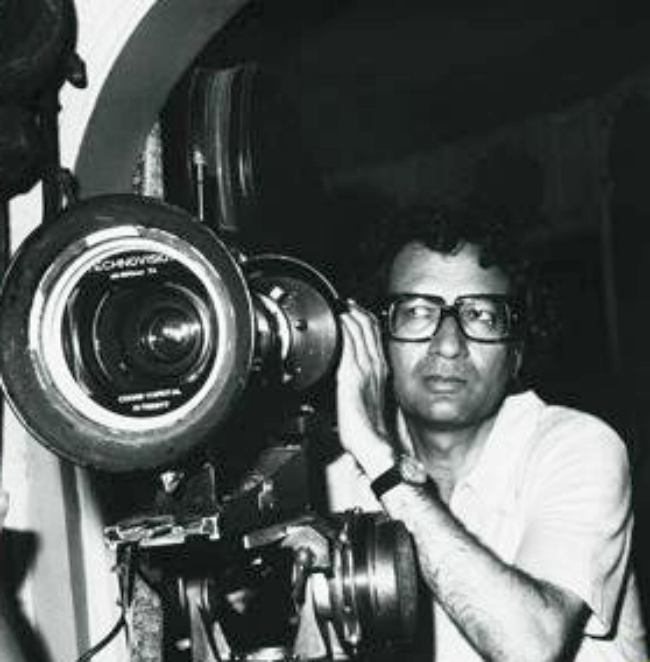
Vijay ‘Goldie’ Anand did not have to struggle for a break in the Hindi film industry. His elder brothers Chetan Anand & Dev Anand (13 & 11 years older) had established themselves as a filmmaker and leading man. Immersed in his theatre group at St Xavier’s College, Bombay, Vijay wore multiple hats as a director, writer, and actor. The Shape of things to come! Just emerging from his teens he wrote the script for the hit film ‘Taxi Driver’ (1954) directed by Chetan Anand and starring Dev  Anand and his bhabi-to-be Kalpana Karthik.

His innings as a director began with ‘Nau do Gyarah’ under the Navketan banner in 1957. For the next 15 years, his brilliance and versatility lit up the big screen. ‘Nau do Gyarah’ was a road movie; ‘Kala Bazaar’ a nod to neo-realist cinema; ‘Tere Ghar Ke Samne’ was a rom-com; ‘Guide’ a classic book adaptation of R K Narayan’s masterpiece; ‘Teesri Manzil’  a musical mystery; ‘Johny Mera Naam’ a caper film with the lost and found formula; ‘Tere Mere Sapne’ inspired by A J Cronin’s Citadel about an idealistic doctor in a coal town, his surrender to Mammon and a timely redemption.

Vijay Anand is not just regarded as a textbook in movie making but the entire curriculum. This genius’s grasp of the movie craft extended across direction, acting, writing, screenplay, and dialogues to the editing room. During his prime in the 60s, he is known to have shared draft ‘mukhdas’ of lyrics to his lyricists to embellish, improve and work upon. Simply to ensure that the songs became a part of the story. Later in his career, he penned a few lyrics himself. The Maestro was not done yet. A trained waltz performer he did a dance number with Bindu in ‘Chuppa Rustam’.

But 4 extraordinary films in a 6-year span built the Vijay Anand cult amongst his legion of fans and within the film fraternity. ‘Guide’, ‘Teesri Manzil’, ‘Jewel Thief’, and ‘Johny Mera Naam’ remain in the collective memory of an entire generation of movie buffs even after the passage of 5 decades.

‘Guide’ (1965) is regarded as one of the best Indian films of all time. The story of a charming tourist guide Raju (Dev Anand) who falls for a married woman Rosie (Waheeda Rehman), goes to jail for embezzlement and is mistaken for a sage and holy man in a drought-stricken place is superbly curated and directed by Vijay Anand. The film transcends into an experience for our minds and soul. In 1965, the story had controversial elements but the filmmaker did not pull any punches. Rosie walks out on her philandering archaeologist husband after a showdown in a cave and gets into a live-in relationship with Raju guide. Waheeda Rehman’s portrayal of the independent woman character with her own identity and dreams remains a landmark in the annals of Hindi cinema. Rosie’s ascent to fame as a talented dancer Ms. Nalini (with Raju as her Manager) is beautifully captured through an elaborate song number. She also has no qualms about breaking up with a drunkard Raju after she discovers that he has siphoned off some of her hard-earned money and hands him over to the police authorities. Then, the seamless screenplay takes Raju’s accidental redemption story to a spiritual level and a surreal ending. The audience exited the theatre in droves with the film imprinted on their minds.

Goldie Anand’s films are also known for their natural and conversational dialogues. Remember that in the 50s and 60s Hindi cinema was still in the throes of theatrical dialogues and posturing with words that were not in sync with the character. ‘Guide’ is a testament to his mastery over the spoken word. In an interview, Waheeda Rehman shared that her only disagreement with the director related to her dialogue during her angry parting with her husband. She felt that the words were ‘coarse’ and ‘harsh’ but Vijay Anand persuaded her that they were ‘in character’ and ‘in context’. After watching screenings later she acknowledged that these words were critical in her character’s arc. Dev Anand’s redemption chart from convicted swindler to an accidental savior is captured through heart-touching dialogues- ‘Shaurat use mili, sar mera ghoom gaya; jab hosh aya to paya salakhon ke piche’ (in jail). ‘In logon ko mujh pe vishwas hain aur abhi mujhe unke vishwas par vishwas hone laga hai’ (Raju Swami fasting to bring rain to the parched countryside). ‘Maut ek khayal hai, jaise zindagi ek khayal hai. Na sukh hai na dukh hai. Na deen hai na duniya. Na insaan na bhagwan. Sirf main hoon, main hoon, sirf main hoon.’ (on his deathbed as heavy rain falls outside).

In an interview, Vijay Anand said that he has always been an explorer and a student of cinema as it is an integrated art form. As a director, he would give a complete picture of what he wanted to all his technicians and collaborators. It is not surprising that he was not limited to any genre. ‘Teesri Manzil’ ( 1966) has been called a musical thriller. The film opens with a film noir scene where a woman rushes up to the third floor of a hotel before falling to her death. Suicide or Murder?  The first half is all about romance and foot-tapping songs and dance. Shammi Kapoor grooves and moves like Elvis Presley possessed. And it is with this film that our Pancham became RD Burman. Film is said to be the Director’s medium and this was brought out charmingly during the filming of the song, ‘Mere Sona Re’ where the buckle of a bag the hero was carrying broke. The filmmaker kept the cameras rolling and the lead man improvised adding a natural flair to the song. The second half of the film is full of twists and turns and new characters are introduced at a bewildering pace. Although it may not satisfy a whodunit purist with a thirst for clues, it evolves into a thrilling yarn.

One of the oft-spoken remarks about Goldie Anand is that ‘he was well before his time.’ In ‘Jewel Thief’ (1967) based on a story by KA Narayan, he created a doppelganger character for the hero, a cunning criminal who does not exist. Here his trump card was to cast Ashok Kumar as the real Jewel Thief. The thespian actor was reluctant to play the villain as it went against his well-accepted screen image. Vijay Anand convinced him that the surprise reveal would happen at the very end. The fast-track narrative was considerably enhanced by SD Burman’s score and compositions, and the film does not feel dated even today. The extent of his creative involvement is revealed when the opening credits roll. We see a profile of the jewel thief appraising the spoils in his gloved hands. Then you hear a chuckle and a short laugh. The Director’s laugh. The jewels are fake.  Shades of Nirav Modi and his diamond collection.

His song picturizations have become the stuff of film legend. Like Guru Dutt, Raj Kapoor, and Raj Khosla he believed that songs were part of a film’s storytelling process and should take the story forward. He fervently felt that songs were part of Indian culture and films and if captured well on reel would bring repeat audiences to the theatre. During his time most filmmakers left it to choreographers to film the song and dance sequences. Not Vijay Anand. ‘My characters should not become artificial when they sing. They are expressing their emotions through the song. The characters are not meant to be dancers in the film.’ The song ‘Hothon mein aisi baat’ from ‘Jewel Thief’ was shot at the royal palace in Gangtok, Sikkim. In this fast-moving song, the camera stays with the talented actress/dancer Vyjanthimala showing her anxiety and distress even as she performs exquisitely till the male lead Dev Anand surprises her with an exclamation in the course of the song. In ‘Tere Mere Sapne’ from ‘Guide’ the rising sun becomes the metaphor for the new love between Raju and Rosie.  The background shot the fastidious director wanted was available for only 15 minutes in the early mornings. So the unit was up and about each morning till he was satisfied. With his eye for detail and authenticity, Goldie scouted for the right locations- Chittor and Udaipur for ‘Guide’. ‘Pal, pal dil ke pas’ in ‘Blackmail’ (1973)is considered as one of the most romantically picturized songs in Hindi film history. It simply features a graceful Raakhee reading letters sent to her by the hero (Dharmendra) and imagining that he is beside her. In the same film Vijay Anand does the unthinkable of featuring the lead pair in an intimate love song situation (‘Mile Do Badan’) while they are being hunted down by villains with arms and dogs. His creative imagination amazes us to this day. ‘Ek Ghar Banega’ from ‘Tere Ghar ke Samne’(1963)had camera tricks where Nutan is seen in ice cubes in a glass of whisky. The song ‘Dil ka bhawar kare pukar’ was shot in the Qutb Minar (actually on a set as permission was not granted). In the song both Dev Anand and Nutan are shown climbing the narrow winding staircase as friends and come down as lovers. The lighting and camera work makes this a magical sequence.

Released in 1970, ‘Johny Mera Naam’ was the biggest hit of his career. This film is often touted as a must-watch for screenplay writers. Never a dull moment in a screen time of 2hrs and 45 mins. Kalyanji-Anandji’s signature car-chase tune which added to the mood and excitement of the movie also ‘inspired’ many composers later. Anita Padhye writes in her Marathi book, ‘Ek Hota Goldie’ about ‘Husn ke lakhon rang’, the raunchy number which became a highlight of the film. The back story of Padma Khanna gives the context- it’s not just another item number. ‘So real were Premnath’s expressions that Goldie was worried that Premnath might hug Padma Khanna out of sheer lust.’ This blockbuster launched Hema Malini towards superstardom and gave a new lease of life to Premnath as a major character actor.

A word about Vijay Anand’s notable screen roles which left a mark on the audience. From the soldier in ‘Haqeeqat’ to the disillusioned Dr Kothari in ‘Tere Mere Sapne’; the Professor husband in ‘Kora Kagaz’ to the Thakur of ‘Main Tulsi Teri Angan Ki’. To the popular TV crime series thriller ‘Tehkikaat’ in 1994 with Vijay Anand as private detective Sam D’Silva- directed by his nephew Shekar Kapur.

After 1973, his career went downhill due to personal and family issues; spiritual meetings with Rajneesh (Osho) and later sessions with UG Krishnamurthy also took him away from the film world. Still, for many Bollywood filmmakers, Vijay Anand is the Boss. Many are in awe of his technical finesse, storytelling skills, and his ear for film music. Shekar Kapur, Sanjay Leela Bhansali, Raj Kumar Santoshi, Madhur Bhandarkar and Rakesh Omprakash Mehra to name a few. Sriram Raghavan (of ‘Andhadhun’ fame) dedicated his ‘Johnny Gadar’ to the Master and peppered it with many hat tips to him. In one scene the hotel receptionist is shown watching ‘Johny Mera Naam’.

Surprisingly, this much-feted filmmaker received only 4 Filmfare awards-Best Director & Dialogues in ‘Guide’ (1966) and Best Screenplay and Editing for ‘Johny Mera Naam’ in 1971.

But his seminal impact and legacy endures through his work. In today’s times, he would probably have been referred to as Mr 360 degrees- the encyclopedia of filmmaking.

The Litmus Test for the Men in Blue

The Redeem Team- A Netflix Documentary

“The Redeem Team,” currently streaming on Netflix, makes for a fascinating and gripping watch. It documents the humiliating losses of the US basketball team of NBA superstars at the FIBA (International Basketball Federation) Games in 2002 & 2006 and the Athens Olympics in 2004. The dominant Americans had slipped into ‘the bronze age.’ Then followed the mission of the national team to redeem themselves in the eyes of their fervent home fans and regain the respect of the world of basketball. Culminating with the gold medal at the Beijing Olympics in 2008.

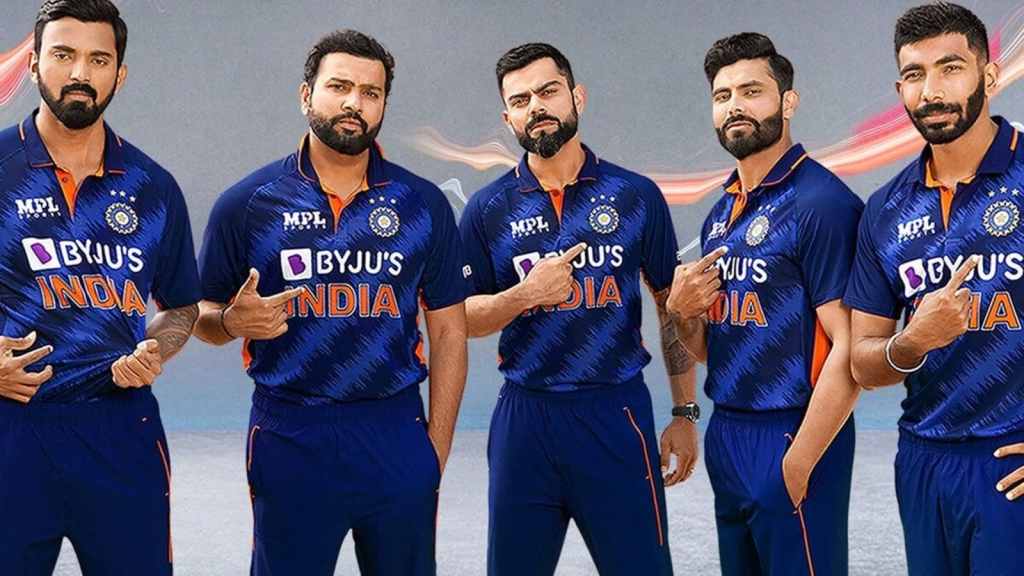
At one point in this docudrama, a sports commentator asks whether ‘the money and greed of the NBA’ had diluted and undermined the competitiveness of Team USA on the global stage. So I started connecting the dots between the IPL and the underwhelming performances of the Indian cricket team on big occasions in world cricket. NBA is a huge business and the IPL is now touted to be the second richest sports league in the world. The US national coach says in the film, ‘We have to learn their game to be able to beat them.’ Just as India cricketers have to step out of the IPL celebrity bubble to take on the raw, relentless, and hard-nosed competition at the ICC championships. A US Olympic team player says that ‘the coach has told them to forget about Cleveland, Lakers, Chicago Bulls on their jerseys. This is all about the national team.’ Read- forget about MI, CSK, and RCB on the jerseys. The Men in Blue represent India. Most interestingly, “The Redeem Team’’ refers to 2 Alphas on the court- Kobe Bryant & Lebron James. ‘Also, we don’t care as to who the Alpha is so long as Team USA wins.’ So be it. Does it really matter if 6 or 7 of the Indian team hit a purple patch or 1 Alpha takes us through the semis or finals or 2 new heroes emerge to take India to the ICC T20 championship trophy on the 13th of November in Australia?

In 2007, Kobe Bryant was widely regarded as an arrogant, controversial loner. The best in US basketball and by default the best on the planet. The ‘Kobe, Kobe’ madness in Beijing in 2008 spoke about his global super-stardom. The gold medal at the Olympics took him into the stratosphere- a huge impact player, a team leader, and the man who stepped up his game when it mattered the most- as in the exhilarating finals against Spain. Will Virat Kohli step up to the crease and win key matches for The Men in Blue?! Will he stamp his majesty and class at the ICC T 20 tournament Down Under to universal cheers of ‘King Kohli’?! The moment is now and here.

The great Kapil Dev has rated India’s chances to enter the semis at a mere 30%. Other experts like Sehwag feel that Babar Azam from Pakistan (who has never played in the IPL) will be the highest run-getter at ICC T-20 2022. The Indian team had lost the last tourney without qualifying for the semi-finals. In 2019, in England, India exited the ODI tournament at the semis stage. At the World Test Championships final at Lords, the Kiwis lifted the trophy. There is no silverware to adorn the BCCI cabinets since 2013. Hopefully, this is going to be our very own ‘Redeem Team.’ Bringing back the Winner’s Cup and the medals and the glory.

The Sinister Art of Covert Warfare

John Adams, the second US President, had prophetically said, “The two ways to conquer and enslave a country is by the sword, the other way through debt.”

The USA, the undisputed super-power after WW2, suffered humiliating military defeats in Vietnam and Afghanistan after many years of occupation. But for decades their geo-political strategy, as supposed leaders of the Free World, was to install puppet rulers to do their bidding. They rolled out 800+ military bases across the globe in a show of sheer power. US controlled institutions like the IMF and the World Bank doled out loans to the developing and poor countries. As they got sucked into the quicksand of debt, the Americans took over their natural resources and cheap labour. Arms sales further pushed these nations into US subservience. Colonization- without the burden of actual occupation.  Please read ‘The Confessions of an Economic Hitman’ by John Perkins to get the real picture.

Xi Jinping, the Chinese strongman, has delusions of being the Emperor of China. In 2013, ‘The One Belt One Road’ (now Belt & Road) initiative was launched with grand fanfare. To supposedly promote trade, commerce and development in partnership with over 100 countries across the world. What happened? The $ 300 million power plant in Tajikistan has made the country a China vassal state. Default has led to take-over of the gold and silver mines. A debt-ridden Angola is now supplying cheap oil to its benefactor. The Hambantota port in Sri Lanka is’ a white elephant’, adding no value to the local economy. The corrupt ‘Gotta Go’ Rajapaksa family perfectly fits into the profile of leaders the Chinese government wants to deal with. The Chinese research vessel which docked at the port for a few days is a naval warship used to track down satellites and missiles. China has already established a naval facility at Djibouti on the Horn of Africa. It’s said that the Sri Lankans are reeling under a $12 billion debt from China.  In fact much more. The Chinese banks, monitored by the CCP (Chinese Communist Party) have also loaned big.

Pakistan has become a willing pawn to the Dragon’s scheme of things. Govt to Govt debt of $ 26 billion has made it a basket case. The majestic African Union (AU) headquarters in Ethiopia has been built by Chinese loan money, Chinese contractors and workers and even their food sent over from mainland China. As the African countries cope with the debt, the Chinese have already cashed in. Also Huawei cameras have been installed to spy on their African brethren leaders.

The factory to the world plans to rule the world.  Markets + Natural Resources + humongous geo-political influence. Many of these countries are being coerced to vote for & support China on critical issues like Taiwan and human atrocities in the Xin Jiang province.

Vladimir Putin was a middle level KGB operative in East Berlin when the Berlin wall fell in 1989. Followed by the collapse of the Soviet Union. This trauma has dictated his world view and it helps that millions of Russians think the same. The Ukraine invasion was triggered by the NATO overreach. But control and supply of oil and gas to Europe is what the news headlines are now all about. Europe and especially Germany are in for a harsh and long winter. Putin has turned off the Nord Stream gas pipeline. The Continent is now reeling with the heat-wave and high inflation and is bracing for the inevitable recession. If you add the fact that Russia and Ukraine are amongst the world’s major wheat exporters, the consequences are even more alarming.

Trump has always been Putin’s puppet. The Tsar probably has the dirt on him-peeing on the bed occupied by President Obama during his Moscow visit or doing something more in keeping with the Donald’s playboy image. Russian oligarchs also got together to secretly bail out the distressed Trump Org through a major European Bank. Likewise, the Saudis sent $2billion to Jared Kushner’s (Trump son-in-law) dwindling account to control the fall-out of the brutal murder of journalist Jamal Khashoggi reportedly at the behest of MBS.

The army of hackers in St Petersburg have attained cult status. They delivered Brexit to Putin with the Ayes at 51.9%. Social media was flooded with images of hordes of immigrants from the Middle East & Asia. In 2016, the same ploy had helped to get Trump into the White House. Only, then the hordes were from Mexico and South America. Indian economic institutions, corporates and infrastructure utilities are major targets of hacking, mainly from China and North Korea. A hack attempt on JNPT port was thwarted a few months ago. Imagine if the ATC (Air Traffic Control) of a major airport like Dubai or Heathrow is hacked- with flights grounded for days the financial losses will be huge. A few years’ back 60 trusts of UK’s NHS (National Health Service) bore the brunt of a cyber- attack with ransomware demands. 20% of the UK Health Service was crippled. It has still not been established whether the Russian State or a criminal group from the US were behind the attacks.

In this age of frenzied social media, misinformation by hostile powers is the name of the game.  Take for example the controlled propaganda narrative about the prolonged Farmers’ Agitation in India. Public protests and rallies are an integral part of any democracy. Yes, the genuine grievances of the farmer community deserves to be heard and addressed with sensitivity and respect.  But it soon became obvious that a very grim picture was being created, hyped and funded by controllers in Canada, USA and UK. As if the entire country had come to a stand-still. The underlying objective was to create chaos and malign and embarrass the Government of the day. Even PM Trudeau jumped on to the bandwagon to satisfy a segment of his vote-base as did some western celebrities for the lure of Mammon. But Karma hit back. The transporters strike in Canada against some Covid-19 regulations saw Trudeau hiding from the public eye for days and then emerging to declare a national emergency. Hence, spreading toxicity, stoking social unrest and fanning law and order problems is the subversive agenda of such ‘warriors.’

The proxy war through radicalised terrorists has been going on for more than 30 years. Major outfits like the Ku Klux Klan (now morphed into Proud Boys), Red Army, Black September, ISIS, Boko Haram have done their work and spread their message . Young men, brainwashed on-line, are now weaponizing motor vehicles to kill and maim and to spread terror as they did in London and Spain in 2017. Interestingly, after 9/11 an unknown assailant sent weaponised anthrax through US mail in an unsuccessful attempt to kill members of the US Congress. Disruption, fear, instability and more free lancers recruitment ensues.

Insidious infiltration of the political parties, journalists and academia has been the game-plan of the CIA & KGB from the 1950’s onwards. ‘The Mitrokhin Papers’ (KGB archivist who fled to the UK) reveals how top Indian leaders and bureaucrats were compromised by the KGB in the 60’s. The Comrade ideology was soon embraced by journalists, writers, poets, professors and even some in the film industry. Vodka, honey-traps and money did the trick where Ideology did not deliver. Now the Chinese are up to the same tricks. Besides India, Australia, Indonesia, Philippines, Eastern Europe and South America are on their radar. In India, we have heard some netas screaming that the People’s Liberation Army has occupied over 2500 square km of Indian land over the last 2 years. Debunked by international intelligence agencies of standing and repute. The Lab leak of the Wuhan virus and gross negligence by China has been downplayed by some of our top TV channels and newspapers. Moreover some human rights activists and NGO’s have kept eerily silent on the brutal pogrom run by the CCP against the 1 million Uyghur Muslims in the Xin Jiang province of China. Surely, the Comrade-rie is growing.

The Wuhan Lab leak happened when a ‘Gain of Function’ research was on.” This refers ‘to serial passaging of micro-organisms to increase their transmissibility, virulence, immunogenicity and host tropins by applying selective pressure to the culture.’’ A Red Flag alert to the scary scenario of bio-chemical warfare. The USA sprayed Agent Orange and napalm bombed Vietnam with brutality. They weaponised and stockpiled 7 bio-agents by the time they shamefully exited Vietnam. Saddam Hussein’s stockpile of chemical weapons was unleashed on the Kurds and during the Iraq-Iran war. Russia used Novichock nerve agents to murder political opponents in Salisbury, England in 2018.

The other intriguing facet enabling the Art of the unconventional power-scramble is the undermining of independent international institutions. The IMF & the World Bank were run by the US for decades. The WHO played tango with China to cover-up the country’s responsibility in the origin and spread of the pandemic which cruelly enveloped the world for 2 years. The UN and the Security Council are clearly impotent in dealing with tragic crises like Yemen, Syria or the Ukraine war. This has led to an unstable and untrusted world order. India as the largest democracy, the most populated nation and the 5th biggest economy in the world does not have a seat as a Permanent Member of the Security Council. This tells the whole story of the power struggles in the elite, self-serving club and the overwhelming desire for control.

Conventional war-fare is no longer the preferred option for the big powers. If wealthy Europe can be brought to its knees by shutting down the Nord Stream gas line, why not?! Hacking and disrupting the Pentagon or a financial powerhouse sends an incredibly strong message. A much wanted terrorist in Kabul can be taken out by a drone attack. Planted news articles and relentless social media propaganda can diminish a country, manoeuvre an election there or even topple a legitimate government. Sinister disinformation and conspiracy theories can lead to riots and even civil wars. The Remote, covert way of warfare is now the espoused strategy by both States and fanatical groups. The world may not be on the brink of WW3 despite all the noise and posturing but the world is certainly a very troubled and uncertain place.

The Men in Blue 2.0

The Asia Cup cricket tournament is on and the Men in Blue are serving their customary fare. Flatter to deceive.  Winning their opening outing against arch-rivals Pakistan in a thriller and then just succumbing to them in their next encounter.  This does not augur well for the national cricket team in the T 20 WC to be played in Australia in October-November this year. The only positive takeaways have been the return to form of master batsman Virat Kohli and some high adrenaline performances from Hardik Pandya and Surya Kumar Yadav.

Let us set the bar high. Win the Asia Cup to propel the side to win the Major-Down-Under. With our cricketers getting the VVIP treatment both in money terms and fame, should we settle for less? With an abundance of talent, with an amazing bench-strength the National cricket team is underperforming on the biggest stages of all.

Men in Blue 2.0. A lot is expected from the players under the mentorship of Rahul Dravid. But his innings thus far has been a mixed bag. The highs have been the 2-1 ODI win and 2-1 T 20 victory against a resurgent England side in England earlier this year. The down-side was allowing them to draw the Test series 2-2 in the one-off Test. One may add beating the West Indies on their home turf in the ODI 3-0 and T 20 by 4-1. The Windies are a very combative side in the T 20 format. They won the ICC trophies in 2012 and 2016. The loss to South Africa 2-1 in Tests and 3-0 in ODI’s hurts. Remember-Kohli resigned from captaincy after the loss of the Test series. There are Statistics and then there are Impact Stats. Winning matches on SENA (South Africa, England, New Zealand, and Australia) tours define the aura for the Indian cricket team. The conditions+ pitches+ opposition take these contests to another level of grit, flair and competition. Plus, plus, plus lifting the ICC World Cup trophies across formats- Tests, ODI’s, T 20’s. These test the nerves and temperament, the skills and adaptability of the best of cricketers. The best that can be said as of now is that the Indian cricket team under Head Coach Dravid is still to find its mojo. Let’s hope that the unit hits top gear soon. A trivia worth sharing- in his 10 month stint thus far Dravid has worked with 7 Indian captains.

Bilateral series wins on Indian turf cannot be discounted. But Indian teams across the last 2 decades and more have stood tall on home pitches. A couple of years back the bombastic coach Shastri hailed the Indian team as the best ever to represent the country.  Really?! A reality check is in order per the SENA tours and the big ICC trophies. We lost the Test series 4-1 to England in 2018; ODI 2-1; T 20 2-1. Lost the Test Series to New Zealand 2-0 in 2020. The high point has been the never-say-die Test tour of England in 2021 where India led the Test Series 2-1 with the hosts levelling the series 2-2 earlier this year. And the T 20 away win in Kiwi-land in 2020. Much hype has been created about our 2018-19 victory tour of Australia. To spell out the context. The Aussies were still shamefully coping with the cheating scandal called ‘Sandpapergate’- ball tampering on the South African tour. Their top players Smith and Warner had been suspended for a year. Morale was at a grim low. Players were booed by their own people across all the venues. The Miracle Down Under under Rahane in 2021 is the real thing. The 36 all-out in the First Test. Losing top players to injury. Against All Odds. The rest is history.

World Cup silverware has not adorned BCCI shelves since the Championship trophy of 2013. Losing the Test Championship at Lords to New Zealand in 2021. Exiting the ODI semi-final in England in 2019. Not making it to the knock-out stage at the 2021 T 20 tournament. Let’s hark back to those who wore the Indian cap and colours in the earlier years. Winners of the ICC World Cup in 1983 and 2011. The T 20 WC in 2007. The Champions trophy in 2002 and 2013. Runners up at the ODI WC in 2003 and T 20 in 2014.

Stats can be spun to suit the narrative. Social media can amplify and distort the same. Is the Indian cricket team in the same league as the majestic Windies team of the late 70’s and 80’s? Or the great Australian side under Waugh and Ponting?  These teams dominated the game for almost a decade. The Caribbean Calypsos did not lose a series for 10 years and more. Beyond the wins and the silver-ware they influenced and changed how the game of cricket was played. Interestingly, it was India that stopped the Windies juggernaut at Lords ’83 and again India that shattered the Aussie dreams of capturing the Last Frontier in 2001.

Shrug, shrug. In the opinion of many the challenge of the SENA tours and losing out on ICC majors does not seem to matter. After all, India is the centre of gravity of the cricketing world. Are we suffering from the Super Bowl syndrome of American football?! The IPL is the second richest sports league in the world after the English Premier League. Hope that Indian cricket is not affected by the curse of English football. The most followed football league on the planet but no major trophy for the English team since WC 1966. The powers that be and the Influencers of Indian cricket should understand that the fortunes of the IPL are inextricably linked to the fortunes of the Men in Blue.

Let’s look at other sports. The Spanish football team dominated the world of football for 5 years from 2008 to 2012.They won the European Championships in 2008 and 2012 and the World Cup in 2010. The 2010 team is considered by some pundits as the greatest of all time. Now 12 years on, can you remember any marquee names?  Possibly one or two in one of the best football squads ever. To quote from one of the experts, “the journey of the treble of trophies was a long time coming for La Roja. After years of near misses and underachievement, Spain’s golden generation-produced largely by Barcelona and Real Madrid- became an unstoppable force.”

Let’s look at individual icons in a team sport. Lionel Messi is right up there in the stratosphere of football all-time greats. Some consider him the G.O.A.T. (Greatest of All Time) for his magical skills and abilities on the football field. But what haunted this Superstar was that he had not won any major tournament with the Argentina team. Till the Copa America in 2021. That he propelled his national team to the WC final in 2014 (1-0) loss to Germany or 2 successive Copa America finals in 2015-2016 did not count. At the top levels in international sports- the World Cups, Grand Slams, Continental Championships, Olympics- it’s holding aloft the trophy or wearing the gold medal that matters.

Domination of the game in all 3 formats is the only ticket for the Men in Blue into crickets ‘Immortal Hall of Fame.’ As ardent well-wishers we hope that the time starts now and continues for a few years on.

Why our high profile Investigations usually wind up nowhere?

The scourge of corruption and the unaccountability of the political class and their complicit bureaucrats have seriously undermined India’s well-being and development. Good, transparent and fair governance has never been front and centre. In our country the rich and the connected are above the law.

Let’s start with the sensational potboilers playing out in Mumbai for the last 2 years and more. The unexplained death of film actor Sushant Singh Rajput (SSR) which the city police immediately dismissed as a suicide. This tragic event was preceded 3 days earlier by another mysterious death of Disha Salian, one time manager of SSR. Passed off as another suicide. Accompanied by a curious, affirmative chorus from a section of the media, some film people and some politicos. Both the cases were closed in the first week itself by the Mumbai police, supported by botched up post mortems at a convenient hospital. The entire approach seemed casually pre-determined. The professional Mumbai police of yesteryears under Julio Ribeiro would not have contaminated the possible crime- scenes. Once evidence surfaced of a possible link between the 2 suspicious deaths, the detectives should have been smacking their lips. Instead, a narco-racket connection, missing hard-drive from SSR’s systems and trails leading to the film industry and the corridors of power were ignored and buried. Thanks to massive outrage on social media the CBI and NCB were brought into the picture and raised hopes of a thorough investigation. Over the last 18 months there have been political theatrics and lots of planted news but justice has not been served. The Central Agencies have flattered to deceive. Why the inordinate silence. ?! At least let the final official version come out.

The other matter is equally sensational and has many strands. The “Vasooligate” or extortion scandal masterminded by some politicians and their police lackeys. Collecting monthly money from dance clubs, bars, restaurants et al. Shades of the protection money or hafta collected by the goons of the underworld. The Home Minister had to resign, a big wicket to fall. That’s all. The Sarkar’s hand-picked Commissioner of Police ended up on the wrong side of this venal churning and disappeared for more than 220 days. What were the State Police and the Central Agencies doing??!! An absolute disgrace. A re-instated sub-inspector goon presumably ran the racket at the behest of the powers that be and went around with a note counting machine. Was the administration sleeping?! Amidst all this a dead body was found floating near a creek. Quickly pronounced as another suicide by the local police authorities. However, in this case the charade could not be kept up and Murder it was. Another link to this curious plot was the planting of explosive devices outside the residence of India’s richest man, Mr Mukesh Ambani.  Central Agencies like the CBI and NIA joined the fray with the Mumbai CID and Police going great guns. With so much time, energy and resource invested what has been the outcome so far. Another never-ending saga. Till the next episode. For public memory is short.

This leads to 3 assumptions. First, that the police are under the control of their political masters and will not rock the boat. The colonial police of the British Raj has evolved into the “Feudal” force of present times. All political parties are one on this matter. Ironically, if given a free hand the cops will not cop-out but can solve difficult cases like the Nirbhaya rape and murder.

The investigating agencies have not been provided with the professional know-how and infrastructure to crack today’s crimes. Forensic training, social data recovery, tracking cyber-hacking footprints and money-laundering trails and sharing of inputs between different agencies.  In the much publicised “Aarushi” murder case incompetent police and forensic work has led to the question of whether the conviction of the Talwars was a miscarriage of justice.

Last but not least is to whether there is a quiet understanding between the political parties to have each other’s backs if a big scandal erupts. A few pawns will have to be sacrificed but that’s the political chess-board, isn’t it. The long-hands of the law rarely grasp the necks of the biggie politicians, business and media tycoons and stars and celebrities.

Please draw your own conclusions. Are these raids or arrests – witch-hunts or political or personal vendetta? Or just to gain political capital from a gullible populace and garner votes during elections. For many of these arrests and allegations are made just before election season kicks off? Or to deflect and distract public attention from some sordid goings on in their own camp? Here, a word of caution. In all fairness, such fraud or crime issues should not be kept simmering indefinitely. The Government of the day (the BJP led government now or the State governments) should give it a closure if there be no conclusive evidence. It should not be raked up again for a hit job during the next election season. As the Bard said, “a lot of sound and fury, signifying nothing.”

The unearthing of the Rs 270 crs cache of black money from the residence of a perfume baron in UP coincides with the upcoming UP election. Probably, these monies were to fund rallies and campaigns; to buy and swing votes for some political party in the State polls. With some part of the country always in election mode, such news snippets give a sense that the anti- black money mission is very effective. Nothing can be farther from the truth. Despite De-Monetisation, unaccounted cash continues to grow and thrive.  This dark side of our election story harks back many decades. The Nagarvala case of 1971. Supposedly a RAW agent gone rogue. The Rs 60 lakhs of unaccounted cash was kept in suitcases at a leading nationalised bank branch and handed over to this mystery man on the basis of a purported phone call from the PMO office. He was nabbed the next day, confessed and sentenced within 2 days, to a 4 years imprisonment and died in prison a few months later. One of the speculations was that this was KGB sponsored election funds. The Agency had infiltrated the highest levels of our Government per the Mitrokhin documents.  Today’s Chinese whispers are that Chinese money is propping up some of our political outfits, media houses and activists. A serious national security issue. Indian intelligence agencies will be on high alert.

Vijay Mallya and Nirav Modi are our poster-boys of financial crimes. The two have duped our PSU banks of thousands of crores and are financial fugitives in London.  Their passports could have been impounded as evidence of their scams had already surfaced. That the King of Good Times attended a Rajya Sabha session on the 1st March 2016 before fleeing the next day is telling. Coincidentally, it was on the 2nd March 2016 that a cluster of PSU banks moved the Debt Recovery Tribunal against Mallya. The diamond merchant escaped from the country on the 1st Jan 2018. On the 29th Jan 2018, the PNB filed a case with the CBI against Modi. Is it just sloppiness on display here or is there more to it? The Panama papers were released in 2016 with the names of 930 Indians or entities parking their monies in off-shore accounts in tax havens. The Pandora papers of 2021 exposed the names of 300 Indian businessmen and celebrities with such accounts. These reports are the work of the International Consortium of Investigative Journalists (ICICJ) and many European countries have taken serious note and action. Other than a few snippets here and there like the actress Aishwarya Rai being called for questioning, there does not seem to be much headway. It needs to be said that some of these off-shore accounts may have been disclosed and legitimate. Official statements to such effect must also be released.

Over the last 70+ years Independent India has seen thousands of public frauds, corruption scandals, corporate favouritism cases, and ties with the underworld. But the administrative will to go after the big-wig culprits has simply not been there. Yes in the late 50’s Mundhra went to jail in the LIC scam as did Big Bull Harshad Mehta in the stocks-scam of the 1990’s. But the exception proves the rule. The defence procurement scams of HDW submarine, Bofors and Augusta Westland have never been laid to rest. The middle-men have been outed and named (foreign nationals) but the investigators have lacked the balls or the skills to connect them with senior political figures or bureaucrats. Mr VP Singh, our Mr Clean PM, used them to win an election, period. The leaked Nira Radia tapes not only brought to light the corporate lobbying interface with the Union Ministers. It also hinted at how coalition political partners were vying for lucrative ministerial berths and how influential media persons were facilitating the same. The Saradha Chit fund Ponzi scam claimed a couple of MLA’s in Bengal and the file was closed. Coming to the present, is it so difficult to establish whether in the Rafale fighter aircraft deal kickbacks of 7.5 million euros were paid in secret commission to a middleman to seal the deal (alleged by a French investigative journal in 2021). Although, the Supreme Court has already ruled on the matter in 2019.

Some may pertinently point out that Bihar’s CM Shri Lalu Prasad Yadav went to jail in the fodder scam.  Sure. His wife, Smt Rabri Devi became the interim CM.  Madam Jayalalitha also spent time in jail in a disproportionate assets case, but her life is celebrated in a recent film drama called “Thalaivi” or Revolutionary leader. Sahara Shree Subroto Roy is in the Tihar jail. But he is frequently out on parole and by all accounts having a cushy arrangement in the prison quarters also. The Sahara group long innings was enabled by political patronage. Mr Ramalinga Raju spent only 35 months behind bars for the Satyam Corporate scam which shook the Indian business world at that time. Not even a slap on the wrist. Film star Sanjay Dutt was jailed for illegal possession of weapons but was out on parole for a large chunk of his sentence time. And then there was the film, “Sanju” and director Raj Kumar Hirani doing a great white-wash job on his buddy’s  very dubious connections. 

The NCB raids especially on Bollywood stars have attracted a lot of media attention.  Drug peddlers have been nabbed and there have been drug seizures across the country. Some film stars have been grilled eliciting excited reactions on social media. The spotlight on drug trafficking and the film world is welcome. These celebrities are role models to millions of youngsters and their being held accountable is a good thing. So is the counselling of some of the young stars and star scions. But here again are we missing the forest for the trees. Drugs are the main source of income for the underworld and the Pakistani establishment and terror outfits in the region use it to fund terrorism.  It finally boils down to a national security issue. No political party or law and order machinery can compromise on this.  Also, what of the 3000 kgs of heroin worth Rs 20,000 crores seized at Adani port in Oct 2021. The Director of Revenue Intelligence and the National Intelligence Agency are seized of the matter. But will we know more about the origins and the kingpins or will it just remain one of the largest drug seizures in the world?

This leads me to another headline grabber- the incarceration of businessman Raj Kundra for 60 days around Sept 2021. He was arrested by the Mumbai police in connection with an adult film racket. Released on a surety of a paltry Rs 50,000. Was this yet another case of Much Ado About Nothing; or was it the Maharashtra Sarkar trying to deflect attention from the “Vasooligate” crises; or with the accused being the husband of Bollywood star Shilpa Shetty was it signalling that it was not being soft on the film industry. Perhaps the Mumbai police was trying to reclaim its lost glory. Else, did this exemplify another case-study of poor diligence and follow-up in building up a convincing case? An aside. Raj Kundra is a joint-owner of the Rajasthan Royals franchise which was banned from the IPL tournament for 2 years on match fixing charges.

Take the case of match-fixing in Indian cricket. Would the truth have ever come out had not South African captain Hansie Cronje admitted and confessed to South Africa’s King Commission in 2000 that he had fixed matches for money and had been first introduced in 1996 by Azharuddin, the India captain, to a bookie. Granted that the Delhi police had shared the initial findings with the South African Cricket Board in March 2000. A side-note is that a PR movie called “Azhar” was made to clean the slate and he became the Congress MP from Moradabad and now is a senior functionary in the Telangana Congress. Then the IPL match fixing and spot fixing scandal saw CSK and RR being banned for 2 years from the tournament.  Sreesanth being the only well- known cricketer to take the rap. Why the top promoters, administrators and players got away is not really a mystery. Incidentally, the film on MS Dhoni makes no mention of this sordid saga.

The toxic effect of unbridled corruption and power on our society is there for all to see. The black-money economy has become a large, parallel and unregulated sector with all its corrosive impact. But it is the top-down trickle syndrome which has earned us the stigma of a highly corrupt nation. People in all walks of life are now emboldened to be corrupt and not only for financial gain. Integrity has lost its value and currency. The real brunt is being felt by the poor and the middle-class. Think of the labourer whose 50% wages is siphoned off on a daily basis by the contractor through his agent. The Government proclaims that a lot of government transactions and document related work can be completed on-line. Things have improved in certain areas like passport issuance and renewal. Otherwise, the ground reality is that one has to download forms and submit the documents physically. If one wants prompt results, enter the agent. You know what this means. This palm greasing for every little thing is what earns us the honors on global corruption indexes. The heroism of front-line health workers, policemen and sanitary workers and many common folk are being justly applauded in these Covid hit times. But one cannot turn a blind-eye to the huge profiteering during the pandemic. Whether it being availability of the Remdesivir drug or the scarcity of oxygen or hospital beds. Covid 19 has shown us both the good and bad sides of who we are as a people. The Aam Aadmi has just given up or become indifferent to this plague of corruption.

What is also worrying is that even educated people tend to shrug off this unsavoury aspect of life. As if it was just another tax to pay as a common citizen. Even more worrying is that many of them tend to look at corruption through the prism of community, State or ideology. Underhand dealings are ok if done by a leader from ones’s own community, State or preferred political party. Some of these charlatans are feted as Chanakyas- Masters of the political chess-board.

The pandemic of corruption is rampant throughout India and has hollowed us out as a nation. Is it better or worse in a certain area or region or government is a relative concept. The misdeeds of the present Union Government will also be exposed after a few years. After all, they have adopted the same old playbook. Then the skeletons will be out of the closet and will dance to the tunes of the new regime in place.

One of the lowest points of the current dispensation has been the handling of the 2017 Unnao rape and subsequent murder cases. The BJP MLA Kuldeep Singh Sengar continued to get the support of his party till the shit hit the ceiling. The 17 year old rape victim tried to immolate herself in front of the CM’s residence and the media and activists thankfully jumped in from thereon.  Amidst the uproar, the Supreme Court and the CBI had to step in to send this so called local bahubali to life imprisonment in 2019.

One of the ways to break this insidious status quo is the tabling of the Vohra Committee report in its entirety in the Lok Sabha and Rajya Sabha for an intensive debate. It should also be made available for public scrutiny and consumption. Submitted in Oct 1993, it is deemed to be an expose of the links between the Mumbai underworld and top politicians and officials at the State and Central governments. Only 7 or 8 pages have been briefly discussed in some Parliamentary Committee and the 100+ page exhaustive dossier has apparently gone missing. Why??? By Whom??? The PIL matter is pending with the Supreme Court.

Police reforms will be the game-changer. A litmus test for the Central Government. Incredibly, the Police Act of 1861 is still in place. The landmark SC ruling of 2006 with its 7 crucial directives for implementation has been gathering dust for many years. A law-oriented, fair, impartial and apolitical police force is a hallmark of a mature and progressive nation. But an anathema to the powers that be. This vital force has to be ramped up by half a million personnel; their abysmal working conditions and below- par salary structure requires significant improvement; with modern equipment and training enhancing their effectiveness and public perception. But considering the general disenchantment with the police, it will make sense to expand the Community-Policing initiative. To foster engagement and trust between the people and the police in an area. The other side of the same coin is to invest in, to overhaul and build a robust judicial system. Most administrations have been very miserly on their judicial related budgets.

Our Netas and their Enablers are averse to any change and they rejoice in the general public apathy. As a people we are quite indifferent to reform although we will benefit the most from it. Change for the common good has to be forced into the system. Constant pressure has to be built up and applied on the powers that be. Social media now provides a vast and instant connect and it’s for the citizens and especially the younger, aspirational generation to put the writing on the wall.