
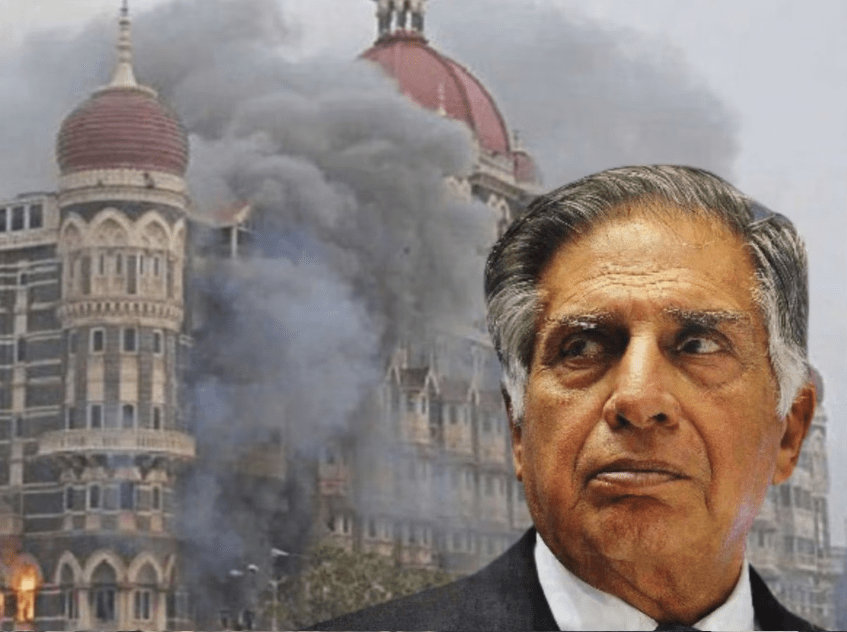
Ratan Tata & the 26/11 terror attack on the Taj

Ratan Tata passed away in the late hours of the 9th of October, 2024. The heartfelt sense of public grief and the profound sense of loss across the country was unprecedented. Social and print media, TV anchors, corporate honchos, political leaders and especially the common people bowed their heads in tribute. A social phenomenon unlike any other, akin to the emotional reactions after the sudden demise of Dr Abdul Kalam on the 27th of July 2015. Eminent scientist, author, teacher and the most distinguished President India has ever had.

On the late evening of the 26th of November 2008, 10 terrorists landed on the Mumbai shores via the Arabian Sea. They belonged to the terror group- Lashkar-e-Taiba-sponsored, supported and trained by the Pakistani Army and ISI. Other than The Taj, the targets were the Chhatrapati Shivaji Terminus, Oberoi Hotel, Cama Hospital, Leopold Café, Chabad House, and Nariman Lighthouse, for which recce had already been done. The terrorists split up to wreak havoc and terror. 2 entered the Taj, and two more joined later. Out of 1700 people at the hotel, over 1600 escaped safely; 34 died, including 17 staff members.

At around 10.45 pm, Ratan Tata reached the Taj after getting a call from RK Krishna Kumar, Director of Tata Group. For him, the hotel resembled a venerable old lady. Built in 1903 by Jamshedji Tata in defiance of the British for barring Indians from their hotels. In an interview with Fareed Zakaria (CNN), he admitted that he was truly emotionally overcome by the sight of the rather beautiful building going up in flames. He could hear the sounds of gunshots and exploding grenades from inside the hotel and felt ‘tremendously helpless.’ The fact that there were hundreds of people trapped in a life-or-death situation caused him extreme anxiety. But as Thomas Mathew writes in his book ‘Ratan Tata- A Life’ ‘for him, it was not just an attack on a hotel belonging to his group but on the nation.’ For 3 days the Chairman of the Tata Group (then 70 years old) stood at the Colaba end of the hotel. When it was all over, he was found at the back of the hotel feeding street dogs, which were distressed.

On the 21st of December 2008, the Taj reopened its doors. As the corporate doyen remarked, ‘We can be hurt, but we cannot be knocked down.’ Religious leaders of all faiths said prayers and performed healing ceremonies. The names of all 1700 Taj employees were read out to highlight their dedication to the Group philosophy. 540 employees who were on duty on the fateful days and could attend the function walked proudly through the lobby on a red carpet. Exactly one year after the horrific event, Ratan Tata unveiled a 12 ft high memorial with the heading- ‘for now and forever you will inspire us’- and there were etched the names of those who were killed in the terror attack. Just 21 months after 26/11, the Taj was restored to its former iconic glory.

Within hours, five outreach centres were set up by the Tata team to provide food, water and first aid to all affected across Mumbai city. In the days after, Ratan Tata & Senior managers visited all the injured at the hospitals to inquire about their well-being and pledge support. The Corporate Icon attended funerals and offered deep condolences and full support to the bereaved families. The families of the martyred employees were flown or driven to Mumbai and put up at the Taj President for 3 weeks at Company cost. He met 80 family members personally to share their grief and show his support. When his team came up with the rehabilitation package for each family, he kept saying, “This is not enough.” The Taj Public Services Welfare Trust (TPSWT) was set up. Ratan Tata broke all limits of empathy and generosity. Spouses or parents of Taj employees who lost their lives were awarded a compensation package of Rs 36 lakhs to Rs 85 lakhs. The spouses became eligible for full salary for their lifetime. The Company paid full educational fees for the children of the deceased and extended full medical facilities for the whole family for the rest of their lives. All loans and advances taken by the deceased were waived. The children who had lost a bread-winning parent were given an open offer of employment at any of the Taj Group of Companies of their choice. Plus, a counsellor was appointed for each bereaved family and for the Staff who survived the ordeal for any post-trauma stress disorder.

Listen to the story of Sunu Verghese (widow of Taj hero Thomas Varghese) meeting Ratan Tata, Krishna Kumar & Raymond Bickson, MD of India Hotels; when she cried and told Ratan Tata, “I have lost everything and we will go home now (to Kerala).” And Ratan Tata’s response, “We lost one of our golden employees in Thomas, and till you die, The Taj will take care of you.” In an interview with author Thomas Mathew, she tearfully said, “I have not seen God. But that day, I saw God in him. God was in front of me.” She was a housewife earlier but now works for the TPSWT. The Institution extended generous support and help to all those who were affected by the terror attack in Mumbai. Beneficiaries included police personnel, commandoes, railway employees, firefighters, pedestrians, and street vendors. TPSWT identified the 168 people who died and their families became beneficiaries of the Tata generosity. Even street hawkers who had lost their wares in the commotion were given brand-new handcarts. Amazing!!

Shaunak Chemburkar, a bell captain at Oberoi Trident, lost his life. TPSWT reached out to his widow, Anjali, and sponsored her beautician course. The whole family, including the paralyzed father and the Alzheimer-stricken mother, received medical and financial support. The Tata Trust stood steadfast with Karuna, a janitor at GT Hospital, and her 3 children. On 26/11, her 29-year-old husband Waghela was having dinner in their tiny house when a gun-wielding Ajmal Kasab knocked on the door. After 2 glasses of water, he sprayed the host with AK 47 bullets. Shyam Sunder Chowdhury, a pedestrian, was paralysed when a taxi full of RDX exploded as he crossed the road in Ville Parle. The Company where he worked did not offer any relief. TPSWT sends a monthly pension to Shyam and sponsors his children’s education. The Trust gave his wife and sister Skills training, and they are now working and earning for the family.

Whilst we salute the many brave-hearts amongst the Mumbai Police, Anti-Terror Squad and the Commandos who made the ultimate sacrifice for the Megapolis and the Nation, let’s highlight some of The Taj’s heroes.  The General Manager, Karambir Singh Kang, remained in the hotel and took charge of the rescue operations during the 3-day siege. His wife and 2 children were in a 6th-floor suite, but he did not walk away from his duty calls to take them to safety. Tragically, his family perished due to asphyxiation as fire engulfed the floor. He had promised his father, an Indian Army Officer, that if the ship goes down, I will be the last man there. Kang calls Ratan Tata ‘a corporate saint’ but adds that he ‘is at his strongest when cornered.’

Mallika Jagad, a 24-year-old banquet manager, was managing the dinner conference hosted by Uni Lever. As soon as she heard the gunshots, she locked the doors and switched off the lights. She and her team told the 60 guests to move away from the doors and windows and quietly hide under the tables. They were asked not to use their mobile phones. The staff moved the food trollies to block the doors but continued to serve food and water to the terrified guests. Leena Iyer, the HR Head at Uni Lever in a Survivors- TV Interview marvelled at the young manager’s admirable presence of mind and the calm composure in the nerve-wracking situation right up to their rescue by fire brigade officials and commandoes. Mallika had only this to say, ‘I may have been the youngest in the room, but it was my responsibility.’

Incredibly, even staff who had been evacuated came back to their station later, such as the all-women’s team of The Taj’s telephone operations. They stayed back the whole night, guiding the guests on how to stay safe and escape. They softly advised the guests in the rooms to stay quietly, switch off the TV and power, and even remove the entry pass card to delete the ‘Occupied’ sign.

Thomas Varghese, a 48-year-old senior waiter, acted instinctively when alerted to the terror attack. He herded the 50-odd guests from the Japanese restaurant down to the kitchen area. When he got the all-clear, he got his juniors to take the guests down the stairs in batches of 5. An active trade union activist, he chose to be at the tail end to ensure that his team would lead the guests to safety. Sadly, the terrorists shot down and killed the final batch of guests and Thomas Varghese. A butler, Sudharshan Thevar, also demonstrated extraordinary courage in rescuing a Swiss couple in their 70s from the 6th floor. He remained in their room and barricaded the door with the bar cabinet and luggage items. As acrid smoke started coming in, he broke the glass windows and took the couple to the ledge. However, as the fire brigade was not able to reach up, he rushed the couple down the stairs just clear of the engulfing flames and finally got them out by crawling out of an AC duct near the ground floor. He later, in a choked voice, recalled meeting Ratan Tata at a function at Taj Chambers where the British Consulate officials had come to thank the Taj Staff. As he walked up to shake hands, all he heard the Chairman of the Tata House say other than a sincere thanks was, ‘May God give me the strength. I wish to do more.’

The most intriguing aspect of the 26/11 attack on The Taj was that all the 600 employees at the hotel remained at their duty stations. Many were young, and many were the sole breadwinners. The natural human instinct would have been to escape, and they were all aware of all the backways and exits. They all stayed back with the single goal of taking all the guests to safety. Why?! It has been the subject of much discussion in academic circles, newsrooms, and multiple TED Talk shows. As Ratan Tata himself had said,’ there were no manuals, no instructions as to what to do in such a situation. These were civilians from the hospitality industry, not Armed Forces or para-military personnel.

How did they defy the psychological stereotype? Prof Rohit Deshpande from Harvard University, who has done extensive research on The Taj attack, came up with 3 theories. ‘Athithi Devo Bhava’ or ‘The Guest is God’ is an enduring theme of Indian culture. In those desperate times, the Staff did not hide or flee but chose to become protectors of the guests and lead them to safety. Plausible. A more reverberating explanation was that because of their humane culture, the Tata Companies evoked a deep sense of loyalty and responsibility from their employees. But the most revealing insights came when the Professor sought to understand the staff’s behaviour through the lens of The Taj’s recruitment process, training and rewards & recognition program. The Taj recruited employees from Tier 2/3 cities and towns where the old-world values still prevailed. Respect for Parents, Elders, Teachers, and Guests. The Tata team recruited for ‘character’ and not high grades. They looked for Integrity, Respect, Empathy & Responsibility. In the customer-centric hospitality industry, they want to delight customers with kindness and attention. The training system at the Taj was to create leadership and ownership from below. The front-line employees were ambassadors of the Guests, the voice of the Customer. Also significantly, even though The Taj was at par with other big name hotel chains on monetary compensation and incentives, they were far ahead on the appreciation and recognition quotient. Within 48 hours of a complimentary remark or comment from a happy customer, the said employee would be applauded not only by her/his department but by the entire hotel management & staff.  (Sourced from Thomas Mathew’s book and Prof Rohit Deshpande’s Ted Talk)

Ratan Tata’s steely resolve, indomitable spirit, and his extraordinarily compassionate response to the victims of the 26/11 terror attacks on Mumbai and The Taj has no parallels in the history of India or of any country in the world. Leaving the last words to the biographer, ‘In having responded the way he did to the crisis, he may have left behind a parable for the ages.’
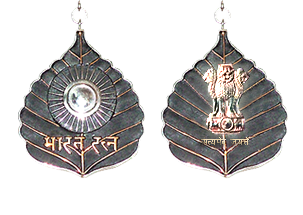
Bharat Ratna

Bharat Ratna- The Jewel of India

The Bharat Ratna, the highest civilian award in the country, was instituted in 1954. It is awarded in recognition of exceptional service/performance of the highest order in any field of human endeavour. No formal recommendation for the award is necessary. This is made by the Prime Minister himself to the President. The number of awards is restricted to 3 annually. On conferment of the award, the recipient receives the Sanad (Certificate) and a Medallion from the President. The award does not carry any monetary grant (Ministry of Home Affairs site- mha.gov.in).

The medallion is designed in the shape of a peepal leaf with the obverse having the Bharat Ratna inscribed in Devanagari script under the image of a sun. The reverse side has the motto, ‘Satyamev Jayate’ written under the Emblem of the State. The emblems, the sun and the rim of the medal are made of platinum whilst the inscriptions are in burnished bronze. The awards are created at the Kolkotta Alipore Mint along with the prestigious Padma awards and the Param Veer Chakra. The award is worn around the neck by a white ribbon.  An interesting fact is that the Bharat Ratna cannot be used as a prefix or suffix with the recipient’s name( India Today).

Let’s look at the subject in the context of the highest honours conferred in other democratic nations. The Presidential Medal of Freedom was established by President Kennedy in 1963. There have been 647 recipients and whilst it is a civilian award it can also be awarded to military personnel and worn on the uniform. An equivalent honour is the Congressional Gold Medal presented by the United States Congress.  Thus far 184 individuals and institutions have received this prestigious prize since 1776. If institutions also are considered for our highest award, the Indian Space Research Organisation (ISRO) will be a leading candidate.

The Legion of Honour is the highest decoration in France and is divided into 5 categories with the Grand Croix (Grand Cross) at the highest. This was instituted by Napoleon Bonaparte in the year 1802. On average 2000 French and 300 foreigners are decorated each year. And here lies the rub. Around 3000 French citizens have received the Grand Cross since inception averaging around 14 per year.  The current French population is around 7 crores. India has 140 crores. We are also 4X of the US population. The fact is that the Bharat Ratna and even the Padma awards have literally been rationed out.

70 years after the first awards were conferred; we have only 53 recipients of our highest civilian award. The limitation of a max of only 3 awards per year has brought us to this ridiculous situation. This limit has been breached by 4 awards in 1999 and 5 awards in 2024. Another big disappointment is that the Bharat Ratna was not awarded between 2020 and 2023. The award doesn’t need to be given every year.

Controversies related to the Bharat Ratna are all about political colour and affiliations. A few of the names in this ultimate roll-call of honour may make your eyebrows rise. Dr Radhakrishnan was conferred the honour in 1954 as a sitting Vice President. Sardar Patel, India’s first Home Minister and Deputy Prime minister, credited with the seminal achievement of preserving the Union of India was honoured posthumously only in 1991, four decades after his demise. PM Nehru was a recipient in 1955 with the Congress supporters and Nehruvian followers insisting that the President presented it to him suo-moto. Again, Smt Indira Gandhi was the Prime Minister in 1971 when she received the top honours. Earnestly hope that such an event does not happen again in the next few years. In 1992, Netaji Subhash Chandra Bose was awarded the Bharat Ratna reigniting controversies regarding his death. This was the only instance where the award was announced and withdrawn. This historical wrong should now be corrected.

There is no formal provision that the decoration be given only to Indian citizens. It has been conferred on a naturalised Indian citizen, Mother Theresa in 1980, which begs the question as to why it has not yet been conferred on the Dalai Lama. The two foreign recipients are Abdul Ghaffar Khan, born in British India, but a Pakistani citizen at the award ceremony in 1987; the other being the iconic South African leader and President Nelson Mandela. Whilst the Pakistani national received India’s highest honour, Dilip Kumar got the Nishan-e-Imtiaz (Pakistan’s highest civilian honour) in 1998. Here’s hoping that India’s first ‘Method Actor’ Dilip Saab moves from the Padma Vibhushan award in 2015 to a richly deserved Bharat Ratna, albeit posthumously. Surprise, Surprise!!  Morarji Desai remains the only Indian honoured with both the Bharat Ratna and the Nishaan-e-Pakistan (the second-highest civilian award in Pakistan).

The one Mega film star to make this august list is M G Ramachandran (MGR) who also became Chief Minister of the State of Tamil Nadu. But overlooked is his Telugu counterpart N T Rama Rao, ‘the God of Telugu Cinema’ not only because of his stirring portrayals of Lord Ram and Lord Krishna but also of several inspiring historical characters. His huge following also made him the Chief Minister of the then Andhra Pradesh. Dr Rajkumar was the colossus of the Kannada film industry- an accomplished playback singer, the SuperStar in more than 200 hit films and a social-cultural symbol in the State like none other. Vara Nada (Gifted Actor) and Bangarada Manushya (Man of Gold) for his legion of fans. The top civilian award also eluded Sivaji Ganesan, hailed as Nadigar Thilagam (Prince of Actors) in the Tamil film industry. His versatility and brilliance in over 280 films have made him the inspiration for generations of Tamil and Indian actors after him. The venerated Mohanlal and Manmooty from Malayalam cinema should also make the shortlist for the Bharat Ratna awards.

Winner of the first National Award in 1967 for Best Actor, Mahanayak Uttam Kumar is the most successful and influential actor in Bengali film history. His name will add lustre to the top national honour. As will that of the consummate actress Suchitra Sen who co-starred with him in many memorable films. Another name that readily comes to mind- the accomplished actress and dancer from Hindi films, Waheeda Rehman.

No case needs to be made for Amitabh Bachchan, ‘The Star of the Millenium’. A real anecdote will suffice. In the 1980’s when his stardom was at its peak, the stunned Egyptian film industry came up with the decree that no Indian film should be allowed a consecutive run of more than 4 weeks. The Soft Power of Indian Cinema was first exemplified by Raj Kapoor whose films ‘Awara’ ( 1951) and ‘Shree 420’ ( 1955) captivated audiences across the Soviet Union and China. The celebrated Satyajit Ray remains the only filmmaker in the list of 53 recipients thus far. Guru Dutt the maker of internationally acclaimed films like ‘Pyaasa’ and ‘Kaagaz Ke Phool’ has also been ignored. Let recognition be delayed, but not denied. Rajamouli Garu and Mani Ratnam are also staking their claims for this highest accolade. But are the powers- that- be paying any attention?!

Lata Mangeshkar’s golden voice floated in the air when the award was conferred on her in 2001. Classical Maestros like Bhimsen Joshi, Bhupen Hazarika, M S Subbalakshmi and Ravi Shankar have also been so honoured. But surely cherished household names Mohammad Rafi Saab, Kishore Kumar and Asha Bhosle do not have to prove ‘ their performance of the highest order’ in their artistic space. The sublime voice of S P Balasubramaniam has not only captivated South Indian film audiences but also those of popular Hindi cinema. Kerala’s iconic singer KJ Yesudas has sung mellifluously in multiple Indian languages and bagged 8 National Awards. Tabla maestro Zakir Hussain after 3 Grammy Awards is again knocking on the door.

In 2014, Sachin Tendulkar became the youngest recipient and the only sportsman to make the honour list. You may well ask- what about Sunil Gavaskar who scored tons of runs against the dreaded West Indian fast bowlers without wearing a helmet?! Or Kapil Dev, lifting the World Cup at Lords in 1983, which remains to this day the most seminal moment in Indian cricket history. Five times World Champion Vishwanathan Anand’s name does not make the honour list – shocking in a country which invented the game of chess in the 6th century Gupta period. To a forgotten hockey hero Balbir Singh Sr part of the Olympic gold medal winning teams in 1948, 1952 and again as captain in 1956. Eligible for the Bharat Ratna- a no-brainer one would think!! Mary Kom, bronze medallist at the 2012 Olympics and the most successful boxer in the history of the World Championships also deserves the highest civil recognition in India,

A welcome news has been of the late PM Narasimha Rao being awarded the Bharat Ratna for opening up and liberalising the Indian economy in the early 1990s. Surely his partner in arms Dr Manmohan Singh, Finance Minister and architect of critical economic reforms in a major crisis situation deserves the same laurels. Jan Nayak and ex-Bihar CM Karpoori Thakur’s belated recognition also raise hope that Odisha CM Naveen Patnaik gets his place in the sun. The hugely popular Naveen Babu’s administration (+ NDMA) handling of recurrent cyclones has been highlighted as the model for disaster management globally. His initiatives have pulled his State from its acute poverty and Naxal insurgencies and made it an attractive FDI and Domestic investment destination. Add to this the sponsoring of the Indian men’s and women’s hockey teams till 2033 and it remains for the Honourable Prime Minister to take the right call.

The socialist/leftist mindset that prevailed for over 5 decades ensured that only JRD Tata received the Bharat Ratna award as a hugely respected business leader.  Ratan Tata has followed in his footsteps through generous philanthropy, especially in health care and education and the Tata Group is now valued at $370 billion which is more than the current GDP of Pakistan, estimated at $341 billion by the IMF. Azim Premji at Wipro and Narayana Murthy at Infosys ushered in the IT revolution in India. Nandan Nilekani, a co-founder at Infosys, is also known as the father of the Aadhar Card (Unique Identity for Indian citizens) which along with the digital revolution and Unified Payments Interface (UPI)I has been the ultimate game-changer for the economy, trade and business and for e-governance. Capitalists and Business Houses are not the derisive words as bandied around in the license-raj times from the 1950s to the late 1980s.  All these gentlemen are now seen as role models and champions of a resurgent India.

Also missing from the list of awardees are extraordinary personalities like the late Ela Bhatt, labour lawyer and organiser par-excellence, who formed SEWA- Self Employed Women’s Association- a trade union for women workers in India’s huge informal sector. What about Verghese Kurien, the architect of India’s ‘white revolution’, which transformed the country from an importer of dairy products to the world’s largest milk producer through a system of farmer’s co-operatives – pushing out the middlemen. Another hero who deserves the highest laurels posthumously is Dr Govind Venkataswamy, the founder of the Aravind Eye Hospital, Madurai. Internationally reputed for its high quality, high volumes and low-cost service model. Do these worthies come up to the criteria of ‘exceptional service/ performance of the highest order’?! –the key requirement for the Bharat Ratna award.

‘Extraordinary contribution in any field of human endeavour.’ If you are the Prime Minister will you recommend Salim Ali, India’s celebrated ornithologist and naturalist- known as ‘the Birdman of India.’ Or Kailash Sankhala noted wild-life conservationist, whose passionate efforts virtually saved the Indian tiger from becoming extinct. Or Rajendra Singh, who renewed traditional techniques for storage and conservation of water in hundreds of villages in Rajasthan and made them inhabitable again.

The above is merely a wish-list of some richly deserving individuals who have been overlooked. You will have your own opinions and your own choices. Respect. The bottom line is that the entire process and dimension and scale of evaluating India’s most prestigious award needs to be revisited and revamped.

Restricting the Bharat Ratna to a quota of 3 awards per year beggars disbelief in a nation of 140 crore Indians. 15 awards annually, including posthumous recognition, is the least correction to be made. Having a jury of 12 upstanding and accomplished citizens from various walks of life to recommend 30 deserving names to the Prime Minister for his final review and selection will greatly enhance the aura of the awards. Let’s celebrate the extraordinary achievements and influence of this unique group of Indians- without distinction of race, caste, creed, occupation, position or gender. Let’s celebrate the Naya Bharat.