
50 Years of Sholay

Sholay was released on the 15th of August 1975. Fifty years later it remains one of the most iconic, celebrated and loved films in the annals of Indian cinema. Let’s first check-out it’s box office impact which transformed the fortunes of Hindi cinema in the mid 70’s. Planned with an ambitious budget of ₹ 1 crore (2x the budget of a well-mounted Bombay produced film); but the shooting and processing span of 27 months cost GP Sippy Films a staggering ₹ 3 crores. After a dismal start over the first weekend, it gained momentum to become the all-time cultural phenomenon it now is. This happened in an era where there was no social media and with several newspapers and magazines giving mixed and even negative reviews. Indeed, the Emergency had been declared just 2 months earlier. It was word-of-mouth excitement that sparked the Sholay explosion.

Thereafter, even the main-stream media got onto the bandwagon to celebrate its massive collection of ₹ 15 crores in its first run. Sholay had a 50-week (hallmarked as a golden jubilee) run at 28 cinema halls. At Minerva Theatre in Bombay, it was featured for a continuous run spanning an astonishing 5 years. Over the next 7 years of releases and re-releases the film had minted a historic ₹ 35 crores. Many trade experts in 2024 projected the movie’s inflation adjusted earning at around ₹ 2,750 crores. Surpassing the ₹ 2,000+ crores of Dangal (propelled by its humongous success in China) and Bahubali 2 at around ₹ 1,900/ crores. One simple fact to end all debates- Sholay sold more than 25 crore tickets – the highest by any Indian film ever.

Let’s connect with the nay-sayers in August 1975. The country had 11 film circuits including 6 major territories. The Rajesh Khanna starrer, Haathi Meri Saathi (1971) had created a record of ₹ 90 lakh gross in a couple of major territories. But the ₹ 3 crore budget itself signaled disaster. The 198-minute-long film had too much of violence and action and no romance or family values to pull in the crowds; an unknown villain Amjad Khan was pitted against 3 big stars in Dharmendra, Sanjeev Kumar and Amitabh Bachchan. (by the time of the film’s release AB had become the Big B). To make matters worse, Gabbar Singh’s dialogue delivery was considered weak and that too in some rustic dialect; a similar story Mera Gaon Mera Desh with Dharmendra, Asha Parekh and Vinod Khanna had set the box office counters ringing in 1971. Indeed, the tall, well-built Vinod Khanna was impressive in the villain’s role as Jabbar Singh. (Sound familiar? What?). Writer Salim Khan’s father had been a senior police officer in Central India and had talked about a dreaded dacoit called Gabbar Singh in the Gwalior ravines who spread terror by slicing of the noses of those who went against him.

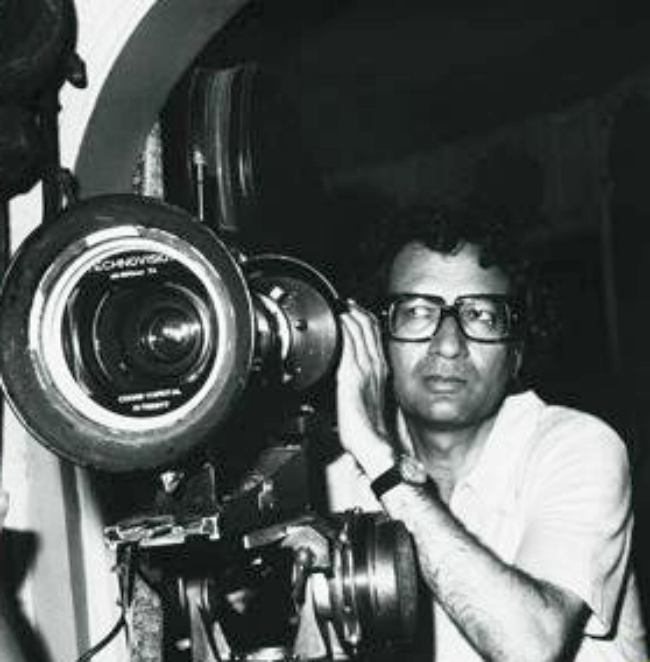
But why has Sholay become such a cultural phenomenon? Why has it become the subject of research for so many social- scientists? There are several dialogues which have entered the common spoken language. Audiences remember names of side characters who barely had screen time for a few minutes. Certain characters and dialogues have contributed to numerous viral and trending memes on YouTube and TikTok. The film itself does not look dated even today. The epic rail chase and encounter with dacoits and the sounds of horse hooves, the steam engine puffing and coaches rattling and rifle shots stunned audiences in 1975. The pulsating back-ground score added the X factor to the 70 MM spectacle as did the expansive lens of the cinematographer, Dwarka Divecha. Even today one wonders how they pulled it off. Delving into some of the back stories surrounding the making of the film may provide some answers about its stupendous impact beyond the darkened single-screen cinema theatres (Author’s note: These nuggets have been mainly consumed from various YouTube interviews of Ramesh Sippy, the director, and the writer duo Salim-Javed + a sprinkling of Sholay  trivia  stock-piled over the years)

What really stands out is the passion, confidence, commitment and teamwork of the entire Sholay unit. Let’s start with producer GP Sippy. Yes, the success of Andaz and especially Seeta aur Geeta (both directed by his son Ramesh Sippy) must have emboldened him. But a ₹ 1crore budget was unheard of in the Bombay film industry at that time. Salim-Javed had approached GP Sippy films with the complete script of what became Majboor which could be wrapped up in a reasonable budget and with limited schedules. However, the film mogul wanted to do something big and Sholay happened. The 27-month shoot in the rugged, rocky terrains of Ramanagara (near Bangalore) and the drastic spike in budget -spend to ₹ 3 crores did not deter the production-house, director, star-cast, technicians and crew from giving their very best. Nothing underlines this more than the fact that when the film’s obituary was being written in the early days after release, Salim-Javed took out full page ads in the Screen and other papers asserting that the movie would gross ₹ 1 crore in every major territory.

GP Sippy Films wanted to retain Dharmendra, Sanjeev Kumar and Hema Malini ( the endearing tangewali Basanti)for their next project after the super-hit success of Seeta Aur Geeta. Amitabh Bachchan was backed by the writer-duo and signed on by Ramesh Sippy after watching his performance in Anand and in the popular Kishore da bus song in Bombay to Goa. Jaya Bahaduri came on board for a small emotional role. Danny Denzongapa was the first choice for the Gabbar Singh character but did not have the dates as he was shooting for Feroz Khan’s Dharmatma in Afghanistan. Again, the just 26-year-old director and the writer team stepped in. Amjad Khan (the son of veteran actor Jayant) and having some theatre experience stepped in. Amjad Khan became Gabbar Singh. The rest, as they say, is history. The debutant actor, himself, gave credit to RD Burman for creating the eerie, unsettling background score when his character was first seen and then adding a palpable aura to his later scenes as well. The Avadhi dialogues became a smash hit with the masses and resonates even 50 years later. ‘Kitne aadmi the?’ (Translation: How many were there?), ‘Ab tera kya hoga Kaaliya?’ (Translation: What will happen to you now Kaaliya?), ‘Yeh haath mujhe de de Thakur!’ (Translation: Surrender your arms to me Thakur- with the implication of cutting his arms off), ‘Bahut yaarana lagta hai!’ (Translation: They look quite close! – said in an amused and calculative way), ‘Holi kab hai? Kab hai Holi?’ (Translation: When is Holi? When is Holi?) have all become part of the spoken lexicon. An interesting trivia is that the cassettes of the Sholay dialogues were specially released on huge public demand and sold more copies than the film’s hit songs.  And let’s listen to Javed Akhtar on why the Gabbar Singh character fascinated the public- ‘…he was pure evil with no back story to justify his cruelty; another reason was that the villain was not a pervert or lecherous, which would have undermined his impact.’

For me, one of the most intriguing aspects of Sholay power is that the names of small characters with limited screen time are still remembered after decades. Gabbar Singh’s side-kick Sambha (played by Mac Mohan) says only three words in the entire film’s run-time- ‘Purre pachas hazaar’ (Translation: A full ₹ 50,000) when the dacoit pointedly asks him about the bounty put on his head by the Government. That too, says Javed Saab, because a supreme egotist like Gabbar can’t boast of it himself. The faithful Sambha has to say it out loud for the other gang members to hear and remember why Gabbar is to be feared- an implicit psychological control over the rest. The venerable and blind Rahim Chacha is remembered for one poignant line, ‘Itna sanaata kyon hai bhai’ (Translation: Why is there so much silence?) when the village is aghast when the body of his dead grandson is brought to the village. The Hitler caricature, bumbling jailor (played by Asrani) has inspired hilarious memes especially with his ‘Aadhe idhar aao. Aadhe udhar jao. Baki hamare saath aao.’ (Translation: Half of you go over there. Half of you over there. The rest follow me- said in a petulant way by a tinpot dictator who is desperately trying to be in command). And who can forget Mausi (so naturally played by Leela Mishra)? And the one-and-only Soorma Bhopali (played by Jagdeep), who entertained us with scenes of situational comedy and flavored by his unique delivery of lines.

Another striking fact about Sholay is that the complete bound script, dialogues and even scene sequencing was handed over to the production house before filming. Only one scene was added and one scene changed. Veeru’s water-tank dramatics was added later to give Dharmendra more screen time, as the star was at the peak of his popularity. Also, in the original film Thakur (Sanjeev Kumar) stamped, kicked and trampled Gabbar Singh to death with his spiked footwear. The CBFC would have none of it and so the cops made their timely entry, arrested the villain and took him away, in a bid for a more palatable ending. When the movie was not doing well after its first weekend, Ramesh Sippy, Salim-Javed and Amitabh Bachchan met to discuss whether the ending with the death of Jai be changed. As by August 1975, Bachchan had become a bonafide superstar with a growing fan following. However, the original death scene remained, as does the legend of Sholay with the fake coin.

As mentioned earlier, the humongous impact of Sholay went far beyond the box-office numbers. Barely a year after it was released, in 1976, Amjad Khan featured in the Britannia Glucose-D ad with the tag-line ‘Gabbar ki asli pasand’ (Translation: Gabbar approved!- Note how the evilest character became  a brand spokesman!). Kailash Surendranath (the admaker) himself remarked on this turn or events, ‘…from being the most feared villain, to the face and brand ambassador of a majorly children consumed product was really something?’ The marketing gold mine was tapped for government campaigns, by major corporates and even down to the Goli Vada Pav joint franchise- ‘Ab goli kha’ (Clever wordplay, where you don’t take the bullet but translation: Have the vada-pav at a Goli franchise) to resonate with the masses.

Even today 50-60 people buy tickets of ₹ 25 each to visit the Ramanagara village- the fictional Ramgarh (off the Bengaluru-Mysuru expressway) to see the rocky locations where the film was shot. On weekends the number of fans goes up to 250. The ticket is ostensibly for the Vulture Park entry, but all the tourists are flocking to see the sites where the iconic film was shot even though nothing related to the film set remains.

As I write this blog, Sholay is being re-released in a 4K restored version (204 mins) at the Toronto International Film Festival. When the film is re-launched in India (re-release is not the word), the senior citizens and the 50+ will throng the cinema halls in millions. The Millennials and the Gen Z may wonder what the buzz is all about and some may even go to end their FOMO (fear of missing out).

Notes & Records of some Iconic Hindi Film Songs

The Golden Age of Hindi Film Music is considered to be the period from the 1950s to the 1970s. Song and dance were always considered to be a part of Indian Nautanki and drama and became an integral part of the narrative structure of popular Indian cinema. By the 1970s, Hindi film songs had reached out to a humongous audience across India but were also resonating in Asia, Africa, Russia, and Eastern Europe. This amazing era was defined by the exceptional creativity, talent, passion, and innovation of not only the Musical Trinity of Iconic Singers, Composers, and Lyricists; song and music also flourished because it was exquisitely imagined and projected by visionary filmmakers and directors.

Flashback to ‘Shree 420’ (1955). ‘Ramaiya Vastavaiya’ sung by Lata Mangeshkar, Mohammad Rafi and the voice of Showman Raj Kapoor- Mukesh. RK’s music team – Shankar Jaikishan, Hasrat Jaipuri, and Shailendra frequented Khandala to compose music for his films. They used to stop at a roadside hotel run by a Telugu guy Ramaiah for tea and snacks. Shankar, who was conversant in Telugu, placed the orders. One time around there was a delay in service and Shankar started humming  ‘Ramaiya Vastavaiya’ – calling Ramaiah to come quickly. His partner Jaikishan started drumming on the table. Shailendra piped in with ‘Maine dil tujko diya’ – indicating that all 4 were waiting for Ramaiah. As they hummed the lines they felt that this could be a song. Raj Kapoor liked the idea and created a street situation for the song and the lyrics were written keeping these lines intact. The original Telugu words were retained even though the Hindi audience could not understand its meaning. The song became a chartbuster.

Lata Mangeshkar sang the ‘Pyar Kiya to Darna Kya’ song for recording at 3 different locations. Mughal-e-Azam was released in 1960 and had been a few years in the making. “There was no technology to create’ the echo effect’,” writes Srishti Magan in an article for the magazine Bollywood probably alluding to a grand palace setting. “The only way out was to record the song at different places and overlap the recording. ” This was achieved to splendid effect by music-director Naushad and Lata Mangeshkar.

OP Nayyar (OP) is lauded as ‘The Rhythm King’.  His music had a robustness and rhythm; his songs were bewitching and easy on the ears. He brought the folk and modern together in perfect harmony. But the OP name is associated with the melodious use of Western instruments like the guitar, accordion, claret, cello, and piano. Author Ajay Mankotia reveals surprising facts through his meetings with and articles on this maverick composer. He changed the rules of Hindi film music. Please listen to ‘Yeh Kya Kar Dale Tune’ from ‘Howrah Bridge’ (1958) and ‘Ankhaon hi ankhon mein ishaara ho gaya’ from ‘CID’ (1958). He brought the Sarangi out of its limited role- either in kothas or as a mournful accompaniment to melancholic songs. He transformed it into an upbeat musical instrument. He gave it a feel-good melody and a fast pace. “The poor Sarangi was joyfully released from typecasting.”

Take the Santoor. The beat allotted to it by music directors was gentle. OP Nayyar used it as a fast-flowing brook- soft but more insistent in the prelude to ‘Jayenge Aap Kahan Jayenge’ from ‘Mere Sanam’ (1965). Never had been the santoor used like this. Shades of fusion music in the 1990s brought forth by the upbeat rhythm of traditional Indian musical instruments. Take ‘Yeh Haseen dard de do’ from ‘Humsaya’ (1968). For the song an accomplished tabla player would provide a beat pattern that would be simple and linear. OP’s beat patterns are complex yet riveting. The beat patterns certainly shook up the music aficionados of the time.

In an episode of KBC, Big B revealed that the exuberant yell “Yahoo!” in the song ‘Chahe Mujhe Junglee Kahe’  from ‘Junglee’ (1961) was recorded by writer Prayag Raj who happened to be in the studio and not by the singer Rafisaab. Later in Amitabh Bachchan’s own ‘Coolie’ (1983) Prayag Raj provided vocalization by shouting “Allah Rakha” in a song. The ‘Yahoo’ song picturized on the ‘Rebel Star’ Shammi Kapoor is considered a turning point in Hindi cinema. It solidified his image as an untamed screen presence, an unshackled freedom-seeking soul. Much akin to contemporaries Elvis Presley and James Dean. The singer in a later interview commented that he sang this exuberant song on a high scale whilst visualising the persona of the rocking Shammi Kapoor. In his foreword to the biography ‘Mohammad Rafi- Golden Voice of the Silver Screen’ by Sujata Dev, Dilip Kumar writes, “With Rafisaab it was a mystical bonding.  As if he was part of me when he sang for me without being told how I would perform the song during the filming of the sequence.” Think also of Kishore Kumar. His years as an actor helped him to project his voice to captivatingly express the emotions of other actors.

A musical giant Salil Chowdury or Salilda, enriched us with his music over 5 decades. From Bengali to Hindi films, Malayalam, Tamil, Telugu, Gujarati, Marathi, Assamese and Odia films. Agnivo Niyogi when writing for the Telegraph mentions quite a few Bengali masterpieces introduced to Hindi audiences. We check out some of these compositions of Salilda which are memorable both in Hindi and Bengali. “The wistful melody ‘Na Jaane Kyun’ from ‘Chhoti Si Baat’ (1976) set to Yogesh’s words and brought to life by Lata Mangeshkar was a recreation of his Bengali song  ‘Pagol Hawa’ which Jaitleshwar Mukhopadhyay sang with great finesse. ‘O Sajana Barkha Bahaar Aayee’  from Bimal Roy’s 1960 classic ‘Parakh’ is another gem from the composer-singer duo of Salilda and Lata Mangeshkar. The latter also sang the Bengali version, ‘Na Jeo Na’. ‘Kahin Door Jab Din Dhal Jaye’ from ‘Anand’ (1971) captures the melancholy of a terminally ill cancer patient who is watching his life slip by. Penned by Yogesh the heartfelt lyrics as rendered by Mukesh touches our hearts. The original Bengali version ‘Amay Proshna Kore Neel Dhrubo Tara’ in Hemant Kumar’s deep, rich voice has etched its place in the annals of Bengali music.”

‘Ek Chatur Naar’ one of the most loved songs from the1968 laugh-riot ‘Padosan’ was actually made up of 3 different songs. A puzzle perfected by bits and pieces brought in by the versatile Kishore Kumar. As composed by RD Burman it was a combination of Carnatic and Hindustani classical music. Manna Dey, a trained classical singer rendered the Carnatic part whilst self-taught Kishore da sang the Hindustani counterpart.  The Alaap ‘Ek Chatur Naar Karke Shringar’ was taken from Ashok Kumar’s original version in ‘Jhoole’ (1941). The tune used in ‘Sant Tulsidas’ (1939) song  ‘Ban Chale Ram Raghuram’ was adapted as ‘Are Dekhi Teri Chaturai.’ The tune used in ‘Chanda Re Jaa Re Jaa Re’ sung by Lata Mangeshkar  ‘ Ziddi’ (1948) was the final piece of the puzzle, ‘Kaale Re Jaa Re Jaa Re Are Nale Mein Jake Tu Munh Dhoke Aa.’  The famous reel battle remains as humorous and entertaining as it was 55 years ago. Rajendra Krishan’s lyrical fluidity, RD Burman’s creative mastery, the class of Manna Dey, and the genius of Kishore Kumar all contributed to the timeless track we have today. The humorous on-screen presentation by Sunil Dutt, Mehmood, and Kishore da himself remains till today as a favorite repeat watch for movie buffs, Manna Dey in his interviews has mentioned his fond memories of the making of this crazy, rollicking duet. The rehearsal over 8 days and good food at each other’s house. The final recording in 2 phases. Manna Dey in his interviews admiringly speaks about the mad-cap genius of Kishore and his improvisations which made the song into a cult classic.

Indian Railways is a recurring character in countless Hindi songs of that era. Shakti Samanta’s 1969 romantic drama ‘Aradhana’  gave Hindi cinema an evergreen romantic song in ‘Mere Sapnon Ki Rani’.  The filmmaker’s son Ashim Samanta recounts what went into the making of the iconic song. The number was to introduce the lead pair of Rajesh Khanna and Sharmila Tagore. The song was visualized with the hero driving a jeep through a scenic hill station whilst the heroine is sitting in a slow-moving passing train. The Bagdogra to Darjeeling toy train route was selected for the song. But just a few days before the actual shoot, Sharmila Tagore informed the director that she had already allotted the dates for a Satyajit Ray film. The filmmaker was livid but she convinced him to go ahead with the scheduled shoot without her. As the hero proposes to her in the song the heroine is seen sitting in the train trying to read a novel and sneaking glances at the Romeo. Whilst watching the film it seems that it was all shot at the same Darjeeling location. In reality, it had to be re-shot on a set at Nataraj Studios, Bombay. Art Director Shanti Das recreated a set to match the toy train compartment. The scenes were edited and interspersed so seamlessly to seem one with the outdoor location shoot. Another important reveal is that all the songs were supposed to be sung by Mohammad Rafi. As he was on a 3-month world tour, Sachin Dev Burman and Shakti Samanta brought in Kishore Kumar. The rest is history.

‘Khaike Paan Banarasiwala’ became the USP for the 1978 hit film ‘Don.’ The lyrics were written by Anjaan for a Dev Anand film ‘Banarasi Babu’ (1973). Kalyanji-Anandji (KA) were the music directors for both the films. However, the star disliked it as it did not go with his urbane, debonair image and hence it went into the KA song bank. After the completion of the rushes, ‘Don’s’ director Chandra Barot screened the film for his mentor Manoj Kumar. He was advised that the film script was going too fast and that a song be introduced post-interval to give the audience a breather. Hence, the famous song picturized on Amitabh Bachchan, where he was inspired by some of Bhagwan Dada’s dance moves a la ‘Albela’. Kishore Kumar agreed to sing the song after much persuasion by the music director duo but insisted that he would only give one take. He asked for a paan at the studio, and chewed the paan, and also spat it during the recording. Please check out the song again to get the real feel and flavor of it again. These incidents were recounted in the radio show Suhana Safar with Annu Kapoor’.

In a Facebook video, Asha Bhosle recalls the recording of the song ‘Inteha Ho gayi Intezar Ki’ when Kishore Kumar sang the song whilst lying on a table. This superhit song featured in Prakash Mehra’s film ‘Sharabi’ (1984) with the camera panning on Big B and another top heroine from the South, Jaya Prada. Anjaan captured the mood of the song in his lyrics which was composed by Kishoreda’s nephew, Bappi Lahiri. The singer decided that he would sing the song lying down as a fallen drunkard. A teetotaller, the artist in him decided to reach the high by lying down flat.

During her last concert tour to Britain in 2016, Asha Bhosle spoke with the Hindustan Times about how she immersed herself into the role of a Lucknow courtesan to prepare herself for the rendering of the mellifluous ghazals from the 1981 film ‘Umrao Jaan’. The soulful lyrics were penned by Shahryar and the music of the film was composed by Khayyam. She mentioned that normally her focus is on 2 things- who is singing the song on the screen and what the screen persona of the actress is. For ‘Dil Cheez Kya hai’ the gestures and expressions of Rekha came to her mind. Then she read an Urdu novel ‘Umrao Jaan Ada’ (1905) to understand the character and situation. “After imbibing all that I became Umrao Jaan myself. I could translate her feelings into my rendition of the song.” We have all heard of Method Acting- the technique for an actor to get into the skin, mind, and even soul of a character. How about, ‘Method Singing?’

Eminent lyricist and filmmaker Gulzar is full of anecdotes about Pancham. 116 of his songs were set to music by R D Burman. “He used to be at his wit’s end about my lyrics. Ek to bechare ki Hindi weak thi aur oopar se meri poetry,” says Gulzar- The poor man’s Hindi was weak and to top it he had to grapple with my poetry. “When I gave him ‘Mera Kuch Saaman ‘ (Ijazat-1987) he threw away the sheet saying that next time you will give me a headline from the Times of India and tell me to tune it.”

Such iconic songs are known for their timeless melodies and poetic lyrics which resonate with people across generations. They have stood the test of time. They take us back in time to a period when music-directors Laxmikant-Pyarelal (LP) flawlessly conducted an 80-piece orchestra and when music arrangers played a vital role. The lyrics were meaningful and had universal themes and appeal. These classic melodies touched millions of hearts and spread cheer and goodwill. Tapping into the entire spectrum of human mood and emotions- uplifting, philosophical, sad, reflective, wistful, upbeat, naughty, and seductive. During a recent episode of a reality show, Sanjay Dutt shared that his father Sunil Dutt had told him to listen to 4-5 select inspiring and motivational songs when he felt down and desolate. One of the booster-dose numbers, ‘Ruk Jaana Nahin Tu Kabhi Haar Ke’- Do not stop after a defeat from the film ‘Imtihaan’ (1974). Another stirring song by Kishore Kumar,  curated by the LP- Majrooh Sultanpuri team and featuring an idealistic and resolute teacher Vinod Khanna who triumphs over the travails and challenges that life has in store for him. The Golden Oldies numbers have this subtle power to relax and refresh, revive and reinforce.

Vijay Anand- The Master Film Maker

Vijay ‘Goldie’ Anand did not have to struggle for a break in the Hindi film industry. His elder brothers Chetan Anand & Dev Anand (13 & 11 years older) had established themselves as a filmmaker and leading man. Immersed in his theatre group at St Xavier’s College, Bombay, Vijay wore multiple hats as a director, writer, and actor. The Shape of things to come! Just emerging from his teens he wrote the script for the hit film ‘Taxi Driver’ (1954) directed by Chetan Anand and starring Dev  Anand and his bhabi-to-be Kalpana Karthik.

His innings as a director began with ‘Nau do Gyarah’ under the Navketan banner in 1957. For the next 15 years, his brilliance and versatility lit up the big screen. ‘Nau do Gyarah’ was a road movie; ‘Kala Bazaar’ a nod to neo-realist cinema; ‘Tere Ghar Ke Samne’ was a rom-com; ‘Guide’ a classic book adaptation of R K Narayan’s masterpiece; ‘Teesri Manzil’  a musical mystery; ‘Johny Mera Naam’ a caper film with the lost and found formula; ‘Tere Mere Sapne’ inspired by A J Cronin’s Citadel about an idealistic doctor in a coal town, his surrender to Mammon and a timely redemption.

Vijay Anand is not just regarded as a textbook in movie making but the entire curriculum. This genius’s grasp of the movie craft extended across direction, acting, writing, screenplay, and dialogues to the editing room. During his prime in the 60s, he is known to have shared draft ‘mukhdas’ of lyrics to his lyricists to embellish, improve and work upon. Simply to ensure that the songs became a part of the story. Later in his career, he penned a few lyrics himself. The Maestro was not done yet. A trained waltz performer he did a dance number with Bindu in ‘Chuppa Rustam’.

But 4 extraordinary films in a 6-year span built the Vijay Anand cult amongst his legion of fans and within the film fraternity. ‘Guide’, ‘Teesri Manzil’, ‘Jewel Thief’, and ‘Johny Mera Naam’ remain in the collective memory of an entire generation of movie buffs even after the passage of 5 decades.

‘Guide’ (1965) is regarded as one of the best Indian films of all time. The story of a charming tourist guide Raju (Dev Anand) who falls for a married woman Rosie (Waheeda Rehman), goes to jail for embezzlement and is mistaken for a sage and holy man in a drought-stricken place is superbly curated and directed by Vijay Anand. The film transcends into an experience for our minds and soul. In 1965, the story had controversial elements but the filmmaker did not pull any punches. Rosie walks out on her philandering archaeologist husband after a showdown in a cave and gets into a live-in relationship with Raju guide. Waheeda Rehman’s portrayal of the independent woman character with her own identity and dreams remains a landmark in the annals of Hindi cinema. Rosie’s ascent to fame as a talented dancer Ms. Nalini (with Raju as her Manager) is beautifully captured through an elaborate song number. She also has no qualms about breaking up with a drunkard Raju after she discovers that he has siphoned off some of her hard-earned money and hands him over to the police authorities. Then, the seamless screenplay takes Raju’s accidental redemption story to a spiritual level and a surreal ending. The audience exited the theatre in droves with the film imprinted on their minds.

Goldie Anand’s films are also known for their natural and conversational dialogues. Remember that in the 50s and 60s Hindi cinema was still in the throes of theatrical dialogues and posturing with words that were not in sync with the character. ‘Guide’ is a testament to his mastery over the spoken word. In an interview, Waheeda Rehman shared that her only disagreement with the director related to her dialogue during her angry parting with her husband. She felt that the words were ‘coarse’ and ‘harsh’ but Vijay Anand persuaded her that they were ‘in character’ and ‘in context’. After watching screenings later she acknowledged that these words were critical in her character’s arc. Dev Anand’s redemption chart from convicted swindler to an accidental savior is captured through heart-touching dialogues- ‘Shaurat use mili, sar mera ghoom gaya; jab hosh aya to paya salakhon ke piche’ (in jail). ‘In logon ko mujh pe vishwas hain aur abhi mujhe unke vishwas par vishwas hone laga hai’ (Raju Swami fasting to bring rain to the parched countryside). ‘Maut ek khayal hai, jaise zindagi ek khayal hai. Na sukh hai na dukh hai. Na deen hai na duniya. Na insaan na bhagwan. Sirf main hoon, main hoon, sirf main hoon.’ (on his deathbed as heavy rain falls outside).

In an interview, Vijay Anand said that he has always been an explorer and a student of cinema as it is an integrated art form. As a director, he would give a complete picture of what he wanted to all his technicians and collaborators. It is not surprising that he was not limited to any genre. ‘Teesri Manzil’ ( 1966) has been called a musical thriller. The film opens with a film noir scene where a woman rushes up to the third floor of a hotel before falling to her death. Suicide or Murder?  The first half is all about romance and foot-tapping songs and dance. Shammi Kapoor grooves and moves like Elvis Presley possessed. And it is with this film that our Pancham became RD Burman. Film is said to be the Director’s medium and this was brought out charmingly during the filming of the song, ‘Mere Sona Re’ where the buckle of a bag the hero was carrying broke. The filmmaker kept the cameras rolling and the lead man improvised adding a natural flair to the song. The second half of the film is full of twists and turns and new characters are introduced at a bewildering pace. Although it may not satisfy a whodunit purist with a thirst for clues, it evolves into a thrilling yarn.

One of the oft-spoken remarks about Goldie Anand is that ‘he was well before his time.’ In ‘Jewel Thief’ (1967) based on a story by KA Narayan, he created a doppelganger character for the hero, a cunning criminal who does not exist. Here his trump card was to cast Ashok Kumar as the real Jewel Thief. The thespian actor was reluctant to play the villain as it went against his well-accepted screen image. Vijay Anand convinced him that the surprise reveal would happen at the very end. The fast-track narrative was considerably enhanced by SD Burman’s score and compositions, and the film does not feel dated even today. The extent of his creative involvement is revealed when the opening credits roll. We see a profile of the jewel thief appraising the spoils in his gloved hands. Then you hear a chuckle and a short laugh. The Director’s laugh. The jewels are fake.  Shades of Nirav Modi and his diamond collection.

His song picturizations have become the stuff of film legend. Like Guru Dutt, Raj Kapoor, and Raj Khosla he believed that songs were part of a film’s storytelling process and should take the story forward. He fervently felt that songs were part of Indian culture and films and if captured well on reel would bring repeat audiences to the theatre. During his time most filmmakers left it to choreographers to film the song and dance sequences. Not Vijay Anand. ‘My characters should not become artificial when they sing. They are expressing their emotions through the song. The characters are not meant to be dancers in the film.’ The song ‘Hothon mein aisi baat’ from ‘Jewel Thief’ was shot at the royal palace in Gangtok, Sikkim. In this fast-moving song, the camera stays with the talented actress/dancer Vyjanthimala showing her anxiety and distress even as she performs exquisitely till the male lead Dev Anand surprises her with an exclamation in the course of the song. In ‘Tere Mere Sapne’ from ‘Guide’ the rising sun becomes the metaphor for the new love between Raju and Rosie.  The background shot the fastidious director wanted was available for only 15 minutes in the early mornings. So the unit was up and about each morning till he was satisfied. With his eye for detail and authenticity, Goldie scouted for the right locations- Chittor and Udaipur for ‘Guide’. ‘Pal, pal dil ke pas’ in ‘Blackmail’ (1973)is considered as one of the most romantically picturized songs in Hindi film history. It simply features a graceful Raakhee reading letters sent to her by the hero (Dharmendra) and imagining that he is beside her. In the same film Vijay Anand does the unthinkable of featuring the lead pair in an intimate love song situation (‘Mile Do Badan’) while they are being hunted down by villains with arms and dogs. His creative imagination amazes us to this day. ‘Ek Ghar Banega’ from ‘Tere Ghar ke Samne’(1963)had camera tricks where Nutan is seen in ice cubes in a glass of whisky. The song ‘Dil ka bhawar kare pukar’ was shot in the Qutb Minar (actually on a set as permission was not granted). In the song both Dev Anand and Nutan are shown climbing the narrow winding staircase as friends and come down as lovers. The lighting and camera work makes this a magical sequence.

Released in 1970, ‘Johny Mera Naam’ was the biggest hit of his career. This film is often touted as a must-watch for screenplay writers. Never a dull moment in a screen time of 2hrs and 45 mins. Kalyanji-Anandji’s signature car-chase tune which added to the mood and excitement of the movie also ‘inspired’ many composers later. Anita Padhye writes in her Marathi book, ‘Ek Hota Goldie’ about ‘Husn ke lakhon rang’, the raunchy number which became a highlight of the film. The back story of Padma Khanna gives the context- it’s not just another item number. ‘So real were Premnath’s expressions that Goldie was worried that Premnath might hug Padma Khanna out of sheer lust.’ This blockbuster launched Hema Malini towards superstardom and gave a new lease of life to Premnath as a major character actor.

A word about Vijay Anand’s notable screen roles which left a mark on the audience. From the soldier in ‘Haqeeqat’ to the disillusioned Dr Kothari in ‘Tere Mere Sapne’; the Professor husband in ‘Kora Kagaz’ to the Thakur of ‘Main Tulsi Teri Angan Ki’. To the popular TV crime series thriller ‘Tehkikaat’ in 1994 with Vijay Anand as private detective Sam D’Silva- directed by his nephew Shekar Kapur.

After 1973, his career went downhill due to personal and family issues; spiritual meetings with Rajneesh (Osho) and later sessions with UG Krishnamurthy also took him away from the film world. Still, for many Bollywood filmmakers, Vijay Anand is the Boss. Many are in awe of his technical finesse, storytelling skills, and his ear for film music. Shekar Kapur, Sanjay Leela Bhansali, Raj Kumar Santoshi, Madhur Bhandarkar and Rakesh Omprakash Mehra to name a few. Sriram Raghavan (of ‘Andhadhun’ fame) dedicated his ‘Johnny Gadar’ to the Master and peppered it with many hat tips to him. In one scene the hotel receptionist is shown watching ‘Johny Mera Naam’.

Surprisingly, this much-feted filmmaker received only 4 Filmfare awards-Best Director & Dialogues in ‘Guide’ (1966) and Best Screenplay and Editing for ‘Johny Mera Naam’ in 1971.

But his seminal impact and legacy endures through his work. In today’s times, he would probably have been referred to as Mr 360 degrees- the encyclopedia of filmmaking.