Has Cricket Become a Batsmen’s Game?

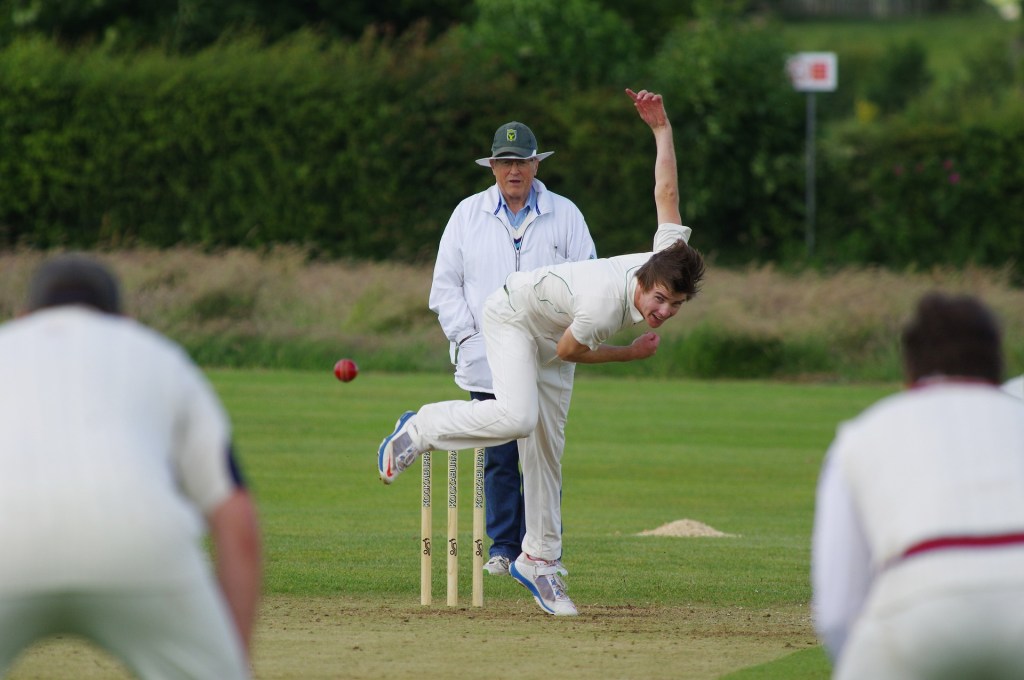
Image by Lisa scott from Pixabay

The scales in cricket have been tilted in favour of the batsmen. It has not really been a level playing field. But not too long ago, there still prevailed the ideal of a battle between bat and ball and a battle of wits between the bowler and the batter. Quality time was spent on discussing the pace-threat and the guiles and skills of spin. I remember Richie Benaud commenting on an Ashes Test. The elegant English stroke player was struggling with a packed slip cordon and Jeff Thomson was on fire. As the captain waved a couple of fielders to long-leg and deep square, the astute veteran sensed a trap. Along came the shoulder-high bouncer and went straight down the throat at long-leg. This was the charm of the game. Even with radio commentary one could visualise the game plan.

The champion bowlers were celebrated and appreciated. Pundits in the sports magazines and newspapers would wax lyrical about Chandra’s flipper or Bedi’s tantalising flight and control. They were on the covers of even the popular periodicals. The flipper we learnt was a back-spin ball which kept deceptively low after pitching- to deadly effect. The legendary Gary Sobers in his ‘spin avatar’ bowled the chinaman– decoded to us by the experts as the left arm bowler’s leg spin. The sharp turn came into the right hand batsmen or moved away from the south-paw. Kuldeep Yadav is the current exponent but our run-happy hyperbolic commentators have little to say on this fine craft of bowling. Tony Cozier, the West Indian expert, educated us about Colin Croft’s toe-crusher yorker and the deceptive slower, swinging one. Cricket aficionados learnt about the 3 variants of bouncer in Andy Robert’s arsenal. The reverse swing of Wasim Akram evoked admiration as did Murali’s doosra (the other one in Hindustani). A regular off break delivery with a wrist twist which made the ball spin in the opposite direction. Cricket was more than a physical sport. At times it was almost a chess-match between bat and ball. It blew your mind.

In the seething cauldron of the MCG, fans used to chant ‘Lillee, Lillee’ as their gladiator ran into bowl at express pace. Roberts, Holding, Croft and Joel Garner of the Fab Four have inspired Caribbean Calypsos. There was deathly silence at Ahmedabad as Holding and Marshall dismantled our second innings in the 1983 Motera Test. Even in the pall of disappointment, I sensed Respect. We had witnessed a sensational bowling display. The crowd stood up to applaud the great West Indian team. Shane Warne’s ‘ ball of the century’  to dismiss Gatting in the 1993 Test match still remains a hot You-Tube favorite.  Harbhajan ‘Turbanator’ Singh’s hat-trick at the 2001 Test vs the Aussies electrified the packed 1,00,000 crowd at the Eden Gardens and virtually brought the country to a stand-still.

Within the prime cricketers fraternity there is mutual and genuine respect between the bowlers and batsmen. Here is Ian Chappell’s (the reputed Aussie captain) take on our great off-spinner Prasanna. He had taken 25 wickets in 4 tests against a formidable batting line-up Down-Under in 1967-68, “the best spinner he had ever faced. He was trying to get you out every ball. A test to your brain. He put his engineering background to good effect by employing things he had learnt as an engineer. He pulled it back on a bloody string.” The awe is obvious, ‘aerodynamics, biomechanics, pitching the ball at length. Psychology. Baiting a batsman over after over to induce a mistake.’ Phew. Cricket is deemed to be a religion in India. Are we missing out on good chunks of its scriptures.?!!

Brian Lara on Wasim Akram’ He made me feel stupid at times. Feared to face the Sultan of Swing ‘and more.’ He was fast and furious. He bowled over and around the wicket, swung the ball both ways, a master of reverse swing. ‘At times he cut the ball prodigiously.’ Such a tribute from an all-time great batsman. The reverse swing is the art of swinging the ball in towards the batsman rather than away from him. One side of the old ball gets scruffy and the other retains its shine to get this movement. A lethal delivery later in the innings. A blessing as else even a good pace bowler would be regularly hit out of the park on a true track. Akram was the original master of this Art of Fast bowling. Then, why does the game seem so one-dimensional now? Runs, fours and sixes. That’s all it takes to hit the cricket pop charts!

So what has eroded the bowler’s stature in cricket. First, the shrinking of the playing fields. From 75-85 mtrs boundaries to 65-70 mtrs to the ropes from the centre of the pitch. In New Zealand, down to 55-60 mtrs of turf expanse. Yes, the hoardings and the ad billboards, the media spots and the dug-outs have also encroached into the playing space. This is the unspoken reality behind the sudden glut of sixes.

The bats have gotten larger and heavier. Chris Gayle wields a 1.36 kgs willow. With the thicker edges, a top edge flies for a six.  We have the swooning commentators going ga-ga. The batsman has been beaten by the pace, bounce or swing but the cheers and bugles are for the ultimate shot. Inadvertently, perhaps, but the bowler is being reduced to a side-role in the cricket show-time.

Let’s look at the pitch report. Mostly, flat and true even if offering some pace and bounce. WACA (Perth in West Australia) used to be a dreaded track, very fast and bouncy. A graveyard for touring willow-wielders. Not anymore. The extra bounce, pace and rip have gone. Touring batsmen from all over the world have heaved a collective sigh of relief. Let’s also listen in to Gary Barwell, head groundsman at Edgbaston, Birmingham. ‘One day pitches in England are the best in the world. Well, if you are a batsman, that is. The tracks are flat and true. It enables batsmen to hit through the ball.’

An interesting bowling nugget from the 1970’s on the wicket conditions. The English team it was said carried left arm quickish spinner Derek Underwood like an umbrella, in case it rained.  On sticky or drying surfaces he was unplayable and would simply run through the opposition batting.

The protective gear now worn by the batters has diminished the aura that the best fast bowlers had. Fear and Intimidation is a thing of the past. Pace like Fire as unleashed by the great West Indies fast men of the 70’s and 80’s is now part of cricket folk-lore. Catch it on the riveting documentary, ‘Fire in Babylon’. Helmets, metal visors, pads, gloves, chest and elbow padding, abdominal guards or the box are effective PPE’s. So should they be. The 5.75 ounces of leather bowled at over 90 miles per hour is a deadly projectile. Who can forget the tragic death of Phil Hughes despite the helmet gear?

The rules of the game also help the batsmen. One bouncer an over in T-20’s and two in ODI’s and Tests. Next the fielding restrictions. During the T20 power play (first 6 overs) only 2 fielders outside the 30 yard circle. For the rest of the innings, a max of 5 fielders outside the defined space. Ditto for ODI’s in the first 10 power-play overs. Then relaxed to 4 fielders in the deep for 10-40 overs and a max of 5 fielders in these positions for the last 10 overs. The bowlers and their captains have little strategic space to test the weaknesses of the batsman. Moreover, a bowler can bowl a max of 10 overs in the 50 over game and 4 overs in the T20 format. The skipper has to use 5 or more bowlers to get through the innings. If anyone is below par on the day or a part-timer is getting taken to the cleaners, the captain can only hope and pray for an end to the mayhem. Why not tweak the rules to allow one main or in-form bowler to have an extra 2 or 5 overs in the two limited over formats? Some latitude to balance out the game. Some push-back on the batsmens’ privileges.

Look at the concept of a ‘Free Hit’. A free hit is given to the batsman for the next delivery if the bowler over-steps with his front foot or his back-foot does not land within the return crease. Both versions of the No Ball. Do the batters require any more largesse in a T20 or ODI game where conditions are skewed in their favour. Catch the poor leg-spinner. The LBW rule says that for a ball pitched outside the leg-stump, the batsman cannot be given out even if the ball had turned and gone on to hit the stumps. For Leggie’s Sake! the pads are protective gear and not a second line of defence. The bowler is being defanged of his venom.

Another nugget to expose the bias. Stuart Broad, the English fast bowler, recently crossed the 600 wicket mark in Test cricket. A remarkable landmark.  But social media in India was flooded with comments about whether he was the same bloke whom Yuvraj Singh had clobbered for 6 sixes in an over. Why do batting exploits have to dominate cricket conversations? Why not salute his indomitable spirit and hail this amazing achievement?

Let’s hark back to the World Cup 2019 thriller finals. England and New Zealand both ended up at the same score even after the Super over. The trophy was handed over to England by a strange rule that they had scored more sixes and fours than their rivals. The run-rate was the same. Again bat over ball. The Kiwis had taken 10 English wickets and lost 8 whilst batting. This did not count in the ICC scheme of things.

Is it any surprise that batting records are being smashed all over the cricketing world? 10 teams have breached the 400 runs mark in the ODI tournaments. Getting 250 runs in a T20 match is entirely possible. Rohit Sharma leads the pack with 4 centuries in the shortest international format.

The advantage is firmly in the batsmen’s crease but cricket administrators and marquee cricketers are waking up to the fact. The DRS review appeals has come as a boon for the bowlers too. This has put pressure on the umpires to be neutral, alert and zoned-in especially on LBW issues. The notoriety of some in the not too distant past still lingers on. The host side at times played with 13 active players. Some officials also came under the match-fixing cloud. The Snick-o-meter with the third umpire or match referee also bats for the bowlers and helps their cause. It analyses the video and sound as to whether a fine snick or noise occurs as ball passes bat.

 The other booster for the pace bowlers should be the 2 new white ball rule- 25 overs from each end in the ODI’s. Sachin Tendulkar has a different perspective, “this is not the perfect recipe as each ball is not given time to get rough and old and reverse. We haven’t seen reverse swing, an integral part of the death overs.” Further, in 2017, the ICC did come up with a half measure on bats-  ‘edges can’t be more than 40 mm in thickness and the overall depth of the bat measured from the highest part of the spine should not be more than 67mm.’

One major ally for the bowlers is the support on the fielding front. The extraordinary enhancement in fitness and fielding skills have not only saved runs but kept the pressure lid on. The conversion ratio of run-outs and direct hits has spiked. Extraordinary catches, especially in the outfield, have become the norm.

So is this just a lament for the plight of the bowlers. Are batsmen the villains?  Absolutely not! The rules and the playing eco-system have to be changed to ensure a fair and engaging contest between bat and ball. Else, why are low scoring matches so thrilling? !! Tendulkar and Dravid, Kohli, Smith and AB DeVilliers, Ponting and Lara, Dhoni and Sangakara have enriched the game beyond measure. They are Maestros. Their exploits with the bat have packed stadiums and commanded a huge and loyal viewership. As the formats have changed, they have been at the forefront of amazing innovations in batting technique and flair. AB is known as the 360 degree genius. The upper-cut, switch-hit, reverse sweep, paddle shot, Inside-Out stroke and the Periscope shot are now all part of the cricket lexicon. The last named because the motion ends up with the batter holding the bat like a protruding periscope. Who can forget Ganguly’s break-out century at Lords in 1996? The Sachin master-class knock of 98 against Pakistan at the Centurion in WC 2003. The Very Very Special Laxman-Dravid partnership which snatched victory from the jaws of defeat against the rampaging Aussies- Eden Gardens 2001. Or Kapil Dev’s iconic 175 not out at Turnbridge Wells in the 1983 World Cup. But let us not forget the critical contributions to the 1983 WC triumph from our under-rated bowling squad.

Baseball is a distant cousin of cricket. The Pitchers have their own variations- the curve ball, the slider, the fast ball. In the All Time great lists they rub shoulders with the batters with almost equal representation. They hog their fair share of the limelight in the MBL Hall of Fame. This is also a statistically obsessed game. But their analysts and fans cover all the bases. However, in Indian cricket, the media and the fans cannot stop talking about the number of centuries, the big hits,the strike rate and in the IPL context- the Orange Cap.

Stats do not tell the whole story and they can be misleading at times. Instead, look at the Impact Players. Whose performances have changed the fortunes of a match or a series. A  Bumrah for India or a Rabada for South Africa with key wickets at the right junctures. Even for a batsman-evaluate the innings in the context of the match, the pitch conditions and the quality of the opposition attack. A fifty on a difficult wicket in a low scoring match is worth much more than a century on a docile pitch.

In the 80’s and 90’s a widely held belief was that a 5 wicket haul in a Test or ODI was equal to a century. Anil Kumble has had 35 five wicket hauls in Tests and 2 in ODI’s. Equals to at least 35 centuries. Places him deservedly amongst the batting greats. His extraordinary 10 wicket haul in an innings against Pakistan at the Ferozshah Kotla in 1999 should catapult him into the exalted cricketer realm. Not quite. If you do an informal survey in your own circle about the 6-7top Indian cricketers for the last 25 years, batting masters with celebrity names will quickly fill up most lists. Kumble, Zaheer Khan, Harbhajan Singh may at best sneak into a few.

On that note, let’s call it stumps.

Management Lessons from the Sports Field

Think over these phrases. ‘Hitting the targets’, ‘achieving the goals’, ‘passing the baton’, ‘ knock it out of the park’, ‘ ball in their court’, ‘run the last mile’. All part of the sporting lexicon. Also commonly found in management jargon and vocabulary.

There is a lot that sports can bring to the Management space. Valuable lessons for corporates, institutions, government bodies, colleges and even organisations like political parties. These examples resonate as they connect to hearts and minds and are out there for all to experience.

Institutional culture flows from the top. Coach, Manager, Captain. CEO, CXO, Manager. Take the case of Greg Chappell, Head cricket coach for the Indian team for 2 turbulent years till the ignominious exit at the World Cup 2007. Tendulkar writes in his book, “Greg was like a ringmaster who imposed his ideas on the players without showing any signs of being concerned about whether they felt comfortable or not.” In many entities also, the leader seeks to remould the team in his/her own image. No reaching out. Few consultations. Just top to down orders.  A recipe for disaster.

Let’s turn to Liverpool, the current EPL champions after a 30 year wait. They also won the European Championship last year. Here’s what Mo Salah, their star forward, has to say about the Manager-Jurgen Klopp, ‘He always wants to do his best for the team. To make everyone smile and be happy. Which means every player wants to give 100% for him.’ There it is. A management lesson in a nutshell.

Rewind to the famous Ashes series of 1981. England under Ian Botham had not won even one of the previous 12 Tests. Enter Brearley as captain. An awkward and challenging situation, right! He brings out the best in the players to lift the Urn and Botham owns the series. As Rodney Hogg, the Aussie fast bowler, remarked in admiration, “He (Brearley) has a degree in people.” Do corporate leaders have any time for people skills? Do they listen?  Bond with their team? Cheer wins? Have their backs when things do not work out? A good work environment breeds good results.

Team bonding exercises are a yearly ritual in corporate life. But camaraderie and trust takes time to build. Collaboration does not happen overnight. Where is the patience and vision to invest in team spirit?  Although the dividends will be rich and consistent. To appreciate team spirit log in to the careers of Michael Jordan and Lionel Messi. True team players. Not larger than the team. MJ has averaged an incredible 30 points and 5.3 assists per game over his basketball career. Messi has a 70:30 ratio in his 1000 goals football score card. (Assist is passing the ball to a teammate in a way that leads to a score or goal).

‘The Last Dance’ portrays the Chicago Bulls winning streak in the NBA championships in the 90’s. 1998 was their last hurrah as champions. What happened? The GM, Jerry Krause, had a grouse with the Coach, Phil Jackson. MJ and Phil and the team were getting too much credit. The CB organisation deserved the plaudits. With a compliant owner in his corner, the GM dismantled the team. Players became free agents, were traded or retired like MJ did. Since then the Chicago Bulls have disappeared into the shadows. Sounds familiar? In the corporate world, the work force is often taken for granted. Cost to Company. Dispensable. Not an important stake-holder in the growth and success. Further, how many organisations have suffered because of internal ego clashes and politics. Finally, change for the sake of change is not a good idea, especially when things are going well.

Managers tend to come down hard on failures. Tongue or mail lashing is the norm even if the recipient has had a good track-record. A poor appraisal can derail the career or destroy the morale. One below-par year can even shut down an office. The Brazilian footballer Ronaldo won the Golden Boot at FIFA 1998. But the red hot favourites lost to the hosts France in the final where the star player did little of consequence. This could have haunted him for the rest of his life. An albatross around his neck! But the powers that be in his home nation reposed their faith in him and built a very talented squad around him. This vote of confidence- despite him coming out of injury just months before the gala event- the WC 2002. He repaid that belief in him and how! Two striking goals in the finals against Germany. The Golden Boot award was his again for his 8 goals in the tournament. But this was just the icing on the cake. Brazil were the champions again.

Mentoring is an aspect of management which is largely ignored. S/he becomes the guru for the younger members and the freshers to take them through the paces. All do not need hand-holding or supervision. Some just require the occasional advice and appreciation to keep them going. Acknowledgement of good work is the key. Credit be given where it is due. Even small wins be celebrated to keep the environment humming. P Gopichand is not just a badminton coach but a mentor. He is a task-master but also a pillar of support. Hence, Saina Nahiwal comes back to the Academy after leaving for a year in 2016. PV Sindhu continues to make badminton headlines. Two world beaters trained and nurtured for many years. But Gopi has carved out separate spaces for them to thrive.

Sports also guides us on how and where to scout for the right talent. In India, the long ostracised Bhil tribals are now major hopes for an Olympic gold medal in archery. Small town cricketers have shown that they have what it takes to reach the top. Corporate chiefs should pay heed. They should also look beyond the prime college campuses. Look out for ‘the fire in the belly’ candidates albeit with modest qualifications. They will bring value to the Boardroom table.

They can also take a leaf out of Paralympic Sports. Multi-sports events for athletes with physical disabilities and intellectual impairments. Surely, some workstations can be found to give the blind and the deaf and the physically handicapped a start in their work-life.

At many companies, there is a generalised approach to training and orientation. Everyone goes through the same stuff at some stage. Let’s bring in Usain Bolt, the 100/200 metres champion. He has never run a mile in his life, even in training. The sprinters’ focus is all about speed and muscle. The 90 mins daily gym workout, the nutrition and diet regimes and the speed dashes are carefully calibrated to achieve this. Endurance tests are for the long distance runners. L&D (learning & development) can experiment with need-to-know basis modules. Plus Upskilling courses to meet market expectations and needs. Specialised sessions to keep the line experts sharp. Most of all organise more workshops to develop soft skills and leadership proficiency.

Federer and Nadal. The fiercest rivalry ever in tennis. The Grand Slam encounters were virtually battlegrounds. But out of court, their respect for each other is heart-warming. Their aura as role-models goes well beyond their sport. What makes a Company an enduring brand? When all the bases are covered. There is respect and trust from the customers, vendors, employees, share-holders and the market at large.

Some cricketing nuggets for the Managers to chew on. Clive Lloyd’s team were humiliated by the Aussies on the 74-75 tour at the hands of Lillee and Thompson. The Captain resolved to fight pace with more pace, fire-power with greater fire-power. Thus started the assembly line of great fast bowlers. The Windies dominated the turf from the late 70’s till the early 90’s. Like Lloyd, companies can chose to do what major competition is doing. Only do it much better.

Sri Lanka were the proverbial minnows in cricket. Till they won the 1996 World Cup. The openers Jayasuriya and Kaluwitharana attacked from the word go taking advantage of the fielding restrictions in the first 15 overs. Cricket logic had been turned on its head. This success formula soon had other successful imitators. The disruptive strategy of the Lankan captain, Ranatunga, also has its takers in the corporate world. Technological innovation which upends the game in say customer service deliverables. Or Product positioning. FMCG companies discovered the brisk uptake in small-town India when their prime shampoos were marketed in affordable sachets and pouches.

HR becoming a part of business strategy. Horses for courses. The right people in the right places. Consider reading the pitch to decide the team composition. Whether to play with 4 quicks or 2 spinners or with 6 batsmen, or else, different players for different formats- T 20 or Tests?

The Fosbury flop which won the American athlete Dick Fosbury the high –jump gold at the 1968 Olympics revolutionised the technique. A straight approach, twisting on take-off, going over heads first with the back to the bar. Not the scissors cut or straddle or the western roll. “The physics of the FLOP allowed the athlete to bend the back around the bar at the peak and clearing the bar whist the centre of mass travelled under the bar ‘’ says a Stanford Education study. All the elite jumpers now use this innovative backward style. Corporates have to innovate to stay relevant and ahead of the relentless competition. They are finding ways of raising the bar and clearing it.

Analytics.  E-Commerce firms are already putting it to great use for customer profiling and figuring out buying patterns.  Others are playing catch-up for cross-sell and up-sell opportunities and understanding the market dynamics better. At top level sports, analytics is a must and pros travel with the teams. They have to keep a tab on rival teams. Check-out tactics, evaluate the strengths and weaknesses of the opponents. Focus on neutralising the key players. In hockey, the goal keeper studies the kinematics (the ball movements) of the penalty corner conversions of the other team. The batter in baseball pores over videos on how to decode the curveball or slider from the pitcher. In business, analytics helps to stay a step ahead of the competition and have more clarity on the way forward. Additionally, the company can reinforce its position by adopting the good practices of other peer companies.

Sports offers both inspiration and guidance to the management fraternity. Our work lives would be much better if those in a position of power and influence imbibe the lessons from the Sports fields.

The True Power of Sport

sport

Photo by Antonino Visalli on Unsplash

25th June 1983. As the midnight hour struck, half of Ahmedabad was on the streets. My friends and I must have walked across the city for a good four hours- but with a spring in our steps and joy in our hearts. We soaked in the bonhomie and the festive atmosphere. The street vendors were running out of their delicacies. There was a hunger for more, as Indians savoured a famous victory. Thousands of miles away, Kapil Dev had lifted the Cricket World Cup at the hallowed Lord’s ground, sending much of urban India into delirious celebrations. We could do it! We had beaten the colonial masters on their own turf in the semi-finals and had triumphed over the great West Indies team in the finals. 36 years after independence we were still finding our own identity and confidence as a country and Kapil’s Devils had played a seminal role in a nation’s awakening.

June 1995. The Rugby World Cup in South Africa. Let’s listen to President Nelson Mandela, “Sport has the power to change the world. It has the power to unite the people as little else has…It is more powerful than governments in breaking down racial barriers.” He should know. It was the genius of Madiba to use the 1995 World Cup as a strategic instrument to reconcile the blacks and whites, and bring peace to a country fractured by five decades of apartheid. Just 5 years earlier when Mandela was released from prison the country seemed to be on the verge of a civil war. Springboks, the national rugby team was for long a hated symbol of white supremacist rule. The African National Congress would have liked nothing better than to marginalise the sport- a passion for white Afrikaners. But when Francois Piennar’s team defied odds to beat the seemingly invincible New Zealand All Blacks in the finals, it became the game that healed and united the Rainbow Nation. This was beautifully captured in the movie ‘Invictus’.

Civil War had been raging in the Ivory Coast for 5 years. Enter Didier Drogba, Chelsea star and Ivory Coast forward and the most famous man in the country. After helping the West African country to qualify for the 2006 World Cup the footballer went down on his knees in the dressing room. Surrounded by his teammates on live television, he begged both the warring factions to lay down their arms. Within a week his fervent appeal was heard and a ceasefire worked out. By 2007 Drogba’s call for peace had become a reality.

On the podium after the 200 mtrs finals at the 1968 Mexico Olympics, Tommie Smith and John Carlos raised a black gloved fist as the US anthem was played. This black power salute was to highlight the racial discrimination and abuses faced by their community back home. They also did not wear shoes to show the poverty and neglect of African Americans. This created headlines around the world. As Smith later said, “We had to be seen because we couldn’t be heard.”

A year earlier the most famous athlete on the planet, Muhammad Ali, had refused to enlist in the brutal war in Vietnam. “Man, I ain’t got no quarrel with them- Viet Cong.” As for going to jail he shrugged it off with, “We ‘ve been in jail for 400 years.” Such acts of defiance not only gave momentum to the Civil Rights struggle but also gave a fillip to the anti-war movement gaining ground in the USA.

Sport is a major force in shaping social consciousness and change. In India till the early 90’s the national cricket team was synonymous with the metros- Bombay, Delhi, Bangalore and Madras. Now the second tier and small towns have stepped up to the crease. Ranchi, Shrirampur, Agra,Roorkee, Vadodara, Amroha are all home-towns of well-known India cricketers, some of the Men in Blue.

Adivasis and tribals, forgotten people for centuries, are now being swept into the mainstream through sports academies and disciplines like hockey and archery. Limba Ram a poor tribal and then Padmi Shri awardee from Rajasthan became a breakout star archer in the early ‘90s. Some of our celebrated hockey players also hail from such alienated and exploited communities.

The Phogat sisters from the deeply masochist and conservative Haryana upended all social norms by winning international medals- in wrestling of all sports. They have become the inspiration for many young girls in the region. Driven by their father Mahavir Phogat their story has been well narrated in ‘Dangal’.

The fabulous Mary Kom has brought the beautiful North East into the national consciousness through her boxing feats. PV Sindhu, the 2019 World badminton champion is not only an inspiration to millions of youngsters but has gate-crashed into the exclusive preserve of a few top cricketers as a media celebrity in her own right.

Across the seas, the inner cities in the UK, France, Italy or the US suffer the plague of unemployment, lack of opportunities and crime. Sport plays a key role in reducing crime. It removes young men, the main perpetrators of random crime, from the streets. Kicking a football or shooting the hoop gives the embittered young to experience a sense of achievement as well as an outlet for their frustrations. It provides a positive channel for their restless energy. In India also it has been harnessed to good effect like the heartening ‘Bridges of Sport’ initiative of Akhilesh in the city of Nagpur, which led to India being represented in the 2010 Homeless World Cup.

Then there is the fairy-tale appeal of sports. Mark Edmundson was ranked 212th in the world in 1976 when he won the Australian tennis Open. He also worked as a window cleaner and floor polisher at a hospital to make ends meet. His modest take on becoming the champion, “I knew the game of the top seeds, but they had not seen mine.”

The Brian Clough managed Nottingham Forest were a football team’ of outcasts and strays’ who made people believe in miracles in the 1977-78 seasons. Not only did they lift the First Division title but also the European Cup. Leicester City too in 2016 put a smile on millions of faces by doing the impossible- lifting the Premier League title.

Muhammad Ali’s ‘Rumble in the Jungle’ in Zaire in 1974 was one such story. The menacing George Foreman, with a fetish for KO’s, was in prime form. Ali at 32 in decline and many worried about whether he would survive the punishment. The rest is history. The stuff of sporting legends.

Yes, the sporting world has seen its scandals and shown its dark-side from time to time. Ben Johnson and Marion Jones have been outed as drug cheats. The former Soviet bloc countries have been tainted with state sponsored doping. Many baseball stars in the US came under the cloud for using performance enhancing drugs. Lance Armstrong has been stripped of all his Tour de France titles. On a lighter side, his best-selling auto- biography ‘It’s All about the Bike” is now to be found in the Fiction section of bookstores and libraries.

The football and cricket worlds were especially rocked by the match fixing and spot-fixing sagas. The Italian League came into the spotlight for all the wrong reasons and some top teams had to be black-listed. Even the gentleman’s game fought to regain its credibility but it was shocking to see the skeletons tumbling out of the cupboard. The reputations of powerful bodies like FIFA and BCCI have been sullied and tarnished. Exposes have revealed that top FIFA officials were even bribed to allot the World Cup to certain interested nations. There was even a concerted effort to legalise cricket betting in India. After all, it is a huge shadowy business.

Despite all this, the reach and influence of Sports continues to grow. The 2008 Beijing Olympics was watched by an estimated audience of 4.7 billion people over 16 days.  The 2018 Football World Cup final in Russia had an audience of 1.1 billion.

And what about the life lessons and management lessons which playing and watching sports can teach us? Tuning into or reading about Alex Ferguson, Brian Clough, Johann Cyruff, Mike Brearley, Frank Worrell, Phil Jackson and Francois Piennar provides a masterclass in leadership and people skills. Team-work, collaboration, motivation, communication, focus, hard-work and practice, dealing with failure, experimentation, risk-taking, analytics… the entire gamut of things.

In 2018, the world was captivated by the story of the Thai Cave rescue. 13  junior football team players and their 25 year old Assistant Coach were trapped for 18 days in a cave labyrinth after severe monsoon flooding. Let’s listen to a Thai psychiatrist who treated them at the hospital after their miraculous rescue, “One of the major reasons for everyone surviving is that they are part of this football team. They care and look out for each other. Lot of love and respect for their coach. They listen to him.”

No wonder Sport speaks a universal language, and carries the great power to change things for the good.

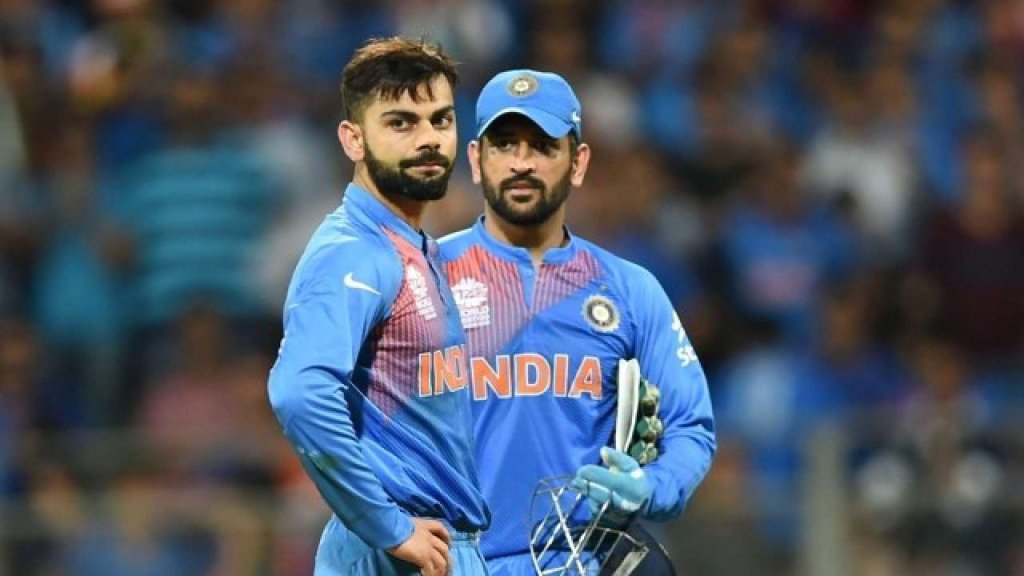
Captain Kohli

Virat Kohli alongwith MSD is the biggest sporting hero in the country today. He is simply all over the place- on TV, Twitter, Instagram, You-Tube, magazines and of course, the Manyawar ads. He is the youth icon married to a glamorous film star. His is the face of Success. The hairstyle and carefully trimmed beard are the rage in upmarket salons and at downtown hair-dressers.

He is at the top of his game. Already rated as one of the greatest batsman the world of cricket has ever seen. Across all formats-Tests, ODI’s, T20’s. He is getting even more dominantly consistent.

He is also the Indian cricket captain. And therein hangs the tale.

The first warning signs came when the impetuous young man forced the BCCI to sack Anil Kumble as team manager in favour of his own man, Ravi Shastri. There was muted criticism from some sections of the media and from some ex-cricketers. Nobody dared to take  the young prince head-on. After all the powerful Board had pathetically caved in before their eyes. Why jeopardise their own chances of jumping on to the gravy train. There was the glaring example of popular commentator Harsha Bhogle who was sidelined for a season. He had to toe the line. Join the club to reap the rewards.

Ravi Shastri fits the bill. Over-rated for his cricketing acumen, he was more the brash and loud establishment cricket expert. A complete loyalist who knows which side his bread is buttered. He has evolved into a side-kick, glorified chamcha and cheer-leader for Kohli.

With the gross IPL culture kicking in you need seasoned and grounded people to lead the national cricket team. The MEN IN BLUE. The pride of the country. Yes, the fitness and fielding standards have remarkably improved. Our youngsters are no longer awed by the Aussies or the West Indians. But the money and glamour have exacted a heavy price. The pride of wearing the India cap is not what it used to be. When a Rahul Dravid walked in to bat you could see the tricolor fluttering in all its glory.

The Hardik Pandya-KL Rahul episode on a chat show gave an insight into the rot which has set in. There is no moralising here. It is the crassness, the insensitivity, the arrogance of privilege and entitlement, the sheer irresponsibility which is abhorrent. It gives a disturbing insight into the team culture. There is no captain or coach or manager to rap their knuckles, counsel them or rein them in.

We cannot ape, say, the Carribean life-style and deliver consistently at the top tournaments and over-seas tours. The discipline, the focus which motivates truly great teams is simply not there. Yes, our guys will have their moments in the sun, win an occasional series abroad but will not make that special cut- an all-time great team.

A master batsman and superb out-fielder need not be a great captain. The best player in the team is not nessacarily the only choice for this critical role.

Virat, the captain, is incompetent if you see through the aura around him. His mis-reading of pitches has become a regular feature. On a dry Southampton wicket on the England tour he opted for only one spinner, a half-fit Ashwin. The hosts played Moeen Ali and Rashid. The Impact player-Moeen. Likewise,at the new Perth stadium our skipper packed the team with four fast bowlers-taken in by the history of the ground. The Aussies had Nathan Lyon who gave the man of the match performance. In the first match of this IPL season he again mis-read the turner at Chepauk and the RCB were roundly thrashed. He also gets critical things like the dew factor wrong in the shorter formats of the game and puts the team at a disadvantage.

The other serious concern is the frequent chopping and changing in the side which undermines player morale and team spirit. For instance, Bhuvaneshwar Kumar was summarily dropped from the Centurion Test after a good all round outing in the first Test of the South Africa tour. Pujara has been dropped thrice despite being our most dependable Test batsman with a sterling over-seas record. Ajinkya Rahane had a fine run from 2013-15 but is now a shadow of the player he was because of the inexplicable and ad-hoc approach of the captain. Then, there are those who continue to be in the playing XI despite their inconsistencies and weaknesses exposed for all to see.

Last but not the least is the famous Virat temper. This unrelenting intensity may be firing-up the batsman in him. However, this constant state of tension is unhealthy for the team in what is essentially a team sport. Where team-spirit, strategy, camaraderie and every little contribution counts. To have your captain constantly on edge must be pretty un-settling for the Indian players. The confession of the young Rishabh Pant is revealing-‘ what he fears most is the skipper’s anger’.

It is his misfortune that he steps into the huge shoes of MS Dhoni. Captain Cool. The player’s man. The Motivator. The Finisher. One of the most successful skippers ever. The de-facto leader when both are playing together. The MSD shadow must be over-powering.

Let us rejoice in the supreme skills of Virat Kohli the batsman and cricketer. Let us cheer on his inevitable progress into cricket’s hallowed Hall of Fame. However, let him be freed from the burdens of captaincy. The torch should soon be passed on to someone better suited to the leadership role albeit he be a lesser player than the master.

Finally it is the performance of the Indian cricket team which matters to us. Their success and dominance is what ultimately fuels the passion of the fans. And drives them in droves to watch the IPL circus. Fortunately,RCB is in line for an early exit from the IPL. India needs Virat Kohli firing from all cylinders on the biggest stage- the World Cup. And with Dhoni behind the stumps, who knows???