
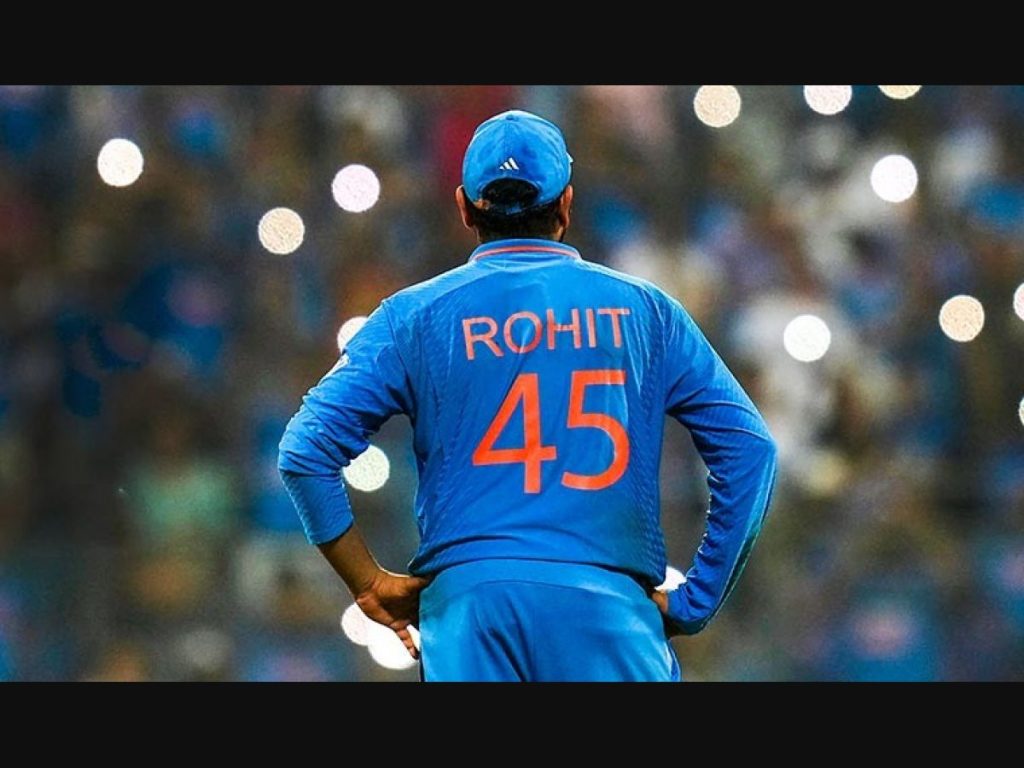
Management Learnings from ‘The Hitman’- Rohit Sharma

Captain Rohit Bhai

I earnestly believe that Team Sports at the highest levels provide a lot of learning for Corporate Management. There is no place to hide. It’s all out there happening in the open in an acutely competitive atmosphere. Goof-ups and crisis management; injuries and replacements; bonding and friction; Ups and downs; temperament and the Never Say Die spirit; leadership and rising up to the occasion; teamwork and collaboration; communication and defining roles; analytics and research; planning and execution. Hence my earlier blogs on ‘Management Lessons from Sports’, ‘The Gift of Captaincy’, and ‘Management Lessons from The Thala- MS Dhoni’- the last posted after CSK won a thrilling IPL final last year.

Rohit Sharma’s so-called laid-back demeanor hides the profound impact he has had both as a captain and batter for India and the IPL franchise. His affable, grounded, pragmatic approach has caught the attention of cricket pundits, cricketing legends, and cricket buffs all over the world. Some of the parallels with MSD are striking and The Thala’s influence is palpable. Rohit Sharma suddenly became the captain of Mumbai Indians in 2013 with Icons and seniors like Sachin Tendulkar, Ricky Ponting, Harbhajan Singh, and Malinga in the squad. Anil Kumble, then associated with MI, remembers that he was completely unfazed and self-assured. Like MSD with the India captaincy, he gave the stalwarts Respect and Space and seamlessly aligned them for the Team’s cause. The Mumbai side picked up its first IPL trophy in 2013. It was also in the same year that Dhoni promoted this middle-order batter to open for India in the Champions Trophy and the rest is history. The Rohit Sharma- Shikhar Dhawan partnership. Dinesh Karthick ( w/k batsman) who was also part of the MI team has observed that the omission from India’s 2011 World Cup team shook him up and he developed the quiet, steely resolve to make every match and tournament count.

‘I have tried to keep it simple. One thing- clear communication to the players. I have tried to make sure that they understand their roles and that’s what it’s all about. Understanding their roles  and going out there and performing their roles.’ Another page out of MSD’s Captaincy manual. Sadly in the corporate sector, there are many employees, especially on the front line who do not understand their roles, contributions, and value to the team, office, or organization as a whole. The positive energy of team synergy and getting the bigger picture is missing. In the vertical or silo systems embraced by many Companies in the Service Sector, the sense of disengagement is even more pronounced and bureaucracy kicks in. Customer Service is the first casualty.

The unique Rohit-bhai takeaway is ‘that there has to be a sense of relaxation as well because it is important to keep the atmosphere light and cheerful’.  But this coin has not dropped with some at the senior levels of corporate hierarchy and even at Board levels. Employee productivity and performance spike if the work atmosphere and culture are congenial- leading to better results and a more robust balance sheet. Virat Kohli calls Rohit ‘the funniest person in the Indian dressing room.’ His tapori language (Mumbai street lingo) and chilled-out behavior are both endearing and calming. The super intense Kohli seems to be enjoying his cricket as never before, laughing and joking with the team.  No overweening egos, no insecurity, no camps. Reaching out and Bonding. The Hitman and The King are Bros for the Indian cricket mission. True, the stump-mic has caught the captain scolding and using cuss words with some team members on the field. But as Rohit Sharma simply puts it, ‘It’s not to hurt anyone. It’s just to make sure they are on the job and are thinking about the team.’ Other funny stump-mic comments have gone viral. In the third T-20 match against Afghanistan he got off the mark with a boundary down the leg-side but umpire Virendra Sharma signalled leg-byes. He approached the umpire with ‘Arrey Viru, thigh-pad diya kya? Bat laga tha. Already mere do zero ho gaya.’ (Did you give it as leg-byes. It hit the bat. In my previous 2 innings I have got ducks.). The Indian commentators in the box doubled up laughing.

Listen in to the Skipper’s report card ( on YouTube -Cricket Boy) on how the Men in Blue performed in their magnificent 4-1 Test win against an England team on a Bazball roll. First, the series-defining partnership by Jurel and Kuldeep Yadav at Ranchi. The emotions around Sarfaraz Khan winning his India cap at the Rajkot Test.  How many years earlier he had played with the father Naushad in the Kanga league. Jaiswal’s dominating double century at Vizag. Bumrah’s 6-wicket spell in the same Test- reverse swinging the ball on a flat track in hot and humid conditions. The best fast-bowling display he has witnessed in India. The ‘legend’ of Ashwin and the brilliant return of the match-winning Kuldeep Yadav. Appreciative mentions of Gill and Jadeja. Special mention of how much he has enjoyed playing with these passionate young cricketers. No mention of his captaincy except to say that he had learned many things during the series. No mention of missing the likes of Kohli, Rahul, Shami, and Pant in the team. When have you last heard of a Corporate Captain being so warm and fulsome in his praise for his team? Teams matter. Corporate heads are representative of their teams. When the team performs well, a generous amount of credit rubs off on the leader.

Rohit-Bhai has been the Big Brother or the ‘Go-to’ man even before he was appointed as captain. You will see his hand over the shoulder of a dejected Kuldeep Yadav who had a bad day at the office. According to Parthiv Patel, ‘Rohit whole-heartedly supports his players even when they are grappling with difficulties demonstrating an unwavering faith in their abilities. There is an unparalleled sense of calmness in the team.’ He then refers to the case of Bumrah brought in by the MI scouts in 2014. By 2015, the management was pondering to send him back after half of the season. But the captain staunchly believed in his abilities and in 2016, the journey of India’s premier fast bowler across formats began. Likewise, Hardik Pandya’s entry in 2015 and after a lack-luster 2016 season many at MI were showing him the exit door. Again, the leader supports the player giving Pandya the chance to become the player he is today. Very ironic, isn’t it? Considering the recent developments at the franchise.

The Captain has to be a good mentor to bring about the best in her/his team. This is a critical attribute to anyone at the Senior or Middle Management levels handling a sizable team. Companies and Institutions unfortunately do not factor in this ‘X’ factor in the KRA’s and Appraisals. It’s all about numbers. So a person with a 15-year innings pops up on the radar as a Cost to Company (CTC). What the team leader is quietly doing daily behind the scenes is overlooked- training and motivating the team, sharing experiences, developing a second line- all fall through the cracks. One of the most critical attributes of an effective Manager- mentoring- is simply shrugged off.

R Ashwin’s exit from Team India after the second day of the Rajkot Test tells a heart-warming story. .The Test match was evenly poised and with the series itself at stake we have Rohit Sharma and Coach Rahul Dravid persuading their main bowler to take the BCCI arranged charter flight to Chennai to attend to his ailing, hospitalised mother. The star spinner then re-joins the Men in Blue on the 4th day of the Test with his recovering mother insisting that her son not let down the national cricket team. Little wonder, that in an emotional video posted on his YouTube channel Ashwin says, ‘I would give my life for him on the field, that’s the kind of captain he is.’ We have an increasing treadmill corporate culture where leave applications for genuine reasons are frowned upon and even family time on weekends is being compromised.

Rohit Sharma has a sharp cricketing brain and reads the game well. Zaheer Khan has this to say, ‘Rohit acts according to the situation, and many times they are different from what may have been planned in the run-up to the game.’ In corporate life also at times long-term planning and rigid structures become constrictive and hold back the Company from changing course pragmatically, especially in dynamic market conditions. Plus the Cool factor he brings to play. Hence no panic buttons after the disappointing loss at Hyderabad from a position of strength. Instead, a determined come-back to dismantle Bazball. Astute handling of bowlers and smart field placements frustrated the English batters and they collapsed like a pack of cards multiple times in the Test series. Another important learning is how the India captain did not hesitate to pick on the brains of key players like Bumrah and Ashwin. A good leader should be open to ideas and suggestions from the core-group and resonating from the ground. The Ivory Tower syndrome has to be avoided at all costs.

Leadership is not bequeathed through job titles or the size of the corner office. Every Corporate leader or Manager worth her/his salt has to earn the respect and trust of the team members by setting the right example and by leading from the front. ‘The Hitman’ ticks all the boxes across all formats of the game. A Test batting average of 45+ over 59 Tests, more than 10,000 runs over 292 ODI, and a Strike Rate of 92; almost 4000 runs in 151 T-20s at a Strike Rate of almost 140 which puts him in the Sehwag league. He has scored hundreds and double hundreds; changed games with his sixes and fours and played many cameo knocks which have made a difference. In the ODI World Cup 2023, he was the second-highest run-getter after Virat Kohli (765 runs in 11 innings) with 597 runs in 11 knocks. Many cricket commentators have lauded his totally unselfish approach of providing a rollicking start to the India innings. The ICC named him as captain of the ICC World Cup team which had 6 Indian players.

The other wonderful dimension he has brought to the game as a batter is the sheer elegance and power he brings to the crease. King Kohli says that ‘he has never seen anyone time the ball like him.’ Kapil Dev captures his Master-Class batting as,’ attractive, effortless and with all the time in the world.’ Sachin Tendulkar has observed to the effect ‘that once Rohit gets into the zone, the poor bowler does not know where to bowl.’ After he made it to ‘The Wisden 5 cricketers of the Year-2022 along with Bumrah) an article in the Almanack celebrated his sublime stroke play and especially highlighted his pull, cover drive, and back-foot punch as perfection.

There is a select group of corporates who have kept their eye on the ball – not losing sight of the fundamentals, the processes, and especially the people. But others focus only on the top-line and bottom-line and pay scant attention to the growing void at the centre.

Back to the Rohit Sharma story. The man who took the Mumbai Indians to 5 IPL titles has been abruptly replaced by Hardik Pandya. The transition could have been handled with more grace and transparency. Instead, it smacks of board-room intrigue, disrespect to the man who has contributed so much to the franchise, and a lack of basic decency and sporting spirit. However, the break from the burdens of leadership can prove to be a blessing in disguise. Fortunately for us, he remains the captain of the Men in Blue for the ICC T 20 World Cup later this year and if he keeps his focus and form we may see the Last Hurrah from Captain Rohit-Bhai at the World Test championship in June next year.

The Gift of Captaincy

On the 19th Jan 2021, the Indian cricket team breached the ‘Gabbatoir’ in Brisbane, Australia. The hosts had last lost a Test there in 1988, against the Viv Richards led great West Indian side. This series win has caused mass frenzy amongst the Indian cricket fans and pundits alike. ‘The Underdog Miracle’, ‘Against All Odds’, ‘A Fairy Tale Win’, ‘The Gabba Heist’ and ‘The Greatest Comeback in Cricket History’ are just some of the awe-struck and superlative reactions and headlines. Social media has gone berserk. After the shameful 36 all out debacle at Adelaide, to pull off the stunning win at the MCG, fight to a stirring draw at Sydney and finally that wonderfully scripted victory at the Gabba seemed unreal and straight off the ultimate feel-good movie triumph. Some of the Indian papers summed up the cricket series thriller with ‘Ajinkya’ (Invincible).

Delve into the sub-texts and one discovers even more astounding layers to the story. The Men in Blue were truly Down-and-Under after the humiliating 36 in the First Test. On Boxing Day at the MCG, the tourists were already depleted without their captain and best batsman and some other major players hobbling along. But then each session, each innings and each Test called out for its own heroes. Debutants and novices and net-practice bowlers rose to the occasion and the national call. As did the few seniors remaining- Rahane, Pujara, Bumrah, Ashwin and Jadeja.  For the decider match, the last three were also ruled out because of injuries. The India XI were reduced to the ‘Hardly XI’ as an Aussie paper put it.

So what was the X-factor? Kohli left on paternity leave after the disastrous First Test. In stepped his understated deputy, Ajinkya Rahane. His astute marshalling of his team and calm disposition played a defining role in what played out thereafter. In a blog I had posted before the WC 2019 (Captain Kohli) I had submitted that the best player does not necessarily the best captain make. Kohli’s undoubted greatness as a batsman notwithstanding. Truly MASTERCLASS. Think about Ian Botham’s dismal stint as the England captain before his break-out Ashes series under Mike Brearley.  Kohli is a force of nature. His passion, his focus and his fitness have left an indelible mark on our cricket. RESPECT. However, his hyper temperament does not make him the right man to lead this Indian side into the sacred pantheon of the All Time Great Teams which demand a sterling overseas track record.

This is not a simplistic debate about aggression vs composure. One of our best captains ‘Dada’ Ganguly was aggressive and even dubbed as arrogant by some. At times he wore his heart on his sleeve. But his cricketing judgments remained sharp and the emotional connect with even the younger members added depth and dimension to his leadership. Remember that he steered the Indian team after the infamous match-fixing scandal and also mentored emerging small town players who later became big names.In the Indian context at least, empathy and bonding and understanding make a big difference- on challenging tours and in big-match situations. The dressing-room environment matters a lot. Come to think of it, Rahane did show a quiet, steely resolve backed up by game-plans and with the entire team on board. But in today’s hyped-up times this may perhaps not qualify as aggressive intent.

So let’s look at the Rahane Effect. Brearley in his book, ‘The Art of Captaincy’ says, “That it is not about winning or losing. It’s about getting the best out of the team you have.” Our stand-in skipper did just that- extracted every ounce of performance from his team, no matter what the situation. He was approachable and the team related to him. The grapevine tells us that he did not tell his men what to do. He just gave them space and re-assurance and they responded magnificently. After all, he counted himself amongst them. The team plays under Kohli. It plays with and for Rahane.

The team-huddle; Rahane with a few key words and a composed tone, with Rohit Sharma, Ashwin, Bumrah, Pujara and Jadeja weighing in. Contrast to Kohli. Mostly a monologue – at times peppered with intensity. Is it any wonder that Bumrah walked back with the debutant Siraj to the top of his run-up. Or that the Indian lower-order batsmen refused to give up. Ashwin and Vihari with back spasms and a hamstring problem. Later Thakur and Sundar stepped up to the plate. Everyone’s contribution counted. Rahane had brought in empathy- the emotional quotient- and this resonated with the players. His special mention of Kuldeep Yadav after the Series win was one with this inclusiveness- this Brohood.

He read the games astutely and keenly. Like introducing Ashwin as first change in the 11th over of the game at the MCG. There was moisture in the wicket. It was a tactical master-stroke. He snared Wade and Smith in his first spell. Ashwin bowled a 12 over spell. Yadav 6 overs, Bumrah 5 overs and Siraj 6 overs. The longish spells allowed the bowlers to find their rythmn and work on their plans. The impatient Kohli had been known to change bowlers after a couple of overs if he sensed nothing was happening. Move to Brisbane on the 4th day. Australia comfortably placed with a 100 run lead and all wickets at hand. The Indian captain continued with his 2 slips and a gully field. Looking for wickets to contain runs. And sure enough, the hosts lost 5 wickets- 4 to catches by the keeper and the slips cordon. Or the decision to elevate Pant to the no 5 position at the SCG and Gabba- repaid in full by the game changing 97 and 89 N.O. knocks. On the 5th day at Brisbane as he walked back after a quick-fire innings he told the incoming Pant to bat out the few minutes before tea. Then revert to his natural self with the bat. Rahane’s calculation was that a target of around 145 was gettable in 35-38 overs if they had a few batters striking good. The clear-headed session by session approach. This when most of India was praying that we would hold out for a draw. The gamble of inducting Washington Sundar into the side with Kuldeep Yadav on the bench underlined the serious strategizing for the finale Test match.

His calmness was a major plus and kept the focus in place. After the racial slurs vented at Siraj by some spectators at the Sydney Test, Rahane stepped in. He firmly complained to the umpires and the referee asking that the guilty be evicted. They had come to play cricket but his players had to be respected. Having stood up for his man the game continued. Or his implacable demeanour when a clearly run-out Tim Paine was ruled not-out at the MCG. Virat Kohli would have ranted. Or his own run-out after a scintillating century on the same ground. He walked up to the disconsolate Jadeja at the other end with a pat and a, “No worry. Keep going. The team needs you.”

Lastly, setting an example as a leader. His impactful century (112) at the MCG turned the narrative for the series. The positive cameo knock (24 of 22 balls) after Gill’s classy 91 on the final day of the Brisbane Test showed India’s intent and kept back the Aussies from an all-out attack. The grit and courage of Pujara, the brilliance from Pant and the aggressive burst from Sundar completed the unbelievable last lap for India. The post-match presentation ceremony where he quickly shifted the limelight to his team and the handing over of the 100 match memento jersey to Nathan Lyon showed humility and grace in abundance (shades of Kane Williamson). Even the hard-boiled Aussies have been bowled over.

Contrast this to the frequent chopping and changing of the Indian team under Kohli (where Shastri had been complicit). Rahane benched for the first 2 Tests on the South African tour despite a good overseas record. The ever dependable Pujara dropped from a Test eleven on this important tour.  Now that both of them have become household names-recall these selection blunders. Bhuvaneshwar Kumar out of the second Test after a good show in the first Test. Whimsical, what!! It is commonly accepted by the experts that our disastrous 1-4 sojourn in England owed much to poor team selection. Two of the matches India lost were fairly close and could have gone our way with the right resources at hand.

His misreading of pitches and conditions has become a regular feature. On a dry Southampton wicket he opted for only one spinner- a half-fit Ashwin. The English went with Moeen Ali and Rashid. The Impact Player- Moeen Ali.  At the new Perth stadium in Australia the skipper got carried away by the history of the ground. We fielded 4 fast bowlers. Nathan Lyon gave the Man of the Match performance. Back to England where the defensive field settings allowed the English middle order to flourish and take control of the matches. Even at the IPL level it has been oft been said that RCB would surely have won a trophy by now if only AB de Villiers had been the captain.

Let me bring in Paddy Upton, a renowned mental coach + a professional cricket coach from South Africa to drive home the point. He had been associated with the Indian cricket squad when Gary Kirsten was the coach. His observations, “Kohli has the fear factor making others insecure and even inferior. Under him the team views everyday details as a chore. When people burden their mind it is hard to get them to be free and to play the game the way it works for them. Kohli is very demonstrative- exuberant in his celebrations but also not empathic on the field whilst showing anger or anguish. His team-mates walk on thin ice, afraid of making a mistake. Once a player tightens up he is no longer the player he is meant to be. On the other hand Rahane is equanimous. His calm and general demeanour allows him to be approachable and relatable to the team.  He has fire and courage within him but controlled. That is why they played so well at the Gabba.” And then the ultimate compliment, “That level of camaraderie I haven’t seen in Test cricket for a while.”

What about Kohli’s handpicked coach- Shastri? This Australia tour has been a boon for him-just being at the right place at the right time. Some of the credit will rub off on him and he will milk and spin it for all it is worth. Especially the so-called rousing speech he gave to the team after the Adelaide debacle- wear this 36 as a badge and it will never happen again.  Shastri is the ultimate Indian cricket establishment figure and so no one will call him out. He is an over-rated loyalist who knows which side of his bread is buttered. Remember his bombast before the WC 2019, calling the team the greatest Indian side ever. A side-kick, a cheer-leader for Virat Kohli- it is high time we found a coach with more professionalism and integrity.

Cricket is a game where the acumen and people- skills of the captain (and coach) really matter. And nowhere is this more tested than in a hard fought Test series. This is the Kohli- Shastri overseas record in the SENA countries since 2017, 1-2 South Africa- 18-19, 1-4 England- 2018, 0-2 New Zealand-2020, and 2-1 Australia- 2018. The context for the last Australia tour which counts as his most famous win is that Smith and Warner were missing and the Aussies were struggling to come out of the sand-paper gate cheating scandal. Else, he is the most successful Indian captain because of wins against the languishing West Indies and Sri Lanka and solid performances on home turf.

Indian cricket is now poised on the cusp of greatness. The best fast bowling attack in our history. Match-winner spinning options. Batsmen who can dig in for hours or change the game in an hour. Tremendous bench-strength. Improved fitness and high confidence levels. But if we have to be rated with the great West Indian teams under Lloyd and Richards or the Aussie teams under Steve Waugh and Ponting, we still have much to prove. Consistent winning performances across formats and dominating overseas tours to the SENA nations.

Despite this wake-up call, Kohli will remain the India captain even for the Tests. At the BCCI no one has the balls to out him. Hopefully, the other players will step out of his aura after this seminal series and stamp their own identity on the field. Perhaps, Virat (Colossus) can reach out to Ajinkya (Invincible) to forge a formidable partnership. Hopefully, Captain Kohli 2.0 will inspire and lead The Men In Blue into Cricket’s Hall of Fame for the legendary cricket teams.

What should change is at the Head Coach position. A Rahul Dravid or a Zaheer Khan can play a defining role and balance out the Kohli excesses. Lest we forget, many of the overnight heroes from the recent tour Down Under,- Gill, Pant, Sundar, Siraj-have been groomed and mentored by Dravid at the India A & Under-19 levels.

Indian Cricket is in for some exciting times ahead. Time to take fresh guard, mark the bowling run-up afresh and set the right field.