The drubbings at the hands of Pakistan and New Zealand in the T20 World Cup tick both the boxes in the above title. Getting thrashed by 10 wickets and 8 wickets is akin to an innings defeat in a Test match. The Men in Blue are out of another ICC major championship —only this time not making it to the knock-out stage.
Is it such a rude shock? Not really. First, the hype. The IPL is the world’s most glamorous cricket carnival hosted by the richest cricket body, the BCCI. It has given opportunity and confidence to the younger players and enhanced the fitness levels of our cricketers. Some of India’s best have been spotted by IPL franchise scouts; Bumrah was discovered by the Mumbai Indians. The flip side is that it does not have the intensity found in major ICC tournaments or even in well-contested series especially with the SENA nations. The cricketers are feted as celebrities and the real contest and the competitive edge are missing. But here lies the catch. The fortunes of the IPL and Team India are interlinked. If the latter continues to underperform at major tournaments, the mass following for the IPL will dwindle.
Many well-paid commentators, including ex-cricketer experts, have all jumped onto the gravy train. So on international series and tours, they no longer objectively call out selection mistakes, wrong captaincy calls, poor reading of the game, bad sportsmanship, or cracks appearing in team spirit. So when Shastri says that this is the greatest Indian team ever, there is a chorus of approvals. While Kohli says his team can win from any situation, there is chest-thumping in the media. Overconfidence leads to bad results. Curiously, there is very little focus on Impact players from the other teams. Remember that Harsha Bhogle was put out in the cold for some time a few years back. His sin – he had something good to say about the competing international players also. Millions of die-hard fans have been fed this false narrative that our cricket team is head and shoulders above the other teams. Bad days like the 36 all out at Adelaide and the 78 at Headingley on the recent England tour and the defeats at the 2019 ODI WC and the World Test Championships in 2021 are all swept under the carpet.
Indian cricket has an abundance of talent and bench strength which is the envy of other cricketing nations. But this has to be mobilized and harnessed effectively by the captain, coach, selectors, and the BCCI. Captain Kohli’s in-one’s-face aggression has won him a huge legion of fans. But such relentless intensity has also undermined his batsmanship – he is showing symptoms of burn-out. He has been crass and hyper on the field and per reliable reports in the dressing room also. The dressing room environment gradually creeps onto the cricket field. It is bound to affect both team spirit and individual performances. Both are two sides of the same coin. Now let’s talk about Mr Shastri. As the captain’s hand-picked coach and Yes Man, he is also accountable for our futile run at the ICC tournaments. With a rich repository of cricket talent to tap into, this is not acceptable. The toxicity started with the ouster of Kumble as coach at Kohli’s behest and the silence from the BCCI and the cricket establishment. Virat Kohli has gradually become bigger than the game in India. Erratic selection, benching of in-form players, taking decisions solely by instinct, and throwing tantrums have all become acceptable over the years. Analytics inputs or sensible advice from the outside even by a reputed name have all been given the short end of the stick. Team bonding and consistency have suffered and even seasoned players have not played up to their potential.
The extended bio-bubble may have taken its toll on the players. It is also possible that some had tired legs or felt stale with the second leg of the IPL just before the WC T20. But this does not tell the entire story. Pakistan’s cricket team is driven by hunger, anger, and passion. They feel marginalized on the world cricket circuit and have grabbed this opportunity to drive home their point. They are playing out of their skins.
Front and Centre are 2 subjects which are almost taboo topics for our cricketing establishment or brotherhood. Thankfully, Madan Lal has been critical about the scheduling of the IPL second leg just before the T20 WC. Kapil Dev has gone even further- whether the Indian cricketers are giving more preference to this cash rich franchise league than to the singular honour of playing for the country. In the future the BCCI will have to give serious thought to player work-loads and series and tournament schedules with the prime focus being that the Men in Blue bring home some much needed silverware. Else they are killing the goose that lays the golden eggs. The success of the Indian Premier League draws from the success of the national cricket team.
The other relates to Virat Kohli’s captaincy. I guess the jury will always be out on this one. Kohli has become an icon for millions of Indian fans not only because of superlative batting performances but because of his raw aggression, passion for fitness and wearing his heart on his sleeve. Even after his team’s very disappointing exit from the ongoing T20 WC his army of admirers on social media hail him as King Kohli. The cricketing experts and the media in general are tip-toeing around the subject with diplomatic grace. We are living in some strange bubble.
Cometh the hour, cometh the man. Rahul Dravid will be the next coach. A true cricketing legend and a mentor for many of the younger stars through U19, India ‘A’, and the National Cricket Academy. Immense match experience and cricketing acumen: focused, grounded, level-headed, and universally respected. When The Wall walked out to bat one could see the Indian tricolour fluttering in the breeze. But he has his work cut out. There are challenging times ahead and he has to be given a free hand. Virat Kohli continues as captain for the Tests and ODI’s. Will he listen, change, adapt or even reinvent himself? Regain his mojo as a masterclass batsman? Some of the impressionable youngsters have bought into the hype and the celebrity-dom. They have to face the reality check and rediscover their day-to-day balance. Dravid’s mission is not just to get the Indian cricket team to bond together and play to their fullest potential. He has to get each person on the Indian team to value and respect the India cap to the fullest. And even more. Play to win but with the sporting spirit currently demonstrated by Kane Williamson’s Kiwis.
After the miracle Down-Under and the wins against England at home, many pundits and fans have already anointed India as the champion cricket team. Ravi Shastri’s bombast adds to this somewhat pre-mature exuberance and celebrations. However, Ian Chappell’s recent observations brings a positive perspective and a lot of cheer and hope for the Indian cricket follower. “India have finally got the equation right and as long as they can avoid the pitfalls often associated with continuing success, they are better equipped than any other team to produce an era of dominance. The rest of the cricketing world.Beware!”
To be hailed amongst the all-time great teams India would need to show its class against quality opposition on their turf. And demonstrate supremacy on home soil. Really perform on the big occasions. Across the 3 formats- Tests, ODI’s, T20 cricket.
An objective look at our recent track record against the SENA nations (South Africa, England, New Zealand, Australia), shows that Indian cricket still has much to conquer. (0-1) Australia in 2015, (1-2) SA 17-18, (1-4) England 2018, (2-1) Australia 2018 and (0-2) New Zealand 2019-20. The Australian tour win be seen in the context of the host side shaken by the sandpaper-gate scandal and without their best batsmen Smith and Warner. Nine of our overseas Test wins have been against Sri Lanka (5) and the West Indies (4) languishing at the bottom of the table. Also take cognisance of our semi-final exits in the 2016 T 20 WC and the 2019 ODI WC.
The West Indies cricket team under Lloyd and Richards dominated cricket from the late 70’s till the end of the 80’s. They comprehensively won on all the Australia tours, only drawing the 1981-82 series (1-1). From 1976 onwards, they beat England in England decisively including a 5-0 blackwash in 1984. India, considered a difficult place to tour, lost (0-3) in 1983-84 followed by a (1-1) draw in 1987. Under Viv Richards they did not lose a Test series from 1984-91.
The Windies transformed themselves from a bunch of easy-going Calypso cricketers to a charismatic band of winners. Their sheer athleticism, ability to play exhilarating and attacking cricket, improvise and control the game changed cricket itself. The lethal pace quartet revolutionised the sport and the Caribbean impact was such that to this day cricket buffs can recall the names of all the players in their squad and not just the marquee ones.The men in the maroon caps had also won the first 2 editions of the ODI WC in 1975 and 79 before losing to India in the memorable final in 83.
The Aussies under Steve Waugh and Ricky Ponting were world beaters for almost a decade. They won the ODI trophy in 1999, 2003 and 2007. Awesome!!! Championship titles in 2006 and 2009. Their record in the other SENA countries is impressive. Under Waugh they won 8 out of 9 Ashes Tests, losing only one. Also, he led them to 15 of their record 16 consecutive victories. England beat Ponting’s XI in a thrilling 2005 Ashes series (2-1) but they exacted a 5-0 whitewash revenge at home in 2006- 07. The stamp of Aussie dominance can be gauged by the fact that Ponting is the only cricketer in history to be a part of 100 Test victories. The next 6 top players with most Test wins are all Australians who were intrinsic parts of the great teams of the late ‘90’s-2000’s.
This Aussie era was marked by ruthless efficiency and driven by cold-blooded scientific analysis and planning. Sledging also reached its peak as winning was everything. But other than Waugh and Ponting others like Gilchrist and Hayden and McGrath and Warne have also left huge shadows on the cricketing grounds.
A few interesting nuggets for Indian buffs. Waugh’s winning streak ended at the Eden Gardens on the classic tour of India in2001. (2-1 for india) The Aussies could not breach the Last Frontier. Ricky Ponting never won a Test match in India, played 7 and lost 5. But under his captaincy from 2005 to 2008 there was a second incredible show of dominance over 22 undefeated matches and 20 wins. India again played the Spoiler at Perth in one of Indian cricket’s most famous overseas wins.
2008-14 was the golden age of Spanish football. Spain topped FIFA rankings for 6 years winning the UEFA Championships in 2008 & 2012 and the FIFA World Cup in 2010. The first team to win 3 consecutive world trophies. From 2010-13 they went undefeated for 29 games. And the Spanish team scored the highest maximum points for WC qualification- 30 out of 30. The star players were mainly drawn from Barcelona and Real Madrid, bitter rivals in the domestic La Liga. But they combined as a team at the national level with the Tiki Taka style of play of short, quick passes. Retaining possession of the ball, wearing down and opening up the opposing defence and then shifting gears. They took the game to another level with their precision, well-oiled football.
After watching ‘ The Last Dance’ on Netflix, the glorious story of the Chicago Bulls stays with you. The treble NBA championships from 1991-93 and an euphoric encore from 1996-98. Although the Bulls have become synonymous with Michael Jordan, it went beyond MJ. The coach, Phil Jackson, created a great team around MJ for the first hat-trick of trophies. When MJ came back from retirement he was moulded into the ultimate team player with the likes of Scottie Pippen, Rodman and Toni Kukoc playing critical and even game winning roles. The dissipation and fall of the team due to the whims and ego of a General Manager and a pliant owner is both poignant and educative. Great teams are very difficult to build. Once they happen and come together they find a life and synergy of their own.
Sunil Gavaskar believes that India has a great team. He comments, “A captain is always as good as his team and he has a terrific team under him. The full balance of the team has been fantastic. When you have something like that you will win more matches than you lose.” He continues about the “terrific opening batsmen, a very good middle order and a bowling attack which has most variety. A wicketkeeper who is very good and who can come down the order and pummel the bowlers.”
Indeed, the bench strength is deep and impressive. We have 2/3 more openers who can take on international attacks. There is strong competition for the middle order slots. A pool of good all-rounders led by Jadeja lends flexibility to the team. A fit and energetic fielding side- thanks to the example set by Kohli and the demands of the IPL. A potent fast bowling battery plus an array of good spinners to choose from. And the dashing Pant has to keep improving as he has Samson, Rahul, Karthick, Saha breathing down his neck to don the gloves. Indian cricket has never had it so good, verily, a plethora of resources.
Behind the scenes, Indian cricket owes a debt of gratitude to Rahul Dravid. Whether at the Cricket Academy or at the U-19 level, the break-out youngsters have been groomed and mentored by this cricketing legend. Young, raw talents have blossomed like never before.
The X factor to make Indian cricket the force that it is- is the fast bowling arsenal. We have at least a dozen bowlers in domestic cricket who can bowl at 140 kmph plus consistently and make the batsman hop and duck. A far cry from the days of Saeed Ahmed Hatteea (a Bombay quick) who was advised by shaken batsmen to cut down on his speed so that he would not burn himself out.
Bharat Arun, our bowling coach, believes that’ over the last 2-3 years Indian pacers have mastered the art of bowling fast, pushing for speeds of over 140 kmph. They have become fast and lethal and most importantly consistent in maintaining fitness which is a crucial issue for speedsters. Bumrah, Shami, Siraj, Yadav and Bhuvi have troubled batsmen in international cricket irrespective of playing conditions. They have hugely influenced Team India’s success to become a top-ranked nation in cricket.’
The only other ingredient for continuing success is team spirit and the hunger for wins. As shown by the Windies teams of the 80’s, the Aussies under Waugh and Ponting, the Bulls era in the 90’s and the golden period of Spanish football. The fairy-tale victory Down Under by Rahane’s depleted team have many lessons to take forward. About getting all players on board, playing to their best potential and at times even out of their skins. Team Spirit adds an extra dimension of its own to team performance. Capt Kohli should reach out and tap into the cricketing brains of Sharma, Ashwin, Rahane and Bumrah in both strategizing for and reading the game.
2021 may well be the watershed year for Indian cricket if events unfold as per schedule. First, the World Test Championships at Lords vs New Zealand on the 18th June 2021. Followed by a gruelling 5Tests tour of England. To cap it all, the World T 20 tournament at home from Oct this year. If the Men in Blue win the Lord’s contest, have a good English tour and lift the T 20 cup, then they are on their way to the Hall of Fame. And we will be ushered into an exciting and enchanting Era of Indian cricket.
On the 19th Jan 2021, the Indian cricket team breached the ‘Gabbatoir’ in Brisbane, Australia. The hosts had last lost a Test there in 1988, against the Viv Richards led great West Indian side. This series win has caused mass frenzy amongst the Indian cricket fans and pundits alike. ‘The Underdog Miracle’, ‘Against All Odds’, ‘A Fairy Tale Win’, ‘The Gabba Heist’ and ‘The Greatest Comeback in Cricket History’ are just some of the awe-struck and superlative reactions and headlines. Social media has gone berserk. After the shameful 36 all out debacle at Adelaide, to pull off the stunning win at the MCG, fight to a stirring draw at Sydney and finally that wonderfully scripted victory at the Gabba seemed unreal and straight off the ultimate feel-good movie triumph. Some of the Indian papers summed up the cricket series thriller with ‘Ajinkya’ (Invincible).
Delve into the sub-texts and one discovers even more astounding layers to the story. The Men in Blue were truly Down-and-Under after the humiliating 36 in the First Test. On Boxing Day at the MCG, the tourists were already depleted without their captain and best batsman and some other major players hobbling along. But then each session, each innings and each Test called out for its own heroes. Debutants and novices and net-practice bowlers rose to the occasion and the national call. As did the few seniors remaining- Rahane, Pujara, Bumrah, Ashwin and Jadeja. For the decider match, the last three were also ruled out because of injuries. The India XI were reduced to the ‘Hardly XI’ as an Aussie paper put it.
So what was the X-factor? Kohli left on paternity leave after the disastrous First Test. In stepped his understated deputy, Ajinkya Rahane. His astute marshalling of his team and calm disposition played a defining role in what played out thereafter. In a blog I had posted before the WC 2019 (Captain Kohli) I had submitted that the best player does not necessarily the best captain make. Kohli’s undoubted greatness as a batsman notwithstanding. Truly MASTERCLASS. Think about Ian Botham’s dismal stint as the England captain before his break-out Ashes series under Mike Brearley. Kohli is a force of nature. His passion, his focus and his fitness have left an indelible mark on our cricket. RESPECT. However, his hyper temperament does not make him the right man to lead this Indian side into the sacred pantheon of the All Time Great Teams which demand a sterling overseas track record.
This is not a simplistic debate about aggression vs composure. One of our best captains ‘Dada’ Ganguly was aggressive and even dubbed as arrogant by some. At times he wore his heart on his sleeve. But his cricketing judgments remained sharp and the emotional connect with even the younger members added depth and dimension to his leadership. Remember that he steered the Indian team after the infamous match-fixing scandal and also mentored emerging small town players who later became big names.In the Indian context at least, empathy and bonding and understanding make a big difference- on challenging tours and in big-match situations. The dressing-room environment matters a lot. Come to think of it, Rahane did show a quiet, steely resolve backed up by game-plans and with the entire team on board. But in today’s hyped-up times this may perhaps not qualify as aggressive intent.
So let’s look at the Rahane Effect. Brearley in his book, ‘The Art of Captaincy’ says, “That it is not about winning or losing. It’s about getting the best out of the team you have.” Our stand-in skipper did just that- extracted every ounce of performance from his team, no matter what the situation. He was approachable and the team related to him. The grapevine tells us that he did not tell his men what to do. He just gave them space and re-assurance and they responded magnificently. After all, he counted himself amongst them. The team plays under Kohli. It plays with and for Rahane.
The team-huddle; Rahane with a few key words and a composed tone, with Rohit Sharma, Ashwin, Bumrah, Pujara and Jadeja weighing in. Contrast to Kohli. Mostly a monologue – at times peppered with intensity. Is it any wonder that Bumrah walked back with the debutant Siraj to the top of his run-up. Or that the Indian lower-order batsmen refused to give up. Ashwin and Vihari with back spasms and a hamstring problem. Later Thakur and Sundar stepped up to the plate. Everyone’s contribution counted. Rahane had brought in empathy- the emotional quotient- and this resonated with the players. His special mention of Kuldeep Yadav after the Series win was one with this inclusiveness- this Brohood.
He read the games astutely and keenly. Like introducing Ashwin as first change in the 11th over of the game at the MCG. There was moisture in the wicket. It was a tactical master-stroke. He snared Wade and Smith in his first spell. Ashwin bowled a 12 over spell. Yadav 6 overs, Bumrah 5 overs and Siraj 6 overs. The longish spells allowed the bowlers to find their rythmn and work on their plans. The impatient Kohli had been known to change bowlers after a couple of overs if he sensed nothing was happening. Move to Brisbane on the 4th day. Australia comfortably placed with a 100 run lead and all wickets at hand. The Indian captain continued with his 2 slips and a gully field. Looking for wickets to contain runs. And sure enough, the hosts lost 5 wickets- 4 to catches by the keeper and the slips cordon. Or the decision to elevate Pant to the no 5 position at the SCG and Gabba- repaid in full by the game changing 97 and 89 N.O. knocks. On the 5th day at Brisbane as he walked back after a quick-fire innings he told the incoming Pant to bat out the few minutes before tea. Then revert to his natural self with the bat. Rahane’s calculation was that a target of around 145 was gettable in 35-38 overs if they had a few batters striking good. The clear-headed session by session approach. This when most of India was praying that we would hold out for a draw. The gamble of inducting Washington Sundar into the side with Kuldeep Yadav on the bench underlined the serious strategizing for the finale Test match.
His calmness was a major plus and kept the focus in place. After the racial slurs vented at Siraj by some spectators at the Sydney Test, Rahane stepped in. He firmly complained to the umpires and the referee asking that the guilty be evicted. They had come to play cricket but his players had to be respected. Having stood up for his man the game continued. Or his implacable demeanour when a clearly run-out Tim Paine was ruled not-out at the MCG. Virat Kohli would have ranted. Or his own run-out after a scintillating century on the same ground. He walked up to the disconsolate Jadeja at the other end with a pat and a, “No worry. Keep going. The team needs you.”
Lastly, setting an example as a leader. His impactful century (112) at the MCG turned the narrative for the series. The positive cameo knock (24 of 22 balls) after Gill’s classy 91 on the final day of the Brisbane Test showed India’s intent and kept back the Aussies from an all-out attack. The grit and courage of Pujara, the brilliance from Pant and the aggressive burst from Sundar completed the unbelievable last lap for India. The post-match presentation ceremony where he quickly shifted the limelight to his team and the handing over of the 100 match memento jersey to Nathan Lyon showed humility and grace in abundance (shades of Kane Williamson). Even the hard-boiled Aussies have been bowled over.
Contrast this to the frequent chopping and changing of the Indian team under Kohli (where Shastri had been complicit). Rahane benched for the first 2 Tests on the South African tour despite a good overseas record. The ever dependable Pujara dropped from a Test eleven on this important tour. Now that both of them have become household names-recall these selection blunders. Bhuvaneshwar Kumar out of the second Test after a good show in the first Test. Whimsical, what!! It is commonly accepted by the experts that our disastrous 1-4 sojourn in England owed much to poor team selection. Two of the matches India lost were fairly close and could have gone our way with the right resources at hand.
His misreading of pitches and conditions has become a regular feature. On a dry Southampton wicket he opted for only one spinner- a half-fit Ashwin. The English went with Moeen Ali and Rashid. The Impact Player- Moeen Ali. At the new Perth stadium in Australia the skipper got carried away by the history of the ground. We fielded 4 fast bowlers. Nathan Lyon gave the Man of the Match performance. Back to England where the defensive field settings allowed the English middle order to flourish and take control of the matches. Even at the IPL level it has been oft been said that RCB would surely have won a trophy by now if only AB de Villiers had been the captain.
Let me bring in Paddy Upton, a renowned mental coach + a professional cricket coach from South Africa to drive home the point. He had been associated with the Indian cricket squad when Gary Kirsten was the coach. His observations, “Kohli has the fear factor making others insecure and even inferior. Under him the team views everyday details as a chore. When people burden their mind it is hard to get them to be free and to play the game the way it works for them. Kohli is very demonstrative- exuberant in his celebrations but also not empathic on the field whilst showing anger or anguish. His team-mates walk on thin ice, afraid of making a mistake. Once a player tightens up he is no longer the player he is meant to be. On the other hand Rahane is equanimous. His calm and general demeanour allows him to be approachable and relatable to the team. He has fire and courage within him but controlled. That is why they played so well at the Gabba.” And then the ultimate compliment, “That level of camaraderie I haven’t seen in Test cricket for a while.”
What about Kohli’s handpicked coach- Shastri? This Australia tour has been a boon for him-just being at the right place at the right time. Some of the credit will rub off on him and he will milk and spin it for all it is worth. Especially the so-called rousing speech he gave to the team after the Adelaide debacle- wear this 36 as a badge and it will never happen again. Shastri is the ultimate Indian cricket establishment figure and so no one will call him out. He is an over-rated loyalist who knows which side of his bread is buttered. Remember his bombast before the WC 2019, calling the team the greatest Indian side ever. A side-kick, a cheer-leader for Virat Kohli- it is high time we found a coach with more professionalism and integrity.
Cricket is a game where the acumen and people- skills of the captain (and coach) really matter. And nowhere is this more tested than in a hard fought Test series. This is the Kohli- Shastri overseas record in the SENA countries since 2017, 1-2 South Africa- 18-19, 1-4 England- 2018, 0-2 New Zealand-2020, and 2-1 Australia- 2018. The context for the last Australia tour which counts as his most famous win is that Smith and Warner were missing and the Aussies were struggling to come out of the sand-paper gate cheating scandal. Else, he is the most successful Indian captain because of wins against the languishing West Indies and Sri Lanka and solid performances on home turf.
Indian cricket is now poised on the cusp of greatness. The best fast bowling attack in our history. Match-winner spinning options. Batsmen who can dig in for hours or change the game in an hour. Tremendous bench-strength. Improved fitness and high confidence levels. But if we have to be rated with the great West Indian teams under Lloyd and Richards or the Aussie teams under Steve Waugh and Ponting, we still have much to prove. Consistent winning performances across formats and dominating overseas tours to the SENA nations.
Despite this wake-up call, Kohli will remain the India captain even for the Tests. At the BCCI no one has the balls to out him. Hopefully, the other players will step out of his aura after this seminal series and stamp their own identity on the field. Perhaps, Virat (Colossus) can reach out to Ajinkya (Invincible) to forge a formidable partnership. Hopefully, Captain Kohli 2.0 will inspire and lead The Men In Blue into Cricket’s Hall of Fame for the legendary cricket teams.
What should change is at the Head Coach position. A Rahul Dravid or a Zaheer Khan can play a defining role and balance out the Kohli excesses. Lest we forget, many of the overnight heroes from the recent tour Down Under,- Gill, Pant, Sundar, Siraj-have been groomed and mentored by Dravid at the India A & Under-19 levels.
Indian Cricket is in for some exciting times ahead. Time to take fresh guard, mark the bowling run-up afresh and set the right field.
As in other major sports, in cricket too success and failure is all too measurable. It is not only the fans and the experts but also the players who take an obsessive interest in statistics. Very rarely comes a cricketer who transcends numbers, who is beyond records. Say ‘Viv Richards’ and the stats, impressive as they are, fade into the background. The talk is all about his sheer brilliance and his swag. The profound influence he has had on redefining batsmanship and the game itself.
His impact on the teams he has represented has been phenomenal. For the Windies, Clive Lloyd was the father figure, the mentor, the captain. But it was Viv who became the talisman, the catalyst who turned a bunch of easy-going Calypso cricketers into the great West Indian teams from the late 70’s to the early 90’s. His aura on the field, his charisma at the crease and his dominating will to win embodied the Caribbean cricket revolution. Kallicharan, Greenidge, Haynes, Roberts, Holding all rode the waves of their talents and skills and realised themselves as champions.
Take the 1976 tour of England which transformed their cricket. Still hurting from the 5-1 thrashing Down-Under in 1975-76. Tony Greig, the England captain, said that he would make them ‘grovel’. Cricket lore has it that Richards checked out the meaning in the dictionary, “In other words he was going to have us down on our knees-begging for mercy. This was the greatest motivating speech the England captain could have given the West Indian team.” In 4 Tests he smashed 829 runs and the English team into submission. Helped by other impactful performances, it was a historic 3-0 win for Lloyd’s men.
Somerset, till the mid-70’s, were the laggards in county cricket. Enter Richards (+ Ian Botham). The county became the ODI team of the era with 5 trophies in 5 seasons. The Richards effect- instilling self- belief in small town players who had never possessed it before. At the fag-end of his career he signed up with Glamorgan, another struggling team and inspired them to a fairy tale win in the 1993 ODI Axa League title. The aroma of the daffodil win still lingers with the Welsh. Small wonder, that both the English counties have voted him as the best overseas player in a recent BBC sports poll.
Viv Richards- the man for the big occasions. In the inaugural edition of the World Cup finals in 1975, this live-wire fielder ran out Alan Turner and the Chappell brothers as the Windies became world champions. His 138 not out vs hosts England in ‘79 sealed a one-sided final with Collis King firing from the other end. It is widely acknowledged that the turning point in India’s great upset win in WC’ 83 was Kapil Dev’s superb catch to dismiss Richards (33 in 28 balls) just as he was moving into top gear.
In the 2 seasons of Kerry Packer’s World Series cricket against the world’s best bowlers on Aussie wickets he was the pick of the batsmen with 1200 plus runs at an average of 60. On the testing pitches of England and Australia he stamped his class as the best touring batsman of his time. His compatriot and fast bowling great Michael Holding sums it best, “Viv is the best batsman I have seen against anything and everything. He never got intimidated. Hadlee in New Zealand, Lillee in Australia, Qadir in Pakistan, Bedi in India, Botham in England. He got runs against anybody and everybody.”
There are runs and runs. Some runs count more than others for the team. Like the 189 not out at Old Trafford ’84, adding 106 runs for the last wicket and scoring 94 of those runs. Like the 61 not out in 36 balls against India at Sabina Park ‘83 to take his side to a dramatic win. The blistering 60 of 40 balls at the Benson & Hedges Cup final in Australia’ 88-89. Time and again he showed up to change the fortunes of a match, a series or a tournament.
His ability to play attacking cricket, improvise and control the game changed cricket itself. In the mid 70’s batting in Test matches was all about technique and temperament. Bill Lawry, Geoff Boycott and even Sunil Gavaskar were cast in this classic traditional mould. Runs came at a slowish pace with only the bad deliveries put away for four. Hitting the ball in the air was a cardinal sin, against the tenets of the game. There were stroke players like Kanhai and Sobers, Pataudi and Vishwanath, Gower and Ian Chappell who batted with flair and elegance and kept the score board ticking at a faster clip. However, Richards revolutionised the art of batting itself. His very presence at the crease unnerved bowlers. He captured the public imagination with his aggression and raw intent to tear apart the bowling attack. Let’s also not forget that he did this at a time where pitches were more challenging, boundaries were longer, fielding restrictions as of today were not there. He faced upto the fastest bowlers without wearing a helmet. Listen to Jeff Dujon, the Windies keeper-batsman, “He never wore a helmet but had the courage to hook the fastest of deliveries of his face. He never liked to be dominated.” His lightning hand-eye coordination, his flair in the middle and his remarkable performances all put together to make him a truly extraordinary batsman.
Dickie Bird, the famous English umpire, called him “A great character. There are very few left in sports.” Richards took swagger to another level. Scyld Berry, the well-known cricket writer, captures the persona,’ before anyone thought of the phrase, Viv Richards walked the walk. Head held high, jaw working his gum; the maroon cap- never, never the helmet and brandishing his choice of weapon- a Slazenger in his right hand. No choreographer equipped with spotlights and sound effects could have improved upon his entrance. Nobody batted like Richards either. His mental power and the awesomely muscular yet athletic 5’10’’ frame. By the second ball of a Viv Richards innings there were very few, if any, teams who did not recognise the Master in their midst.’
Who better to comment on the MAN than the great rival bowlers of the era. Bob Willis- “The best batsman by a mile. He had this fear factor about him. Even if you bowled a good ball, he could destroy you. He could win matches on his own.” Imran Khan talks about “This complete genius” with “amazing reflexes” who could destroy any attack. Jeff Thomson doffs his cap with his, “Nobody better than Viv” comment. His mate Dennis Lillee, “I just loved bowling to the man. It was such a challenge. I regarded him as one of the supreme players, if not the supreme player.” The great off-spinner Prasanna has called him, “One of the greatest of all time” and Bedi, Underwood and Qadir have all paid fulsome tributes.
The great batsmen peers have all saluted the Caribbean maestro. Gavaskar called his batting ‘Sensational’. Martin Crowe, “He walked out to own the stage.” Inzamam has it that Richards changed the very concept and idea of batting. He remains the ‘hero’ for Tendulkar and Kohli, Sehwag, Gilchrist and Jayasuriya.
The West Indian champion batter was a generation ahead, way ahead of his time. His 100 in 56 balls against England at Antigua ‘86 was only eclipsed by Brendon Mccullum’s century in 54 balls in 2016. Richards would have taken to the T20 format like a fish to water. Imagine the plight of bowlers the world over. Franchisees like the billionaire Mukesh Ambani would have rolled out the red carpet to get this most destructive of batsmen on board. With a blank cheque to write his price.
Hardly surprising that he makes every honour list in cricket. The Wisden’s top 5 cricketers of the last century. Amongst the best 5 Test batsmen ever. The finest ODI batsman in history. 31 man of the match awards in 187 matches at a strike rate of 90 tells its story. Strike rate on par with Kohli today. In 1994 he was knighted for his services to cricket by the Queen of England .(OBE). In 1999 his native Antigua and Barbuda conferred on him the title of Knight Commander of the Order of the Nation. (KCN).
Some may remember that he refused to be a part of the rebel West Indies team to apartheid South Africa in 1983-84. Despite being repeatedly offered a blank cheque. Despite repeated calls from the SA President’s office. Despite the offer of being made an ‘honorary white man’, whatever that means. In the same vein he publicly thanked Ian Botham for always being in his corner and never turning his back on him when the Englishman received hate-mails during their shared apartment years at Taunton, Somerset.
The mettle of the man. In the WC’ 83 semi-final against Pakistan, Qadir deceived him with a googly but the catch was dropped at leg-slip. Richard’s 80 not out propelled his team into their third successive final. Whilst walking back, he approached Qadir with a hand-shake and a, “Well bowled, Sir.’
After India’s disastrous 2007 WC, Tendulkar was planning to retire from cricket. The turmoil in Indian cricket (read Greg Chappell) plus his own inability to bat like the younger Sachin weighed on his mind. A 45 mins call with his ‘hero Viv’ changed all that. The West Indian urged him to continue as he still had a lot to give to Indian cricket. Become the Shaolin master- a mentor and inspiration for the younger guys. The message resonated from one master to the other.
Watch any of his interviews or panel discussions on TV or You-tube. You see a grounded person, generous in his praise for his team-mates and rivals. Bob Willis called him a lovely person who left all his aggression on the field. His emotional eulogies for Abdul Qadir and Bob Willis after their passing in 2019 are touching. For him Gavaskar is the ‘Godfather’ of Indian cricket. He has high praise for Tendulkar and Lara, Dravid and Ponting, Kohli and AB and encouragement for youngsters like Bumrah and KL Rahul. Respect for Akram and Lillee, Bedi and ‘mystery man’ Chandra. He has humorously confessed to being a nervous wreck against our spin quartet on his debut tour of India in 1974. He could not read Chandrashekar at all. That the spinners took the new ball in the fourth over itself psyched him out.
Along with Andy Roberts he has changed the fortunes of Antigua and Barbuda. These had been relegated to forgotten backwaters after the exploitative sugarcane plantations were stopped in the mid ’50’s. Their fame brought international cricket to Antigua in 1981 and opened the doors for tourism. Today these islands attract around 3 lakh tourists annually, thrice the size of the population.
Viv Richards has founded the SVRF to promote education, sports and recreation and health. Thousands of locals have benefitted. He has used his stature and influence to persuade the Indian Manipal group to open its educational and medical facilities in Antigua. The colleges attract more than 100 Indian students every year.
Isaac Vivian Alexander Richards is one of the very few sportsmen who have enriched their sport beyond measure. Federer in tennis, Jordan in basketball, Bolt in athletics, Messi in football. Richards belongs to this exalted company- through his seminal influence and lasting impact on the evolution of cricket and enhancing its appeal-beyond measure.
The scales in cricket have been tilted in favour of the batsmen. It has not really been a level playing field. But not too long ago, there still prevailed the ideal of a battle between bat and ball and a battle of wits between the bowler and the batter. Quality time was spent on discussing the pace-threat and the guiles and skills of spin. I remember Richie Benaud commenting on an Ashes Test. The elegant English stroke player was struggling with a packed slip cordon and Jeff Thomson was on fire. As the captain waved a couple of fielders to long-leg and deep square, the astute veteran sensed a trap. Along came the shoulder-high bouncer and went straight down the throat at long-leg. This was the charm of the game. Even with radio commentary one could visualise the game plan.
The champion bowlers were celebrated and appreciated. Pundits in the sports magazines and newspapers would wax lyrical about Chandra’sflipper or Bedi’s tantalising flight and control. They were on the covers of even the popular periodicals. The flipper we learnt was a back-spin ball which kept deceptively low after pitching- to deadly effect. The legendary Gary Sobers in his ‘spin avatar’ bowled the chinaman– decoded to us by the experts as the left arm bowler’s leg spin. The sharp turn came into the right hand batsmen or moved away from the south-paw. Kuldeep Yadav is the current exponent but our run-happy hyperbolic commentators have little to say on this fine craft of bowling. Tony Cozier, the West Indian expert, educated us about Colin Croft’s toe-crusher yorker and the deceptive slower, swinging one. Cricket aficionados learnt about the 3 variants of bouncer in Andy Robert’s arsenal. The reverse swing of Wasim Akram evoked admiration as did Murali’s doosra (the other one in Hindustani). A regular off break delivery with a wrist twist which made the ball spin in the opposite direction. Cricket was more than a physical sport. At times it was almost a chess-match between bat and ball. It blew your mind.
In the seething cauldron of the MCG, fans used to chant ‘Lillee, Lillee’ as their gladiator ran into bowl at express pace. Roberts, Holding, Croft and Joel Garner of the Fab Four have inspired Caribbean Calypsos. There was deathly silence at Ahmedabad as Holding and Marshall dismantled our second innings in the 1983 Motera Test. Even in the pall of disappointment, I sensed Respect. We had witnessed a sensational bowling display. The crowd stood up to applaud the great West Indian team. Shane Warne’s ‘ ball of the century’ to dismiss Gatting in the 1993 Test match still remains a hot You-Tube favorite. Harbhajan ‘Turbanator’ Singh’s hat-trick at the 2001 Test vs the Aussies electrified the packed 1,00,000 crowd at the Eden Gardens and virtually brought the country to a stand-still.
Within the prime cricketers fraternity there is mutual and genuine respect between the bowlers and batsmen. Here is Ian Chappell’s (the reputed Aussie captain) take on our great off-spinnerPrasanna. He had taken 25 wickets in 4 tests against a formidable batting line-up Down-Under in 1967-68, “the best spinner he had ever faced. He was trying to get you out every ball. A test to your brain. He put his engineering background to good effect by employing things he had learnt as an engineer. He pulled it back on a bloody string.” The awe is obvious, ‘aerodynamics, biomechanics, pitching the ball at length. Psychology. Baiting a batsman over after over to induce a mistake.’ Phew. Cricket is deemed to be a religion in India. Are we missing out on good chunks of its scriptures.?!!
Brian Lara on Wasim Akram’ He made me feel stupid at times. Feared to face the Sultan of Swing ‘and more.’ He was fast and furious. He bowled over and around the wicket, swung the ball both ways, a master of reverse swing. ‘At times he cut the ball prodigiously.’ Such a tribute from an all-time great batsman. The reverse swing is the art of swinging the ball in towards the batsman rather than away from him. One side of the old ball gets scruffy and the other retains its shine to get this movement. A lethal delivery later in the innings. A blessing as else even a good pace bowler would be regularly hit out of the park on a true track. Akram was the original master of this Art of Fast bowling. Then, why does the game seem so one-dimensional now? Runs, fours and sixes. That’s all it takes to hit the cricket pop charts!
So what has eroded the bowler’s stature in cricket. First, the shrinking of the playing fields. From 75-85 mtrs boundaries to 65-70 mtrs to the ropes from the centre of the pitch. In New Zealand, down to 55-60 mtrs of turf expanse. Yes, the hoardings and the ad billboards, the media spots and the dug-outs have also encroached into the playing space. This is the unspoken reality behind the sudden glut of sixes.
The bats have gotten larger and heavier. Chris Gayle wields a 1.36 kgs willow. With the thicker edges, a top edge flies for a six. We have the swooning commentators going ga-ga. The batsman has been beaten by the pace, bounce or swing but the cheers and bugles are for the ultimate shot. Inadvertently, perhaps, but the bowler is being reduced to a side-role in the cricket show-time.
Let’s look at the pitch report. Mostly, flat and true even if offering some pace and bounce. WACA (Perth in West Australia) used to be a dreaded track, very fast and bouncy. A graveyard for touring willow-wielders. Not anymore. The extra bounce, pace and rip have gone. Touring batsmen from all over the world have heaved a collective sigh of relief. Let’s also listen in to Gary Barwell, head groundsman at Edgbaston, Birmingham. ‘One day pitches in England are the best in the world. Well, if you are a batsman, that is. The tracks are flat and true. It enables batsmen to hit through the ball.’
An interesting bowling nugget from the 1970’s on the wicket conditions. The English team it was said carried left arm quickish spinner Derek Underwood like an umbrella, in case it rained. On sticky or drying surfaces he was unplayable and would simply run through the opposition batting.
The protective gear now worn by the batters has diminished the aura that the best fast bowlers had. Fear and Intimidation is a thing of the past. Pace like Fire as unleashed by the great West Indies fast men of the 70’s and 80’s is now part of cricket folk-lore. Catch it on the riveting documentary, ‘Fire in Babylon’. Helmets, metal visors, pads, gloves, chest and elbow padding, abdominal guards or the box are effective PPE’s. So should they be. The 5.75 ounces of leather bowled at over 90 miles per hour is a deadly projectile. Who can forget the tragic death of Phil Hughes despite the helmet gear?
The rules of the game also help the batsmen. One bouncer an over in T-20’s and two in ODI’s and Tests. Next the fielding restrictions. During the T20 power play (first 6 overs) only 2 fielders outside the 30 yard circle. For the rest of the innings, a max of 5 fielders outside the defined space. Ditto for ODI’s in the first 10 power-play overs. Then relaxed to 4 fielders in the deep for 10-40 overs and a max of 5 fielders in these positions for the last 10 overs. The bowlers and their captains have little strategic space to test the weaknesses of the batsman. Moreover, a bowler can bowl a max of 10 overs in the 50 over game and 4 overs in the T20 format. The skipper has to use 5 or more bowlers to get through the innings. If anyone is below par on the day or a part-timer is getting taken to the cleaners, the captain can only hope and pray for an end to the mayhem. Why not tweak the rules to allow one main or in-form bowler to have an extra 2 or 5 overs in the two limited over formats? Some latitude to balance out the game. Some push-back on the batsmens’ privileges.
Look at the concept of a ‘Free Hit’. A free hit is given to the batsman for the next delivery if the bowler over-steps with his front foot or his back-foot does not land within the return crease. Both versions of the No Ball. Do the batters require any more largesse in a T20 or ODI game where conditions are skewed in their favour. Catch the poor leg-spinner. The LBW rule says that for a ball pitched outside the leg-stump, the batsman cannot be given out even if the ball had turned and gone on to hit the stumps. For Leggie’s Sake! the pads are protective gear and not a second line of defence. The bowler is being defanged of his venom.
Another nugget to expose the bias. Stuart Broad, the English fast bowler, recently crossed the 600 wicket mark in Test cricket. A remarkable landmark. But social media in India was flooded with comments about whether he was the same bloke whom Yuvraj Singh had clobbered for 6 sixes in an over. Why do batting exploits have to dominate cricket conversations? Why not salute his indomitable spirit and hail this amazing achievement?
Let’s hark back to the World Cup 2019 thriller finals. England and New Zealand both ended up at the same score even after the Super over. The trophy was handed over to England by a strange rule that they had scored more sixes and fours than their rivals. The run-rate was the same. Again bat over ball. The Kiwis had taken 10 English wickets and lost 8 whilst batting. This did not count in the ICC scheme of things.
Is it any surprise that batting records are being smashed all over the cricketing world? 10 teams have breached the 400 runs mark in the ODI tournaments. Getting 250 runs in a T20 match is entirely possible. Rohit Sharma leads the pack with 4 centuries in the shortest international format.
The advantage is firmly in the batsmen’s crease but cricket administrators and marquee cricketers are waking up to the fact. The DRS review appeals has come as a boon for the bowlers too. This has put pressure on the umpires to be neutral, alert and zoned-in especially on LBW issues. The notoriety of some in the not too distant past still lingers on. The host side at times played with 13 active players. Some officials also came under the match-fixing cloud. The Snick-o-meter with the third umpire or match referee also bats for the bowlers and helps their cause. It analyses the video and sound as to whether a fine snick or noise occurs as ball passes bat.
The other booster for the pace bowlers should be the 2 new white ball rule- 25 overs from each end in the ODI’s. Sachin Tendulkar has a different perspective, “this is not the perfect recipe as each ball is not given time to get rough and old and reverse. We haven’t seen reverse swing, an integral part of the death overs.” Further, in 2017, the ICC did come up with a half measure on bats- ‘edges can’t be more than 40 mm in thickness and the overall depth of the bat measured from the highest part of the spine should not be more than 67mm.’
One major ally for the bowlers is the support on the fielding front. The extraordinary enhancement in fitness and fielding skills have not only saved runs but kept the pressure lid on. The conversion ratio of run-outs and direct hits has spiked. Extraordinary catches, especially in the outfield, have become the norm.
So is this just a lament for the plight of the bowlers. Are batsmen the villains? Absolutely not! The rules and the playing eco-system have to be changed to ensure a fair and engaging contest between bat and ball. Else, why are low scoring matches so thrilling? !! Tendulkar and Dravid, Kohli, Smith and AB DeVilliers, Ponting and Lara, Dhoni and Sangakara have enriched the game beyond measure. They are Maestros. Their exploits with the bat have packed stadiums and commanded a huge and loyal viewership. As the formats have changed, they have been at the forefront of amazing innovations in batting technique and flair. AB is known as the 360 degree genius. The upper-cut, switch-hit, reverse sweep, paddle shot, Inside-Out stroke and the Periscope shot are now all part of the cricket lexicon. The last named because the motion ends up with the batter holding the bat like a protruding periscope. Who can forget Ganguly’s break-out century at Lords in 1996? The Sachin master-class knock of 98 against Pakistan at the Centurion in WC 2003. The Very Very Special Laxman-Dravid partnership which snatched victory from the jaws of defeat against the rampaging Aussies- Eden Gardens 2001. Or Kapil Dev’s iconic 175 not out at Turnbridge Wells in the 1983 World Cup. But let us not forget the critical contributions to the 1983 WC triumph from our under-rated bowling squad.
Baseball is a distant cousin of cricket. The Pitchers have their own variations- the curve ball, the slider, the fast ball. In the All Time great lists they rub shoulders with the batters with almost equal representation. They hog their fair share of the limelight in the MBL Hall of Fame. This is also a statistically obsessed game. But their analysts and fans cover all the bases. However, in Indian cricket, the media and the fans cannot stop talking about the number of centuries, the big hits,the strike rate and in the IPL context- the Orange Cap.
Stats do not tell the whole story and they can be misleading at times. Instead, look at the Impact Players. Whose performances have changed the fortunes of a match or a series. A Bumrah for India or a Rabada for South Africa with key wickets at the right junctures. Even for a batsman-evaluate the innings in the context of the match, the pitch conditions and the quality of the opposition attack. A fifty on a difficult wicket in a low scoring match is worth much more than a century on a docile pitch.
In the 80’s and 90’s a widely held belief was that a 5 wicket haul in a Test or ODI was equal to a century. Anil Kumble has had 35 five wicket hauls in Tests and 2 in ODI’s. Equals to at least 35 centuries. Places him deservedly amongst the batting greats. His extraordinary 10 wicket haul in an innings against Pakistan at the Ferozshah Kotla in 1999 should catapult him into the exalted cricketer realm. Not quite. If you do an informal survey in your own circle about the 6-7top Indian cricketers for the last 25 years, batting masters with celebrity names will quickly fill up most lists. Kumble, Zaheer Khan, Harbhajan Singh may at best sneak into a few.
25th June 1983. As the midnight hour struck, half of Ahmedabad was on the streets. My friends and I must have walked across the city for a good four hours- but with a spring in our steps and joy in our hearts. We soaked in the bonhomie and the festive atmosphere. The street vendors were running out of their delicacies. There was a hunger for more, as Indians savoured a famous victory. Thousands of miles away, Kapil Dev had lifted the Cricket World Cup at the hallowed Lord’s ground, sending much of urban India into delirious celebrations. We could do it! We had beaten the colonial masters on their own turf in the semi-finals and had triumphed over the great West Indies team in the finals. 36 years after independence we were still finding our own identity and confidence as a country and Kapil’s Devils had played a seminal role in a nation’s awakening.
June 1995. The Rugby World Cup in South Africa. Let’s listen to President Nelson Mandela, “Sport has the power to change the world. It has the power to unite the people as little else has…It is more powerful than governments in breaking down racial barriers.” He should know. It was the genius of Madiba to use the 1995 World Cup as a strategic instrument to reconcile the blacks and whites, and bring peace to a country fractured by five decades of apartheid. Just 5 years earlier when Mandela was released from prison the country seemed to be on the verge of a civil war. Springboks, the national rugby team was for long a hated symbol of white supremacist rule. The African National Congress would have liked nothing better than to marginalise the sport- a passion for white Afrikaners. But when Francois Piennar’s team defied odds to beat the seemingly invincible New Zealand All Blacks in the finals, it became the game that healed and united the Rainbow Nation. This was beautifully captured in the movie ‘Invictus’.
Civil War had been raging in the Ivory Coast for 5 years. Enter Didier Drogba, Chelsea star and Ivory Coast forward and the most famous man in the country. After helping the West African country to qualify for the 2006 World Cup the footballer went down on his knees in the dressing room. Surrounded by his teammates on live television, he begged both the warring factions to lay down their arms. Within a week his fervent appeal was heard and a ceasefire worked out. By 2007 Drogba’s call for peace had become a reality.
On the podium after the 200 mtrs finals at the 1968 Mexico Olympics, Tommie Smith and John Carlos raised a black gloved fist as the US anthem was played. This black power salute was to highlight the racial discrimination and abuses faced by their community back home. They also did not wear shoes to show the poverty and neglect of African Americans. This created headlines around the world. As Smith later said, “We had to be seen because we couldn’t be heard.”
A year earlier the most famous athlete on the planet, Muhammad Ali, had refused to enlist in the brutal war in Vietnam. “Man, I ain’t got no quarrel with them- Viet Cong.” As for going to jail he shrugged it off with, “We ‘ve been in jail for 400 years.” Such acts of defiance not only gave momentum to the Civil Rights struggle but also gave a fillip to the anti-war movement gaining ground in the USA.
Sport is a major force in shaping social consciousness and change. In India till the early 90’s the national cricket team was synonymous with the metros- Bombay, Delhi, Bangalore and Madras. Now the second tier and small towns have stepped up to the crease. Ranchi, Shrirampur, Agra,Roorkee, Vadodara, Amroha are all home-towns of well-known India cricketers, some of the Men in Blue.
Adivasis and tribals, forgotten people for centuries, are now being swept into the mainstream through sports academies and disciplines like hockey and archery. Limba Ram a poor tribal and then Padmi Shri awardee from Rajasthan became a breakout star archer in the early ‘90s. Some of our celebrated hockey players also hail from such alienated and exploited communities.
The Phogat sisters from the deeply masochist and conservative Haryana upended all social norms by winning international medals- in wrestling of all sports. They have become the inspiration for many young girls in the region. Driven by their father Mahavir Phogat their story has been well narrated in ‘Dangal’.
The fabulous Mary Kom has brought the beautiful North East into the national consciousness through her boxing feats. PV Sindhu, the 2019 World badminton champion is not only an inspiration to millions of youngsters but has gate-crashed into the exclusive preserve of a few top cricketers as a media celebrity in her own right.
Across the seas, the inner cities in the UK, France, Italy or the US suffer the plague of unemployment, lack of opportunities and crime. Sport plays a key role in reducing crime. It removes young men, the main perpetrators of random crime, from the streets. Kicking a football or shooting the hoop gives the embittered young to experience a sense of achievement as well as an outlet for their frustrations. It provides a positive channel for their restless energy. In India also it has been harnessed to good effect like the heartening ‘Bridges of Sport’ initiative of Akhilesh in the city of Nagpur, which led to India being represented in the 2010 Homeless World Cup.
Then there is the fairy-tale appeal of sports. Mark Edmundson was ranked 212th in the world in 1976 when he won the Australian tennis Open. He also worked as a window cleaner and floor polisher at a hospital to make ends meet. His modest take on becoming the champion, “I knew the game of the top seeds, but they had not seen mine.”
The Brian Clough managed Nottingham Forest were a football team’ of outcasts and strays’ who made people believe in miracles in the 1977-78 seasons. Not only did they lift the First Division title but also the European Cup. Leicester City too in 2016 put a smile on millions of faces by doing the impossible- lifting the Premier League title.
Muhammad Ali’s ‘Rumble in the Jungle’ in Zaire in 1974 was one such story. The menacing George Foreman, with a fetish for KO’s, was in prime form. Ali at 32 in decline and many worried about whether he would survive the punishment. The rest is history. The stuff of sporting legends.
Yes, the sporting world has seen its scandals and shown its dark-side from time to time. Ben Johnson and Marion Jones have been outed as drug cheats. The former Soviet bloc countries have been tainted with state sponsored doping. Many baseball stars in the US came under the cloud for using performance enhancing drugs. Lance Armstrong has been stripped of all his Tour de France titles. On a lighter side, his best-selling auto- biography ‘It’s All about the Bike” is now to be found in the Fiction section of bookstores and libraries.
The football and cricket worlds were especially rocked by the match fixing and spot-fixing sagas. The Italian League came into the spotlight for all the wrong reasons and some top teams had to be black-listed. Even the gentleman’s game fought to regain its credibility but it was shocking to see the skeletons tumbling out of the cupboard. The reputations of powerful bodies like FIFA and BCCI have been sullied and tarnished. Exposes have revealed that top FIFA officials were even bribed to allot the World Cup to certain interested nations. There was even a concerted effort to legalise cricket betting in India. After all, it is a huge shadowy business.
Despite all this, the reach and influence of Sports continues to grow. The 2008 Beijing Olympics was watched by an estimated audience of 4.7 billion people over 16 days. The 2018 Football World Cup final in Russia had an audience of 1.1 billion.
And what about the life lessons and management lessons which playing and watching sports can teach us? Tuning into or reading about Alex Ferguson, Brian Clough, Johann Cyruff, Mike Brearley, Frank Worrell, Phil Jackson and Francois Piennar provides a masterclass in leadership and people skills. Team-work, collaboration, motivation, communication, focus, hard-work and practice, dealing with failure, experimentation, risk-taking, analytics… the entire gamut of things.
In 2018, the world was captivated by the story of the Thai Cave rescue. 13 junior football team players and their 25 year old Assistant Coach were trapped for 18 days in a cave labyrinth after severe monsoon flooding. Let’s listen to a Thai psychiatrist who treated them at the hospital after their miraculous rescue, “One of the major reasons for everyone surviving is that they are part of this football team. They care and look out for each other. Lot of love and respect for their coach. They listen to him.”
No wonder Sport speaks a universal language, and carries the great power to change things for the good.
Some years back I saw two top level state politicians from different political parties bonding together at a resort. They were hand-slapping and laughing loudly. The same morning they had been featured on the front page of a national newspaper calling each other derisive names. The esteemed correspondent had analysed that the parties could part ways soon.
Politicians are past-masters of Spin and it’s more extreme form- Propaganda. But their most effective spin has been that they are all bitter rivals on the grounds of ideology and policy. Nothing could be farther than the truth. With a few exceptions like the feud between Jayalalitha and Karunanidhi which had sunk to personal levels, behind the scenes the political fraternity is just that- a fraternity. When one is in power he ensures that the other is not unnecessarily harassed , leave alone prosecuted. All the name calling is for public consumption-during elections, on media and on the floors of Houses and Assemblies. Politicos switch parties whenever it suits them and political alignments are formed or dropped as the landscape changes.
Please think why lip-service is paid to some of the most significant legislations our country requires. But is never passed. Think 33% reservation for women in the Lok Sabha/Rajya Sabha and the State legislatures. Think the police reform bill basically freeing the law enforcement agencies from the clutches and control of the political masters. Think about the Election Finance Bill making the source of political funding transparent to the public. The Criminality Law barring candidates with criminal records from contesting elections. Lots of talk but no action. No politician of any consequence wants these ground-breaking changes. They will destroy his well entrenched interests and derail their dynastic agendas.
The media has become a willing accomplice in these manipulating games. Some have become propaganda mouthpieces. Think of Fox News in the US. In India the so-called high brow, intellectual channels are as guilty as the shrill competition they laugh at. The common man today does not have a single TV channel or newspaper she/he can turn to for unbiased, factual news content.
The avalanche on the social media platforms is also disturbing. Political parties and big business have their spin professionals and there is a lot of fake stuff floating around. The consequences can be scary and momentous. Think back to the 2016 US election or the Brexit referendum. Russian hackers with downloads of Immigrant hordes and impending marginalisation of the white population could easily have swung the results.
Spin is not the domain of only the political stream and need not have national or global repercussions. But even at this level there are interesting case-studies. Remember the ‘whitewash’ job done by Rajkumar Hirani in ‘Sanju’. A bio-pic of Sanjay Dutt?. A large hearted and at times misguided victim of circumstance and the media. His close ties to the mafia and the wanton ways of this privileged person are all glossed over. Hirani and Sanju Baba will soon team up for the third instalment of the lovable Munnabhai series.
Take the case of the legendary Dhoni. Embroiled in several controversies between 2013-15. He was VP at India Cements, captain of Chennai Super Kings and captain of India. His boss, Srinivasan was the owner of the first two and the Chairman of the BCCI. A cushy position for MSD. All bases covered. The Tamil-Nadu police officer who exposed the match-fixing racket has disappeared into the shadows. Smaller fish like Sreesanth have been sent to the cooler. Dhoni has manfully stood up for his boss’s son-in-law Meiyappan before the investigators, reportedly calling him’ just a special fan of CSK.’ Public memory is short. But this sordid episode is just not cricket. The Chennai team and RR are back after a two year ban. THALA IS BACK.
Then there is the small matter of Rhiti Sports, an agency run by his friend Arun Pandey. Co-owned then by Dhoni. Representing Jadeja, Raina and Ojha amongst others. Any conflict of interest, friends?
The same Pandey produced the hit movie “Dhoni”. The uplifting story of MSD from humble beginnings in Ranchi to railway conductor to captain of the World Cup winning team. The legend who finishes of the final with a six. Etched in our memories forever. But no mention of the match-fixing saga, the 2 year ban, the conflict of interest et al.
His accomplishments are undeniable. Captain Cool. Winner of two World Cups for India. One of the greatest cricketers ever. An inspiration to millions and millions. But with a spin-doctor in the background.
The latest chapter in what is at least this dubious- association tale is the case of the Amrapali Builders. The SC has come down like a ton of bricks on the real-estate operators who have duped thousands of middle-class buyers . Dhoni has been their public face and endorser for years. Now his lawyers claim that the cricketer has been duped of his Rs 40 crore fees. Another victim, right?
Is it any surprise that a docu-drama called “Roar of the Lion” is now streaming on HotStar. MSD setting the record straight. The cricketer-hero will soon be riding out into the sunset. But before that the country anticipates the Dhoni magic again-conjuring up the third ODI World Cup win for India.
The IPL event shows the Hype Machine in all its glory. This unusual mix of cricket, Bollywood, Big-Business and the Politicos is seductive. But the novelty may be wearing-off. The crass commercialisation may be its undoing. It has become more of a social event than a serious tournament. In which other top sports event will you hear the commentator screaming a ‘Yes Bank Six’? Even the ultimate cricket stroke is sponsored. Show-time it is. Great sport it is not. The passion, the edge is missing.
Make-believe and Bollywood are two sides of the same coin. Take the case of Salman Khan, the other bad-boy of the film-world. Maybe, Hirani can do another effective ‘white-wash job’ The super-star has been accused of killing an endangered species of deer whilst on a shoot in Rajasthan 20 years ago. Then there is the reckless driving and manslaughter case where a poor pavement dweller was run over and some others injured. In India, the rich and powerful can literally get away with anything. Then, the Spin kicked in. ‘Being Human’ a philanthropic organisation was born and promoted with gusto. Remember the T shirts with the logo.The large-hearted BHAI was taking shape.
Salman has become something of a social phenomenon, in the same way Rajnikanth is. But his is a carefully cultivated image off-scream. On-screen the swag, the attitude, the over-the –top action and the one-liners are the formula for success.
‘King Khan’ has however been having a disappointing run over the last few years. His last film Zero disappeared without a trace. But his PR machine is in top-gear. He is all over the social media. Everyday , there is some latest news about SRK. A honorary degree from some University, the doting father, some nostalgic pics from his early days, the enthusiastic owner of KKR, his grand visit to China. Hat’s off – the celebrity is happening while his career is in a slump. His friends in the media and his mega-star status ensure that there is little talk about his poor choice of movies and even taking his audience for granted. Now, he has hit the pause button and is on the look-out for the right role. His legion of fans are praying for a blockbuster. Here’s hoping that something of the quality of Swades or Chak De is in the offing.
But herein lies another example of the power and mystique of Spin. Many people will assume that SRK is the King of the Box Office. That has always been the title he is crowned with. Reality-check says different. In the last decade Aamir and Salman lead the honor list with 3 movies apiece in the top 10 Indian Movies list. A Shah-Rukh film does not make the cut.
The Corporate World has also bought into this game of Buzz and Hype. ‘The Best Company to Work with’, ‘the Best in the Industry’ are all trophies ardently solicited and even bought. There are media channels, newspapers and industry bodies willing to oblige. There are professional facilitators willing to show the way. All for a price. There are sponsored appearances on television and paid articles and interviews in the print-media to raise the profile of the CEO or the Company.
As for the tycoons, they own or have a stake in the media-houses and other hubs of influence. Need anything more be said.
In this spinning, at times manipulative world with its over-dose of planted news, it is difficult to sift through the real information. But for our own sake, let us hit the pause button at times, question what is being presented and try to make our own sense of things.
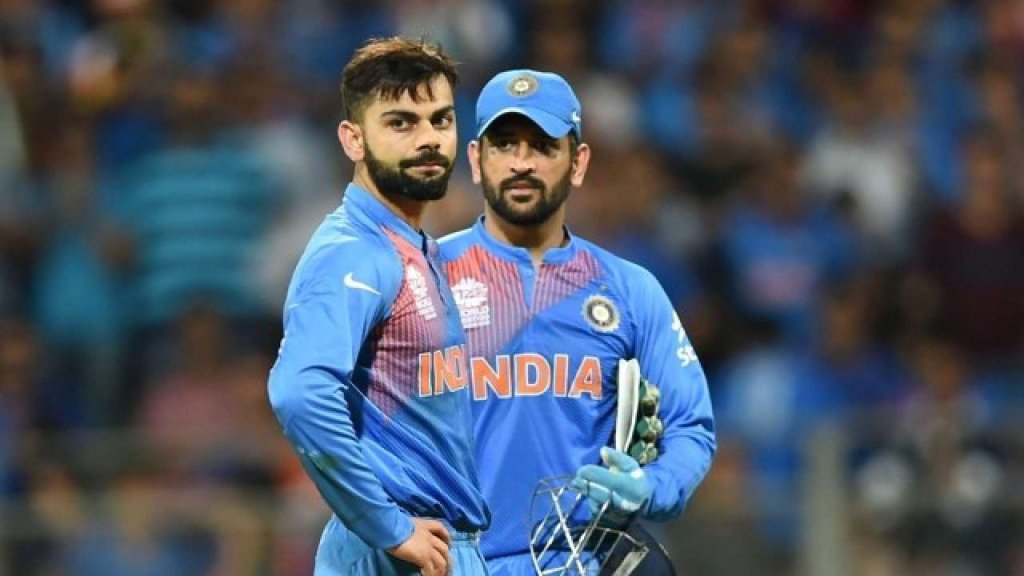
Virat Kohli alongwith MSD is the biggest sporting hero in the country today. He is simply all over the place- on TV, Twitter, Instagram, You-Tube, magazines and of course, the Manyawar ads. He is the youth icon married to a glamorous film star. His is the face of Success. The hairstyle and carefully trimmed beard are the rage in upmarket salons and at downtown hair-dressers.
He is at the top of his game. Already rated as one of the greatest batsman the world of cricket has ever seen. Across all formats-Tests, ODI’s, T20’s. He is getting even more dominantly consistent.
He is also the Indian cricket captain. And therein hangs the tale.
The first warning signs came when the impetuous young man forced the BCCI to sack Anil Kumble as team manager in favour of his own man, Ravi Shastri. There was muted criticism from some sections of the media and from some ex-cricketers. Nobody dared to take the young prince head-on. After all the powerful Board had pathetically caved in before their eyes. Why jeopardise their own chances of jumping on to the gravy train. There was the glaring example of popular commentator Harsha Bhogle who was sidelined for a season. He had to toe the line. Join the club to reap the rewards.
Ravi Shastri fits the bill. Over-rated for his cricketing acumen, he was more the brash and loud establishment cricket expert. A complete loyalist who knows which side his bread is buttered. He has evolved into a side-kick, glorified chamcha and cheer-leader for Kohli.
With the gross IPL culture kicking in you need seasoned and grounded people to lead the national cricket team. The MEN IN BLUE. The pride of the country. Yes, the fitness and fielding standards have remarkably improved. Our youngsters are no longer awed by the Aussies or the West Indians. But the money and glamour have exacted a heavy price. The pride of wearing the India cap is not what it used to be. When a Rahul Dravid walked in to bat you could see the tricolor fluttering in all its glory.
The Hardik Pandya-KL Rahul episode on a chat show gave an insight into the rot which has set in. There is no moralising here. It is the crassness, the insensitivity, the arrogance of privilege and entitlement, the sheer irresponsibility which is abhorrent. It gives a disturbing insight into the team culture. There is no captain or coach or manager to rap their knuckles, counsel them or rein them in.
We cannot ape, say, the Carribean life-style and deliver consistently at the top tournaments and over-seas tours. The discipline, the focus which motivates truly great teams is simply not there. Yes, our guys will have their moments in the sun, win an occasional series abroad but will not make that special cut- an all-time great team.
A master batsman and superb out-fielder need not be a great captain. The best player in the team is not nessacarily the only choice for this critical role.
Virat, the captain, is incompetent if you see through the aura around him. His mis-reading of pitches has become a regular feature. On a dry Southampton wicket on the England tour he opted for only one spinner, a half-fit Ashwin. The hosts played Moeen Ali and Rashid. The Impact player-Moeen. Likewise,at the new Perth stadium our skipper packed the team with four fast bowlers-taken in by the history of the ground. The Aussies had Nathan Lyon who gave the man of the match performance. In the first match of this IPL season he again mis-read the turner at Chepauk and the RCB were roundly thrashed. He also gets critical things like the dew factor wrong in the shorter formats of the game and puts the team at a disadvantage.
The other serious concern is the frequent chopping and changing in the side which undermines player morale and team spirit. For instance, Bhuvaneshwar Kumar was summarily dropped from the Centurion Test after a good all round outing in the first Test of the South Africa tour. Pujara has been dropped thrice despite being our most dependable Test batsman with a sterling over-seas record. Ajinkya Rahane had a fine run from 2013-15 but is now a shadow of the player he was because of the inexplicable and ad-hoc approach of the captain. Then, there are those who continue to be in the playing XI despite their inconsistencies and weaknesses exposed for all to see.
Last but not the least is the famous Virat temper. This unrelenting intensity may be firing-up the batsman in him. However, this constant state of tension is unhealthy for the team in what is essentially a team sport. Where team-spirit, strategy, camaraderie and every little contribution counts. To have your captain constantly on edge must be pretty un-settling for the Indian players. The confession of the young Rishabh Pant is revealing-‘ what he fears most is the skipper’s anger’.
It is his misfortune that he steps into the huge shoes of MS Dhoni. Captain Cool. The player’s man. The Motivator. The Finisher. One of the most successful skippers ever. The de-facto leader when both are playing together. The MSD shadow must be over-powering.
Let us rejoice in the supreme skills of Virat Kohli the batsman and cricketer. Let us cheer on his inevitable progress into cricket’s hallowed Hall of Fame. However, let him be freed from the burdens of captaincy. The torch should soon be passed on to someone better suited to the leadership role albeit he be a lesser player than the master.
Finally it is the performance of the Indian cricket team which matters to us. Their success and dominance is what ultimately fuels the passion of the fans. And drives them in droves to watch the IPL circus. Fortunately,RCB is in line for an early exit from the IPL. India needs Virat Kohli firing from all cylinders on the biggest stage- the World Cup. And with Dhoni behind the stumps, who knows???





 A Fistful of Salt