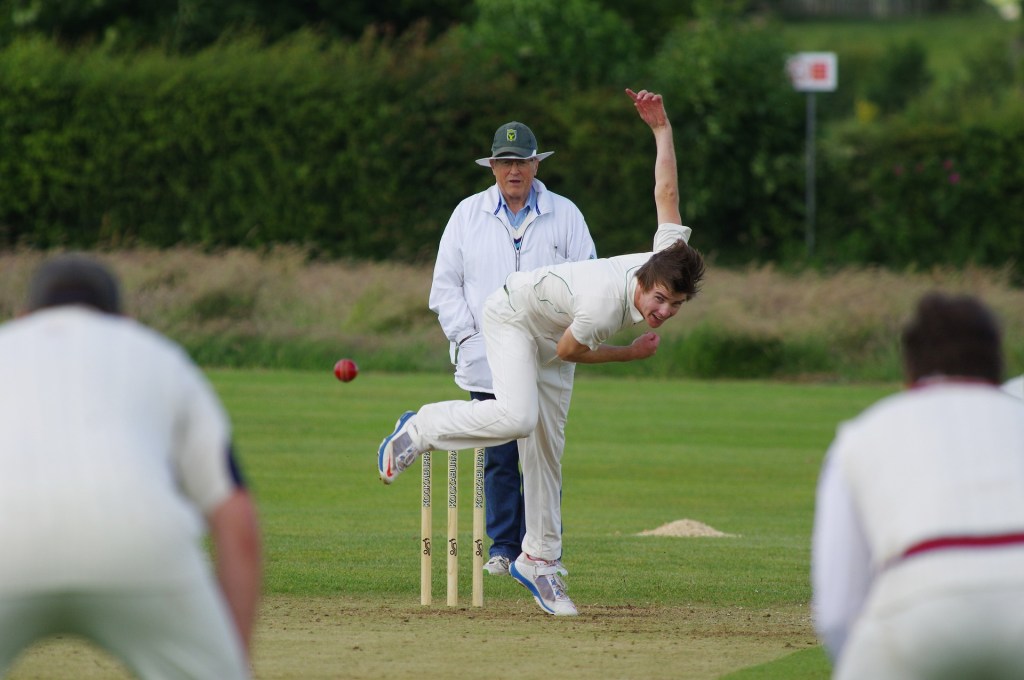
Is the Indian Cricket Team on the Cusp of Greatness?

(File image: Reuters)

After the miracle Down-Under and the wins against England at home, many pundits and fans have already anointed India as the champion cricket team. Ravi Shastri’s bombast adds to this somewhat pre-mature exuberance and celebrations. However, Ian Chappell’s recent observations brings a positive perspective and a lot of cheer and hope for the Indian cricket follower. “India have finally got the equation right and as long as they can avoid the pitfalls often associated with continuing success, they are better equipped than any other team to produce an era of dominance. The rest of the cricketing world.Beware!”

To be hailed amongst the all-time great teams India would need to show its class against quality opposition on their turf. And demonstrate supremacy on home soil. Really perform on the big occasions. Across the 3 formats- Tests, ODI’s, T20 cricket.

An objective look at our recent track record against the SENA nations (South Africa, England, New Zealand, Australia), shows that Indian cricket still has much to conquer. (0-1) Australia in 2015, (1-2) SA 17-18, (1-4) England 2018, (2-1) Australia 2018 and (0-2) New Zealand 2019-20. The Australian tour win be seen in the context of the host side shaken by the sandpaper-gate scandal and without their best batsmen Smith and Warner. Nine of our overseas Test wins have been against Sri Lanka (5) and the West Indies (4) languishing at the bottom of the table. Also take cognisance of our semi-final exits in the 2016 T 20 WC and the 2019 ODI WC.

The West Indies cricket team under Lloyd and Richards dominated cricket from the late 70’s till the end of the 80’s. They comprehensively won on all the Australia tours, only drawing the 1981-82 series (1-1). From 1976 onwards, they beat England in England decisively including a 5-0 blackwash in 1984. India, considered a difficult place to tour, lost (0-3) in 1983-84 followed by a (1-1) draw in 1987. Under Viv Richards they did not lose a Test series from 1984-91.

The Windies transformed themselves from a bunch of easy-going Calypso cricketers to a charismatic band of winners. Their sheer athleticism, ability to play exhilarating and attacking cricket, improvise and control the game changed cricket itself. The lethal pace quartet revolutionised the sport and the Caribbean impact was such that to this day cricket buffs can recall the names of all the players  in their squad and not just the marquee ones.The men in the maroon caps had also won the first 2 editions of the ODI WC in 1975 and 79 before losing to India in the memorable final in 83.

The Aussies under Steve Waugh and Ricky Ponting were world beaters for almost a decade. They won the ODI trophy in 1999, 2003 and 2007. Awesome!!! Championship titles in 2006 and 2009. Their record in the other SENA countries is impressive. Under Waugh they won 8 out of 9 Ashes Tests, losing only one. Also, he led them to 15 of their record 16 consecutive  victories. England beat Ponting’s XI in a thrilling 2005 Ashes series (2-1) but they exacted a 5-0 whitewash revenge at home in 2006- 07. The stamp of Aussie dominance can be gauged by the fact that Ponting is the only cricketer in history to be a part of 100 Test victories. The next 6 top players with most Test wins are all Australians who were intrinsic parts of the great teams of the late ‘90’s-2000’s.

This Aussie era was marked by ruthless efficiency and driven by cold-blooded scientific analysis and planning. Sledging also reached its peak as winning was everything. But other than Waugh and Ponting others like Gilchrist and Hayden and McGrath and Warne have also left huge shadows on the cricketing grounds.

A few interesting nuggets for Indian buffs. Waugh’s winning streak ended at the Eden Gardens on the classic tour of India in2001. (2-1 for india) The Aussies could not breach the Last Frontier. Ricky Ponting never won a Test match in India, played 7 and lost 5. But under his captaincy from 2005 to 2008 there was a second incredible show of dominance over 22 undefeated matches and 20 wins. India again played the Spoiler at Perth in one of Indian cricket’s most famous overseas wins.

2008-14 was the golden age of Spanish football.  Spain topped FIFA rankings for 6 years winning the UEFA Championships in 2008 & 2012 and the FIFA World Cup in 2010. The first team to win 3 consecutive world trophies. From 2010-13 they went undefeated for 29 games. And the Spanish team scored the highest maximum points for WC qualification- 30 out of 30. The star players were mainly drawn from Barcelona and Real Madrid, bitter rivals in the domestic La Liga. But they combined as a team at the national level with the Tiki Taka style of play of short, quick passes. Retaining possession of the ball, wearing down and opening up the opposing defence and then shifting gears. They took the game to another level with their precision, well-oiled football.

After watching ‘ The Last Dance’ on Netflix, the glorious story of the Chicago Bulls stays with you. The treble NBA championships from 1991-93 and an euphoric encore from 1996-98. Although the Bulls have become synonymous with Michael Jordan, it went beyond MJ. The coach, Phil Jackson, created a great team around MJ for the first hat-trick of trophies. When MJ came back from retirement he was moulded into the ultimate team player with the likes of Scottie Pippen, Rodman and Toni Kukoc playing critical and even game winning roles. The dissipation and fall of the team due to the whims and ego of a General Manager and a pliant owner is both poignant and educative. Great teams are very difficult to build. Once they happen and come together they find a life and synergy of their own.

Sunil Gavaskar believes that India has a great team. He comments, “A captain is always as good as his team and he has a terrific team under him. The full balance of the team has been fantastic. When you have something like that you will win more matches than you lose.” He continues about the “terrific opening batsmen, a very good middle order and a bowling attack which has most variety. A wicketkeeper who is very good and who can come down the order and pummel the bowlers.”

Indeed, the bench strength is deep and impressive. We have 2/3 more openers who can take on international attacks. There is strong competition for the middle order slots. A pool of good all-rounders led by Jadeja lends flexibility to the team. A fit and energetic fielding side- thanks to the example set by Kohli and the demands of the IPL. A potent fast bowling battery plus an array of good spinners to choose from. And the dashing Pant has to keep improving as he has Samson, Rahul, Karthick, Saha breathing down his neck to don the gloves. Indian cricket has never had it so good, verily, a plethora of resources.

Behind the scenes, Indian cricket owes a debt of gratitude to Rahul Dravid. Whether at the Cricket Academy or at the U-19 level, the break-out youngsters have been groomed and mentored by this cricketing legend. Young, raw talents have blossomed like never before.

The X factor to make Indian cricket the force that it is- is the fast bowling arsenal. We have at least a dozen bowlers in domestic cricket who can bowl at 140 kmph plus consistently and make the batsman hop and duck. A far cry from the days of Saeed Ahmed Hatteea (a Bombay quick) who was advised by shaken batsmen to cut down on his speed so that he would not burn himself out.

Bharat Arun, our bowling coach, believes that’ over the last 2-3 years Indian pacers have mastered the art of bowling fast, pushing for speeds of over 140 kmph. They have become fast and lethal and most importantly consistent in maintaining fitness which is a crucial issue for speedsters. Bumrah, Shami, Siraj, Yadav and Bhuvi have troubled batsmen in international cricket irrespective of playing conditions. They have hugely influenced Team India’s success to become a top-ranked nation in cricket.’

The only other ingredient for continuing success is team spirit and the hunger for wins. As shown by the Windies teams of the 80’s, the Aussies under Waugh and Ponting, the Bulls era in the 90’s and the golden period of Spanish football. The fairy-tale victory Down Under by Rahane’s depleted team have many lessons to take forward. About getting all players on board, playing to their best potential and at times even out of their skins.  Team Spirit adds an extra dimension of its own to team performance. Capt Kohli should reach out and tap into the cricketing brains of Sharma, Ashwin, Rahane and Bumrah in both strategizing for and reading the game.

2021 may well be the watershed year for Indian cricket if events unfold as per schedule. First, the World Test Championships at Lords vs New Zealand on the 18th June 2021. Followed by a gruelling 5Tests tour of England. To cap it all, the World T 20 tournament at home from Oct this year. If the Men in Blue win the Lord’s contest, have a good English tour and lift the T 20 cup, then they are on their way to the Hall of Fame. And we will be ushered into an exciting and enchanting Era of Indian cricket.

What the ISMS!!!

Photo by Jack Hunter on Unsplash

Let’s take a look at the Ideologies and Doctrines which have dominated discourses and radically shaped the world- geopolitically, economically, culture-wise- over the last 100 years. Whilst science and technology, IOT and social media have made today’s world a different place, in many ways we are stuck with the same ‘Isms’ albeit in variant forms. What the ‘ Isms’. Time to revisit these long-held and almost sacrosanct beliefs. Review how they have stood the test of time and actually fared in practice. Are they still effective and relevant or past their shelf-life.

I post this blog as a student and an observer. Recommend that you take it with A Fistful of Salt.

Capitalism, we have been told, is about free markets with limited government intervention. Defined by the profit motive of entrepreneurs and corporates, freedom of consumers to choose goods and services, fair competition(?),  flexible labour markets (!!), robust finance sector and free trade. The Capital of this ‘Ism’ is the USA. It has been said that if Wall Street sneezes the rest of the world catches a cold. The $ is the global and petro currency. From Europe to Japan to China and Saudi Arabia trillions of dollars have been invested in US Treasury bonds, real estates and the US stock market. Silicon Valley rules the roost in the IT of things. A galaxy of American brands shine over the world. At $ 22 trillion the US economy accounts for 25% of the world’s GDP. The wealthiest, most powerful nation in history. A roaring success, right???

Not quite. Almost 40% of the US population live in poverty. Another 10% hold on to 2 jobs to put food on the table and send the kids to school. The proportion of middle class (the weather bell index) has fallen below 50% over the last 5 decades. Real Income remains stagnant at the 1989 levels. More than 20% of the adults are illiterate. College grads carry a staggering burden of $ 1.3 trillion debt. Amongst developed nations the USA ranks a poor 15th in healthcare and services. Yet, yet … in 2020 the richest 400 Americans paid tax at a lower rate than any other section of the society.  Unbridled, deregulated capitalism was unleashed by the economist Milton Friedman and President Ronald Reagan. (Curiously around the same time the movie ‘Wall Street’ was released with the Gordon Gekko character saying, “Greed is Good.”) This led to the meltdown of 2008. The US government bailed out the ‘Too Big to Fail’ firms ($ 700 billion program) and their CXO’s walked away with fat salaries and bonuses. Sadly as millions across the USA and the world lost their jobs, pensions and homes. The corrupt nexus between Capitol Hill, the White House, Wall Street, the media houses and the Ivy League experts is out there for all to see.  As is the plight of a worker who does not even get the time to pee as he sweats to keep the line moving. Did I say minimum government intervention, earlier on. It is the irony of ironies that the Biden administration has got a $ 1.9 trillion relief bill passed to help out millions of ordinary Americans caught up in the Covid crises. The Federal administration as the Saviour. What the ISM!!!

The Russian Revolution of 1917 led by Lenin brought the Communist Manifesto into practice and it shook up the world. The doctrine quickly took over Eastern Europe, parts of Asia, spread to Africa and Latin America with Cuba becoming a flag bearer and a flash point. The footprint grew rapidly. A Communist State became a state that was administered by a single party-guided by the Marxist/Leninist/Maoist philosophy.

The captivating charm of this philosophy lay in its egalitarian, humane and idealistic welfare promises. A better socio-economic order. Remember the oft quoted definition of Communism, “a theory or a system where all property is owned by the State, where each person contributes according to their ability and gets according to their needs.” Intellectuals, academics and activists in Europe were swept away by the fervour. A few decades later the bearded guerrilla Che Guevera was romanticised around the world with his face adorning T shirts and jackets. As Chairman Mao had said, “Power flows from the barrel of a gun.” PM Nehru was a great admirer of the Soviet Union and the Stalinist 5 year plans. As the years rolled by, many in India- politicians, bureaucrats, professors, economists, writers and activists bought into the Vodka fuelled narrative. The hangover still lingers on. Only today the General Secretary of our communist parties sits in Delhi whilst the Chairman sits in Beijing.  West Bengal, Kerala and Tripura have had leftist governments with multiple tenures.

How did the Utopian ideal work on the ground. China’s stupendous economic growth over the last 40 years has been driven by a mutant Ideology. China and Russia still remain dominant military and nuclear powers. But after the collapse of the Soviet Union, Russia has struggled with its economy which is heavily dependent on oil, natural gas and minerals. An embarrassing fall for a country which till 1989 was the other super-power. East European nations- earlier a part of the Iron Curtain- are still struggling to play catch-up with their Western neighbours. The case of the 2 Germany’s is stark and glaring. Even after nearly 4 decades of re-unification and an infusion-aid of $ 2 trillion, East Germany has twice the rate of unemployment and lags behind in wages to the extent of 20%-40%. The meltdown of the oil rich Venezuela is another example of the collapse of the command economy model. Castro’s Cuba has done well in health-care and education. As is the case with the Indian state of Kerala and esp. on the literacy front. The Naxalbaris of the late 60’s with their violent protests did augur in substantial land reforms in West Bengal. The State became a communist bastion for 3 decades. Today the Naxal movement has degenerated into domestic terrorism funded and armed by China and Pakistan. On the side, they have evolved into a Mafia group deep into an extortion and protection racket and illegal trading.

The only Communist wickets left standing are China, Cuba, Vietnam and North Korea. Vietnam’s economy is picking up pages from the Chinese model. North Korea is the worst embodiment of the communist practice- a Hermit Kingdom run by a cruel dictator, a wannabe nuclear power with millions living in poverty and misery. The really dark side of communism is not as freely discussed as it should be. Probably because so-called intellectuals and left leaning activists still control the narrative in India and many other parts of the world. Millions and millions have been brutally killed by the likes of Stalin, Mao, Pol Pot in Cambodia and the Dear Leaders in North Korea. Surprisingly, these mass murderers continue to be deified and have their portraits in Parliament Halls, Public offices and even Universities.

Let the final word rest with George Orwell’s classic ‘Animal Farm’ – the best unravelling of the Communist culture and state of mind. What starts of as the Utopian ideal of creating a paradise of progress, justice and equality where all are happy and free but fatally ignores the human weaknesses for power, control and greed. Alas, the revolution against tyranny leads to totalitarianism, just as terrible.

Deng Xiao Ping who followed Mao jettisoned the Great Leader’s Ideology. Sacrilege! His oft quoted mantra- “Black Cat. White Cat. What does it matter what colour the cat is so long as it catches mice.” Just 40 years later, China is the second largest economy in the world at GDP $15 trillion. In purchasing power parity (PPP) it has overtaken the USA. State Capitalism. The factory to the world. The capital of off-shoring.  Leveraging cheap labour to power the world’s largest brands and plants. Benefitting from and eating into the tech transfer. Transforming this huge country into the world’s largest market. But it continues to be governed with an iron fist by a single party with a strong man at the head. The cutting to size of Jack Ma of Alibaba fame shows who’s the Boss. This is Bian ti, the Chinese variant of capitalism. Ironically this rapid, exponential growth has rolled out because of the authoritarian regime. The Comrades have bulldozed their agenda through, lands and communities cleared overnight to set up factories and for infrastructure projects. No courts, no opposition, no activism.

This massive economic surge has propelled more than 30% Chinese into the middle-class., majorly in urban areas. Basic health-care insurance covers have been provided to all citizens.  Mandatory school education from the age of 6-15 years has also been a game changer.

But there is much that is hidden. The yuan is a tightly managed currency and the Communist Government manoeuvres to keep it low. Off late, there have been rumblings in the US and Europe about the theft of patents and IP rights. The Chinese have stolen everything from the formulae for drugs, technology for mobiles and blueprint for heavy equipment. The reason for joint ventures with a not so subtle aim to access state of the art Western and Japanese technology. And there is the controversial issue of large scale dumping- selling its oversupply in overseas and Indian markets, depressing prices and hurting indigenous manufacturing. There are many many secrets behind the Great Wall- forced labour from rural areas on construction sites, sweat -shop factory hubs and the origins of the Wuhan virus. The Comrades and Capitalists have much in common- Greed and a lust for power. Human nature being what it is. With Big Brother watching, corruption is rampant.

Europe is deemed to be the cradle of liberal thought and practice with England and France claiming to be at the vanguard of the movement. Liberalism can be broadly defined as a socio-economic and political philosophy which promotes democracy, civil rights and individual liberties and free enterprise. A liberal being a person with an open-mind -receptive to opinions, ideas and lifestyles different from one’s own. The report card has been impressive on the whole-voting rights for adult population, gender equality, marriage equality, racial equality, environmental justice, minimum wages and stipulated work conditions, labour unions and constitutionally limited and democratically elected governments.  Positive Progress.  But any thought, however virtuous and taken to the extreme can be counterproductive. Look at France today. Unregulated freedom of expression has sparked an outrage amongst millions of Muslim faithful around the world. On the other hand French liberals have reset themselves into the belief that these communities should espouse the values and culture of the country they are living in and integrate themselves into the mainstream to the extent possible. Now these are being implemented through laws. Across the continent also there are many European leaders and peoples who now believe that their way of life is being undermined and challenged by these migrants- The Other. Attitudes are hardening and suspicions are rising. Is this ‘The Clash of Civilisations’ as predicted by Samuel Huntington..

Also genuine liberal thought is on the wane. Reaching out to understand where the other is coming from is a rare occurrence. Objective and reasonable opinions and analysis based on sound research is no longer the norm. Self -proclaimed liberals and activists are often aligned to a political party or ideology or an NGO or a think tank with an agenda of its own.  Why are our progressive intellectuals silent on the mass persecution of Uyghur Muslims in the Xinjiang province of China.!!??  The basic premise of an open mind-set has long been jettisoned.  Even once trusted institutions like the BBC and The New York Times have lost a lot of credibility. The latter, for example, provides a platform and $money to discredited Indian journalists to vent their opinion and bias. No fact-checking. No one like Mark Tully (the famous BBC correspondent in Delhi) to deep-dive and ascertain the real situation. India and the world need the conscience-keepers and the sane and reasonable voices more than ever. May their tribe increase. However, liberalism has to reboot itself to be an effective influence and to resonate across borders.

For the concept of secularism, let us turn again to a French philosopher and sociologist Jean Bauberot and the French word ‘laicite’ with its anti-clerical roots.  It refers basically to the separation of State from religious institutions. No domination of the political sphere by any religious community or entity . Neutral State in an Open Society. In  increasingly plural and diverse nations Secularism seeks to maximise harmony and minimise conflict. Another exploration of the term brings out 3 core principles-institutional separation, freedom of conscience and belief and no discrimination on the grounds of religion. “These conditions allow for the competing concepts of the good life to be pursued in society.”

In practice, this philosophy ran into a lot of hurdles. The clarion call for Religion to be entirely excluded from the public square and manifest solely as a private matter remained a non-starter. Human nature being what it is and the power of religion being what it is. For centuries, the State and the Faith had fed off each other and used each other to consolidate their powers. It is to Dr Ambedkar’s credit that he realised the impracticality of introducing the word ‘secular’ in the Indian constitution. Mrs Gandhi added it in the year 1976 for political reasons and political capital. Taking a leaf from the playbook of our colonial masters, our GOP (Grand Old Party) mastered the art of Divide and Rule, Vote Bank politics and selective appeasement on regional or religious grounds. All political parties play the same psuedo secular card today. An idealistic and progressive Idea  remains unrecognisable – hijacked and manipulated beyond measure. In the Indian context we have to reclaim the soul and spirit of our secularism-Genuine tolerance for all religions rather than separation from the temporal – with a secure place for even non-believers.

At the global level also, Secularism has been resisted and derided. It is seen by many as a maligned Western concept. When the burkhas and veils were banned in many European nations the International Humanist and Ethical Union of the Middle East protested that this was not their secularism. The powerful Evangelical lobby in the USA supported the venal Trump to move the needle on their agenda- Anti abortion and anti LGBTQ. Even a much debated issue like Mercy Killing remains on hold because of the overlap of Religion and Public Policy. It took Independent India seven decades to ban a practice like the Triple Talaq, which had already been rejected by many Islamic countries. The issue is complex and sensitive. It is not helped by the fact that many religions have themselves fragmented into different denominations and there is even discrimination and hostility amongst some. As the churning in Europe demonstrates it is difficult to get all sides on board to agree to a common definition of Secularism for the Greater Good.

Another ‘ISM’ in currency is Internationalism- a political movement that advocates greater economic and political cooperation amongst nations of the world. It is meant to promote peace and security, economic stability and humanitarism. Organisations like the United Nations, World Bank, ASEAN, OECD, WTO, WHO, UNICEF are the tangible results of this thought. Single nation states cannot resolve systemic global issues like climate change, nuclear disarmament, cyber terrorism, global tax avoidance, pandemic and the catastrophe risk. These agencies have stepped in with varying degrees of success. For instance, climate change has been addressed through the Kyoto Protocol and the Paris Accords. The latter had 195 signatories- a possible tipping point to take on this crisis. However the terms are not enforceable on the nation states and any progress is subject to the focus/ whims of the large and powerful signatories. President Trump withdrew the USA from the Paris Agreement and also the World Health Organisation. Likewise, the World Trade Organisation has to a large extent stabilised global trade through agreed upon terms which are fair and remove inequities amongst trading partners. It has also played a significant role in the reduction of trade protectionist policies. But the large scale dumping from China continues to disrupt other markets. The World Bank has helped nations recover after the global recession of 2008. Peace keeping forces have played a stellar role in controlling hostilities in war zones. The International Red Cross has gallantly stepped in during the Ebola pandemic and in providing humanitarian aid in war ravaged countries. The positives are many. International sports events like the Olympics and the football World Cup have connected countries like never before as have cultural exchanges like music, movies and cuisine.

The downside is also stark. The world is a more troubled place and new blocs are forming. There are many hotspots and prolonged localised wars. Yemen and Syria are truly cursed lands. The scourge of terrorism continues unabated. North Korea continues to be a nuclear rogue whilst the Iran deal may be back on the table. COVID 19 has again demonstrated as to how the rich countries call the shots. They have pre- booked and stocked the major supplies of vaccines and left the rest of the world to their own fate. The pandemic crisis has been gravely compounded by the WHO chief playing PR for the Chinese and playing down the gravity of the virus.

Colonialism did not die with the British Empire. The USA stepped in with its subtle model – leveraging on its 800 military bases across the globe, its industrial might and its control over the international finance agencies. China takes the baton forward in a refined form. The Belt and Road initiative is one with its expansionist dream of a great Chinese Empire. Pakistan and Sri Lanka and some East European and African countries will soon be reduced to debt-ridden vassal states. China will have unfettered access to raw materials, minerals, trade routes and markets. As British historian Mark Mazower aptly observes in his book ‘Governing the World’, “Internationalism was first and foremost a Euro-American project.  It was a gift the West promised to give the Rest but like all Gifts created its inadequacies and dependencies.” National Interests and ambitions of these dominant powers plus geo-politics will determine what the future of the global order will be. They guard the same with intense zeal. How else does one explain that India as the world’s largest democracy with a 1.3 billion population and the 6th largest economy in the world does not have a permanent seat at the UN Security Council.

And so we wait for the next great experiment which will enamour the world.  Hope it has Humanity at its core. Where basics like food, shelter, health, education, public utilities, law and order will co-exist with entrepreneurship and innovation, aspirations and wealth creation. Where quality of life will also factor in the Happiness Index. The signs are out there with Canada seriously debating about Universal Basic Income and New Zealand raising its minimum hourly wages and taxing its 2% super-rich at 39%. Hopefully, they will bridge the gap between theory and practice by factoring in human nature. And hark back to another Deng Xiao Ping mantra “Of crossing the river by touching the stones.”  Meaning gradual implementation of the reforms or models to know which policies produce favourable outcomes and which do not before they can be implemented across.      

The Gift of Captaincy

On the 19th Jan 2021, the Indian cricket team breached the ‘Gabbatoir’ in Brisbane, Australia. The hosts had last lost a Test there in 1988, against the Viv Richards led great West Indian side. This series win has caused mass frenzy amongst the Indian cricket fans and pundits alike. ‘The Underdog Miracle’, ‘Against All Odds’, ‘A Fairy Tale Win’, ‘The Gabba Heist’ and ‘The Greatest Comeback in Cricket History’ are just some of the awe-struck and superlative reactions and headlines. Social media has gone berserk. After the shameful 36 all out debacle at Adelaide, to pull off the stunning win at the MCG, fight to a stirring draw at Sydney and finally that wonderfully scripted victory at the Gabba seemed unreal and straight off the ultimate feel-good movie triumph. Some of the Indian papers summed up the cricket series thriller with ‘Ajinkya’ (Invincible).

Delve into the sub-texts and one discovers even more astounding layers to the story. The Men in Blue were truly Down-and-Under after the humiliating 36 in the First Test. On Boxing Day at the MCG, the tourists were already depleted without their captain and best batsman and some other major players hobbling along. But then each session, each innings and each Test called out for its own heroes. Debutants and novices and net-practice bowlers rose to the occasion and the national call. As did the few seniors remaining- Rahane, Pujara, Bumrah, Ashwin and Jadeja.  For the decider match, the last three were also ruled out because of injuries. The India XI were reduced to the ‘Hardly XI’ as an Aussie paper put it.

So what was the X-factor? Kohli left on paternity leave after the disastrous First Test. In stepped his understated deputy, Ajinkya Rahane. His astute marshalling of his team and calm disposition played a defining role in what played out thereafter. In a blog I had posted before the WC 2019 (Captain Kohli) I had submitted that the best player does not necessarily the best captain make. Kohli’s undoubted greatness as a batsman notwithstanding. Truly MASTERCLASS. Think about Ian Botham’s dismal stint as the England captain before his break-out Ashes series under Mike Brearley.  Kohli is a force of nature. His passion, his focus and his fitness have left an indelible mark on our cricket. RESPECT. However, his hyper temperament does not make him the right man to lead this Indian side into the sacred pantheon of the All Time Great Teams which demand a sterling overseas track record.

This is not a simplistic debate about aggression vs composure. One of our best captains ‘Dada’ Ganguly was aggressive and even dubbed as arrogant by some. At times he wore his heart on his sleeve. But his cricketing judgments remained sharp and the emotional connect with even the younger members added depth and dimension to his leadership. Remember that he steered the Indian team after the infamous match-fixing scandal and also mentored emerging small town players who later became big names.In the Indian context at least, empathy and bonding and understanding make a big difference- on challenging tours and in big-match situations. The dressing-room environment matters a lot. Come to think of it, Rahane did show a quiet, steely resolve backed up by game-plans and with the entire team on board. But in today’s hyped-up times this may perhaps not qualify as aggressive intent.

So let’s look at the Rahane Effect. Brearley in his book, ‘The Art of Captaincy’ says, “That it is not about winning or losing. It’s about getting the best out of the team you have.” Our stand-in skipper did just that- extracted every ounce of performance from his team, no matter what the situation. He was approachable and the team related to him. The grapevine tells us that he did not tell his men what to do. He just gave them space and re-assurance and they responded magnificently. After all, he counted himself amongst them. The team plays under Kohli. It plays with and for Rahane.

The team-huddle; Rahane with a few key words and a composed tone, with Rohit Sharma, Ashwin, Bumrah, Pujara and Jadeja weighing in. Contrast to Kohli. Mostly a monologue – at times peppered with intensity. Is it any wonder that Bumrah walked back with the debutant Siraj to the top of his run-up. Or that the Indian lower-order batsmen refused to give up. Ashwin and Vihari with back spasms and a hamstring problem. Later Thakur and Sundar stepped up to the plate. Everyone’s contribution counted. Rahane had brought in empathy- the emotional quotient- and this resonated with the players. His special mention of Kuldeep Yadav after the Series win was one with this inclusiveness- this Brohood.

He read the games astutely and keenly. Like introducing Ashwin as first change in the 11th over of the game at the MCG. There was moisture in the wicket. It was a tactical master-stroke. He snared Wade and Smith in his first spell. Ashwin bowled a 12 over spell. Yadav 6 overs, Bumrah 5 overs and Siraj 6 overs. The longish spells allowed the bowlers to find their rythmn and work on their plans. The impatient Kohli had been known to change bowlers after a couple of overs if he sensed nothing was happening. Move to Brisbane on the 4th day. Australia comfortably placed with a 100 run lead and all wickets at hand. The Indian captain continued with his 2 slips and a gully field. Looking for wickets to contain runs. And sure enough, the hosts lost 5 wickets- 4 to catches by the keeper and the slips cordon. Or the decision to elevate Pant to the no 5 position at the SCG and Gabba- repaid in full by the game changing 97 and 89 N.O. knocks. On the 5th day at Brisbane as he walked back after a quick-fire innings he told the incoming Pant to bat out the few minutes before tea. Then revert to his natural self with the bat. Rahane’s calculation was that a target of around 145 was gettable in 35-38 overs if they had a few batters striking good. The clear-headed session by session approach. This when most of India was praying that we would hold out for a draw. The gamble of inducting Washington Sundar into the side with Kuldeep Yadav on the bench underlined the serious strategizing for the finale Test match.

His calmness was a major plus and kept the focus in place. After the racial slurs vented at Siraj by some spectators at the Sydney Test, Rahane stepped in. He firmly complained to the umpires and the referee asking that the guilty be evicted. They had come to play cricket but his players had to be respected. Having stood up for his man the game continued. Or his implacable demeanour when a clearly run-out Tim Paine was ruled not-out at the MCG. Virat Kohli would have ranted. Or his own run-out after a scintillating century on the same ground. He walked up to the disconsolate Jadeja at the other end with a pat and a, “No worry. Keep going. The team needs you.”

Lastly, setting an example as a leader. His impactful century (112) at the MCG turned the narrative for the series. The positive cameo knock (24 of 22 balls) after Gill’s classy 91 on the final day of the Brisbane Test showed India’s intent and kept back the Aussies from an all-out attack. The grit and courage of Pujara, the brilliance from Pant and the aggressive burst from Sundar completed the unbelievable last lap for India. The post-match presentation ceremony where he quickly shifted the limelight to his team and the handing over of the 100 match memento jersey to Nathan Lyon showed humility and grace in abundance (shades of Kane Williamson). Even the hard-boiled Aussies have been bowled over.

Contrast this to the frequent chopping and changing of the Indian team under Kohli (where Shastri had been complicit). Rahane benched for the first 2 Tests on the South African tour despite a good overseas record. The ever dependable Pujara dropped from a Test eleven on this important tour.  Now that both of them have become household names-recall these selection blunders. Bhuvaneshwar Kumar out of the second Test after a good show in the first Test. Whimsical, what!! It is commonly accepted by the experts that our disastrous 1-4 sojourn in England owed much to poor team selection. Two of the matches India lost were fairly close and could have gone our way with the right resources at hand.

His misreading of pitches and conditions has become a regular feature. On a dry Southampton wicket he opted for only one spinner- a half-fit Ashwin. The English went with Moeen Ali and Rashid. The Impact Player- Moeen Ali.  At the new Perth stadium in Australia the skipper got carried away by the history of the ground. We fielded 4 fast bowlers. Nathan Lyon gave the Man of the Match performance. Back to England where the defensive field settings allowed the English middle order to flourish and take control of the matches. Even at the IPL level it has been oft been said that RCB would surely have won a trophy by now if only AB de Villiers had been the captain.

Let me bring in Paddy Upton, a renowned mental coach + a professional cricket coach from South Africa to drive home the point. He had been associated with the Indian cricket squad when Gary Kirsten was the coach. His observations, “Kohli has the fear factor making others insecure and even inferior. Under him the team views everyday details as a chore. When people burden their mind it is hard to get them to be free and to play the game the way it works for them. Kohli is very demonstrative- exuberant in his celebrations but also not empathic on the field whilst showing anger or anguish. His team-mates walk on thin ice, afraid of making a mistake. Once a player tightens up he is no longer the player he is meant to be. On the other hand Rahane is equanimous. His calm and general demeanour allows him to be approachable and relatable to the team.  He has fire and courage within him but controlled. That is why they played so well at the Gabba.” And then the ultimate compliment, “That level of camaraderie I haven’t seen in Test cricket for a while.”

What about Kohli’s handpicked coach- Shastri? This Australia tour has been a boon for him-just being at the right place at the right time. Some of the credit will rub off on him and he will milk and spin it for all it is worth. Especially the so-called rousing speech he gave to the team after the Adelaide debacle- wear this 36 as a badge and it will never happen again.  Shastri is the ultimate Indian cricket establishment figure and so no one will call him out. He is an over-rated loyalist who knows which side of his bread is buttered. Remember his bombast before the WC 2019, calling the team the greatest Indian side ever. A side-kick, a cheer-leader for Virat Kohli- it is high time we found a coach with more professionalism and integrity.

Cricket is a game where the acumen and people- skills of the captain (and coach) really matter. And nowhere is this more tested than in a hard fought Test series. This is the Kohli- Shastri overseas record in the SENA countries since 2017, 1-2 South Africa- 18-19, 1-4 England- 2018, 0-2 New Zealand-2020, and 2-1 Australia- 2018. The context for the last Australia tour which counts as his most famous win is that Smith and Warner were missing and the Aussies were struggling to come out of the sand-paper gate cheating scandal. Else, he is the most successful Indian captain because of wins against the languishing West Indies and Sri Lanka and solid performances on home turf.

Indian cricket is now poised on the cusp of greatness. The best fast bowling attack in our history. Match-winner spinning options. Batsmen who can dig in for hours or change the game in an hour. Tremendous bench-strength. Improved fitness and high confidence levels. But if we have to be rated with the great West Indian teams under Lloyd and Richards or the Aussie teams under Steve Waugh and Ponting, we still have much to prove. Consistent winning performances across formats and dominating overseas tours to the SENA nations.

Despite this wake-up call, Kohli will remain the India captain even for the Tests. At the BCCI no one has the balls to out him. Hopefully, the other players will step out of his aura after this seminal series and stamp their own identity on the field. Perhaps, Virat (Colossus) can reach out to Ajinkya (Invincible) to forge a formidable partnership. Hopefully, Captain Kohli 2.0 will inspire and lead The Men In Blue into Cricket’s Hall of Fame for the legendary cricket teams.

What should change is at the Head Coach position. A Rahul Dravid or a Zaheer Khan can play a defining role and balance out the Kohli excesses. Lest we forget, many of the overnight heroes from the recent tour Down Under,- Gill, Pant, Sundar, Siraj-have been groomed and mentored by Dravid at the India A & Under-19 levels.

Indian Cricket is in for some exciting times ahead. Time to take fresh guard, mark the bowling run-up afresh and set the right field.

G.O.A.T. (Greatest of All Time)

Photo by Fauzan Saari on Unsplash

The greatest individual player in a quintessentially team sport is an anomaly and incongruity of sorts. This has not stopped the billion plus football-crazy fans mulling over just that or umpteen expert panels on TV debating just that. For the elderly generation of Brazil football fans the answer is obvious. Move the clock forward to the 80’s and all of Argentina and Naples and much of the world shouts the name ‘Maradona’. Step forward to the modern era and many find it difficult to comprehend that there has ever been a player that does magical things with the football that a certain Barcelona player does. The GOAT debate simmers on with country and club loyalties thrown in and generational perspectives kicking in.

Membership of this ultra-elite club demands longevity and consistency in impactful performances, trophies & international laurels and of course – goals and assists.  The latter criteria modified to embrace the great goalkeepers, defenders and mid-fielders and their wonderful saves, interceptions and passes. After all, soccer is the ultimate team sport.

Pele (Edson Arantes Do Nascimento) of Brazil and FC Santos needs no introduction. Fifty years after his last World Cup, he still tops most GOAT lists. 3 time World Cup medal winner (1958, ‘62, ‘70). 77 goals in 92 appearance in the Canary yellow Jersey (the iconic No 10), 650 goals in 694 matches for his clubs. Voted the International Athlete of the Century by the IOA (International Olympic Association). Pele combined speed with creativity, skill with physical power and stamina with athleticism at a level never seen before. Johann Cyruff, the Dutch legend, said that, “Pele was the only player who surpassed the boundaries of logic.” His lowest point was the WC ‘66, where the Bulgarians fouled and kicked him out of the second game. Then Portugal took over with shockingly violent fouls and the great man hobbled through the 90 mins as substitutes were not allowed at that time. The world’s best player was kicked and stamped out of the tournament with the referees looking the other way. He vowed never to play in another World Cup. But come 1970 and faith was restored in the beautiful game. By Pele and a Brazilian squad still considered one of the best ever- Jairzinho, Tostao, Rivelino, Gerson. Brazil were champions once again and Pele crowned ‘the Player of the Tournament.’

Pele had become the global face of football- powering its endless and exponential growth. In 1975 near retirement, he signed a $7 million deal with the New York Cosmos making him the richest athlete in the world. We also remember the hysteria in Calcutta when he came over with the Cosmos side in 1977 for an exhibition match with Mohan Bagan. 25,000 policemen were deployed in the city, at the hotel and the stadium to prevent this feverish enthusiasm from boiling over. Exactly 10 years earlier he had played in another exhibition match in Lagos in war ravaged Nigeria. The military and the separatists had announced a 48 hour cease-fire to allow this special event to happen.

Lev Yashin, the Soviet footballer, is considered by many as the greatest goal keeper in the history of the sport. The only goal keeper to be awarded the Ballon d’Or in 1963. With his club Dynamo Moscow he won 5 league championships. His influence can be gauged by the fact that over a 27 game season he let in only 7 goals. He emerged as a star as  part of the 1956 Olympic gold medal winning Soviet team conceding only 2 goals and led the team to their best ever FIFA WC finish- 4th place- in 1966. Over his career he is said to have stopped over a 100 penalty kicks. His athleticism, positioning and acrobatic saves made him an inspiring figure in the goal. Yashin’s physical stature, sheer reflexes and bravery made him a Hero of the Soviet Union. His face adorned all the FIFA 2018 WC posters. It will not be an exaggeration to say that he invented the concept of a sweeper- goal keeper. He dramatically changed the role of goalkeeping by always being ready to act as an extra defender or by starting dangerous counter-attacks through a quick throw or a precisely directed kick.

In the Soviet psyche of his times the goalkeeper virtually represented the last line of defence. As his wife stirringly mentioned after his death, “Any mistakes a goalkeeper makes, everyone sees it. They remember it. They talk about it. The goalkeeper is the last line, the one on the border. If that border is breached, it’s a goal.” She should know. In the ‘62 WC Lev Yashin let in 2 soft goals as his team crashed out 2-1 to Chile. His house in Moscow was attacked. Placards and banners of ‘Yashin, Retire!’ & ‘Get out and take your pension’ were all over the city.

Johann Cyruff, the Dutch mid-fielder revolutionised the game as we see it today. He and his mentor, Rinus Michels, created the ‘Total Football’ philosophy with club Ajax- a tactic which allowed for versatility to the players all over the pitch irrespective of their positions. This disruptive flexibility meant that their position was immediately filled by another player. Ajax were unstoppable from the late 60’s, winning 6 titles from 1966-73 and a hat-trick of European Cups in 1971-72-73. He was the European player of the year thrice and also won the Ballon d’Or thrice. He scored 204 goals to propel Ajax to greatness as a club and netted 23 as the Dutch captain.  Between  1970-74 the Netherlands lost only one of the 29 matches in which Cyruff featured i.e.  the 1974 WC final against hosts Germany. He moved on the field like a grandmaster. He created the most chances, completed the most passes in the final third of the pitch and simply befuddled the opponent defences. In his prime, the Ajax club side and the Dutch national team enjoyed the maximum possession of the ball. They set the pace, they controlled the game.

Gordon Banks, the English goalkeeper was named the FIFA goal keeper of the year an incredible 6 times. He had 73 caps for England between 1958 and 1972 and 600 plus club appearances for Leicester and Stoke City. He started every England match in their glorious WC quest in 1966 and let in only 3 goals. In the 1970 edition he made what is regarded as one of the greatest saves to prevent a Pele goal. He also starred in the 1972 league win by Stoke. Sadly, the same year he lost his right eye in a car crash ending his career at the highest level.

Franz Beckenbauer was named in the World team of the 20th century. He is often credited as the inventor of the modern sweeper or libero. A central defender, he retained the ability to charge up the pitch with the ball at his feet. Fearless and effective. This versatility made him a dangerous player. He notched up 427 appearances for the elite German club, Bayern Munich and 103 for the German national side. As captain of his country, he won the European Championship in 1972 and the World Cup in 1974. At club level Bayern Munich won the UEFA Cup Winners Cup in 1967 and under his leadership 3 European Cups from 1974 to 1976. Add to all these triumphs, the Ballon d’Or in 1972. No wonder, he was nicknamed ‘Der Kaiser’, for his elegant style, dominance and leadership aura on the field.

Diego Maradona became a global phenomenon after the 1986 World Cup in Mexico. He did something truly extraordinary- carrying an average Argentinian team to a World Cup victory. The controversial ‘Hand of God’ goal against England is still talked about but the superlative second goal still takes our breath away. As does the artistry and brilliance of the double strike in the semis against Belgium. At a mere 5 ft 5 inches, compact and built low to the ground he was exceptional at evading defenders with sheer ability and ball skills. It has been said that he had the stamina of a full back, the strength of a centre back, tackling ability of a defensive mid-fielder, passing acumen of a playmaker and the finishing ability of a great striker. He has been named FIFA player of the century along with who else, Pele. Maradona, a midfielder, has scored 34 times for his country in 91 matches and 259 times in 490 club appearances. He is still worshipped as a saint in Naples. The fairy tale title win in 1987 is still savoured as is the Napoli encore in 1990. Rumour has it that 1988 also would have been their year- as the team were cruising along- had the Mafia not stepped in. Another Serie A win would have ruined their betting syndicates. Maradona had moved to the Italian League after a couple of turbulent seasons with FC Barcelona. But not before lifting the Catalan club to a couple of titles.

Sadly in the 1994 US WC, he played only 2 matches scoring one goal. He was sent home in disgrace having failed a drug test.  The cocaine addiction was taking its toll and his health worsened drastically .It would be no exaggeration to say that Fidel Castro and the Cuban public health service saved his life. The Cuban leader who had become a father figure over the years ensured that he got the best treatment and rehabilitation the healthcare system had to offer. Sadly, a couple of weeks back, Maradona  passed away at the age of 60. As the foot balling world mourns the loss, some great players lauded him as the G.O.A.T in their fulsome tributes.

The Brazilian Ronaldo Nazario is considered one of the most lethal goal poachers in football. His immense speed and power made him a handful for the best of the defenders. 62 goals in 98 matches for his country; an astounding 15 goals in 2 World Cups (1998, 2002) speaks volumes about his sterling abilities. The WC winner medal in 2002 plus the Golden Boot award.  FIFA player of the year thrice. Stellar careers at illustrious clubs like AC Milan, FC Barcelona, Real Madrid and PSV Eindhoven. The mysteriously low point for Ronaldo was the ‘98 WC final against France. He is said to have convulsed before the match at the team hotel. Shaking and with froth in his mouth. Definitely not fit to play. But then he took the field, a shadow of himself and watched the French romp to a 3-0 win. It was widely reported that the star player had been forced to play under pressure from the sponsors, Nike. Another theory was that it was an injection for a knee injury which had gone wrong. However, Brazil kept its faith in Ronaldo and he repaid it with the World Cup four years later.

Paolo Maldini, Italy and AC Milan, has to be one of the most complete players the game has seen. A left back and central defender, he read the game wonderfully well.  He was skilled with his feet, excellent in the air and had the uncanny ability to marshal a staunch defence even at the fag-end of an exhausting match. He dispossessed the opposition player by a mixture of anticipation, interception and physicality. He redefined defending as a beautiful art form and was imperiously consistent. His oft repeated quote, “If I have to make a tackle then I have already made a mistake” summed up his classy approach to defending. A one-club player he turned out for Milan a record 902 times. With his club he won 7 Serie A titles and the UEFA Championship League trophy 5 times. He donned the Italian jersey for 4 World Cups including at the 94 WC final loss. He captained the national team for 8 years and 74 matches (out of 126 caps). As fate would have it he got a call up to play for Italy at the 2006 WC, “I said no to the call-up in 2006 and they won.”

Zinedine Zidane is another name which universally makes the cut. A physically imposing central mid-fielder he was light on his feet and his elegance with the ball was incredibly brilliant. He also possessed this uncanny knack of reading the game several moves ahead. His high point was the 1998 World Cup win for France against favourites Brazil. He scored twice in the finals and became the toast of the nation. Capped 108 times for France he also won the UEFA Euro 2000 and was named player of the tournament. With 31 international goals and 128 more in club football with Real Madrid and Juventus this attacking midfielder broadened the dimensions of the game to amazing levels. A master playmaker and an effective interceptor. A Ballon d’Or winner, 3 times FIFA player of the year. Unfortunately, he is also remembered for the head-butt incident in the 2006 WC final. After a slow start Zidane dragged a lack-lustre French squad into the final with Italy. Italy’s  Materazzi  made some unprintable comments on Zizou’s sister and the latter lost it for a moment. The red-card and the heart-breaking loss. I recall a head-line which went like this, “In dragging France to the 2006 WC final Zidane hinted at immortality and once they got there he proved his mortality.”

Think Ronaldinho and you think of the bucktoothed grin, the sublime free-kicks and the sense of fun he brought to the field. Football was an expression of self. Entertainment always seemed to be the top priority and even above winning but his super skills usually ensured both. The WC winners medal in 2002 and the Ballon d’Or in 2005 simply happened along the way. As did 66 free kick goals. The training regimen and the ultra-professional habits of the world’s best footballers were not for this Brazilian magician. The right wing midfielder achieved so much even without trying. In 2005 he achieved the unthinkable. With 2 magical goals for FC Barcelona against arch rivals Real Madrid. The packed Bernabeu was on its feet applauding the beauty of what they had witnessed. Sad to say, one of the world’s best No 10 has become prisoner no 194. In jail for 32 days with his brother on charges of travelling on a false passport to Paraguay and money laundering. He has posted a $1.6 million bail and recently been freed after pleading guilty to the passport fraud.

Gianluigi Buffon, the famous Italian goalkeeper finally announced his retirement in 2018 after 176 caps for Italy. In a career spanning 27 years and 649 Serie A matches, he spent the majority of the time with Juventus and has become a folk-hero in Turin. 7 Serie A & 4 Coppa Italia titles with Juventus , the UEFA Cup with Parma. A decisive role in Italy’s WC win in 2006 conceding only 2 goals in 7 matches, that too a penalty and an own goal by a teammate. His speciality lay in his exceptional positioning in set-piece situations; his long and athletic frame plus his agility and exceptional reflexes made him very capable of blocking penalty kicks and angled headers. Hence, Buffon has a jaw-dropping 300 plus clean-sheets to his name and career.

At the age of 13, Lionel Messi’s precocious footballing talents so impressed the FC Barcelona scouts and management that he moved to the Catalan city. The club paid for his expensive treatment for growth hormonal deficiency. In just 4 years he moved to the first team and the rest is history. 10 La Liga wins, 4 UEFA trophies, 6 Copa del Rey. A stupendous 678 goals for Barcelona at a mind-boggling 0.92 goals per game.36 La Liga hat-tricks and 26 El Classico goals against arch-rival Real Madrid. The only player to net more than 40 goals for 10 consecutive seasons. 6 Ballon d’Or (the highest), 6 European Golden Shoe awards and 10 player of the year citations. The accolades go on….. But they don’t tell the full story. For Messi to millions of football fans all over transcends awards and stats. He is the modern maestro of the Beautiful Game- the biggest box office draw today. His ability to manipulate the ball with deft touches and quick movements have often been described as ‘Out of this world’. Seasoned commentators and great yester year players have gone ga-ga whilst commenting about the magic he weaves on the pitch. What adds to the aura of his genius is the sheer number of assists he conjures up for country and club. An all-time high 42 assists for the national side + 71 goals in 142 games. A record 183 assists in the La Liga. The albatross around his neck is the lack of international titles with the national side.  Just an Olympic gold medal in Beijing 2008. In the WC final against Germany in 2014 and the 3 Copa America finals he has ended up on the losing side. No matter that he won the Golden Ball at WC ‘14. His legions of fans speak about the fragility of the Argentinian team and how he had to single-handedly qualify them for the WC in Russia two years back. Then the shadow of Maradona spreads across the pitch. The other painful story is how the Barca dream has fallen apart this season. After 20 years at the club & 14 glorious years as its inspirational player Messi will be exiting in June next year.  The ineptitude and indifference of the Club President and Management has been shocking to say the least.

CR7. Cristiano Ronaldo of Portugal, Man U, Real Madrid, Juventus and possibly Man U again. He has netted 451 times in 438 games for Real Madrid averaging a little over a goal a match. Mind boggling. With the Spanish club he has won 4 European Cups, 3 Club World Cups, 3 UEFA Super Cups, 2 La Liga titles and 2 Copa del Rey. In 2016 he captained the Portuguese side to the European Championship triumph. A 5 time Ballon d’Or winner. A rare specimen of supreme physical fitness, his tall frame and tremendous pace terrorises defences. Add an almost unstoppable free kick to the arsenal. A unique feature of this very fast player is the exhibition of the double scissors and chop moves which allows him to quickly change directions.  In 2018, the Turin medical staff did a medical test on this supreme athlete and found that his condition at 34 was the same as a 20 year old. With an incredible 50% muscle and 7% body fat. Watch the insane 2.65 metre jump header against Sampdoria in the Serie A match last year. Awesome. One of the greatest goals of all time. The prolific striker has added 2 Italian championship titles to his remarkable trophy haul. As the highest paid footballer and the athlete with the highest social media following, Ronaldo is in a league of his own. Both he and Messi have only a year or two left at the very top. Will be interesting to see how things pan out for them. But the Messi vs Ronaldo debate is not going to end any time soon.  His fans often make the point that the Argentine tends to disappear in some matches whilst their Man has his moments even in a below par game. CR 7’s global popularity has also seen him evolve as an entrepreneur with set goals. His footwear line ‘CR 7 footwear’ is making footprints across the Middle East, South East Asia & Latin America. His association with a Portuguese hotel chain have led to expansions in Lisbon, Madrid and New York. And of course there is the lifetime mega contract with Nike Inc.

So is there a definitive G.O.A.T  ranking. Not quite. Football associations and sports magazines and TV channels conduct their own surveys and publish their own results. A recent French Sports list anointed Buffon as the best goalkeeper of all time. Another by Sport Bible and BBC put Lionel Messi on top of the charts. Moreover football aficionados have their own choices, their own way of looking at things. This adds another dimension to the never-ending discussion especially on social media.

RESPECT. Old timers may recall Alfredo Di Stefano and the Golden Age of Real Madrid. Or Hungarian Ferenc Puskas hailed as the top scorer of the 20th century  and in whose name a FIFA award has been instituted. The bow-legged Brazilian dazzler, Garrincha, recepient of 2 WC winner medals and still revered in his country. The Roll of Honour includes the English midfielder Bobby Charlton of the 1966 WC champions team and the Ballon d ‘Or winner in the same year. A survivor of the great Manchester United team which lost several of its players in the Munich plane crash of 1958. Gerd Muller, the hero of the’74 WC for hosts Germany. Named ‘Der Bomber’ for his precise and deadly strikes.  There will be enthusiastic support for the elegant Michel Platini of France and the savvy German captain Lothar Matthaus. For the mercurial genius of George Best the winger for Man U and Northern Ireland; for David Beckham of ‘Bend It like Beckham’ fame and the ‘Flying Dutchman’- Robin Van Persie. There will be millions rooting for the Italian goalie Dino Zoff who led his team to the ’82 WC triumph at the ripe age of 40 and holds the record for conceding no goals for 1142 minutes.  The almost impregnable Oliver Kahn under the German goal-post. Didier Drogba the famous Chelsea and Marseille striker and the most beloved person in the West African nation of Ivory Coast. The show will go on.

The legends, celebrated in the blog, are the recurrent names which resonate across the global footballing fraternity. Animated discussions continue in TV studios and magazine offices, clubs and bars all over the globe. It keeps the pot boiling and certainly adds flavour and spice to the world’s favourite sport.

You’re Fired, Mr Trump!

Photo by Marco Zuppone on Unsplash

In 2004, a TV reality show called “The Apprentice” made Donald Trump a household name.  A reality business competition, it aired for 15 successful seasons and just under 200 hit episodes. It added to his aura of the savvy, tough billionaire tycoon with the Catch Phrase, ‘You’re Fired.’

Reality was different. By 2004, his companies were in the dumps. He had received around $ 40 million from his father in the mid 80’s and had started managing Fred Trump’s $ 250 million real-estate empire. Another bright spot was the co-authored book ‘The Art of the Deal’ which topped the best seller lists and made him a celebrity. Thus began this tale of myths, illusions and charades.

Between 1991-2006, Trump companies filed for bankruptcy 6 times. Starting with the Taj Mahal casino in Atlantic City and the Plaza Hotel in New York. An interesting aside is that some vendors for the casino project claimed that they had not been paid in full. This was a recurrent theme in some other projects also. By the mid 90’s major US banks had blacklisted the Trump Organisation for loans. So he re-worked on the valuation of his assets and Deutsche Bank was happy to oblige.

However, the real bailout in 2004 came from the Russian oligarchs looking to launder their ill-gotten wealth. Paying top prices for office spaces and apartments, mansions and cottages at exclusive resorts. A few years’ later the Saudi Sheikhs went on a buying spree shelling out exorbitant amounts for the properties. The Trump brand continued to grow and he diversified into licensing his name. The Trump name attached to prestigious projects globally for a 15% (??) equity stake it is said. President Trump continued to see US foreign relations through the prism of his own business deals. For instance, the $90 million dollars Saudi investment in Kushner’s companies, to pull them out of a deep hole. No wonder that the President and his son-in-law Jared Kushner were so protective of the Saudi prince Mohammad bin Salman (MBS) after the brutal killing of journalist Jamal Khashoggi. Shady business deals. Unethical practices. The US President pushing his UK Ambassador to get the Open Championship (of  Golf) moved to his property in Scotland. Hosting Xi Jinping at his Mar-a-Lago property in Florida. Business as usual!!

Citizen Trump did not pay any Income Tax for 11 of the last 18 years. President Trump paid $750 dollars as Income Tax in 2016 & 2017. Billionaire Trump did not file any tax returns for the last 10 years and more. Now having lost the White House, Citizen Trump will have to face the lenders at his door. For starters, $100 million in mortgages in 2022. Another $125 million two years later for the Florida golf course property. Deutsche Bank will also be jumping into the fray to recover $ 340 million in outstanding loans. The German Bank, tired of all the controversy and negative publicity, has tired of Trump and wants to end all ties. Even if there be an overlap in the figures above, the President is in deep shit.

Prominent Trump supporters shrug this off as this is how real estate business works. So let’s move on to Trump University, affiliated to the Trump Organisation. Running specialised classes and seminars on how to crack the best deals in the real estate domain. A great rip-off whilst it lasted from 2005-2010. In 2013, approx. 6000 duped students received a court settlement of $ 25 million.

In 1989 he had publicly shown his racist colours. The Central Park 5 (a young group of blacks and Latinos) had been convicted of rape and aggravated assault on a white woman despite contrary evidence. Trump took out full page ads in 4 New York newspapers screaming ‘Bring Back the Death Penalty’  The wrongfully convicted men were released in 2002 after the actual criminal had confessed. No remorse, no apology from the builder businessman even after the City had awarded a $41 million dollar settlement.

His womaniser reputation just added to his charisma. Hosting the Miss USA &Miss World pageants added to the glamour. The 2005 tapes boasting about his ‘conquests’ and objectifying of women to a TV host, his friendship with the disgraced sex trafficker the late Jeffrey Epstein and his pay-off to porn-stars to ensure their silence revealed a sleazy and sordid side of his personality.

In the 2016 elections, Trump was pitted against an unpopular Hillary Clinton. Just banking on the Clinton name she had little personal connect with the voters and a rather dubious reputation. Remember, ‘Crooked Hillary’ and the ‘Lock Her Up’ chants at the Trump rallies. Yet, she led in the popular vote count by more than 3 million votes. Donald Trump entered the White House through the Electoral College door. His trump card was the Outsider Image, the Anti Establishment guy who would get things done. He would’ drain the swamp’ in Washington – another effective rally cry. His business acumen would propel the economy to unheard of heights. Make America Great Again. Typical Trump speak- the greatest, the biggest, never before in history.’

His Russian friends and Putin were firmly in his corner. The Republican candidate openly called out to the Russian hackers to hack into the DNC server and also to out the Hillary e-mails. More sinister was their infiltration of Face-book and other social media platforms to scare off swing states and the undecided voters to support their Man.

Some hoped that the White House would make him more responsible.. The Oval office has never seen such a venal, corrupt, narcissistic, self-serving and incompetent President. The fault-lines of racism have re-surfaced because of his support to the White Supremacists and his dismissal of the Black Lives Matter (BLM) movement. His support for white cops killing unarmed black men in cold blood and his deference to the slave owners/Southern Confederate generals.  African countries have been called ‘shit holes’. The Mexicans are thugs and rapists-so the need for a beautiful border wall which Mexico would pay for. Like most of Trump’s projects, the Wall remains incomplete. That Homeland Security has not yet re-united 545 separated children with their parents would be heart-rending to most- a top priority- but not to this Administration.

On foreign relations, his admiration for brutal dictators is there for all to see. MBS in Saudi Arabia, Putin in Russia, Erdogan in Turkey. He is Putin’s puppet and the ex-KGB officer has some dirt on him. His photo-ops with Kim Jong Un of North Korea  achieved nothing except to raise the stock of this cruel despot. The tested allies in Europe, Canada and Japan played second fiddle at the cost of world order and balance of power. Yes, NATO countries have to pay their dues. A long over-due rap on the knuckles. But undermining the alliance played into the hands of Russia, China and Turkey. There are many who say that he is the only US President who has not led his country into war. But the US withdrawal from Syria was tantamount to surrender to Assad, Russia and Turkey and a death warrant for thousands of Kurds who had fought on the American side. Yemen has been left to the mercy of the Saudis and is being bombed out of existence. Trump’s bromance with the’ Rocket Man’ of North Korea was fuelled by a desire to get the Nobel Peace prize and played out by the hermit kingdom and its Big Brother China. His hated predecessor Obama had received the Nobel. For trying to make the world a better place- especially through constructive engagement with hostile nations like Iran and Cuba. Plus he had got Bin Laden.

His sneering comments calling fallen American soldiers as ‘suckers’ and ‘losers’ would have sunk any other Presidency. Not Mr Teflon-for nothing seems to stick to him. It has been said that ‘you can fool some of the people all the time’. We are now talking about 70 million plus Americans here.

Most appalling is the way Trump has undermined US democracy and institutions over the last 4 years. The Attorney General has become his personal lackey, the DOJ doing his personal bidding. The Republican led Senate has become a mute spectator and complicit in his autocratic actions. The GOP has mutated into the Trump party. The Democrats dominated Congress has been undermined, ignored and thwarted at every turn. The list of his associates indicted for crimes keeps growing from his personal lawyer to his campaign manager… The Conservatives are thrilled that he has packed the courts with judges of dubious track-records and regressive persuasions. In retrospect this may turn out to be his single biggest achievement . National Guards, Reserves, Prison Patrols without insignia or badges or identities were deployed in cities to intimidate non-violent BLM protestors.

Trumpers have hailed him for a robust economy before the pandemic struck. Fact check. It was Obama who inherited a recession crippled economy in 2008. Every year of his second term generated more employment than happened in the first 2 years of the current President. Trump is simply surfing off the economy that Obama had turned around after the initial gloomy years of his Presidency. ‘The Donald’ was simply overseeing and taking forward what he had inherited. His only major initiative was another tax-break for the very rich- for the first time in American history the 400 wealthiest Americans paid at a rate lower than any other group…  And the extraordinary $ 48 billion bailout for the agriculture sector reeling from the trade war and the Covid outbreak.  In 2016, soya bean exports alone to China had netted $ 11 billion. Of course, this record direct subsidy has kept his farmer base intact.

The gross mishandling and underplaying of COVID 19 has cost him the White House. More than 2,37,000 deaths and counting is a record which even the record-obsessed Trump shies away from. His disdain for the advice of his own scientists, derision for mask-wearers and for social distancing puts the onus of thousands of deaths on his conscience and his watch. Not wearing masks became a political statement for millions of his devout followers. Trump pledged that he would dismantle Obamacare and come out with his own grand plan. Zilch!!. Even die-hard Republicans have admitted to the benefits of the Affordable Care Act and Medicaid which the GOP threatened to unravel in the midst of a pandemic. The withdrawal from the Paris Accord on climate change is one with this contempt for the scientific community.

His signature line from the TV show resonated across the Oval Office many times in these 4 years. ‘You’re Fired.’ 2 Chiefs of Staff, an Attorney General, the Defence Secretary, National Security Advisor, Labour Secretary, Director of National Intelligence, Homeland Secretary, EU Ambassador and the list goes on and on… Even after the election results he has fired the present Defence Secretary on twitter.

No President has been a more polarising figure. USA is a severely divided nation. More than 70 million Americans have voted for Trump even after a grossly decadent 4 year term. Biden has pulled in approx 5 million more popular votes. Trumpism has become a cult and is here to stay. A coarse ideology of white grievance and alienation, racism and bigotry, narcissism and superiority, disregard for science and facts, an alternative reality full of conspiracies.  Fox News huddles together with Breitbart (a far right news network) and QAnon (a crazily wierd conspiracy outfit). Shameless Senate leaders like Mitch McConnell and Lindsey Graham have become a part of the pack. Surprise, Shocker!! Trump’s solid vote base of 30% plus voters includes Evangelical leaders and their loyal followers. Driven by their anti-abortion, anti LGBTQ dogma.  

It is possible that all this divisiveness has lurked below the surface for some decades. It has taken a Trump to tap into it and bring it out into the open. The Statue of Liberty has shrunk. The USA is no longer the ‘land of the free and the brave.’  It can no longer take the condescending high ground and dismiss a third of the planets’ nations as banana republics. It has lost its credibility and stature on the world stage. Biden and Harris have a tough road ahead to heal and to get things back to normalcy.

Joe Biden does not cut an impressive figure. He is definitely not a President Bartlet from the iconic ‘West Wing’ TV series. COVID 19, the revulsion for Trump and the Obama factor have seen him through. In the early 70’s he was seen as a segregationist and his racial prejudices came through right till the mid 90’s. His son Hunter Biden’s dealings with Ukraine and China may be above board but the stink of political privilege and leverage will linger on.

Some Indian commentators have called the Biden/Harris win a setback for India. Some adverse comments in the past underpin these concerns. On the other hand, Trump has pushed back China and ignored Pakistan over these years. Betting on his support is fraught with risk. A fickle, all about himself person can be easily manipulated. A summit meeting invite by the Chinese strongman, a photo-op with elaborate pomp and ceremony on the Great Wall and he would be feasting on the popular Chinese dish Chow Mein instead of his favourite McDonald burger. Remember how the Saudis got him to dance with a royal sword at the palace. The President elect and his VP will have to grapple with realpolitik in a troubled world.  Mend fences with and rally their traditional allies again. In the current global scenario with an expansionist and aggressive China, India will get a seat at the table.

Over the last 4 years, only the Saturday Night Live hosts have called out President Trump for what he is and what he represents. Calling a spade a bloody shovel with spadesful of laughs thrown in. I distinctly recall 2 comments from a few months back. One that COVID 19 would magically beat Trump. Prediction realised. But the Don will sulk terribly and fire out tweets. He and his Mob will shout ‘fraud’ and seek to delegitimise Biden’s win. He will put his ‘Capo’ William Barr to probe into the electoral fraud. All from the Putin playbook.  

The other prediction from the SNL episode was that Trump would pardon himself before exiting the White House. Very much on the cards. After 3 months of sordid drama the curtain will finally fall on what has been a ridiculous, long drawn and very dark soap opera.

Viv Richards- Masterclass

Getty Images

As in other major sports, in cricket too success and failure is all too measurable. It is not only the fans and the experts but also the players who take an obsessive interest in statistics. Very rarely comes a cricketer who transcends numbers, who is beyond records. Say ‘Viv Richards’ and the stats, impressive as they are, fade into the background. The talk is all about his sheer brilliance and his swag. The profound influence he has had on redefining batsmanship and the game itself.

His impact on the teams he has represented has been phenomenal. For the Windies, Clive Lloyd was the father figure, the mentor, the captain. But it was Viv who became the talisman, the catalyst who turned a bunch of easy-going Calypso cricketers into the great West Indian teams from the late 70’s to the early 90’s. His aura on the field, his charisma at the crease and his dominating will to win embodied the Caribbean cricket revolution. Kallicharan, Greenidge, Haynes, Roberts, Holding all rode the waves of their talents and skills and realised themselves as champions.

Take the 1976 tour of England which transformed their cricket. Still hurting from the 5-1 thrashing Down-Under in 1975-76. Tony Greig, the England captain, said that he would make them ‘grovel’. Cricket lore has it that Richards checked out the meaning in the dictionary, “In other words he was going to have us down on our knees-begging for mercy. This was the greatest motivating speech the England captain could have given the West Indian team.” In 4 Tests he smashed 829 runs and the English team into submission. Helped by other impactful performances, it was a historic 3-0 win for Lloyd’s men.

Somerset, till the mid-70’s, were the laggards in county cricket. Enter Richards (+ Ian Botham). The county became the ODI team of the era with 5 trophies in 5 seasons. The Richards effect- instilling self- belief in small town players who had never possessed it before. At the fag-end of his career he signed up with Glamorgan, another struggling team and inspired them to a fairy tale win in the 1993 ODI Axa League title. The aroma of the daffodil win still lingers with the Welsh. Small wonder, that both the English counties have voted him as the best overseas player in a recent BBC sports poll.

Viv Richards- the man for the big occasions. In the inaugural edition of the World Cup finals in 1975, this live-wire fielder ran out Alan Turner and the Chappell brothers as the Windies became world champions. His 138 not out vs hosts England in ‘79 sealed a one-sided final with Collis King firing from the other end. It is widely acknowledged that the turning point in India’s great upset win in WC’ 83 was Kapil Dev’s superb catch to dismiss Richards (33 in 28 balls) just as he was moving into top gear.

In the 2 seasons of Kerry Packer’s World Series cricket against the world’s best bowlers on Aussie wickets he was the pick of the batsmen with 1200 plus runs at an average of 60. On the testing pitches of England and Australia he stamped his class as the best touring batsman of his time. His compatriot and fast bowling great Michael Holding sums it best, “Viv is the best batsman I have seen against anything and everything. He never got intimidated. Hadlee in New Zealand, Lillee in Australia, Qadir in Pakistan, Bedi in India, Botham in England. He got runs against anybody and everybody.”

There are runs and runs. Some runs count more than others for the team. Like the 189 not out at Old Trafford ’84, adding 106 runs for the last wicket and scoring 94 of those runs. Like the 61 not out in 36 balls against India at Sabina Park ‘83 to take his side to a dramatic win. The blistering 60 of 40 balls at the Benson & Hedges Cup final in Australia’ 88-89. Time and again he showed up to change the fortunes of a match, a series or a tournament.

His ability to play attacking cricket, improvise and control the game changed cricket itself. In the mid 70’s batting in Test matches was all about technique and temperament. Bill Lawry, Geoff Boycott and even Sunil Gavaskar were cast in this classic traditional mould. Runs came at a slowish pace with only the bad deliveries put away for four. Hitting the ball in the air was a cardinal sin, against the tenets of the game. There were stroke players like Kanhai and Sobers, Pataudi and Vishwanath, Gower and Ian Chappell who batted with flair and elegance and kept the score board ticking at a faster clip. However, Richards revolutionised the art of batting itself. His very presence at the crease unnerved bowlers. He captured the public imagination with his aggression and raw intent to tear apart the bowling attack. Let’s also not forget that he did this at a time where pitches were more challenging, boundaries were longer, fielding restrictions as of today were not there. He faced upto the fastest bowlers without wearing a helmet. Listen to Jeff Dujon, the Windies keeper-batsman, “He never wore a helmet but had the courage to hook the fastest of deliveries of his face. He never liked to be dominated.” His lightning hand-eye coordination, his flair in the middle and his remarkable performances all put together to make him a truly extraordinary batsman.

Dickie Bird, the famous English umpire, called him “A great character. There are very few left in sports.” Richards took swagger to another level. Scyld Berry, the well-known cricket writer, captures the persona,’ before anyone thought of the phrase, Viv Richards walked the walk. Head held high, jaw working his gum; the maroon cap- never, never the helmet and brandishing his choice of weapon- a Slazenger in his right hand. No choreographer equipped with spotlights and sound effects could have improved upon his entrance. Nobody batted like Richards either. His mental power and the awesomely muscular yet athletic 5’10’’ frame. By the second ball of a Viv Richards innings there were very few, if any, teams who did not recognise the Master in their midst.’

Who better to comment on the MAN than the great rival bowlers of the era. Bob Willis- “The best batsman by a mile. He had this fear factor about him. Even if you bowled a good ball, he could destroy you. He could win matches on his own.” Imran Khan talks about “This complete genius” with “amazing reflexes” who could destroy any attack. Jeff Thomson doffs his cap with his, “Nobody better than Viv” comment. His mate Dennis Lillee, “I just loved bowling to the man. It was such a challenge. I regarded him as one of the supreme players, if not the supreme player.” The great off-spinner Prasanna has called him, “One of the greatest of all time” and Bedi, Underwood and Qadir have all paid fulsome tributes.

The great batsmen peers have all saluted the Caribbean maestro. Gavaskar called his batting ‘Sensational’. Martin Crowe, “He walked out to own the stage.” Inzamam has it that Richards changed the very concept and idea of batting. He remains the ‘hero’ for Tendulkar and Kohli, Sehwag, Gilchrist and Jayasuriya.

The West Indian champion batter was a generation ahead, way ahead of his time. His 100 in 56 balls against England at Antigua ‘86 was only eclipsed by Brendon Mccullum’s century in 54 balls in 2016. Richards would have taken to the T20 format like a fish to water. Imagine the plight of bowlers the world over. Franchisees like the billionaire Mukesh Ambani would have rolled out the red carpet to get this most destructive of batsmen on board. With a blank cheque to write his price.

Hardly surprising that he makes every honour list in cricket. The Wisden’s top 5 cricketers of the last century. Amongst the best 5 Test batsmen ever. The finest ODI batsman in history. 31 man of the match awards in 187 matches at a strike rate of 90 tells its story. Strike rate on par with Kohli today. In 1994 he was knighted for his services to cricket by the Queen of England .(OBE). In 1999 his native Antigua and Barbuda conferred on him the title of Knight Commander of the Order of the Nation. (KCN).

Some may remember that he refused to be a part of the rebel West Indies team to apartheid South Africa in 1983-84. Despite being repeatedly offered a blank cheque. Despite repeated calls from the SA President’s office. Despite the offer of being made an ‘honorary white man’, whatever that means. In the same vein he publicly thanked Ian Botham for always being in his corner and never turning his back on him when the Englishman received hate-mails during their shared apartment years at Taunton, Somerset.

The mettle of the man. In the WC’ 83 semi-final against Pakistan, Qadir deceived him with a googly but the catch was dropped at leg-slip. Richard’s 80 not out propelled his team into their third successive final. Whilst walking back, he approached  Qadir with a hand-shake and a, “Well bowled, Sir.’

After India’s disastrous 2007 WC, Tendulkar was planning to retire from cricket. The turmoil in Indian cricket (read Greg Chappell) plus his own inability to bat like the younger Sachin weighed on his mind. A 45 mins call with his ‘hero Viv’ changed all that. The West Indian urged him to continue as he still had a lot to give to Indian cricket. Become the Shaolin master- a mentor and inspiration for the younger guys.  The message resonated from one master to the other.

Watch any of his interviews or panel discussions on TV or You-tube. You see a grounded person, generous in his praise for his team-mates and rivals. Bob Willis called him a lovely person who left all his aggression on the field. His emotional eulogies for Abdul Qadir and Bob Willis after their passing in 2019 are touching. For him Gavaskar is the ‘Godfather’ of Indian cricket. He has high praise for Tendulkar and Lara, Dravid and Ponting, Kohli and AB and encouragement for youngsters like Bumrah and KL Rahul. Respect for Akram and Lillee, Bedi and ‘mystery man’ Chandra. He has humorously confessed to being a nervous wreck against our spin quartet on his debut tour of India in 1974. He could not read Chandrashekar at all. That the spinners took the new ball in the fourth over itself psyched him out.

Along with Andy Roberts he has changed the fortunes of Antigua and Barbuda. These had been relegated to forgotten backwaters after the exploitative sugarcane plantations were stopped in the mid ’50’s. Their fame brought international cricket to Antigua in 1981 and opened the doors for tourism. Today these islands attract around 3 lakh tourists annually, thrice the size of the population.

Viv Richards has founded the SVRF to promote education, sports and recreation and health. Thousands of locals have benefitted. He has used his stature and influence to persuade the Indian Manipal group to open its educational and medical facilities in Antigua. The colleges attract more than 100 Indian students every year.

Isaac Vivian Alexander Richards is one of the very few sportsmen who have enriched their sport beyond measure. Federer in tennis, Jordan in basketball, Bolt in athletics, Messi in football.  Richards belongs to this exalted company- through his seminal influence and lasting impact on the evolution of cricket and enhancing its appeal-beyond measure.

The Magic of Agatha Christie

A hundred years ago Agatha Christie’s first crime novel ‘The Mysterious Affairs at Styles’ hit the book stores. It had been written 4 years earlier on a dare from the author’s sister. After 6 rejections it finally found a publisher. During WW1, she had served as a hospital dispenser and had become familiar with drugs and poisons. It was the latter knowledge which she used to deadly effect in her first novel and then in many others.

The book also introduced Hercule Poirot, a well-known Belgian detective. Agatha Christie first visualised him amongst the stream of refugees from Europe during the first Great War. The foppish little man with a fetish for order and neatness. The egg-shaped head held at a slight tilt and the eyes turning green when excited. The dapper clothes and the patent leather shoes, the taste for tisane and the delicate stomach- all fleshed out the famous persona. The magnificent moustaches added to the flamboyance. But it was his reliance on ‘the little grey cells’ which captured the public imagination. Over the years, he evolved into one of the world’s great fictional characters. Hercule Poirot remains the only fictional character to be honoured by an obituary in the New York Times after ‘Curtain-Poirot’s Last Case’ was released in 1975.

‘The Murder of Roger Ackroyd’ in 1926 was that break-out book which took Christie and Poirot into the rarefied celebrity levels. It is still considered a must read for crime fiction connoisseurs. A classic village murder mystery garnished with intrigue and suspicion. The novel garnered huge acclaim due its unique narrative style and a startling denouement.

Another masterpiece featuring Poirot was the ‘Murder on the Orient Express’ which came out in 1934. The plot was inspired by the kidnapping tragedy of the baby boy of the famed American aviator Charles Lindbergh, two years earlier. Poirot’s flair for deduction makes it a journey to remember. He does not miss out on the physical evidence but it is his order and method approach and uncanny understanding of human nature that uncovers the crime.

In 1930 with ‘Murder in the Vicarage’ arrived a fascinating amateur sleuth, Miss Jane Marple. A little, old spinster from the village of St Mary’s Mead, whose insights into the comings and goings of village life and the universality of human nature facilitates the solutions to gory murders. Unnoticed and considered harmless, the old lady picks up clues and snatches of conversations and nudges the hapless police in the right direction. “Intuition,” says Miss Marple, “is like reading a word without having to spell it out.”

It is surmised that through her character Agatha Christie was taking a sly dig at the spinster stereotype which had become a recurrent theme in the UK between the wars. Women outnumbered men and single ones were seen as lonely, superfluous and sexually frustrated. Hence, the irony of an old, independent- minded spinster sleuth stepping in to right the course of the police investigation.

‘The Moving Finger’ – A flurry of poison pen letters wrecks a peaceful village life and leads on to, what else, murders. The novel has a unique Christie clue that means something different from what is normally assumed. If the reader cracks this, everything falls into place. Miss Marple appears periodically to readjust the focus and to guide the investigation.

She plays the central role in ‘4.50 from Paddington’. The fascinating premise is drawn from the fact that her friend sees a murder being committed in a passing train. “She stared out of the carriage as a man remorselessly tightened his grip on the neck of a young woman.” No body, no other eye-witnesses and no suspects- the authorities do not believe her. However, Miss Marple believes her and takes it upon herself to put together and solve this amazing crime-puzzle.

Poirot appears in 33 novels and 50+ short stories; Miss Marple in 12 books and 20 short stories. Interestingly, the former’s last case (Curtain) was actually written in the early 40’s- prompted by the devastations of war and the desire to give the detective a fitting finale. For three decades this work lay in the vaults. Likewise ‘Sleeping Murder’ with Miss Marple was published posthumously in 1976 but likely penned a couple of decades earlier.

Agatha Christie’s most celebrated book, ‘And Then There Were None’ does not showcase either sleuth. The author called it her most difficult book to conceive. Ten strangers are forced to confront their dark pasts as they are trapped on an isolated island. It becomes clear that everybody is doomed- their fate caught up in the verses of a macabre poem. There is mystery and suspense to increase the heartbeats but what stays with the reader is the sinister atmosphere.

‘The Witness for the Prosecution’ a shocking tale of lust and betrayal remains as popular as ever. This chilling short story has been reimagined for different media- stage/film/TV- starting as a radio play ‘Three Blind Mice’ with its haunting background score. The stage version won the coveted Edgar award in 1955. Released as a major film two years later, directed by Billy Wilder, it hit the BO bulls-eye and was nominated for 6 Academy awards. The film’s poster read- “You’ll talk about it. Please don’t tell the ending.”

Another Christie creation ‘The Mousetrap’ has created history as the longest running play in history. 28000 shows have been staged at London’s West End since 1952. “Nobody is what they seem,” says a character adding to the chills. Everyone is trapped inside a guesthouse in a snowstorm. There is no contact with the outside world. And the murderer is one of them. Today, watching the play has become a part of the London experience for tourists.

So, what is the secret behind the enduring appeal of her books? What makes her the Maestro of the Whodunits? Agatha Christie was a brilliant exponent in the art of misdirection but she never cheated the readers. Yes, there are red-herrings and dead ends; she had the consummate magician’s sleight of hand and adroitly played with the cards. But the reader is provided with all the information needed through deftly placed clues and conversational pointers. In ‘Towards Zero’ we are told that it was dark and raining on the night of the murder. Should it raise the antennae of the readers?!! Or is it just general narration. Readers became arm-chair detectives joining in the quest to solve the crime.

Her books are easy reads. However, her control over the plot was sublime. She completely understood the arc of the set-up, development and payoff. Although unpredictable and original, her plots were linked to a single fascinatingly clever idea. “‘After the Funeral’ does something very clever on the motive front. It offers us a two layer motive of the following sort- X committed the murder for reason Y. And why did X have reason Y as a motivation. Because of reason Z.” said Sophie Hannah-crime writer.

Her unorthodox brilliance shows up again in another class act- where she assembles a cast of characters to be at a certain place at a certain time. ‘Towards Zero’. The book cover succinctly says, “It is all part of a carefully laid plan for murder.”

Some of the cleverly devised conversations have their own undercurrents in the context of the story.  Sample this from ‘Witness for the Prosecution’, “Curious things,habits. People themselves never know they had them.” The author’s observation on human nature was acute and revealing. They added spice and depth to the narrative.

Her simple, succinct ways of stoking curiosity at the end of a chapter made many of her novels a single-sitting experience. Consider Poirot’s unusual remark in ‘The Murder of Roger Ackroyd’, “Three motives. It is almost too much. I am inclined to believe, after all, that Ralph Paton is innocent.”

Her characters were perfectly suited to the genre of books she wrote. Miss Lemon, Poirot’s secretary, with her passion for the perfect filing system, Captain Hastings, Poirot’s very own Watson, and, the good Chief Inspector Japp. Ariadne Oliver, the novelist, a delightful dig at herself as the writer. Dr Shepherd in Roger Ackroyd, the good country doctor, with his dry wit and his coaxing of Poirot out of retirement. The tyrannical Simeon Lee in Hercule Poirot’s Christmas, whose character is at the very centre of the grisly tale of murder and revenge.

But even the super successful have their critics. Agatha Christie books have been dismissed as cozy, ingenious puzzles which lack art. Others have panned her for not developing and detailing her characters as per classic literature works. Her prose has been derided as flat and functional. She was roasted in comparisons with her two contemporary writers and rivals, Margery Allingham and Dorothy Sayers.

Ahem!!! Her book sales have only been surpassed by the Holy Bible and Shakespeare’s works. A billion copies plus in English and a billion and a half in other languages. Amongst her avid readers at that time were Sigmund Freud, TS Eliot, PG Wodehouse, Queen Mary, French philosopher Roland Barthes… and the British POW’s.

Agatha Miller was born in 1890 into an upper class family in Torquay, Devon in south west England.   She was largely home-schooled and got into reading at the late age of 8. She married Colonel Archibald Christie in 1914 and they had a daughter, Rosalind. Her biggest unsolved mystery revolved around herself when she disappeared for 11 days in December 1926. More than 1000 people were involved in a nationwide search which included Arthur Conan Doyle and Dorothy Sayers. She re-appeared at a hotel where she had registered in the name of her husband’s lover. A very private person she later claimed it was amnesia. Many speculated that it was revenge against her philandering spouse whom she divorced in 1928. Some even mentioned that she had contemplated suicide but her Christian beliefs had kept her away from this sin. Does this relate with the anguished and then re-born Angus MacWhirter character in ‘Towards Zero’?

She remarried in 1930, Max Mallowan a well-known archaeologist. Her dry humour again surfaces through her comment, “An archaeologist is the best husband a woman can have. The older she gets, the more interested he is in her.” Every year she spent months with him at his digs in the Middle East getting a first-hand experience of his profession. This was beautifully presented in the ‘Murder in Mesopotamia’.

Agatha Christie became Dame Commander of the British Empire ( DBE) in 1971. Max Mallowan had been knighted in 1968.  Plaudits continued to pour in even posthumously. In 2013, ‘The Murder of Roger Ackroyd’ was voted as the finest crime novel by an association of 600 established crime writers. Two years years later ‘And Then There Were None’ was acclaimed as the World’s favourite Christie.

Sophie Hannah wrote a Christie continuation Poirot novel ‘The Monogram Murders’ in 2014. Translated into 34 languages, it made the best-seller lists in 20 countries. Such is the Agatha Christie legacy.

The 1974 film adaptation of ‘The Murder on the Orient Express’ directed by Sidney Lumet became the biggest British film grosser. ‘The Mirror Crack’d’ , a Miss Marple mystery, had Elizabeth Taylor in the role of the glamorous film star. For the latter, Agatha Christie had again turned to real life for inspiration. Influenced by the tragic story of American star, Gene Tierney, who gave birth to a disabled child after a chance meeting with a fan.

‘And Then There Were None’ had its first motion picture release in 1945. It was successfully adapted as ‘Gumnaam’  in Hindi, in 1965. It made for a sensational TV series in Russia in 1987 and by Asahi TV in Japan in 2017. Some other inspired Indian movies have been ‘Dhund’ in Hindi- ‘The Unexpected Guest’, ‘Shubho Mahurat’ in Bengali- ‘The Mirror Crack’d’  and the Malyalam film ‘GrandMaster’‘ABC Murders’. ‘The Mousetrap’ has long been a favourite play for many Indian theatre groups. And her books continue to sell across Indian languages in packs of 4’s and 6’s.

The major British ITV series ‘Agatha Christie’s Poirot’ screened from 1989 to 2013. 13 blockbuster seasons with 70 episodes. Starring David Suchet in the eponymous role it became a phenomenon. Reigniting fond memories for the oldies and striking a chord with even the millennials.

So what about the constant query- Is she still relevant in this age of gritty realism and bloody gore?!! The answer- her books have never been out of print and continue to sell around 5 million copies a year. The Harper Collins contract with the Agatha Christie Ltd now extends till 2030. The global footprint keeps expanding through plays, movies and TV serials and now the OTP platform. Across peoples, races, generations and borders, Agatha Christie continues to influence, entertain and delight.

A salute to the Queen of Crime!

Has Cricket Become a Batsmen’s Game?

Image by Lisa scott from Pixabay

The scales in cricket have been tilted in favour of the batsmen. It has not really been a level playing field. But not too long ago, there still prevailed the ideal of a battle between bat and ball and a battle of wits between the bowler and the batter. Quality time was spent on discussing the pace-threat and the guiles and skills of spin. I remember Richie Benaud commenting on an Ashes Test. The elegant English stroke player was struggling with a packed slip cordon and Jeff Thomson was on fire. As the captain waved a couple of fielders to long-leg and deep square, the astute veteran sensed a trap. Along came the shoulder-high bouncer and went straight down the throat at long-leg. This was the charm of the game. Even with radio commentary one could visualise the game plan.

The champion bowlers were celebrated and appreciated. Pundits in the sports magazines and newspapers would wax lyrical about Chandra’s flipper or Bedi’s tantalising flight and control. They were on the covers of even the popular periodicals. The flipper we learnt was a back-spin ball which kept deceptively low after pitching- to deadly effect. The legendary Gary Sobers in his ‘spin avatar’ bowled the chinaman– decoded to us by the experts as the left arm bowler’s leg spin. The sharp turn came into the right hand batsmen or moved away from the south-paw. Kuldeep Yadav is the current exponent but our run-happy hyperbolic commentators have little to say on this fine craft of bowling. Tony Cozier, the West Indian expert, educated us about Colin Croft’s toe-crusher yorker and the deceptive slower, swinging one. Cricket aficionados learnt about the 3 variants of bouncer in Andy Robert’s arsenal. The reverse swing of Wasim Akram evoked admiration as did Murali’s doosra (the other one in Hindustani). A regular off break delivery with a wrist twist which made the ball spin in the opposite direction. Cricket was more than a physical sport. At times it was almost a chess-match between bat and ball. It blew your mind.

In the seething cauldron of the MCG, fans used to chant ‘Lillee, Lillee’ as their gladiator ran into bowl at express pace. Roberts, Holding, Croft and Joel Garner of the Fab Four have inspired Caribbean Calypsos. There was deathly silence at Ahmedabad as Holding and Marshall dismantled our second innings in the 1983 Motera Test. Even in the pall of disappointment, I sensed Respect. We had witnessed a sensational bowling display. The crowd stood up to applaud the great West Indian team. Shane Warne’s ‘ ball of the century’  to dismiss Gatting in the 1993 Test match still remains a hot You-Tube favorite.  Harbhajan ‘Turbanator’ Singh’s hat-trick at the 2001 Test vs the Aussies electrified the packed 1,00,000 crowd at the Eden Gardens and virtually brought the country to a stand-still.

Within the prime cricketers fraternity there is mutual and genuine respect between the bowlers and batsmen. Here is Ian Chappell’s (the reputed Aussie captain) take on our great off-spinner Prasanna. He had taken 25 wickets in 4 tests against a formidable batting line-up Down-Under in 1967-68, “the best spinner he had ever faced. He was trying to get you out every ball. A test to your brain. He put his engineering background to good effect by employing things he had learnt as an engineer. He pulled it back on a bloody string.” The awe is obvious, ‘aerodynamics, biomechanics, pitching the ball at length. Psychology. Baiting a batsman over after over to induce a mistake.’ Phew. Cricket is deemed to be a religion in India. Are we missing out on good chunks of its scriptures.?!!

Brian Lara on Wasim Akram’ He made me feel stupid at times. Feared to face the Sultan of Swing ‘and more.’ He was fast and furious. He bowled over and around the wicket, swung the ball both ways, a master of reverse swing. ‘At times he cut the ball prodigiously.’ Such a tribute from an all-time great batsman. The reverse swing is the art of swinging the ball in towards the batsman rather than away from him. One side of the old ball gets scruffy and the other retains its shine to get this movement. A lethal delivery later in the innings. A blessing as else even a good pace bowler would be regularly hit out of the park on a true track. Akram was the original master of this Art of Fast bowling. Then, why does the game seem so one-dimensional now? Runs, fours and sixes. That’s all it takes to hit the cricket pop charts!

So what has eroded the bowler’s stature in cricket. First, the shrinking of the playing fields. From 75-85 mtrs boundaries to 65-70 mtrs to the ropes from the centre of the pitch. In New Zealand, down to 55-60 mtrs of turf expanse. Yes, the hoardings and the ad billboards, the media spots and the dug-outs have also encroached into the playing space. This is the unspoken reality behind the sudden glut of sixes.

The bats have gotten larger and heavier. Chris Gayle wields a 1.36 kgs willow. With the thicker edges, a top edge flies for a six.  We have the swooning commentators going ga-ga. The batsman has been beaten by the pace, bounce or swing but the cheers and bugles are for the ultimate shot. Inadvertently, perhaps, but the bowler is being reduced to a side-role in the cricket show-time.

Let’s look at the pitch report. Mostly, flat and true even if offering some pace and bounce. WACA (Perth in West Australia) used to be a dreaded track, very fast and bouncy. A graveyard for touring willow-wielders. Not anymore. The extra bounce, pace and rip have gone. Touring batsmen from all over the world have heaved a collective sigh of relief. Let’s also listen in to Gary Barwell, head groundsman at Edgbaston, Birmingham. ‘One day pitches in England are the best in the world. Well, if you are a batsman, that is. The tracks are flat and true. It enables batsmen to hit through the ball.’

An interesting bowling nugget from the 1970’s on the wicket conditions. The English team it was said carried left arm quickish spinner Derek Underwood like an umbrella, in case it rained.  On sticky or drying surfaces he was unplayable and would simply run through the opposition batting.

The protective gear now worn by the batters has diminished the aura that the best fast bowlers had. Fear and Intimidation is a thing of the past. Pace like Fire as unleashed by the great West Indies fast men of the 70’s and 80’s is now part of cricket folk-lore. Catch it on the riveting documentary, ‘Fire in Babylon’. Helmets, metal visors, pads, gloves, chest and elbow padding, abdominal guards or the box are effective PPE’s. So should they be. The 5.75 ounces of leather bowled at over 90 miles per hour is a deadly projectile. Who can forget the tragic death of Phil Hughes despite the helmet gear?

The rules of the game also help the batsmen. One bouncer an over in T-20’s and two in ODI’s and Tests. Next the fielding restrictions. During the T20 power play (first 6 overs) only 2 fielders outside the 30 yard circle. For the rest of the innings, a max of 5 fielders outside the defined space. Ditto for ODI’s in the first 10 power-play overs. Then relaxed to 4 fielders in the deep for 10-40 overs and a max of 5 fielders in these positions for the last 10 overs. The bowlers and their captains have little strategic space to test the weaknesses of the batsman. Moreover, a bowler can bowl a max of 10 overs in the 50 over game and 4 overs in the T20 format. The skipper has to use 5 or more bowlers to get through the innings. If anyone is below par on the day or a part-timer is getting taken to the cleaners, the captain can only hope and pray for an end to the mayhem. Why not tweak the rules to allow one main or in-form bowler to have an extra 2 or 5 overs in the two limited over formats? Some latitude to balance out the game. Some push-back on the batsmens’ privileges.

Look at the concept of a ‘Free Hit’. A free hit is given to the batsman for the next delivery if the bowler over-steps with his front foot or his back-foot does not land within the return crease. Both versions of the No Ball. Do the batters require any more largesse in a T20 or ODI game where conditions are skewed in their favour. Catch the poor leg-spinner. The LBW rule says that for a ball pitched outside the leg-stump, the batsman cannot be given out even if the ball had turned and gone on to hit the stumps. For Leggie’s Sake! the pads are protective gear and not a second line of defence. The bowler is being defanged of his venom.

Another nugget to expose the bias. Stuart Broad, the English fast bowler, recently crossed the 600 wicket mark in Test cricket. A remarkable landmark.  But social media in India was flooded with comments about whether he was the same bloke whom Yuvraj Singh had clobbered for 6 sixes in an over. Why do batting exploits have to dominate cricket conversations? Why not salute his indomitable spirit and hail this amazing achievement?

Let’s hark back to the World Cup 2019 thriller finals. England and New Zealand both ended up at the same score even after the Super over. The trophy was handed over to England by a strange rule that they had scored more sixes and fours than their rivals. The run-rate was the same. Again bat over ball. The Kiwis had taken 10 English wickets and lost 8 whilst batting. This did not count in the ICC scheme of things.

Is it any surprise that batting records are being smashed all over the cricketing world? 10 teams have breached the 400 runs mark in the ODI tournaments. Getting 250 runs in a T20 match is entirely possible. Rohit Sharma leads the pack with 4 centuries in the shortest international format.

The advantage is firmly in the batsmen’s crease but cricket administrators and marquee cricketers are waking up to the fact. The DRS review appeals has come as a boon for the bowlers too. This has put pressure on the umpires to be neutral, alert and zoned-in especially on LBW issues. The notoriety of some in the not too distant past still lingers on. The host side at times played with 13 active players. Some officials also came under the match-fixing cloud. The Snick-o-meter with the third umpire or match referee also bats for the bowlers and helps their cause. It analyses the video and sound as to whether a fine snick or noise occurs as ball passes bat.

 The other booster for the pace bowlers should be the 2 new white ball rule- 25 overs from each end in the ODI’s. Sachin Tendulkar has a different perspective, “this is not the perfect recipe as each ball is not given time to get rough and old and reverse. We haven’t seen reverse swing, an integral part of the death overs.” Further, in 2017, the ICC did come up with a half measure on bats-  ‘edges can’t be more than 40 mm in thickness and the overall depth of the bat measured from the highest part of the spine should not be more than 67mm.’

One major ally for the bowlers is the support on the fielding front. The extraordinary enhancement in fitness and fielding skills have not only saved runs but kept the pressure lid on. The conversion ratio of run-outs and direct hits has spiked. Extraordinary catches, especially in the outfield, have become the norm.

So is this just a lament for the plight of the bowlers. Are batsmen the villains?  Absolutely not! The rules and the playing eco-system have to be changed to ensure a fair and engaging contest between bat and ball. Else, why are low scoring matches so thrilling? !! Tendulkar and Dravid, Kohli, Smith and AB DeVilliers, Ponting and Lara, Dhoni and Sangakara have enriched the game beyond measure. They are Maestros. Their exploits with the bat have packed stadiums and commanded a huge and loyal viewership. As the formats have changed, they have been at the forefront of amazing innovations in batting technique and flair. AB is known as the 360 degree genius. The upper-cut, switch-hit, reverse sweep, paddle shot, Inside-Out stroke and the Periscope shot are now all part of the cricket lexicon. The last named because the motion ends up with the batter holding the bat like a protruding periscope. Who can forget Ganguly’s break-out century at Lords in 1996? The Sachin master-class knock of 98 against Pakistan at the Centurion in WC 2003. The Very Very Special Laxman-Dravid partnership which snatched victory from the jaws of defeat against the rampaging Aussies- Eden Gardens 2001. Or Kapil Dev’s iconic 175 not out at Turnbridge Wells in the 1983 World Cup. But let us not forget the critical contributions to the 1983 WC triumph from our under-rated bowling squad.

Baseball is a distant cousin of cricket. The Pitchers have their own variations- the curve ball, the slider, the fast ball. In the All Time great lists they rub shoulders with the batters with almost equal representation. They hog their fair share of the limelight in the MBL Hall of Fame. This is also a statistically obsessed game. But their analysts and fans cover all the bases. However, in Indian cricket, the media and the fans cannot stop talking about the number of centuries, the big hits,the strike rate and in the IPL context- the Orange Cap.

Stats do not tell the whole story and they can be misleading at times. Instead, look at the Impact Players. Whose performances have changed the fortunes of a match or a series. A  Bumrah for India or a Rabada for South Africa with key wickets at the right junctures. Even for a batsman-evaluate the innings in the context of the match, the pitch conditions and the quality of the opposition attack. A fifty on a difficult wicket in a low scoring match is worth much more than a century on a docile pitch.

In the 80’s and 90’s a widely held belief was that a 5 wicket haul in a Test or ODI was equal to a century. Anil Kumble has had 35 five wicket hauls in Tests and 2 in ODI’s. Equals to at least 35 centuries. Places him deservedly amongst the batting greats. His extraordinary 10 wicket haul in an innings against Pakistan at the Ferozshah Kotla in 1999 should catapult him into the exalted cricketer realm. Not quite. If you do an informal survey in your own circle about the 6-7top Indian cricketers for the last 25 years, batting masters with celebrity names will quickly fill up most lists. Kumble, Zaheer Khan, Harbhajan Singh may at best sneak into a few.

On that note, let’s call it stumps.

Rafi Saab and Kishore Da

A picture taken when Kishore Kumar visited Rafi at his son’s Khalid’s place in London. Image courtesy: Yasmin Rafi.

In a village near Amritsar, the young Mohammad Rafi would fly kites with his friends. He would look up and say, “meenu aasman di udai leni hai” (I want to fly in the sky- in Punjabi as told in his biography by Sujata Dev). A few years later the family moved to Lahore to join his father. Here the boy came under the singing spell of a fakir (religious ascetic) who he would follow down the streets of his neighbourhood. Then destiny smiled. In 1943, the programme executive of All India Radio (AIR) Lahore heard him sing as he worked at his brother’s saloon. He became a radio singer, performed at mehfils and even recorded for a Punjabi film. For a short period, he learnt the basics of classical singing from the maestro himself, Chote Ghulam Ali Khan. Then it was Bombay calling. In 1946, Naushad saab gave him his first big break in Anmol Ghadi. The music-composer remained his mentor and guide till the very end.

His homage to Gandhiji in 1948, ‘Suno Suno O Duniyawalon, Bapu Ki Amar Kahani’ brought Nehruji to tears. The young Rafi received a silver medal from the Prime Minister to commemorate India’s first Independence Day.

He became the rage in the 50’s and 60’s. His range was awesome and the masses loved his mellifluous voice. The patriotic song from Shaheed, ‘Aye Watan Aye Watan’ still gives us the goosebumps. ‘Hum Bekhudi Me Tumko Pukare’ the ghazal from Kaala Paani still weaves its elegant magic. Rafi saab sang many soulful bhajans. ‘O Duniya Ke Rakhwale’ from Baiju Bawra carries divine stirrings. The qawali ‘Pardah Hai Pardah’ from Amar Akbar Anthony in the late 70’s had the fans clapping in accompaniment. ‘Main Zindagi Kaa Saath Nibhata Chala Gaya’ (Hum Dono) remains evergreen and a spirit booster to this day.

Dilip Kumar in the foreword to the cited biography (Mohammad Rafi- Golden Voice of the Silver Screen by Sujata Dev) says that, “With Rafi saab it was a mystical bonding as if he was a part of me when he sang for me without being told how I would perform the song during the filming of the sequence.” Tune into the melancholic Devdas, the peppy numbers of Naya Daur or the unforgettable Bhojpuri rendition in Ganga Jamuna.  Shammi Kapoor broke the mould of the lead star with his exuberance and it was Rafi who heralded it with the Junglee song. Even the career graph of comedian Johnny Walker is embellished with famous songs like ‘Sar Jo Tera Chakraye’ in Pyaasa to ‘Yeh Hai Bombay Meri Jaan’ from CID.

Film songs and music were critical to the Box office of Hindi films till the late 70’s. Mohammad Rafi played a seminal role in the stardom of Rajendra Kumar, Pradeep Kumar, Bharat Bhushan, Biswajit , the young Jeetendra, and Shashi Kapoor and many others. His songs added to the aura of Dilip Kumar, Shammi Kapoor and Guru Dutt.

Despite all this, he won only 6 Filmfare awards and 1 National Award in his 24 year career (the Filmfare Awards had prestige then). This was largely because the first singer awards were instituted in 1959 and the Best Male and Female categories were opened up only in 1968. But if you tune in to the Golden Oldies Rafi nominations which missed the cut you will shake your head in disbelief. The National Award was for ‘Kya  Hua Tera Wada’ in 1978 for Hum Kissi Se Kum Nahin. Add to that a Padma Shri in 1967. This glaring wrong can certainly be righted posthumously.

This legendary artiste was considered a Farishta (Angel) in the film world. He was totally immersed in his music and songs. Even in his heydays he never missed out on a morning riyaaz (practice). Otherwise, it was all time with family and close friends. He remained a Punjabi foodie, enjoyed kite-flying and spent good time on the badminton courts. He was also amongst the first from the film world to entertain our jawans at the border.

The only major controversy was the feud with Lata Mangeshkar, the superstar female singer. They did not sing a duet together between 1963 and 67. The fall-out was related to getting a share of the royalty payments. Music directors were entitled to a 5% royalty from the sale of records. Lata and some other singers fought for 50% of these proceeds. Rafi’s personal opinion was that he was being paid fees upfront. Possibly, he was too creative a person to be much involved with the commercial aspects of his talent.

On 31st July 1980, just 55, Rafi saab passed away at Bombay Hospital with his family in attendance. At this critical time in his last voyage, who should step forward to help out- Uttam Singh (Sikh), Bhupinder Singh (Hindu), Kersi Lord (Parsee) and Leslie Coutinho (Christian – a drummer), all musicians and singers. The Universe bowing down to this epitome of Insaniyat (humanity).

Kishore Kumar’s maverick journey seems to have started young. His brother Ashok Kumar has stated that he had a shrill voice. At the age of 10, he injured his foot badly in a kitchen accident. He cried and sobbed for a month and his voice changed. Later in Khandwa (MP) his father, a successful lawyer, used to give him 2 annas for entertaining guests and visitors with a KL Saigal song. The rate was halved for his star sibling when he came over from Bombay.

Towards the mid 40’s Kishore moved to Bombay to stay with Ashok dada, a leading star. In 1948 he got his first solo break in Ziddi. Big brother nudged him towards acting and thus started a career of more than 80 films. His purple patch only came in the late 50’s with films like New Delhi, Aasha, Chalti Kaa Naam Gaadi and later Half Ticket and Padosan. As a singer a turning point was his meeting with SD Burman. The composer rebuked him for imitating Saigal and asked him to ‘find his own voice’. Burman da remained a mentor and guide for over 25 years. But the playback opportunities remained limited to singing some songs for Dev Anand (a big star) and for his own screen forays. The versatile genius dabbled in everything- production, direction, writing, music director. ‘Door Gagan Ki Chaon Mein’ stands out as a testimony to his creativity as a director and for composing memorable tunes.

In 1969, it was Dada Burman again. The film Aradhana and the lead man- Rajesh Khanna who stoked a nationwide hysteria. Kishore with ‘Mere Sapnon Ki Rani’ and ‘Roop Tera Mastana’ exploded on the charts. Then came a time where every leading star wanted Kishore in his playback corner. The old guard of Dilip Kumar and Shammi Kapoor were coming to the end of their lead-man days. Rajesh Khanna, Amitabh Bachchan, Vinod Khanna, Rishi Kapoor and others stepped up to take the baton forward with songs from the inimitable Kishore Kumar.

His years as an actor helped him to project his voice for the other actors. He captured the charm of Rajesh Khanna and the debonair gestures of Dev Anand on screen with effortless elan. For an untrained singer to carry off the semi-classical numbers from Amar Prem, Kudrat and Mehbooba was a triumph. The folk-songs like ‘O Majhi Re’ were a legacy from the Burman days. The poignant ‘Zindagi Ka Safar’ (Safar) retains its recall value as a classic as does the playful ‘Khaike Paan Banaraswala’ from Don. And when needed he simply switched on the rich deep tone for a Big B song.

Dev Anand said that Kishore had the voice of ‘a hero’. Their bonding went back to Ziddi in 1948. The great Manna Dey had fond memories of their crazy, rollicking duet , ‘Ek Chatur Naar’ in Padosan. The rehearsals over 8 days and good food at each other’s houses. The final recording in 2 phases. Manna da spoke admiringly about the mad-cap genius of Kishore, his improvisations which made the song a cult-classic. Javed Akhtar, the well-known lyricist, in his TV program ‘Classic Legends’ goes so far as to say that in any duet, Kishore’s voice held its own distinctive appeal. When 2 versions of the same song were there in the film, it is his rendition that stays with you. Check out Kudrat and Pyaar ka Mausam.

Hindi film aficionados know all about his yodelling skills inspired by the American country singer Jimmie Rodgers and the New Zealand born vaudeville star Tex Horton. Lesser known is that he and Burman Dada introduced falsetto singing in the Hindi film world. Singing notes higher than their normal range or as the composer put it, ‘gala tod ke gaana.’ ‘Chala Jaata Hoon’ from Mere Jeevan Saathi effectively captures this musical nuance.

Some will remember that his songs were banned on AIR and Doordarshan for many months during the Emergency years. He had the gumption to say No! to Sanjay Gandhi’s orders to perform at a Congress meet at Bombay. He had also turned down instructions to sing some songs to hype up the party’s 20 point program. Dev Anand, Manoj Kumar and Shatrughan Sinha also stood up during these dark months and had to pay a price. Although, Kishore da bagged 8 Filmfare awards, his Padma award and National award shelf remained empty.??!!

Stories of his eccentricities are legion. Like the framed message near the front door ‘I want the Money’ directed at the producers. Like locking up a producer in a cupboard for getting him into trouble with the Income Tax people. Like walking around his garden with a journalist and talking to the trees on personal terms. He had been called at times a sad and lonely man. Possibly the roller-coaster years with many of his films not doing well and a limited acceptance as a singer took their toll.

Unlike the serene Rafi saab, his life was a tumultuous journey. Four marriages including the one to the beautiful Madhubala.  His fellow-artistes have variously described him as moody and whimsical and  warm, funny and a live-wire at the recording studios. His packed concert tours saw an invariably energetic and entertaining performer.

Little is said about his helping hand to friends and relatives. His financial support helped Bipin Gupta to complete the movie ‘Dal Mein Kaala’ in 1964. After the untimely demise of a friend and fellow-actor Arun Mukherjee, his consistent help was critical for the family. He sang the Tagore song in Ray’s ‘Charulata’ for free as he admired them both. Earlier he had helped out Satyajit Ray with Rs 5000 to complete his path breaking film ‘Pather Panchali’.

He passed away on the 13th Oct 1987, his brother Ashok Kumar’s birthday. His body was taken to Khandwa for the last rites. Kishore da had been actively thinking of a retired life in his beloved hometown.

Rafi saab and Kishore da sang 33 duets together.  At every concert, Kishore would sing a few Rafi numbers with the respectful disclaimer’ I do not possess the vocal talent of Rafi saab but I would like to present some of his melodies.’ On another occasion when he learnt that Mohammad Rafi had been paid less than him for a duet he quietly corrected the situation with the producer. On his part, the senior singer treated him with affection like a younger brother. He took only a rupee as token compensation for the 2 songs he sang in ‘Chalti Kaa Naam Zindagi.’ The industry lore has it that whenever a Kishore song touched him, the younger compatriot would be invited for a feast, possibly a biryani spread. ‘Dukhi Man Mere’ from Funtoosh, ‘Koi Hamdam Na Raha’ from Jhumroo and ‘Tum Bin Jaoon Kahan’ from Pyar Kaa Mausam were such daawat occasions. Remember, that Rafi had done the playback of the last song for the hero Shashi Kapoor.

Rafi saab and Kishore Da. Both legends. Poles apart as personalities. Respect and Camaraderie. Rivals yet friends. Their unique jugalbandi story – Inspirational and Heart warming.

Management Lessons from the Sports Field

Think over these phrases. ‘Hitting the targets’, ‘achieving the goals’, ‘passing the baton’, ‘ knock it out of the park’, ‘ ball in their court’, ‘run the last mile’. All part of the sporting lexicon. Also commonly found in management jargon and vocabulary.

There is a lot that sports can bring to the Management space. Valuable lessons for corporates, institutions, government bodies, colleges and even organisations like political parties. These examples resonate as they connect to hearts and minds and are out there for all to experience.

Institutional culture flows from the top. Coach, Manager, Captain. CEO, CXO, Manager. Take the case of Greg Chappell, Head cricket coach for the Indian team for 2 turbulent years till the ignominious exit at the World Cup 2007. Tendulkar writes in his book, “Greg was like a ringmaster who imposed his ideas on the players without showing any signs of being concerned about whether they felt comfortable or not.” In many entities also, the leader seeks to remould the team in his/her own image. No reaching out. Few consultations. Just top to down orders.  A recipe for disaster.

Let’s turn to Liverpool, the current EPL champions after a 30 year wait. They also won the European Championship last year. Here’s what Mo Salah, their star forward, has to say about the Manager-Jurgen Klopp, ‘He always wants to do his best for the team. To make everyone smile and be happy. Which means every player wants to give 100% for him.’ There it is. A management lesson in a nutshell.

Rewind to the famous Ashes series of 1981. England under Ian Botham had not won even one of the previous 12 Tests. Enter Brearley as captain. An awkward and challenging situation, right! He brings out the best in the players to lift the Urn and Botham owns the series. As Rodney Hogg, the Aussie fast bowler, remarked in admiration, “He (Brearley) has a degree in people.” Do corporate leaders have any time for people skills? Do they listen?  Bond with their team? Cheer wins? Have their backs when things do not work out? A good work environment breeds good results.

Team bonding exercises are a yearly ritual in corporate life. But camaraderie and trust takes time to build. Collaboration does not happen overnight. Where is the patience and vision to invest in team spirit?  Although the dividends will be rich and consistent. To appreciate team spirit log in to the careers of Michael Jordan and Lionel Messi. True team players. Not larger than the team. MJ has averaged an incredible 30 points and 5.3 assists per game over his basketball career. Messi has a 70:30 ratio in his 1000 goals football score card. (Assist is passing the ball to a teammate in a way that leads to a score or goal).

‘The Last Dance’ portrays the Chicago Bulls winning streak in the NBA championships in the 90’s. 1998 was their last hurrah as champions. What happened? The GM, Jerry Krause, had a grouse with the Coach, Phil Jackson. MJ and Phil and the team were getting too much credit. The CB organisation deserved the plaudits. With a compliant owner in his corner, the GM dismantled the team. Players became free agents, were traded or retired like MJ did. Since then the Chicago Bulls have disappeared into the shadows. Sounds familiar? In the corporate world, the work force is often taken for granted. Cost to Company. Dispensable. Not an important stake-holder in the growth and success. Further, how many organisations have suffered because of internal ego clashes and politics. Finally, change for the sake of change is not a good idea, especially when things are going well.

Managers tend to come down hard on failures. Tongue or mail lashing is the norm even if the recipient has had a good track-record. A poor appraisal can derail the career or destroy the morale. One below-par year can even shut down an office. The Brazilian footballer Ronaldo won the Golden Boot at FIFA 1998. But the red hot favourites lost to the hosts France in the final where the star player did little of consequence. This could have haunted him for the rest of his life. An albatross around his neck! But the powers that be in his home nation reposed their faith in him and built a very talented squad around him. This vote of confidence- despite him coming out of injury just months before the gala event- the WC 2002. He repaid that belief in him and how! Two striking goals in the finals against Germany. The Golden Boot award was his again for his 8 goals in the tournament. But this was just the icing on the cake. Brazil were the champions again.

Mentoring is an aspect of management which is largely ignored. S/he becomes the guru for the younger members and the freshers to take them through the paces. All do not need hand-holding or supervision. Some just require the occasional advice and appreciation to keep them going. Acknowledgement of good work is the key. Credit be given where it is due. Even small wins be celebrated to keep the environment humming. P Gopichand is not just a badminton coach but a mentor. He is a task-master but also a pillar of support. Hence, Saina Nahiwal comes back to the Academy after leaving for a year in 2016. PV Sindhu continues to make badminton headlines. Two world beaters trained and nurtured for many years. But Gopi has carved out separate spaces for them to thrive.

Sports also guides us on how and where to scout for the right talent. In India, the long ostracised Bhil tribals are now major hopes for an Olympic gold medal in archery. Small town cricketers have shown that they have what it takes to reach the top. Corporate chiefs should pay heed. They should also look beyond the prime college campuses. Look out for ‘the fire in the belly’ candidates albeit with modest qualifications. They will bring value to the Boardroom table.

They can also take a leaf out of Paralympic Sports. Multi-sports events for athletes with physical disabilities and intellectual impairments. Surely, some workstations can be found to give the blind and the deaf and the physically handicapped a start in their work-life.

At many companies, there is a generalised approach to training and orientation. Everyone goes through the same stuff at some stage. Let’s bring in Usain Bolt, the 100/200 metres champion. He has never run a mile in his life, even in training. The sprinters’ focus is all about speed and muscle. The 90 mins daily gym workout, the nutrition and diet regimes and the speed dashes are carefully calibrated to achieve this. Endurance tests are for the long distance runners. L&D (learning & development) can experiment with need-to-know basis modules. Plus Upskilling courses to meet market expectations and needs. Specialised sessions to keep the line experts sharp. Most of all organise more workshops to develop soft skills and leadership proficiency.

Federer and Nadal. The fiercest rivalry ever in tennis. The Grand Slam encounters were virtually battlegrounds. But out of court, their respect for each other is heart-warming. Their aura as role-models goes well beyond their sport. What makes a Company an enduring brand? When all the bases are covered. There is respect and trust from the customers, vendors, employees, share-holders and the market at large.

Some cricketing nuggets for the Managers to chew on. Clive Lloyd’s team were humiliated by the Aussies on the 74-75 tour at the hands of Lillee and Thompson. The Captain resolved to fight pace with more pace, fire-power with greater fire-power. Thus started the assembly line of great fast bowlers. The Windies dominated the turf from the late 70’s till the early 90’s. Like Lloyd, companies can chose to do what major competition is doing. Only do it much better.

Sri Lanka were the proverbial minnows in cricket. Till they won the 1996 World Cup. The openers Jayasuriya and Kaluwitharana attacked from the word go taking advantage of the fielding restrictions in the first 15 overs. Cricket logic had been turned on its head. This success formula soon had other successful imitators. The disruptive strategy of the Lankan captain, Ranatunga, also has its takers in the corporate world. Technological innovation which upends the game in say customer service deliverables. Or Product positioning. FMCG companies discovered the brisk uptake in small-town India when their prime shampoos were marketed in affordable sachets and pouches.

HR becoming a part of business strategy. Horses for courses. The right people in the right places. Consider reading the pitch to decide the team composition. Whether to play with 4 quicks or 2 spinners or with 6 batsmen, or else, different players for different formats- T 20 or Tests?

The Fosbury flop which won the American athlete Dick Fosbury the high –jump gold at the 1968 Olympics revolutionised the technique. A straight approach, twisting on take-off, going over heads first with the back to the bar. Not the scissors cut or straddle or the western roll. “The physics of the FLOP allowed the athlete to bend the back around the bar at the peak and clearing the bar whist the centre of mass travelled under the bar ‘’ says a Stanford Education study. All the elite jumpers now use this innovative backward style. Corporates have to innovate to stay relevant and ahead of the relentless competition. They are finding ways of raising the bar and clearing it.

Analytics.  E-Commerce firms are already putting it to great use for customer profiling and figuring out buying patterns.  Others are playing catch-up for cross-sell and up-sell opportunities and understanding the market dynamics better. At top level sports, analytics is a must and pros travel with the teams. They have to keep a tab on rival teams. Check-out tactics, evaluate the strengths and weaknesses of the opponents. Focus on neutralising the key players. In hockey, the goal keeper studies the kinematics (the ball movements) of the penalty corner conversions of the other team. The batter in baseball pores over videos on how to decode the curveball or slider from the pitcher. In business, analytics helps to stay a step ahead of the competition and have more clarity on the way forward. Additionally, the company can reinforce its position by adopting the good practices of other peer companies.

Sports offers both inspiration and guidance to the management fraternity. Our work lives would be much better if those in a position of power and influence imbibe the lessons from the Sports fields.