
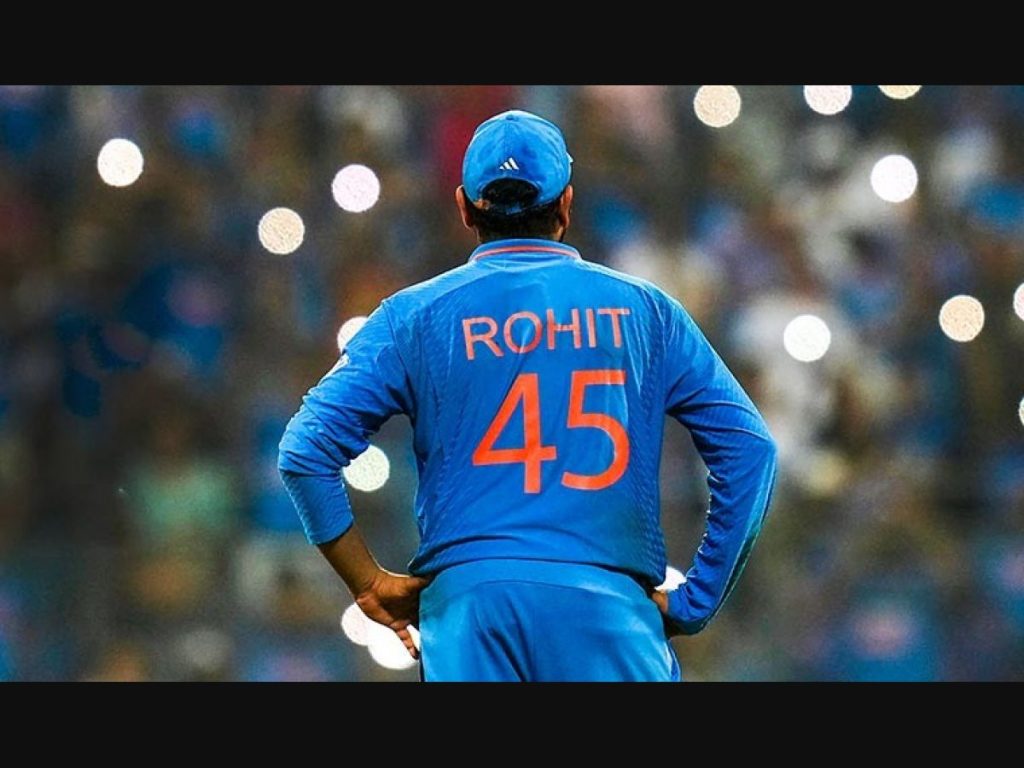
Management Learnings from ‘The Hitman’- Rohit Sharma

Captain Rohit Bhai

I earnestly believe that Team Sports at the highest levels provide a lot of learning for Corporate Management. There is no place to hide. It’s all out there happening in the open in an acutely competitive atmosphere. Goof-ups and crisis management; injuries and replacements; bonding and friction; Ups and downs; temperament and the Never Say Die spirit; leadership and rising up to the occasion; teamwork and collaboration; communication and defining roles; analytics and research; planning and execution. Hence my earlier blogs on ‘Management Lessons from Sports’, ‘The Gift of Captaincy’, and ‘Management Lessons from The Thala- MS Dhoni’- the last posted after CSK won a thrilling IPL final last year.

Rohit Sharma’s so-called laid-back demeanor hides the profound impact he has had both as a captain and batter for India and the IPL franchise. His affable, grounded, pragmatic approach has caught the attention of cricket pundits, cricketing legends, and cricket buffs all over the world. Some of the parallels with MSD are striking and The Thala’s influence is palpable. Rohit Sharma suddenly became the captain of Mumbai Indians in 2013 with Icons and seniors like Sachin Tendulkar, Ricky Ponting, Harbhajan Singh, and Malinga in the squad. Anil Kumble, then associated with MI, remembers that he was completely unfazed and self-assured. Like MSD with the India captaincy, he gave the stalwarts Respect and Space and seamlessly aligned them for the Team’s cause. The Mumbai side picked up its first IPL trophy in 2013. It was also in the same year that Dhoni promoted this middle-order batter to open for India in the Champions Trophy and the rest is history. The Rohit Sharma- Shikhar Dhawan partnership. Dinesh Karthick ( w/k batsman) who was also part of the MI team has observed that the omission from India’s 2011 World Cup team shook him up and he developed the quiet, steely resolve to make every match and tournament count.

‘I have tried to keep it simple. One thing- clear communication to the players. I have tried to make sure that they understand their roles and that’s what it’s all about. Understanding their roles  and going out there and performing their roles.’ Another page out of MSD’s Captaincy manual. Sadly in the corporate sector, there are many employees, especially on the front line who do not understand their roles, contributions, and value to the team, office, or organization as a whole. The positive energy of team synergy and getting the bigger picture is missing. In the vertical or silo systems embraced by many Companies in the Service Sector, the sense of disengagement is even more pronounced and bureaucracy kicks in. Customer Service is the first casualty.

The unique Rohit-bhai takeaway is ‘that there has to be a sense of relaxation as well because it is important to keep the atmosphere light and cheerful’.  But this coin has not dropped with some at the senior levels of corporate hierarchy and even at Board levels. Employee productivity and performance spike if the work atmosphere and culture are congenial- leading to better results and a more robust balance sheet. Virat Kohli calls Rohit ‘the funniest person in the Indian dressing room.’ His tapori language (Mumbai street lingo) and chilled-out behavior are both endearing and calming. The super intense Kohli seems to be enjoying his cricket as never before, laughing and joking with the team.  No overweening egos, no insecurity, no camps. Reaching out and Bonding. The Hitman and The King are Bros for the Indian cricket mission. True, the stump-mic has caught the captain scolding and using cuss words with some team members on the field. But as Rohit Sharma simply puts it, ‘It’s not to hurt anyone. It’s just to make sure they are on the job and are thinking about the team.’ Other funny stump-mic comments have gone viral. In the third T-20 match against Afghanistan he got off the mark with a boundary down the leg-side but umpire Virendra Sharma signalled leg-byes. He approached the umpire with ‘Arrey Viru, thigh-pad diya kya? Bat laga tha. Already mere do zero ho gaya.’ (Did you give it as leg-byes. It hit the bat. In my previous 2 innings I have got ducks.). The Indian commentators in the box doubled up laughing.

Listen in to the Skipper’s report card ( on YouTube -Cricket Boy) on how the Men in Blue performed in their magnificent 4-1 Test win against an England team on a Bazball roll. First, the series-defining partnership by Jurel and Kuldeep Yadav at Ranchi. The emotions around Sarfaraz Khan winning his India cap at the Rajkot Test.  How many years earlier he had played with the father Naushad in the Kanga league. Jaiswal’s dominating double century at Vizag. Bumrah’s 6-wicket spell in the same Test- reverse swinging the ball on a flat track in hot and humid conditions. The best fast-bowling display he has witnessed in India. The ‘legend’ of Ashwin and the brilliant return of the match-winning Kuldeep Yadav. Appreciative mentions of Gill and Jadeja. Special mention of how much he has enjoyed playing with these passionate young cricketers. No mention of his captaincy except to say that he had learned many things during the series. No mention of missing the likes of Kohli, Rahul, Shami, and Pant in the team. When have you last heard of a Corporate Captain being so warm and fulsome in his praise for his team? Teams matter. Corporate heads are representative of their teams. When the team performs well, a generous amount of credit rubs off on the leader.

Rohit-Bhai has been the Big Brother or the ‘Go-to’ man even before he was appointed as captain. You will see his hand over the shoulder of a dejected Kuldeep Yadav who had a bad day at the office. According to Parthiv Patel, ‘Rohit whole-heartedly supports his players even when they are grappling with difficulties demonstrating an unwavering faith in their abilities. There is an unparalleled sense of calmness in the team.’ He then refers to the case of Bumrah brought in by the MI scouts in 2014. By 2015, the management was pondering to send him back after half of the season. But the captain staunchly believed in his abilities and in 2016, the journey of India’s premier fast bowler across formats began. Likewise, Hardik Pandya’s entry in 2015 and after a lack-luster 2016 season many at MI were showing him the exit door. Again, the leader supports the player giving Pandya the chance to become the player he is today. Very ironic, isn’t it? Considering the recent developments at the franchise.

The Captain has to be a good mentor to bring about the best in her/his team. This is a critical attribute to anyone at the Senior or Middle Management levels handling a sizable team. Companies and Institutions unfortunately do not factor in this ‘X’ factor in the KRA’s and Appraisals. It’s all about numbers. So a person with a 15-year innings pops up on the radar as a Cost to Company (CTC). What the team leader is quietly doing daily behind the scenes is overlooked- training and motivating the team, sharing experiences, developing a second line- all fall through the cracks. One of the most critical attributes of an effective Manager- mentoring- is simply shrugged off.

R Ashwin’s exit from Team India after the second day of the Rajkot Test tells a heart-warming story. .The Test match was evenly poised and with the series itself at stake we have Rohit Sharma and Coach Rahul Dravid persuading their main bowler to take the BCCI arranged charter flight to Chennai to attend to his ailing, hospitalised mother. The star spinner then re-joins the Men in Blue on the 4th day of the Test with his recovering mother insisting that her son not let down the national cricket team. Little wonder, that in an emotional video posted on his YouTube channel Ashwin says, ‘I would give my life for him on the field, that’s the kind of captain he is.’ We have an increasing treadmill corporate culture where leave applications for genuine reasons are frowned upon and even family time on weekends is being compromised.

Rohit Sharma has a sharp cricketing brain and reads the game well. Zaheer Khan has this to say, ‘Rohit acts according to the situation, and many times they are different from what may have been planned in the run-up to the game.’ In corporate life also at times long-term planning and rigid structures become constrictive and hold back the Company from changing course pragmatically, especially in dynamic market conditions. Plus the Cool factor he brings to play. Hence no panic buttons after the disappointing loss at Hyderabad from a position of strength. Instead, a determined come-back to dismantle Bazball. Astute handling of bowlers and smart field placements frustrated the English batters and they collapsed like a pack of cards multiple times in the Test series. Another important learning is how the India captain did not hesitate to pick on the brains of key players like Bumrah and Ashwin. A good leader should be open to ideas and suggestions from the core-group and resonating from the ground. The Ivory Tower syndrome has to be avoided at all costs.

Leadership is not bequeathed through job titles or the size of the corner office. Every Corporate leader or Manager worth her/his salt has to earn the respect and trust of the team members by setting the right example and by leading from the front. ‘The Hitman’ ticks all the boxes across all formats of the game. A Test batting average of 45+ over 59 Tests, more than 10,000 runs over 292 ODI, and a Strike Rate of 92; almost 4000 runs in 151 T-20s at a Strike Rate of almost 140 which puts him in the Sehwag league. He has scored hundreds and double hundreds; changed games with his sixes and fours and played many cameo knocks which have made a difference. In the ODI World Cup 2023, he was the second-highest run-getter after Virat Kohli (765 runs in 11 innings) with 597 runs in 11 knocks. Many cricket commentators have lauded his totally unselfish approach of providing a rollicking start to the India innings. The ICC named him as captain of the ICC World Cup team which had 6 Indian players.

The other wonderful dimension he has brought to the game as a batter is the sheer elegance and power he brings to the crease. King Kohli says that ‘he has never seen anyone time the ball like him.’ Kapil Dev captures his Master-Class batting as,’ attractive, effortless and with all the time in the world.’ Sachin Tendulkar has observed to the effect ‘that once Rohit gets into the zone, the poor bowler does not know where to bowl.’ After he made it to ‘The Wisden 5 cricketers of the Year-2022 along with Bumrah) an article in the Almanack celebrated his sublime stroke play and especially highlighted his pull, cover drive, and back-foot punch as perfection.

There is a select group of corporates who have kept their eye on the ball – not losing sight of the fundamentals, the processes, and especially the people. But others focus only on the top-line and bottom-line and pay scant attention to the growing void at the centre.

Back to the Rohit Sharma story. The man who took the Mumbai Indians to 5 IPL titles has been abruptly replaced by Hardik Pandya. The transition could have been handled with more grace and transparency. Instead, it smacks of board-room intrigue, disrespect to the man who has contributed so much to the franchise, and a lack of basic decency and sporting spirit. However, the break from the burdens of leadership can prove to be a blessing in disguise. Fortunately for us, he remains the captain of the Men in Blue for the ICC T 20 World Cup later this year and if he keeps his focus and form we may see the Last Hurrah from Captain Rohit-Bhai at the World Test championship in June next year.

Three Aces

The 3 Aces- Ace of Clubs- Yashashvi Jaiswal, Ace of Hearts- Sarfaraz Khan, Ace of Spades- Dhruv Jurel

The ongoing Test series between India and England has been a humdinger. Enthralling cricket, ebbs and flows, high drama, scintillating performances with bat and ball, and the emergence of some special young talent. India’s 3-1 victory is one for the ages. On par with the 2001 series 2-1 win against an Aussie side at the top of their game and especially remembered for VVS Laxman’s epochal 281 at the Eden Gardens, Kolkata. Come to think of it the present bilateral Tests have some parallels with India’s ‘Miracle Down Under’ another 2-1 triumph under Rahane’s captaincy in 2021. The Men in Blue scripted the greatest comeback in Test match history with Kohli returning home after the first Test defeat. No Shami, no KL Rahul, and injuries to Bumrah, Jadeja, Umesh Yadav, Ashwin and Hanuma Vihari. The current India squad has no Kohli, KL Rahul, Shami and Rishabh Pant. The visitors also lost their spinner Jack Leach through a knee injury in the first test at Hyderabad.

The term Bazball is coined after England Team Coach Brendon McCullum’s nickname ‘Baz.’ It refers to the aggressive style of batting by English batters. It has worked well for the McCullum–Stokes partnership- 14 Test wins, 7 losses, 1 draw thus far. Remember they beat Pakistan 3-0 in Pakistan. England’s run rate in Test matches touched 4.76 per over, never matched in the history of the game. The Indian tour was seen as The Last Frontier for Bazball and obviously, it has come apart. Social media has gone crazy with ‘RIP Bazball’ & ‘Bazball meets its Waterloo’. After the 4th Test Indian fans had a field day, ‘Haar gaya Bazball, Jeet gaya Bat-Ball’ (Bazball loses, Bat-ball wins). But I salute McCullum- Ben Stokes for stoking life into Test cricket. It has become exciting again with twists and turns every session.

Now to the Three Aces. Their humble backgrounds, struggles, challenges, and sensational success have added an emotional and inspiring dimension to this Test contest. The cricket field has verily become their ‘Karmabhoomi.’ The 22-year-old Yashashvi Jaiswal’s (Ace of Clubs) tale has been aptly captured by the Forbes India headline, ‘From battling hunger to developing an insatiable hunger for runs’. A remarkable rags-to-riches story of a 10-year-old from a small town in UP relocating to Mumbai in search of his cricketing dreams. He first worked and stayed at a dairy shop but was fired because he was obsessed with the sport. Then he moved to one of the tents in Azad Maidan, Mumbai, and lived with the groundsman. He sold ‘pani-puri’ in the evenings to make ends meet. His parents repeatedly told him to come back home but he had marked his guard. In a 2018 interview with News 18, his mother Kanchan shared his response, ‘Main maidan mein he rahunga to sab kuch asan hoga. Subhe uthe he meri samne cricket hota hai’ (If I stay on the ground everything will be easy. As soon as I wake up I see cricket in front of me.).

Another challenge the boy had to face was the canard that he was over-age and had fudged his real age. Clubs and teams stayed away. Providentially, he was spotted by Jwala Singh who not only decided to train him but provided him with food and accommodation. The mentor/coach himself said in interviews, ‘I wanted to help him because his story is similar to mine. I also came from UP to Mumbai to play cricket so I know the kind of struggle he faced.’ In 2019, he became the youngest cricketer to score a List A club double century, then became the leading run-getter at the U 19 World Cup in 2020. He was then purchased by the Rajasthan Royals at the IPL auction for ₹ 2.4 crores which has now been bumped up to ₹ 4 crores.

In his debut Test Match against the Windies in 2023 he hit an elegant 171. In the ongoing Test series, he has scored 618 runs with two majestic double-hundreds. In the Vizag Test at 94, he walked down the track and lifted the ball over the long-on boundary. With the Dharamshala Test coming up he stands a good chance of beating Kohli’s series record of 655 runs on the England tour of India in 2016-17.  His idol Sachin Tendulkar celebrated his Vizag century celebration picture with the caption, ‘Yashashvi Bhava’ meaning may you see a lot of success.

This Test series is also flavoured with spicy tit-bits- one such served by Ben Duckett who smashed a masterful century at Rajkot in just 88 balls. The Indian opener Jaiswal dominated with an unbeaten 214 and equaled Wasim Akram’s world record of 12 sixes in a Test innings. Duckett claimed ‘that England deserved some credit for Jaiswal’s knock as his batting style followed ‘Bazball’. Commentators, pundits and social media went berserk. Joe Root’s reverse scoop of Bumrah which got him out was discussed ‘as the worst shot in England’s cricket history’. (Sky Sports)

Sarfaraz Khan’s (Ace Of Hearts) has been a long, gritty journey to his Rajkot Test debut. After he received his India cap he rushed to his Abbu and his wife who were cheering for him. He handed over the cap to Naushad Khan who kissed it. All were teary-eyed. A lump-in-the-throat scene straight out of a movie. Naushad Khan had played competitive cricket for Mumbai but could not make the national team. He was living his dreams through his son Sarfaraz. The jersey number of the debutant Test cricketer read 97. Say 9&7 separately in Hindi and you hear the father’s name. The latter is now a cricket coach not only to his sons Sarfaraz and Musheer but also to several aspiring youngsters at the Maidans. Young Sarfaraz was made to work on fitness, batting, bowling, and fielding. From early morning drills to specific diet plans he had to follow strict schedules. Naushad Khan has even set up a synthetic turf around his home in Kurla so that his sons don’t miss practice during monsoons.

At age 12, he scored a record-breaking 439 runs from 421 balls in the Harris Shield-Mumbai’s premier school tournament. He played for India u-19 in 2014 and was second highest scorer in the WC U-19 in 2016. He joined RCB in 2016 at a base price of 20 lacs and played some cameo innings. But questions about his fitness and body weight started doing the rounds. Unfortunately, he missed the IPL 2017 season because of an injury. He shifted to UP to play Ranji trophy and went off the radar. He became one of the many other domestic circuit players.

But the father-son duo didn’t give up.  A flood of runs in the Ranji Trophy-928 in the 2019-20 edition and 982 runs in 20-21 with an average of 82.83 still did not resonate with the national selectors. With some injuries in the Indian camp, Sarfaraz finally got a call to join the Indian squad for the current Test series. Critics were still talking about his body weight. His 50 of 48 balls in the first innings silenced them and his run-out at 62 because of a mix-up with Jadeja became a huge talking point.  The star all-rounder was trolled on social media for denying the debutant his maiden Test century. He apologized to both father and son. Drama and more drama. The aggressive 68 in the second innings also facilitated India’s massive win at Rajkot.

The India cap eluding them for years did not break their spirit. Naushad Khan gave it a beautiful, philosophical spin during his interview with Akash Chopra and several news channels,’ Raat ko  waqt do guzarne ke liye, suraj apne he samaye par niklega.’  Translated as ‘let the night pass at its own pace, the sun will rise at the set time.’ Destiny had planned a perfect time for Sarfaraz’s dream to come true.  He has also thanked Surya Kumar Yadav for insisting that he be physically present for the Rajkot match- a once-in-a-lifetime experience- if his son padded up for India. The only downside for this exciting batter is that for IPL 2024, no side bid for him at his base price of ₹ 20 lakhs. But hope still remains that with Shreyas Iyer and another player struggling with injuries, KKR may reach out to him.

The Third Ace.  Ace of Spades. Ranchi Test. England 353.  India struggling at 177 for 7 and is likely to be bundled out for under 200. England with a big lead wraps up the match and it’s 2-2 before the final Test. Dhruv Jurel in only his second international match scores a match-defining 90 and with Kuldeep Yadav keeps England’s lead down to 46. The rest is history. On reaching 50 he raises his hand in salute to his father Nem Chand Jurel, a retired Army Hawaldar and a Kargil war veteran. His humble background comes through in this story narrated by his father.’ He wanted a cricket kit bag but it was very expensive- some ₹6,000. “I said ‘Mat khelo, Itna paisa nahin hain’. (Leave the game. I don’t have so much money). But his mother decided to pawn her only gold chain and we managed to buy his kit bag.”

At the age of 14 he found his way alone to a cricket academy in Noida and to coach Phoolchand. The boy from Agra played for UP across age groups and became the vice-captain of the Indian team for the U-19 WC2020. By playing for his state in the Syed Mushtaq Ali tournament- India’s no 1 domestic T-20 championship- he caught the eye of the IPL scouts and was picked up by Rajasthan Royals in 2022 for a base price of 20 lakhs.(increased to Rs 50 lakhs for the 2024 season). He got his IPL breakthrough in 2023 and scored 152 runs at a strike rate of 172. His range of shots and ability to play under pressure brought him into the spotlight. The youngster himself says, ‘Hard work is a big thing. I am a big fan of manifestation and visualization.’ Hard Work!! The Rajasthan Royals Performance Director, Zubin Bharucha has revealed that before his Test debut Jurel batted for over 4 hours a day on different surfaces at the Rajasthan Royals High Performance Center at Nagpur. Coming in at No 8 in the 3rd Test he scored 46 runs.

Just reflect. His IPL SR of 172 and his Ranchi Test innings of 90 & 39 not out under immense pressure SR of 60.40 and 50.64. Calmness, composure, and temperament. Joe Root, his team-mate at RR has this to say, ‘His ability to strike cleanly and blast the ball to all parts is impressive. But to be able to transfer skills to the Test format means he has a very good technique. He is going to be a very good player for years to come.’

With just 15 first-class matches and not all of them as keeper, Jurel has been a revelation behind the stumps. Diving down the leg side, jumping high, or standing up to the stumps his dexterity and reflexes have stood out. Sunil Gavaskar was reminded of ‘a young MSD’ On a lighter note, Jamie Alter posed this question on a cricket podcast, ‘I ask that a wicket-keeper batsman playing at Ranchi and with close connection to the Indian Army, wins the Man of the Match award -which cricketer will come to mind.’ MSD of course. Also, listen in to Ben Stokes, ‘His keeping was something to watch. I think Ben Foakes (England keeper) has a little man crush on him there. There has been a real talent that has emerged in this Test Series and Jurel is one of them.’ England spinner Shoaib Bashir is another with his 8 wickets at Ranchi and a match-winning future ahead.

Cricket is the ultimate winner after these thrilling 4 Test encounters. Nasser Hussain, ‘That’s one of the things I have enjoyed most about this series from both sides. There has been a lot of character on the show and it has made for gripping cricket.’ Leaving the last word to Virat Kohli- his special message for Team India on X, ‘YES!!! Phenomenal series win by our young team. They showed guts, determination, and resilience.’

In a Tarot Card reading, Three Aces symbolize multiple new beginnings, opportunities, a fresh start, or a new environment. It also signifies a dramatic energy shift. May Test cricket regain its charm, popularity, and appeal! This will enhance the entire aura of the game across formats.

Bharat Ratna

Bharat Ratna- The Jewel of India

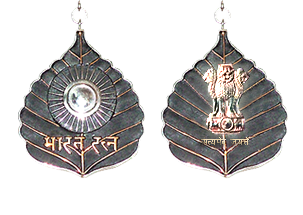
The Bharat Ratna, the highest civilian award in the country, was instituted in 1954. It is awarded in recognition of exceptional service/performance of the highest order in any field of human endeavour. No formal recommendation for the award is necessary. This is made by the Prime Minister himself to the President. The number of awards is restricted to 3 annually. On conferment of the award, the recipient receives the Sanad (Certificate) and a Medallion from the President. The award does not carry any monetary grant (Ministry of Home Affairs site- mha.gov.in).

The medallion is designed in the shape of a peepal leaf with the obverse having the Bharat Ratna inscribed in Devanagari script under the image of a sun. The reverse side has the motto, ‘Satyamev Jayate’ written under the Emblem of the State. The emblems, the sun and the rim of the medal are made of platinum whilst the inscriptions are in burnished bronze. The awards are created at the Kolkotta Alipore Mint along with the prestigious Padma awards and the Param Veer Chakra. The award is worn around the neck by a white ribbon.  An interesting fact is that the Bharat Ratna cannot be used as a prefix or suffix with the recipient’s name( India Today).

Let’s look at the subject in the context of the highest honours conferred in other democratic nations. The Presidential Medal of Freedom was established by President Kennedy in 1963. There have been 647 recipients and whilst it is a civilian award it can also be awarded to military personnel and worn on the uniform. An equivalent honour is the Congressional Gold Medal presented by the United States Congress.  Thus far 184 individuals and institutions have received this prestigious prize since 1776. If institutions also are considered for our highest award, the Indian Space Research Organisation (ISRO) will be a leading candidate.

The Legion of Honour is the highest decoration in France and is divided into 5 categories with the Grand Croix (Grand Cross) at the highest. This was instituted by Napoleon Bonaparte in the year 1802. On average 2000 French and 300 foreigners are decorated each year. And here lies the rub. Around 3000 French citizens have received the Grand Cross since inception averaging around 14 per year.  The current French population is around 7 crores. India has 140 crores. We are also 4X of the US population. The fact is that the Bharat Ratna and even the Padma awards have literally been rationed out.

70 years after the first awards were conferred; we have only 53 recipients of our highest civilian award. The limitation of a max of only 3 awards per year has brought us to this ridiculous situation. This limit has been breached by 4 awards in 1999 and 5 awards in 2024. Another big disappointment is that the Bharat Ratna was not awarded between 2020 and 2023. The award doesn’t need to be given every year.

Controversies related to the Bharat Ratna are all about political colour and affiliations. A few of the names in this ultimate roll-call of honour may make your eyebrows rise. Dr Radhakrishnan was conferred the honour in 1954 as a sitting Vice President. Sardar Patel, India’s first Home Minister and Deputy Prime minister, credited with the seminal achievement of preserving the Union of India was honoured posthumously only in 1991, four decades after his demise. PM Nehru was a recipient in 1955 with the Congress supporters and Nehruvian followers insisting that the President presented it to him suo-moto. Again, Smt Indira Gandhi was the Prime Minister in 1971 when she received the top honours. Earnestly hope that such an event does not happen again in the next few years. In 1992, Netaji Subhash Chandra Bose was awarded the Bharat Ratna reigniting controversies regarding his death. This was the only instance where the award was announced and withdrawn. This historical wrong should now be corrected.

There is no formal provision that the decoration be given only to Indian citizens. It has been conferred on a naturalised Indian citizen, Mother Theresa in 1980, which begs the question as to why it has not yet been conferred on the Dalai Lama. The two foreign recipients are Abdul Ghaffar Khan, born in British India, but a Pakistani citizen at the award ceremony in 1987; the other being the iconic South African leader and President Nelson Mandela. Whilst the Pakistani national received India’s highest honour, Dilip Kumar got the Nishan-e-Imtiaz (Pakistan’s highest civilian honour) in 1998. Here’s hoping that India’s first ‘Method Actor’ Dilip Saab moves from the Padma Vibhushan award in 2015 to a richly deserved Bharat Ratna, albeit posthumously. Surprise, Surprise!!  Morarji Desai remains the only Indian honoured with both the Bharat Ratna and the Nishaan-e-Pakistan (the second-highest civilian award in Pakistan).

The one Mega film star to make this august list is M G Ramachandran (MGR) who also became Chief Minister of the State of Tamil Nadu. But overlooked is his Telugu counterpart N T Rama Rao, ‘the God of Telugu Cinema’ not only because of his stirring portrayals of Lord Ram and Lord Krishna but also of several inspiring historical characters. His huge following also made him the Chief Minister of the then Andhra Pradesh. Dr Rajkumar was the colossus of the Kannada film industry- an accomplished playback singer, the SuperStar in more than 200 hit films and a social-cultural symbol in the State like none other. Vara Nada (Gifted Actor) and Bangarada Manushya (Man of Gold) for his legion of fans. The top civilian award also eluded Sivaji Ganesan, hailed as Nadigar Thilagam (Prince of Actors) in the Tamil film industry. His versatility and brilliance in over 280 films have made him the inspiration for generations of Tamil and Indian actors after him. The venerated Mohanlal and Manmooty from Malayalam cinema should also make the shortlist for the Bharat Ratna awards.

Winner of the first National Award in 1967 for Best Actor, Mahanayak Uttam Kumar is the most successful and influential actor in Bengali film history. His name will add lustre to the top national honour. As will that of the consummate actress Suchitra Sen who co-starred with him in many memorable films. Another name that readily comes to mind- the accomplished actress and dancer from Hindi films, Waheeda Rehman.

No case needs to be made for Amitabh Bachchan, ‘The Star of the Millenium’. A real anecdote will suffice. In the 1980’s when his stardom was at its peak, the stunned Egyptian film industry came up with the decree that no Indian film should be allowed a consecutive run of more than 4 weeks. The Soft Power of Indian Cinema was first exemplified by Raj Kapoor whose films ‘Awara’ ( 1951) and ‘Shree 420’ ( 1955) captivated audiences across the Soviet Union and China. The celebrated Satyajit Ray remains the only filmmaker in the list of 53 recipients thus far. Guru Dutt the maker of internationally acclaimed films like ‘Pyaasa’ and ‘Kaagaz Ke Phool’ has also been ignored. Let recognition be delayed, but not denied. Rajamouli Garu and Mani Ratnam are also staking their claims for this highest accolade. But are the powers- that- be paying any attention?!

Lata Mangeshkar’s golden voice floated in the air when the award was conferred on her in 2001. Classical Maestros like Bhimsen Joshi, Bhupen Hazarika, M S Subbalakshmi and Ravi Shankar have also been so honoured. But surely cherished household names Mohammad Rafi Saab, Kishore Kumar and Asha Bhosle do not have to prove ‘ their performance of the highest order’ in their artistic space. The sublime voice of S P Balasubramaniam has not only captivated South Indian film audiences but also those of popular Hindi cinema. Kerala’s iconic singer KJ Yesudas has sung mellifluously in multiple Indian languages and bagged 8 National Awards. Tabla maestro Zakir Hussain after 3 Grammy Awards is again knocking on the door.

In 2014, Sachin Tendulkar became the youngest recipient and the only sportsman to make the honour list. You may well ask- what about Sunil Gavaskar who scored tons of runs against the dreaded West Indian fast bowlers without wearing a helmet?! Or Kapil Dev, lifting the World Cup at Lords in 1983, which remains to this day the most seminal moment in Indian cricket history. Five times World Champion Vishwanathan Anand’s name does not make the honour list – shocking in a country which invented the game of chess in the 6th century Gupta period. To a forgotten hockey hero Balbir Singh Sr part of the Olympic gold medal winning teams in 1948, 1952 and again as captain in 1956. Eligible for the Bharat Ratna- a no-brainer one would think!! Mary Kom, bronze medallist at the 2012 Olympics and the most successful boxer in the history of the World Championships also deserves the highest civil recognition in India,

A welcome news has been of the late PM Narasimha Rao being awarded the Bharat Ratna for opening up and liberalising the Indian economy in the early 1990s. Surely his partner in arms Dr Manmohan Singh, Finance Minister and architect of critical economic reforms in a major crisis situation deserves the same laurels. Jan Nayak and ex-Bihar CM Karpoori Thakur’s belated recognition also raise hope that Odisha CM Naveen Patnaik gets his place in the sun. The hugely popular Naveen Babu’s administration (+ NDMA) handling of recurrent cyclones has been highlighted as the model for disaster management globally. His initiatives have pulled his State from its acute poverty and Naxal insurgencies and made it an attractive FDI and Domestic investment destination. Add to this the sponsoring of the Indian men’s and women’s hockey teams till 2033 and it remains for the Honourable Prime Minister to take the right call.

The socialist/leftist mindset that prevailed for over 5 decades ensured that only JRD Tata received the Bharat Ratna award as a hugely respected business leader.  Ratan Tata has followed in his footsteps through generous philanthropy, especially in health care and education and the Tata Group is now valued at $370 billion which is more than the current GDP of Pakistan, estimated at $341 billion by the IMF. Azim Premji at Wipro and Narayana Murthy at Infosys ushered in the IT revolution in India. Nandan Nilekani, a co-founder at Infosys, is also known as the father of the Aadhar Card (Unique Identity for Indian citizens) which along with the digital revolution and Unified Payments Interface (UPI)I has been the ultimate game-changer for the economy, trade and business and for e-governance. Capitalists and Business Houses are not the derisive words as bandied around in the license-raj times from the 1950s to the late 1980s.  All these gentlemen are now seen as role models and champions of a resurgent India.

Also missing from the list of awardees are extraordinary personalities like the late Ela Bhatt, labour lawyer and organiser par-excellence, who formed SEWA- Self Employed Women’s Association- a trade union for women workers in India’s huge informal sector. What about Verghese Kurien, the architect of India’s ‘white revolution’, which transformed the country from an importer of dairy products to the world’s largest milk producer through a system of farmer’s co-operatives – pushing out the middlemen. Another hero who deserves the highest laurels posthumously is Dr Govind Venkataswamy, the founder of the Aravind Eye Hospital, Madurai. Internationally reputed for its high quality, high volumes and low-cost service model. Do these worthies come up to the criteria of ‘exceptional service/ performance of the highest order’?! –the key requirement for the Bharat Ratna award.

‘Extraordinary contribution in any field of human endeavour.’ If you are the Prime Minister will you recommend Salim Ali, India’s celebrated ornithologist and naturalist- known as ‘the Birdman of India.’ Or Kailash Sankhala noted wild-life conservationist, whose passionate efforts virtually saved the Indian tiger from becoming extinct. Or Rajendra Singh, who renewed traditional techniques for storage and conservation of water in hundreds of villages in Rajasthan and made them inhabitable again.

The above is merely a wish-list of some richly deserving individuals who have been overlooked. You will have your own opinions and your own choices. Respect. The bottom line is that the entire process and dimension and scale of evaluating India’s most prestigious award needs to be revisited and revamped.

Restricting the Bharat Ratna to a quota of 3 awards per year beggars disbelief in a nation of 140 crore Indians. 15 awards annually, including posthumous recognition, is the least correction to be made. Having a jury of 12 upstanding and accomplished citizens from various walks of life to recommend 30 deserving names to the Prime Minister for his final review and selection will greatly enhance the aura of the awards. Let’s celebrate the extraordinary achievements and influence of this unique group of Indians- without distinction of race, caste, creed, occupation, position or gender. Let’s celebrate the Naya Bharat.