
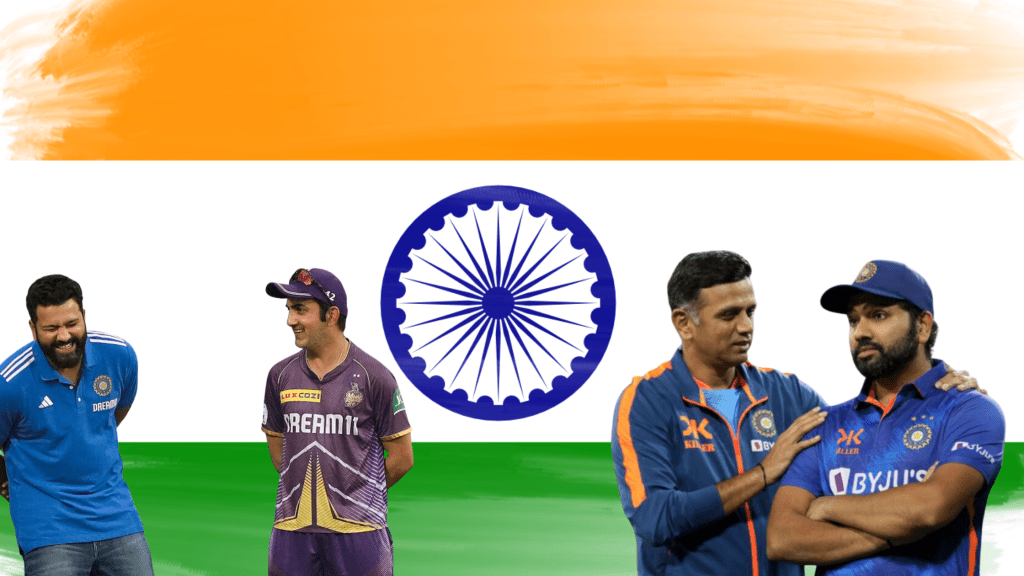
Head Coach Gautam Gambhir will have to climb THE WALL

Gautam Gambhir, the new Head Coach, has big shoes to fill. In a sense, he will have to climb up The Wall to make his impact felt. He does have an impressive resume. He played for India in all game formats from 2003 to 2016. World Cup trophy winner with the T-20 squad in 2007 & ODI team in 2011. A big match player- remember his match-winning 75 from 54 balls in the 2007 finals against Pakistan & the resilient 97 out of 122 balls in the WC 2011 finals against Sri Lanka. He captained KKR to the IPL titles in 2012 and 2014 and mentored them in 2024. A strong, outspoken personality, he will be taking over a champion Indian cricket team, which has been two years in the making and with complete focus on the ICC Champions Trophy and World Test championship in 2025.

GG is an ardent admirer of Anil Kumble, India’s spinning legend. He regards him as the best captain he has played under, with his honesty and impeccable dedication to the cause of Indian cricket and The Men in Blue. The same Anil Kumble was sacked as coach in 2017 because of differences with Captain Kohli, who replaced him with his man, the flamboyant Ravi Shastri. Interestingly, Head Coach Gambhir will have a big say in the appointment of the Indian captain, too.

Let’s talk about Rahul Dravid- The Wall.  What makes him such an Icon across the cricketing world? He is one of the most incredible batters of all time (Tests & ODI), and he also holds the record for the most catches in Test cricket history- 210 in 164 matches. When he went out to bat, one could see the Indian tricolour fluttering behind him. Navjot Sidhu famously said,’ Rahul is a person who will walk on broken glass if his team wants him to.’ Brain Lara has declared that ‘if I have to put anyone to bat for my life, it will be Kallis or Dravid.’ In today’s times when aggression is all about pumping fists or cussing opponents listen in to Mathew Hayden, ‘all these things going around is not aggression. If you really want to see aggression look into Dravid’s eyes.’ ++ the Gentleman Cricketer. Ganguly has hailed him as ‘a champion at everything. I am very impressed with the way he approaches life.’ As Brett Lee has wryly observed,’ If you can’t get along with Rahul Dravid, you are struggling in life.’

His contribution to Indian cricket has been immense. Head of cricket with National Cricket Academy (NCA), Coach of India U-19 and India A teams. He has groomed and mentored many of India’s current cricket stars. Tendulkar has called him ‘the perfect role model for youngsters.’ So the spontaneous chorus from Ganguly, Sehwag, Tendulkar, Irfan Pathan, and Laxman…of ‘ Win the WC for Dravid’ is not surprising at all.

The serene drive of Dravid plus the calm, grounded passion of Rohit Sharma made for a great partnership since Feb 2022, when the latter was made captain across all formats. Their deep rapport is shown by the fact that the Skipper persuaded the Coach to stay on after the 19th Nov 2023 debacle- a call acknowledged with gratitude by Dravid after the recent T20 WC Redemption win. The Hitman has been a remarkable leader. Think of the position after 15 overs. South Africa batting with six wickets in hand and 30 runs to get in 30 balls, and India had a 3.35% chance of winning. Bumrah, Hardik and Arshdeep all rising to the occasion and not panicking under intense pressure. The Indian fielders totally living in the zone. Bumrah revealed that the Indian Skipper gave his players a lot of freedom. ‘Rohit Sharma has been absolutely phenomenal. Even in the previous World Cup, you know he has been proactive; he gives a lot of freedom to his players, and he lets them express themselves.’ A selfless, fearless captain for whom personal milestones and records don’t matter. Everything for Team India and the Nation. Nasser Hussain sees his leadership as ‘Iron Fist in a Velvet Glove.’ Everyone knows who is in charge, but he is a Big Brother, too, especially for the younger players. Rohit Bhai!  Rohit Sharma imitated the Messi Walk as he went up to receive the trophy, which rang so true. Two champion sportsmen so desperate to win the big one for their countries and their teams. (inspired by the video Ric Flair of WWE with the same music in the background).

His cricketing sense also comes through, with the well-thought-out selection of the team (with Head Coach & Ajit Agarkar and the team of selectors) and an astute reading of the wicket, conditions, and the state of the game. Remember his comments about bowling a line where the batter has to hit against the winds in the Caribbean islands? Remember his captaincy when the Bazball- high-adrenaline English Test team came to India to conquer The Last Frontier and stumbled badly. The Hitman’s final mission is winning the World Test Championship to be played at Lords in June 2025.

Cricket is a Team Sport, and the recent T20 WC championships showcased Indian cricket at its best. From the camaraderie and defining roles in the dressing room to the indomitable team spirit and clinical execution on the cricket field. The head coach and support staff play integral roles. So, you have King Kohli, who had a disappointing run in the tournament, coming up with a classy, match-winning 76 when it mattered the most ;Axar Patel’s critical 47 of 31 balls with 4 sixes to keep India in the game. Arshdeep Singh ended up as India’s top wicket-taker with 17 wickets. The same Arshdeep was viciously trolled for dropping a catch against Pakistan at the Asia Cup just 2 years back. Bumrah, with 15 wickets, deservedly became the Player of the Tournament (the first to do so without scoring a single run)—a genius of his craft. An extraordinary defensive-attacking bowler, he was not only exceptional in cutting the flow of runs but also a relentless wicket-taking threat. Michael Vaughan has called him ‘the greatest white ball bowler ever.’ This T20 WC will also be remembered for Hardik Pandya’s stirring comeback after months of booing and trolling for replacing Rohit Sharma as MI captain. He had a forgettable IPL season where his team finished at the bottom. Sanjay Manjrekar heard him ‘say something to the effect of having risen above results and losing the fear of failure.’ Kudos to Hardik for showing such tenacity and resilience and to him and Arshdeep for vanquishing the troll armies by performing on the biggest stage. However, Pandya’s resurgence in form also speaks volumes of the warm bonding in the dressing room. Something for him to imbibe and take forward. Surya Yadav, Kuldeep Yadav, Rishabh Pant, and Axar Patel have had their days and moments. Kapil Dev’s catch to dismiss Viv Richards in the 83 WC has become part of Indian cricket folklore. I hope Surya Yadav’s amazing, game-changing catch will also be celebrated by replays on sports channels and TV videos for months to come.

Gambhir is very forthright in his views. Very refreshing. He talks about how every Team India player in the dressing room is essential and how broadcasters and media influencers build up one or two cricketers into brands by overshowing them to the detriment of other performers and national team members. The majority of the Men in Blue end up in the shadows. The broadcaster justifies this for TRP, advertising revenues, and social media outlets to mobilise followers and monetise the podcasts. So, this celebrity culture has made some cricketers bigger than the game of cricket itself. Think about Sachin Tendulkar, MS Dhoni and King Kohli. Underplayed are champions like Yuvraj Singh, R Ashwin, Anil Kumble, Sehwag and even ‘The Miracle Down Under’ series under Ajinkya Rahane’s captaincy.

He is also bang on about cricket in India being all about batters. Heavy bats, smaller boundaries, and flat tracks present arduous, uphill tasks for the bowlers. GG wants the white ball change after 25 overs in ODI’s to be reversed as it undermines wrist spinners. It’s really heartening to watch a top Indian batter ask if we as fans know and appreciate that Zaheer Khan took 21 wickets in 9 matches to contribute to India’s triumph in WC 2011. I sincerely hope that Zaheer Khan becomes the new bowling coach. He has a sharp cricketing brain and is respected by the players. One of the memorable features of the T20 WC has been the intense bat-ball contest. So, will Boom Boom Bumrah ever get the massive cult following of Virat Kohli? I seriously doubt it. In our country, batters are the real heroes. All others are just the supporting cast.of actors. It doesn’t really resonate that Shami took 23 wickets in just 6 games to take us to the final of the 2023 ODI WC final. Our sports channels and pundits will spend one episode on such an achievement and then jump back onto the gravy bandwagon. Sad!  A Murali and Malinga are still revered in Sri Lanka; a Wasim Akram and Shoaib Akhtar are still feted in Pakistan.

Moreover, despite his vote for the IPL as a resounding success story for Indian cricket, Gambhir is emphatic that it all boils down to the Indian cricket team dominating all formats of the game and winning the ICC silverware. Hence, even with IPL throwing up some talented players for the shortest format, selectors will look at domestic cricket performances like the Ranji Trophy for Test cricket and the Vijay Hazare and Syed Mushtaq Ali for white-ball tournaments. To win the Indian cap and jersey, aspiring players must go through the grind to the extent the cricket schedules and injury lay-offs allow. It won’t be easy for IPL-fixated cricketers looking for easy money, glamour, and a green channel route to the national side.

A big Thank You to The Wall & The Hitman for putting Indian cricket on the right track and lifting a WC trophy after a hiatus of 11 years. It remains to be seen whether Rohit Sharma remains the Test and ODI captain. I sincerely hope he does. He has fuel in the tank for another year of international cricket. An interesting change at the Coach level will be the change in approach. Rahul Dravid lived and breathed the spirit of The Gentleman’s Game. The hardnosed GG has his own take on playing hard within the laws and rules of the game. Hopefully, with Gambhir and his chosen support staff, exciting and winning times will be ahead. Indian cricket should be hailed as a superpower not only because of immense financial clout and a humongous fan following but also because our cricket team consistently wins major ICC trophies and bilateral series, especially on SENA tours (South Africa, England, New Zealand, Australia).

You can also read: Management Learnings from ‘The Hitman’- Rohit Sharma
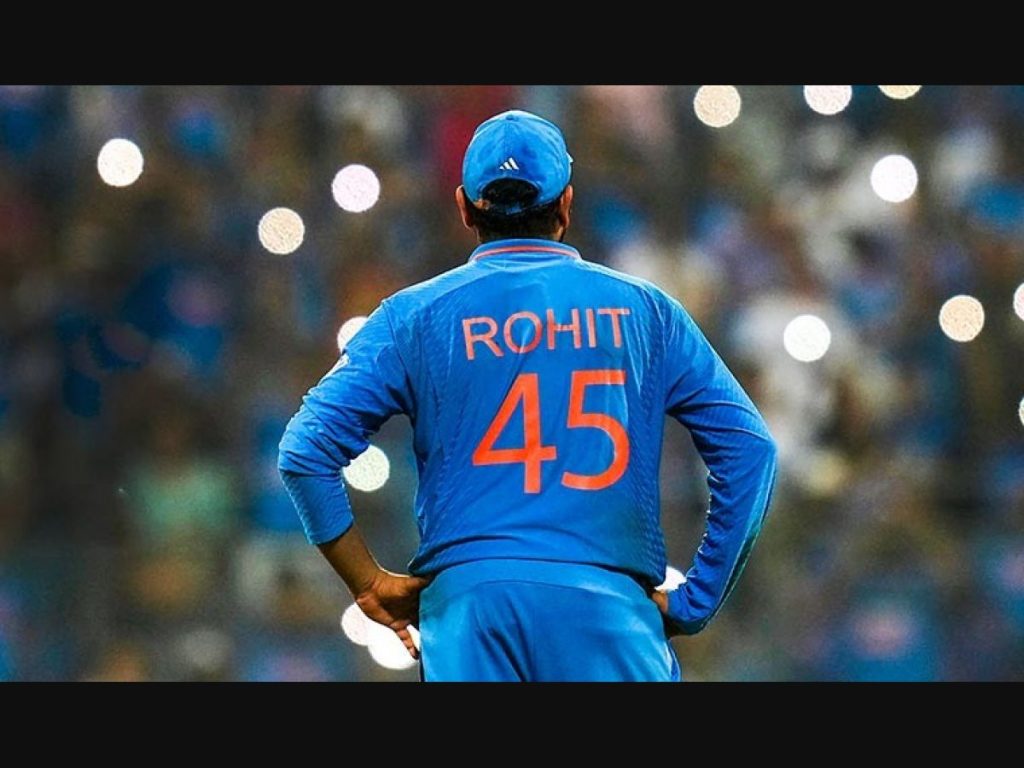
Management Learnings from ‘The Hitman’- Rohit Sharma

Captain Rohit Bhai

I earnestly believe that Team Sports at the highest levels provide a lot of learning for Corporate Management. There is no place to hide. It’s all out there happening in the open in an acutely competitive atmosphere. Goof-ups and crisis management; injuries and replacements; bonding and friction; Ups and downs; temperament and the Never Say Die spirit; leadership and rising up to the occasion; teamwork and collaboration; communication and defining roles; analytics and research; planning and execution. Hence my earlier blogs on ‘Management Lessons from Sports’, ‘The Gift of Captaincy’, and ‘Management Lessons from The Thala- MS Dhoni’- the last posted after CSK won a thrilling IPL final last year.

Rohit Sharma’s so-called laid-back demeanor hides the profound impact he has had both as a captain and batter for India and the IPL franchise. His affable, grounded, pragmatic approach has caught the attention of cricket pundits, cricketing legends, and cricket buffs all over the world. Some of the parallels with MSD are striking and The Thala’s influence is palpable. Rohit Sharma suddenly became the captain of Mumbai Indians in 2013 with Icons and seniors like Sachin Tendulkar, Ricky Ponting, Harbhajan Singh, and Malinga in the squad. Anil Kumble, then associated with MI, remembers that he was completely unfazed and self-assured. Like MSD with the India captaincy, he gave the stalwarts Respect and Space and seamlessly aligned them for the Team’s cause. The Mumbai side picked up its first IPL trophy in 2013. It was also in the same year that Dhoni promoted this middle-order batter to open for India in the Champions Trophy and the rest is history. The Rohit Sharma- Shikhar Dhawan partnership. Dinesh Karthick ( w/k batsman) who was also part of the MI team has observed that the omission from India’s 2011 World Cup team shook him up and he developed the quiet, steely resolve to make every match and tournament count.

‘I have tried to keep it simple. One thing- clear communication to the players. I have tried to make sure that they understand their roles and that’s what it’s all about. Understanding their roles  and going out there and performing their roles.’ Another page out of MSD’s Captaincy manual. Sadly in the corporate sector, there are many employees, especially on the front line who do not understand their roles, contributions, and value to the team, office, or organization as a whole. The positive energy of team synergy and getting the bigger picture is missing. In the vertical or silo systems embraced by many Companies in the Service Sector, the sense of disengagement is even more pronounced and bureaucracy kicks in. Customer Service is the first casualty.

The unique Rohit-bhai takeaway is ‘that there has to be a sense of relaxation as well because it is important to keep the atmosphere light and cheerful’.  But this coin has not dropped with some at the senior levels of corporate hierarchy and even at Board levels. Employee productivity and performance spike if the work atmosphere and culture are congenial- leading to better results and a more robust balance sheet. Virat Kohli calls Rohit ‘the funniest person in the Indian dressing room.’ His tapori language (Mumbai street lingo) and chilled-out behavior are both endearing and calming. The super intense Kohli seems to be enjoying his cricket as never before, laughing and joking with the team.  No overweening egos, no insecurity, no camps. Reaching out and Bonding. The Hitman and The King are Bros for the Indian cricket mission. True, the stump-mic has caught the captain scolding and using cuss words with some team members on the field. But as Rohit Sharma simply puts it, ‘It’s not to hurt anyone. It’s just to make sure they are on the job and are thinking about the team.’ Other funny stump-mic comments have gone viral. In the third T-20 match against Afghanistan he got off the mark with a boundary down the leg-side but umpire Virendra Sharma signalled leg-byes. He approached the umpire with ‘Arrey Viru, thigh-pad diya kya? Bat laga tha. Already mere do zero ho gaya.’ (Did you give it as leg-byes. It hit the bat. In my previous 2 innings I have got ducks.). The Indian commentators in the box doubled up laughing.

Listen in to the Skipper’s report card ( on YouTube -Cricket Boy) on how the Men in Blue performed in their magnificent 4-1 Test win against an England team on a Bazball roll. First, the series-defining partnership by Jurel and Kuldeep Yadav at Ranchi. The emotions around Sarfaraz Khan winning his India cap at the Rajkot Test.  How many years earlier he had played with the father Naushad in the Kanga league. Jaiswal’s dominating double century at Vizag. Bumrah’s 6-wicket spell in the same Test- reverse swinging the ball on a flat track in hot and humid conditions. The best fast-bowling display he has witnessed in India. The ‘legend’ of Ashwin and the brilliant return of the match-winning Kuldeep Yadav. Appreciative mentions of Gill and Jadeja. Special mention of how much he has enjoyed playing with these passionate young cricketers. No mention of his captaincy except to say that he had learned many things during the series. No mention of missing the likes of Kohli, Rahul, Shami, and Pant in the team. When have you last heard of a Corporate Captain being so warm and fulsome in his praise for his team? Teams matter. Corporate heads are representative of their teams. When the team performs well, a generous amount of credit rubs off on the leader.

Rohit-Bhai has been the Big Brother or the ‘Go-to’ man even before he was appointed as captain. You will see his hand over the shoulder of a dejected Kuldeep Yadav who had a bad day at the office. According to Parthiv Patel, ‘Rohit whole-heartedly supports his players even when they are grappling with difficulties demonstrating an unwavering faith in their abilities. There is an unparalleled sense of calmness in the team.’ He then refers to the case of Bumrah brought in by the MI scouts in 2014. By 2015, the management was pondering to send him back after half of the season. But the captain staunchly believed in his abilities and in 2016, the journey of India’s premier fast bowler across formats began. Likewise, Hardik Pandya’s entry in 2015 and after a lack-luster 2016 season many at MI were showing him the exit door. Again, the leader supports the player giving Pandya the chance to become the player he is today. Very ironic, isn’t it? Considering the recent developments at the franchise.

The Captain has to be a good mentor to bring about the best in her/his team. This is a critical attribute to anyone at the Senior or Middle Management levels handling a sizable team. Companies and Institutions unfortunately do not factor in this ‘X’ factor in the KRA’s and Appraisals. It’s all about numbers. So a person with a 15-year innings pops up on the radar as a Cost to Company (CTC). What the team leader is quietly doing daily behind the scenes is overlooked- training and motivating the team, sharing experiences, developing a second line- all fall through the cracks. One of the most critical attributes of an effective Manager- mentoring- is simply shrugged off.

R Ashwin’s exit from Team India after the second day of the Rajkot Test tells a heart-warming story. .The Test match was evenly poised and with the series itself at stake we have Rohit Sharma and Coach Rahul Dravid persuading their main bowler to take the BCCI arranged charter flight to Chennai to attend to his ailing, hospitalised mother. The star spinner then re-joins the Men in Blue on the 4th day of the Test with his recovering mother insisting that her son not let down the national cricket team. Little wonder, that in an emotional video posted on his YouTube channel Ashwin says, ‘I would give my life for him on the field, that’s the kind of captain he is.’ We have an increasing treadmill corporate culture where leave applications for genuine reasons are frowned upon and even family time on weekends is being compromised.

Rohit Sharma has a sharp cricketing brain and reads the game well. Zaheer Khan has this to say, ‘Rohit acts according to the situation, and many times they are different from what may have been planned in the run-up to the game.’ In corporate life also at times long-term planning and rigid structures become constrictive and hold back the Company from changing course pragmatically, especially in dynamic market conditions. Plus the Cool factor he brings to play. Hence no panic buttons after the disappointing loss at Hyderabad from a position of strength. Instead, a determined come-back to dismantle Bazball. Astute handling of bowlers and smart field placements frustrated the English batters and they collapsed like a pack of cards multiple times in the Test series. Another important learning is how the India captain did not hesitate to pick on the brains of key players like Bumrah and Ashwin. A good leader should be open to ideas and suggestions from the core-group and resonating from the ground. The Ivory Tower syndrome has to be avoided at all costs.

Leadership is not bequeathed through job titles or the size of the corner office. Every Corporate leader or Manager worth her/his salt has to earn the respect and trust of the team members by setting the right example and by leading from the front. ‘The Hitman’ ticks all the boxes across all formats of the game. A Test batting average of 45+ over 59 Tests, more than 10,000 runs over 292 ODI, and a Strike Rate of 92; almost 4000 runs in 151 T-20s at a Strike Rate of almost 140 which puts him in the Sehwag league. He has scored hundreds and double hundreds; changed games with his sixes and fours and played many cameo knocks which have made a difference. In the ODI World Cup 2023, he was the second-highest run-getter after Virat Kohli (765 runs in 11 innings) with 597 runs in 11 knocks. Many cricket commentators have lauded his totally unselfish approach of providing a rollicking start to the India innings. The ICC named him as captain of the ICC World Cup team which had 6 Indian players.

The other wonderful dimension he has brought to the game as a batter is the sheer elegance and power he brings to the crease. King Kohli says that ‘he has never seen anyone time the ball like him.’ Kapil Dev captures his Master-Class batting as,’ attractive, effortless and with all the time in the world.’ Sachin Tendulkar has observed to the effect ‘that once Rohit gets into the zone, the poor bowler does not know where to bowl.’ After he made it to ‘The Wisden 5 cricketers of the Year-2022 along with Bumrah) an article in the Almanack celebrated his sublime stroke play and especially highlighted his pull, cover drive, and back-foot punch as perfection.

There is a select group of corporates who have kept their eye on the ball – not losing sight of the fundamentals, the processes, and especially the people. But others focus only on the top-line and bottom-line and pay scant attention to the growing void at the centre.

Back to the Rohit Sharma story. The man who took the Mumbai Indians to 5 IPL titles has been abruptly replaced by Hardik Pandya. The transition could have been handled with more grace and transparency. Instead, it smacks of board-room intrigue, disrespect to the man who has contributed so much to the franchise, and a lack of basic decency and sporting spirit. However, the break from the burdens of leadership can prove to be a blessing in disguise. Fortunately for us, he remains the captain of the Men in Blue for the ICC T 20 World Cup later this year and if he keeps his focus and form we may see the Last Hurrah from Captain Rohit-Bhai at the World Test championship in June next year.

Is the Indian Cricket Team on the Cusp of Greatness?

(File image: Reuters)

After the miracle Down-Under and the wins against England at home, many pundits and fans have already anointed India as the champion cricket team. Ravi Shastri’s bombast adds to this somewhat pre-mature exuberance and celebrations. However, Ian Chappell’s recent observations brings a positive perspective and a lot of cheer and hope for the Indian cricket follower. “India have finally got the equation right and as long as they can avoid the pitfalls often associated with continuing success, they are better equipped than any other team to produce an era of dominance. The rest of the cricketing world.Beware!”

To be hailed amongst the all-time great teams India would need to show its class against quality opposition on their turf. And demonstrate supremacy on home soil. Really perform on the big occasions. Across the 3 formats- Tests, ODI’s, T20 cricket.

An objective look at our recent track record against the SENA nations (South Africa, England, New Zealand, Australia), shows that Indian cricket still has much to conquer. (0-1) Australia in 2015, (1-2) SA 17-18, (1-4) England 2018, (2-1) Australia 2018 and (0-2) New Zealand 2019-20. The Australian tour win be seen in the context of the host side shaken by the sandpaper-gate scandal and without their best batsmen Smith and Warner. Nine of our overseas Test wins have been against Sri Lanka (5) and the West Indies (4) languishing at the bottom of the table. Also take cognisance of our semi-final exits in the 2016 T 20 WC and the 2019 ODI WC.

The West Indies cricket team under Lloyd and Richards dominated cricket from the late 70’s till the end of the 80’s. They comprehensively won on all the Australia tours, only drawing the 1981-82 series (1-1). From 1976 onwards, they beat England in England decisively including a 5-0 blackwash in 1984. India, considered a difficult place to tour, lost (0-3) in 1983-84 followed by a (1-1) draw in 1987. Under Viv Richards they did not lose a Test series from 1984-91.

The Windies transformed themselves from a bunch of easy-going Calypso cricketers to a charismatic band of winners. Their sheer athleticism, ability to play exhilarating and attacking cricket, improvise and control the game changed cricket itself. The lethal pace quartet revolutionised the sport and the Caribbean impact was such that to this day cricket buffs can recall the names of all the players  in their squad and not just the marquee ones.The men in the maroon caps had also won the first 2 editions of the ODI WC in 1975 and 79 before losing to India in the memorable final in 83.

The Aussies under Steve Waugh and Ricky Ponting were world beaters for almost a decade. They won the ODI trophy in 1999, 2003 and 2007. Awesome!!! Championship titles in 2006 and 2009. Their record in the other SENA countries is impressive. Under Waugh they won 8 out of 9 Ashes Tests, losing only one. Also, he led them to 15 of their record 16 consecutive  victories. England beat Ponting’s XI in a thrilling 2005 Ashes series (2-1) but they exacted a 5-0 whitewash revenge at home in 2006- 07. The stamp of Aussie dominance can be gauged by the fact that Ponting is the only cricketer in history to be a part of 100 Test victories. The next 6 top players with most Test wins are all Australians who were intrinsic parts of the great teams of the late ‘90’s-2000’s.

This Aussie era was marked by ruthless efficiency and driven by cold-blooded scientific analysis and planning. Sledging also reached its peak as winning was everything. But other than Waugh and Ponting others like Gilchrist and Hayden and McGrath and Warne have also left huge shadows on the cricketing grounds.

A few interesting nuggets for Indian buffs. Waugh’s winning streak ended at the Eden Gardens on the classic tour of India in2001. (2-1 for india) The Aussies could not breach the Last Frontier. Ricky Ponting never won a Test match in India, played 7 and lost 5. But under his captaincy from 2005 to 2008 there was a second incredible show of dominance over 22 undefeated matches and 20 wins. India again played the Spoiler at Perth in one of Indian cricket’s most famous overseas wins.

2008-14 was the golden age of Spanish football.  Spain topped FIFA rankings for 6 years winning the UEFA Championships in 2008 & 2012 and the FIFA World Cup in 2010. The first team to win 3 consecutive world trophies. From 2010-13 they went undefeated for 29 games. And the Spanish team scored the highest maximum points for WC qualification- 30 out of 30. The star players were mainly drawn from Barcelona and Real Madrid, bitter rivals in the domestic La Liga. But they combined as a team at the national level with the Tiki Taka style of play of short, quick passes. Retaining possession of the ball, wearing down and opening up the opposing defence and then shifting gears. They took the game to another level with their precision, well-oiled football.

After watching ‘ The Last Dance’ on Netflix, the glorious story of the Chicago Bulls stays with you. The treble NBA championships from 1991-93 and an euphoric encore from 1996-98. Although the Bulls have become synonymous with Michael Jordan, it went beyond MJ. The coach, Phil Jackson, created a great team around MJ for the first hat-trick of trophies. When MJ came back from retirement he was moulded into the ultimate team player with the likes of Scottie Pippen, Rodman and Toni Kukoc playing critical and even game winning roles. The dissipation and fall of the team due to the whims and ego of a General Manager and a pliant owner is both poignant and educative. Great teams are very difficult to build. Once they happen and come together they find a life and synergy of their own.

Sunil Gavaskar believes that India has a great team. He comments, “A captain is always as good as his team and he has a terrific team under him. The full balance of the team has been fantastic. When you have something like that you will win more matches than you lose.” He continues about the “terrific opening batsmen, a very good middle order and a bowling attack which has most variety. A wicketkeeper who is very good and who can come down the order and pummel the bowlers.”

Indeed, the bench strength is deep and impressive. We have 2/3 more openers who can take on international attacks. There is strong competition for the middle order slots. A pool of good all-rounders led by Jadeja lends flexibility to the team. A fit and energetic fielding side- thanks to the example set by Kohli and the demands of the IPL. A potent fast bowling battery plus an array of good spinners to choose from. And the dashing Pant has to keep improving as he has Samson, Rahul, Karthick, Saha breathing down his neck to don the gloves. Indian cricket has never had it so good, verily, a plethora of resources.

Behind the scenes, Indian cricket owes a debt of gratitude to Rahul Dravid. Whether at the Cricket Academy or at the U-19 level, the break-out youngsters have been groomed and mentored by this cricketing legend. Young, raw talents have blossomed like never before.

The X factor to make Indian cricket the force that it is- is the fast bowling arsenal. We have at least a dozen bowlers in domestic cricket who can bowl at 140 kmph plus consistently and make the batsman hop and duck. A far cry from the days of Saeed Ahmed Hatteea (a Bombay quick) who was advised by shaken batsmen to cut down on his speed so that he would not burn himself out.

Bharat Arun, our bowling coach, believes that’ over the last 2-3 years Indian pacers have mastered the art of bowling fast, pushing for speeds of over 140 kmph. They have become fast and lethal and most importantly consistent in maintaining fitness which is a crucial issue for speedsters. Bumrah, Shami, Siraj, Yadav and Bhuvi have troubled batsmen in international cricket irrespective of playing conditions. They have hugely influenced Team India’s success to become a top-ranked nation in cricket.’

The only other ingredient for continuing success is team spirit and the hunger for wins. As shown by the Windies teams of the 80’s, the Aussies under Waugh and Ponting, the Bulls era in the 90’s and the golden period of Spanish football. The fairy-tale victory Down Under by Rahane’s depleted team have many lessons to take forward. About getting all players on board, playing to their best potential and at times even out of their skins.  Team Spirit adds an extra dimension of its own to team performance. Capt Kohli should reach out and tap into the cricketing brains of Sharma, Ashwin, Rahane and Bumrah in both strategizing for and reading the game.

2021 may well be the watershed year for Indian cricket if events unfold as per schedule. First, the World Test Championships at Lords vs New Zealand on the 18th June 2021. Followed by a gruelling 5Tests tour of England. To cap it all, the World T 20 tournament at home from Oct this year. If the Men in Blue win the Lord’s contest, have a good English tour and lift the T 20 cup, then they are on their way to the Hall of Fame. And we will be ushered into an exciting and enchanting Era of Indian cricket.

Has Cricket Become a Batsmen’s Game?

Image by Lisa scott from Pixabay

The scales in cricket have been tilted in favour of the batsmen. It has not really been a level playing field. But not too long ago, there still prevailed the ideal of a battle between bat and ball and a battle of wits between the bowler and the batter. Quality time was spent on discussing the pace-threat and the guiles and skills of spin. I remember Richie Benaud commenting on an Ashes Test. The elegant English stroke player was struggling with a packed slip cordon and Jeff Thomson was on fire. As the captain waved a couple of fielders to long-leg and deep square, the astute veteran sensed a trap. Along came the shoulder-high bouncer and went straight down the throat at long-leg. This was the charm of the game. Even with radio commentary one could visualise the game plan.

The champion bowlers were celebrated and appreciated. Pundits in the sports magazines and newspapers would wax lyrical about Chandra’s flipper or Bedi’s tantalising flight and control. They were on the covers of even the popular periodicals. The flipper we learnt was a back-spin ball which kept deceptively low after pitching- to deadly effect. The legendary Gary Sobers in his ‘spin avatar’ bowled the chinaman– decoded to us by the experts as the left arm bowler’s leg spin. The sharp turn came into the right hand batsmen or moved away from the south-paw. Kuldeep Yadav is the current exponent but our run-happy hyperbolic commentators have little to say on this fine craft of bowling. Tony Cozier, the West Indian expert, educated us about Colin Croft’s toe-crusher yorker and the deceptive slower, swinging one. Cricket aficionados learnt about the 3 variants of bouncer in Andy Robert’s arsenal. The reverse swing of Wasim Akram evoked admiration as did Murali’s doosra (the other one in Hindustani). A regular off break delivery with a wrist twist which made the ball spin in the opposite direction. Cricket was more than a physical sport. At times it was almost a chess-match between bat and ball. It blew your mind.

In the seething cauldron of the MCG, fans used to chant ‘Lillee, Lillee’ as their gladiator ran into bowl at express pace. Roberts, Holding, Croft and Joel Garner of the Fab Four have inspired Caribbean Calypsos. There was deathly silence at Ahmedabad as Holding and Marshall dismantled our second innings in the 1983 Motera Test. Even in the pall of disappointment, I sensed Respect. We had witnessed a sensational bowling display. The crowd stood up to applaud the great West Indian team. Shane Warne’s ‘ ball of the century’  to dismiss Gatting in the 1993 Test match still remains a hot You-Tube favorite.  Harbhajan ‘Turbanator’ Singh’s hat-trick at the 2001 Test vs the Aussies electrified the packed 1,00,000 crowd at the Eden Gardens and virtually brought the country to a stand-still.

Within the prime cricketers fraternity there is mutual and genuine respect between the bowlers and batsmen. Here is Ian Chappell’s (the reputed Aussie captain) take on our great off-spinner Prasanna. He had taken 25 wickets in 4 tests against a formidable batting line-up Down-Under in 1967-68, “the best spinner he had ever faced. He was trying to get you out every ball. A test to your brain. He put his engineering background to good effect by employing things he had learnt as an engineer. He pulled it back on a bloody string.” The awe is obvious, ‘aerodynamics, biomechanics, pitching the ball at length. Psychology. Baiting a batsman over after over to induce a mistake.’ Phew. Cricket is deemed to be a religion in India. Are we missing out on good chunks of its scriptures.?!!

Brian Lara on Wasim Akram’ He made me feel stupid at times. Feared to face the Sultan of Swing ‘and more.’ He was fast and furious. He bowled over and around the wicket, swung the ball both ways, a master of reverse swing. ‘At times he cut the ball prodigiously.’ Such a tribute from an all-time great batsman. The reverse swing is the art of swinging the ball in towards the batsman rather than away from him. One side of the old ball gets scruffy and the other retains its shine to get this movement. A lethal delivery later in the innings. A blessing as else even a good pace bowler would be regularly hit out of the park on a true track. Akram was the original master of this Art of Fast bowling. Then, why does the game seem so one-dimensional now? Runs, fours and sixes. That’s all it takes to hit the cricket pop charts!

So what has eroded the bowler’s stature in cricket. First, the shrinking of the playing fields. From 75-85 mtrs boundaries to 65-70 mtrs to the ropes from the centre of the pitch. In New Zealand, down to 55-60 mtrs of turf expanse. Yes, the hoardings and the ad billboards, the media spots and the dug-outs have also encroached into the playing space. This is the unspoken reality behind the sudden glut of sixes.

The bats have gotten larger and heavier. Chris Gayle wields a 1.36 kgs willow. With the thicker edges, a top edge flies for a six.  We have the swooning commentators going ga-ga. The batsman has been beaten by the pace, bounce or swing but the cheers and bugles are for the ultimate shot. Inadvertently, perhaps, but the bowler is being reduced to a side-role in the cricket show-time.

Let’s look at the pitch report. Mostly, flat and true even if offering some pace and bounce. WACA (Perth in West Australia) used to be a dreaded track, very fast and bouncy. A graveyard for touring willow-wielders. Not anymore. The extra bounce, pace and rip have gone. Touring batsmen from all over the world have heaved a collective sigh of relief. Let’s also listen in to Gary Barwell, head groundsman at Edgbaston, Birmingham. ‘One day pitches in England are the best in the world. Well, if you are a batsman, that is. The tracks are flat and true. It enables batsmen to hit through the ball.’

An interesting bowling nugget from the 1970’s on the wicket conditions. The English team it was said carried left arm quickish spinner Derek Underwood like an umbrella, in case it rained.  On sticky or drying surfaces he was unplayable and would simply run through the opposition batting.

The protective gear now worn by the batters has diminished the aura that the best fast bowlers had. Fear and Intimidation is a thing of the past. Pace like Fire as unleashed by the great West Indies fast men of the 70’s and 80’s is now part of cricket folk-lore. Catch it on the riveting documentary, ‘Fire in Babylon’. Helmets, metal visors, pads, gloves, chest and elbow padding, abdominal guards or the box are effective PPE’s. So should they be. The 5.75 ounces of leather bowled at over 90 miles per hour is a deadly projectile. Who can forget the tragic death of Phil Hughes despite the helmet gear?

The rules of the game also help the batsmen. One bouncer an over in T-20’s and two in ODI’s and Tests. Next the fielding restrictions. During the T20 power play (first 6 overs) only 2 fielders outside the 30 yard circle. For the rest of the innings, a max of 5 fielders outside the defined space. Ditto for ODI’s in the first 10 power-play overs. Then relaxed to 4 fielders in the deep for 10-40 overs and a max of 5 fielders in these positions for the last 10 overs. The bowlers and their captains have little strategic space to test the weaknesses of the batsman. Moreover, a bowler can bowl a max of 10 overs in the 50 over game and 4 overs in the T20 format. The skipper has to use 5 or more bowlers to get through the innings. If anyone is below par on the day or a part-timer is getting taken to the cleaners, the captain can only hope and pray for an end to the mayhem. Why not tweak the rules to allow one main or in-form bowler to have an extra 2 or 5 overs in the two limited over formats? Some latitude to balance out the game. Some push-back on the batsmens’ privileges.

Look at the concept of a ‘Free Hit’. A free hit is given to the batsman for the next delivery if the bowler over-steps with his front foot or his back-foot does not land within the return crease. Both versions of the No Ball. Do the batters require any more largesse in a T20 or ODI game where conditions are skewed in their favour. Catch the poor leg-spinner. The LBW rule says that for a ball pitched outside the leg-stump, the batsman cannot be given out even if the ball had turned and gone on to hit the stumps. For Leggie’s Sake! the pads are protective gear and not a second line of defence. The bowler is being defanged of his venom.

Another nugget to expose the bias. Stuart Broad, the English fast bowler, recently crossed the 600 wicket mark in Test cricket. A remarkable landmark.  But social media in India was flooded with comments about whether he was the same bloke whom Yuvraj Singh had clobbered for 6 sixes in an over. Why do batting exploits have to dominate cricket conversations? Why not salute his indomitable spirit and hail this amazing achievement?

Let’s hark back to the World Cup 2019 thriller finals. England and New Zealand both ended up at the same score even after the Super over. The trophy was handed over to England by a strange rule that they had scored more sixes and fours than their rivals. The run-rate was the same. Again bat over ball. The Kiwis had taken 10 English wickets and lost 8 whilst batting. This did not count in the ICC scheme of things.

Is it any surprise that batting records are being smashed all over the cricketing world? 10 teams have breached the 400 runs mark in the ODI tournaments. Getting 250 runs in a T20 match is entirely possible. Rohit Sharma leads the pack with 4 centuries in the shortest international format.

The advantage is firmly in the batsmen’s crease but cricket administrators and marquee cricketers are waking up to the fact. The DRS review appeals has come as a boon for the bowlers too. This has put pressure on the umpires to be neutral, alert and zoned-in especially on LBW issues. The notoriety of some in the not too distant past still lingers on. The host side at times played with 13 active players. Some officials also came under the match-fixing cloud. The Snick-o-meter with the third umpire or match referee also bats for the bowlers and helps their cause. It analyses the video and sound as to whether a fine snick or noise occurs as ball passes bat.

 The other booster for the pace bowlers should be the 2 new white ball rule- 25 overs from each end in the ODI’s. Sachin Tendulkar has a different perspective, “this is not the perfect recipe as each ball is not given time to get rough and old and reverse. We haven’t seen reverse swing, an integral part of the death overs.” Further, in 2017, the ICC did come up with a half measure on bats-  ‘edges can’t be more than 40 mm in thickness and the overall depth of the bat measured from the highest part of the spine should not be more than 67mm.’

One major ally for the bowlers is the support on the fielding front. The extraordinary enhancement in fitness and fielding skills have not only saved runs but kept the pressure lid on. The conversion ratio of run-outs and direct hits has spiked. Extraordinary catches, especially in the outfield, have become the norm.

So is this just a lament for the plight of the bowlers. Are batsmen the villains?  Absolutely not! The rules and the playing eco-system have to be changed to ensure a fair and engaging contest between bat and ball. Else, why are low scoring matches so thrilling? !! Tendulkar and Dravid, Kohli, Smith and AB DeVilliers, Ponting and Lara, Dhoni and Sangakara have enriched the game beyond measure. They are Maestros. Their exploits with the bat have packed stadiums and commanded a huge and loyal viewership. As the formats have changed, they have been at the forefront of amazing innovations in batting technique and flair. AB is known as the 360 degree genius. The upper-cut, switch-hit, reverse sweep, paddle shot, Inside-Out stroke and the Periscope shot are now all part of the cricket lexicon. The last named because the motion ends up with the batter holding the bat like a protruding periscope. Who can forget Ganguly’s break-out century at Lords in 1996? The Sachin master-class knock of 98 against Pakistan at the Centurion in WC 2003. The Very Very Special Laxman-Dravid partnership which snatched victory from the jaws of defeat against the rampaging Aussies- Eden Gardens 2001. Or Kapil Dev’s iconic 175 not out at Turnbridge Wells in the 1983 World Cup. But let us not forget the critical contributions to the 1983 WC triumph from our under-rated bowling squad.

Baseball is a distant cousin of cricket. The Pitchers have their own variations- the curve ball, the slider, the fast ball. In the All Time great lists they rub shoulders with the batters with almost equal representation. They hog their fair share of the limelight in the MBL Hall of Fame. This is also a statistically obsessed game. But their analysts and fans cover all the bases. However, in Indian cricket, the media and the fans cannot stop talking about the number of centuries, the big hits,the strike rate and in the IPL context- the Orange Cap.

Stats do not tell the whole story and they can be misleading at times. Instead, look at the Impact Players. Whose performances have changed the fortunes of a match or a series. A  Bumrah for India or a Rabada for South Africa with key wickets at the right junctures. Even for a batsman-evaluate the innings in the context of the match, the pitch conditions and the quality of the opposition attack. A fifty on a difficult wicket in a low scoring match is worth much more than a century on a docile pitch.

In the 80’s and 90’s a widely held belief was that a 5 wicket haul in a Test or ODI was equal to a century. Anil Kumble has had 35 five wicket hauls in Tests and 2 in ODI’s. Equals to at least 35 centuries. Places him deservedly amongst the batting greats. His extraordinary 10 wicket haul in an innings against Pakistan at the Ferozshah Kotla in 1999 should catapult him into the exalted cricketer realm. Not quite. If you do an informal survey in your own circle about the 6-7top Indian cricketers for the last 25 years, batting masters with celebrity names will quickly fill up most lists. Kumble, Zaheer Khan, Harbhajan Singh may at best sneak into a few.

On that note, let’s call it stumps.